Horror

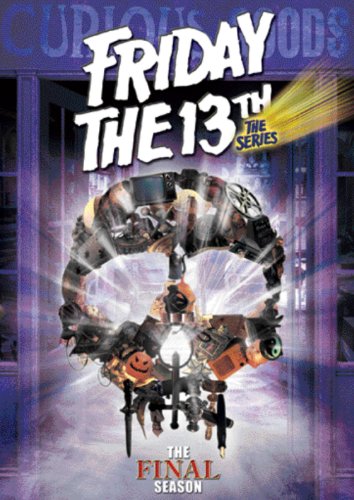
If you come to this DVD set in the hopes of discovering something to do with Jason or even his machete wielding momma, you will be very disappointed. There is no Camp Crystal Lake, and no one’s wearing a hockey mask. The fact is that this series, syndicated from Canada, had absolutely nothing to do with the film franchise. They have no characters in common. They have no connection to the stories in the film franchise. Basically the name is the only thing they share.


The 70’s and 80’s were fertile ground for horror films. It was a new era of iconic monsters. Starting with Michael Myers and Jason, the trend that gave us Freddy seemed to be at the end of its run by the late 1980’s. Certainly sequels were still being churned out, but it seemed like we’d seen the last of these maniacal monsters, at least for a while. But before it petered out, the cycle would supply our nightmares with one more notable denizen…Chucky. Today Chucky paces the sidelines here in Tampa as the head coach of the local NFL franchise, but for the last 20 years it was the darkest alleyways of our dreams that Chucky prowled. Inhabited by the soul of a killer, Chucky was truly one of the “Good Guys”.


Man, has television come a long way in just over 50 years. There was once a pretty strict code that applied to television programs. Men and women, even when married, couldn’t be seen to have shared the same bed. Anything stronger than a “golly gee” was strictly forbidden. You couldn’t even show a woman’s belly button. And the good guys always had to win, while the bad guys got their comeuppance in the end. Alfred Hitchcock was one of the first to push those boundaries by telling mystery stories where the bad guys often appeared to get away with their evil deeds. Even Hitchcock wasn’t brazen enough to completely skirt these rules, and at the end of such immoral plays he would always add, in his spoken postscript, some terrible twist of fate that got the bad guys in the end. Those days seem long behind us now. We have mob bosses, crooked cops, and now a serial killer, not only getting away with their crimes but acting the hero, of sorts, for the show. Vic Mackey and Tony Soprano only helped pave the way. In Showtime’s groundbreaking series, Dexter, Morgan Dexter is a serial killer who happens to kill other killers. The series is based on two novels by Jeff Lindsay. Darkly Dreaming Dexter and Dearly Devoted Dexter gave birth to the character and world of Dexter Morgan.


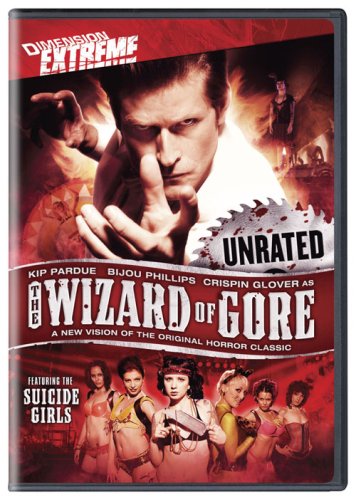
I remember the first time I saw a Herschell Gordon Lewis film. It was Blood Feast, and it was sometime back in the early 1970’s. Lewis was ahead of his time and was doing extreme slasher before even mainstream slasher films were cool. It was shortly after that bloody experience that I saw the original Wizard Of Gore. Perhaps those experiences didn’t prepare me as much as I thought they would for the remake of Wizard Of Gore. I have to honestly say that I don’t really see the connection between these two films. Certainly the main idea of the magician remains, but little else of the original material survives.


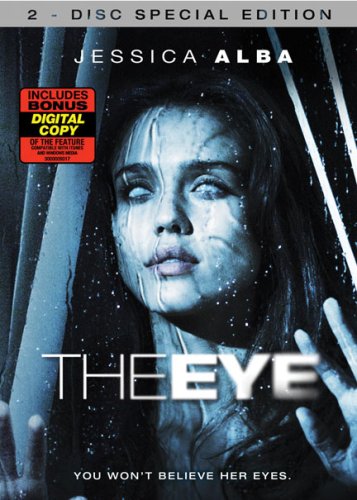
Why god must you do this? Why does Hollywood in all its limited wisdom try to remake any and everything with the hopes that it will be good, when it just winds up becoming another EPIC FAIL? They’ve done it with The Grudge, they’ve done it with The Eye, and now I hear they might be remaking Oldboy and The Host. We’re coming up on sacred cow territory here, and quite frankly, I don’t know why these films have to be “Americanized” to appeal to the unwashed masses; I thought the whole point of them was to be appreciated on their own merits. But sure enough, the horror film genre is guilty of cannibalizing product like anyone else. See what I did there?

Moving on, The Eye is based on the 2002 Hong Kong film Gin gwai, but Tom Cruise’s CW Production studio bought the American rights, and Sebastian Gutierrez (Snakes on a Plane) adapted the screenplay for American audiences, in a film that David Moreau and Xavier Palud (Them) directed. Sydney Wells (Jessica Alba, The Love Guru) is a classically trained violinist who has been blind most of her life. Upon receiving a corneal transplant (the eyes people, work with me here), she starts to see visions that shock and terrify her. Her sister Helen (Parker Posey, Best In Show) doesn’t know what to do for her, and her doctor (Alessandro Nivola, Grace is Gone) thinks she’s crazy, even though she walks around with strange markings on her hands and arms. So she tries to find out where her donor eyes came from, and the person who had them before saw unimaginable horror, and those visions are transferred to Sydney.

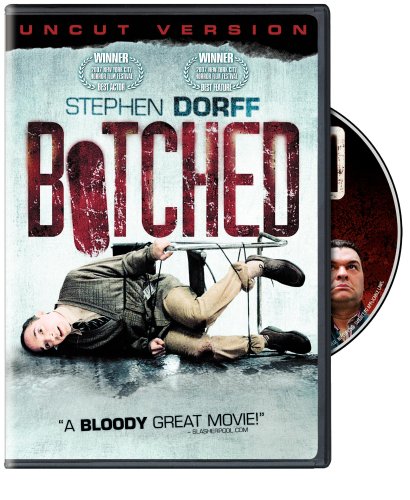
Campy blood & horror movies have always been a sore spot for me. I’m not talking about funny horror films with character like Shaun of the Dead. I’m talking about those movies that have a high amount of gore and little story to back it up. A movie that is played up for lack of acting and focuses more on how gruesome they make the average murder. Troma films immediately come to mind. However, there are times films that from their campy behavior create a story and scenes that are bearable to watch and a good ride on the couch. Perhaps we have found such a film in Botched a 2007 film directed by Kit Ryan. Just as long as it doesn’t turn into another Tripper, I think we will be alright.

Poor ol’ Ritchie Donovan (played by Stephen Dorff). This thieving gig he has is bringing him so much bad luck. After a diamond robbery goes awry, he is sent to Moscow to steal a rare antique cross locked away in an office building. He is given two companions: Yuri (played by Russell Smith) & Peter (played by Jamie Foreman) who are brothers but appear to be heavily in experienced in the ways of crime. They get to the penthouse as planned and make the heist. However, in the process Yuri goes off script and things start to go horribly wrong. A murder ends up at his feet as they head to the elevator to escape the scene of the crime. Once inside the elevator, things only become worse.

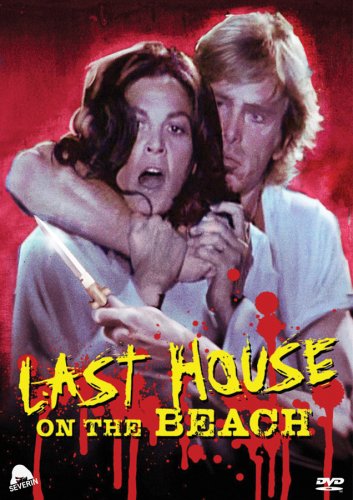
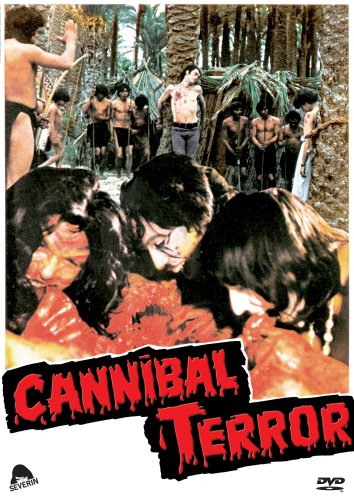
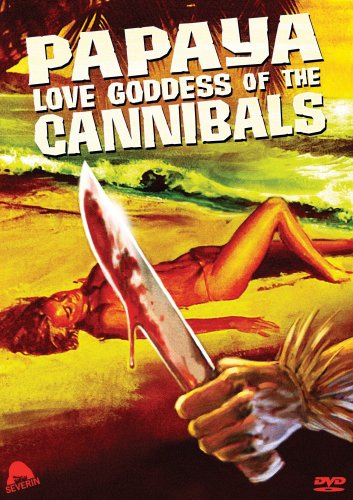
Severin continues their serious play to be the go-to company for Eurosleaze with this, one of Joe D’Amato’s better efforts. We first meet Papaya (Melissa Chimenti) as she luxuriates on the beach, makes love with a fellow in a cabana – and then orally castrates him, whereupon she walks away as two minions torch the cabana. Fantasy Island, this ain’t. The action then shifts to Sara (Sirpa Lane of The Beast fame), a journalist we first see revelling in a cock fight. She hooks up with Vincent (Maurice Poli), a nuclear power executive with whom she has had a casual fling before. The two of them are drawn into Papaya’s web of sex and blood ritual. She is, in fact, part of a political group fighting back against the power company’s expropriations and pollution by any means necessary.

Obviously, not your usual softcore romp, and a rather more interesting storyline than most of D’Amato’s Black Emanuelle series. The characters are still utterly without affect, which casts a vaguely surreal miasma over the proceedings. The sex scenes are pretty risible, but the film actually becomes quite watchable despite these scenes being its primary reason for being. D’Amato’s heightened interest turns up in the editing, in the careful creation of atmosphere, and most of all in the no-punches-pulled working out of the film’s ideas. Papaya raises, if rather clumsily, some hard questions about the nature of exoticism and the justifications for violence. Believe it or not, this is one to think about and discuss.

Some years back, I reviewed Elite's Millennium Edition of the NOTLD. That was certainly the most definitive edition at that time. So now we have another deluxe edition. How does it stack up? Before we get to that, a few (largely unnecessary) words about the film. There's a blurb on the box that calls this “the most influential horror film since Psycho,” and there is a great deal of truth to that. As has been pointed out before, the film single-handedly transformed the mythology of the zombie, changing the monster from mindless slave to flesh-eating ghoul. I can't think of any other instance where a mythology was changed so completely and with such finality. And there are plenty of reasons why it had such impact. Sure, there's the gore. And while the intestine-gobbling was pretty intense for 1968, H.G. Lewis had been pumping out gore films just as (if not more) excessive for half a decade. Unlike Lewis' films, George Romero's picture is extremely well made. The pace is lightning-fast (we have our heroine pursued by a zombie less than ten minutes into the film); the cinematography is imaginative, with plenty of energetic editing and lively camera work; and the lighting is dramatic exercise in stark high contrast. I haven't even mentioned the intelligence of the script. So let's just place this among the greatest horror films ever made and leave it at that.

Audio

It’s ironic that 28 Days Later and the Dawn of the Dead remake (which was originally a George Romero film), have jump-started Romero’s long-running “Dead” series that started in 1968 with Night of the Living Dead.

Since 28 Days Later and the Dawn remake were released, Romero has released two new installments: Land of the Dead in 2005, and now Diary of the Dead in 2007.

The Pang brothers return with one more instalment to their series of ghost tales. This one also goes under the title of The Eye 10 (and The Eye: Infinity), which is actually the more accurate nomenclature, given the sheer number of hauntings that are present here. A group of friends on vacation in Thailand regale each other with ghost stories. Their host then produces a book that lists the ten ways of seeing ghosts. The group, whose instinct for self-preservation could do with some strengthening, proceed to put the book to the test. They get far more than they bargained for.

In the making-of featurettes that accompany the film, the Pangs talk about how they had too many ideas to fit into the first two instalments of the franchise. So here they have a structure that allows them to pack in a cornucopia of summonings and hauntings. Some of the manifestations are undeniably effective, and there are some pretty decent jolts. On the other hand, the Pangs recycle some of their greatest hits, sometimes to deliberately humorous effect. The tone generally is much lighter than before, but the humour has a tendency to disrupt scenes that are building up a good head of terror. The film is thus a frustrating mixed bag, where flashes of the Pang brilliance are present, but there are also plenty of moments where the brothers seem to be just going through the motions, when they aren't taking the piss entirely.