Mature

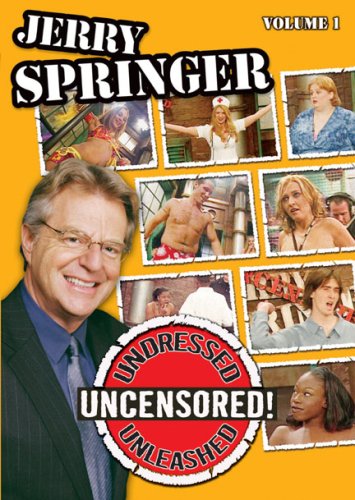
I'm not sure what we will consider the fall of man. Perhaps it will be dangerous emissions into the air; perhaps it will be what happens when we don't recycle enough. It could just be when I don't win a freaking Nobel Peace Prize for my work in the field of gaming and dvd collecting. But perhaps the true fall of man will actually be rested upon the shoulders of one man and that man is Jerry Springer. For years, his brash trailer trash tv show has done more to destroy mankind than the rubber chicken (trust me, you just don't know). Within the last few years, Jerry has had to take his shtick elsewhere. In college campuses, in shopping malls, on PPV. Yes Pay Per View. This first volume of Jerry explores the first three Pay Per View specials and wow. That is simply all I can say.

If you never seen Jerry Springer, let me sum it up in a couple of sentences. There are people that belong (or are in) a trailer park who sleep with their spouse's best friend, mother, daughter, dog, cow, it really doesn't matter. Then they get on Jerry, talk about it, and have fights that are broken up by security over it. This theme will continue for most of the show until Jerry has his little moment at the end where he will speak about what we have learned today (Yeah, don't live in a trailer park and don't date strippers, we got it!). In other episodes, he'll have some hot women get on and do things that our momma never told us about nor will our girlfriend ever think about doing to us or with us. So it continues.

The original Bachelor's Party was produced roughly 25 years ago in the 80's. Drugs, Sex, Tom Hanks and a donkey with a taste for belly dancing and cocaine all highlighted this cult favorite film that actually did very well for it's time and genre. However, 2008 decided to release a sequel to this movie. Naturally, they could not get Tom Hanks to even do a cameo since he's busy doing important films that involve him walking around an airport or naming inanimate objects "Wilson". However, throw in some hot comics and even hotter females with some solid writing and you might just have a really fun and racucous time.

Ron (played by Josh Cooke) and has fallen in love with Melinda(played bySara Foster). They decide to get married and Ron's friends decide to throw him a bachelor party at the local strip joint. However, Ron's future brother in law, Todd (played by Warren Christie ) decides to take them to something a little more crazy and fancy. He books a vacation for Ron, his friends and himself to a scantily clad hideaway on the family's company tab. Ron tries his best to remain faithful to Melinda and still have a good time around a bevy of booze and beauties.

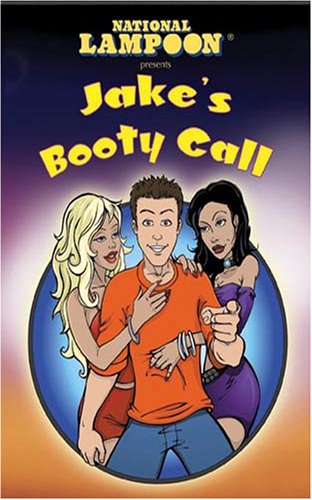
The web has a way of delivering some of the most interesting material. Flash animation in particular can produce some very funny shorts. Furthermore, these shorts are unedited and can be downloaded by millions of people on a whim. These viral episodes can be played over and over again, with little care to the quality or the content. But what happens when they take that idea and decide to make into a feature length film? In this case, proof that people will download anything.

Jake is the king of poon nanni. He'll screw anything in a skirt and come back for sloppy seconds. However, Siton is not so lucky in the conquering of young females. In fact, he's never been fortunate enough to get a girl to sit a top of his knob. One night, Jake uses Siton as his wing man in his quest for more tastes of the forbidden fruit. After Siton fails to close the deal, Jake realizes that this character needs a little more help. We also find out that Siton is actually a prince. Thus begins the journey where Jake and Prince Siton go across the world trying to find beautiful women and more importantly one that gives the prince his first taste of that casual sex.

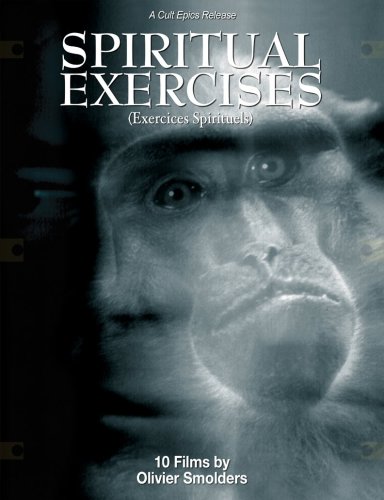
Olivier Smolders is a Belgian filmmaker with a sensibility as distinctive and challenging as his artistry is developed. Cult Epics has done North American audiences a huge service by bringing his films to Region 1 DVD release. This disc has ten short films. Each piece has its own distinct identity, yet they are all very clearly the work of a singular creative talent. The frequently disturbing shorts range from a tale of murder and cannibalism in “Adoration” (previously available on the Cinema of Death collection), to the heartbreaking “Mort à Vignole” (where Smolders narrates a family tragedy filtered through home movies made by his and his wife’s parents, along with his own family footage), to an extended yet elegantly filmed practical joke (“Point de Fuite”) to a most unusual adaptation of Sade with “La Philosophie dans le Boudoir.” The films are invariably gorgeous and clinical in the precision of their observations. The blurbs on the case invoke Lynch, Greenaway and Bergman, and the comparisons are apt, though Smolders is also very much his own man.

Audio

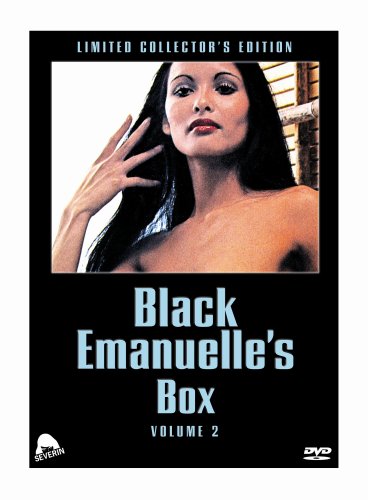
Severin unleashes three more entries from Italy’s long-running sexploitation saga, and the result is another fascinating collection. The quality of the movies themselves up and down, but the good stuff is very good, and the collective result is something that is completely fascinating. Exploitation fans should be over the moon.

I’ve already gone on at length about Black Emmanuelle/White Emmanuelle (1976) elsewhere, so I won’t rehash everything again. Briefly, though, the set-up has Laura Gemser as Emanuelle (let’s stick to the single “m” version to avoid confusion with Sylvia Kristel), here a model instead of a journalist, arriving with SOB photographer boyfriend at the palatial home of some friends in Egypt. Much aristocratic ennui ensues, until Laure (Annie Belle) arrives to tear down everyone’s comfortable illusions. The most nicely shot and intelligently scripted of the films, there is something absolutely mesmerizing about the display of decadent self-loathing proposed here. Writer/director Brunello Rondi’s effort is emphatically a high point of the series, and invites repeated viewings.

After going all the way back to the 20s with the last entry in this series, now Cult Epics gives us a collection from 1960s, a period that marks the beginning of the end for this kind of pornographic short. Theatrical hardcore is just around the corner, and things will never be the same. In the meantime, though, things are remarkably the same. Other than some clothing styles (in those brief moments when clothes are actually on), it’s interesting to note that there is very little to distinguish these twelve entries from those of any other decade, a point driven home by the bonus short from the 1940s, which doesn’t feel very different from the rest of the offerings. Artistically, there is not much going on here (surprise, surprise), but the star rating indicates the fact that, despite this, there is some clear archival value here.


Audio

In the manner of the 1920s release, the audio track that had been standard for the rest of this series (the sound of film running through a projector) has been replaced with a music score. In this instance, it’s a series of swinging grooves, very much in keeping with the 60s, and acting as one of the only reminders of when these movies were actually made. The music is treated well by the 2.0 mix. The movies themselves are, of course, silent.

Video

What happens when the reviewer who did Dante's Cove decides to tackle its vampiresque cousin, The Lair? (Besides scheduling more sessions with his psychiatrist) You get somebody who starts understanding what makes up the Here! network. We're homies, we break bread together. Just don't expect me to wear my pants that low nor participate in your late night parties. I got an image to uphold. Season one of the Lair provides something that no other show on the Here! network has proved to this point. A show where there is actual dialog and something more than a cheap excuse to show lots and lots of male on male action. Welcome to the Fang Bang.

The Lair is the story of a journalist, Thom (played by David Moretti ) who is investigating the John Doe murders when he comes across a janitor, Frankie (played by Brian Nolan) who gives him information about a club called the Lair. The Lair as it turns out is a sex club with all gay male clientèle (expect gratuitous scenes of six or seven men at a time doing things that would make Ron Jeremy walk out of the room) who have much darker secrets than their lifestyle. They are vampires. The vampires are lead by Damian (played by Peter Stickles) and Colin (played by Dylan Vox). Colin looks like he should be the double for Billy Idol's next televised concert. Seriously, I expected him to bust out with White Wedding at any moment. The story starts to get interesting when Thom's jealous boyfriend Jonathan (played by Jessie Cutlip) goes to the Lair and finds himself in a deadly situation. This leads to Thom who must keep himself alive and in the process unravel the mystery of how the John Doe murders and the Lair are connected.

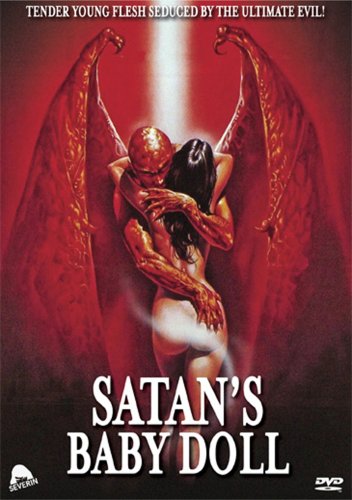
Mario Bianchi’s film is a 1982 remake of the recently reviewed Malabimba. The spirit of a newly deceased woman possesses her daughter, and proceeds to wreak havoc in the gothic castle that is the family’s domicile. Of course, given that the father is a murderous drug-addict, there isn’t that much for the possessed teen to do, as far as the plot itself is concerned. Curiously, this effort is less lurid than its predecessor (barring a couple of insanely OTT performances), with less nudity and taboo-busting, and also a rather less interesting deconstruction of respectable society. Plotting and motivation are haphazard at best. Still, it’s a not-unentertaining late-period Italian gothic, blessed with handsome sets.

Audio

Connoisseurs of Eurosleaze will be pleased with this nasty little variation on the gothic. In an isolated castle, a fractious, failing aristocratic family has gathered. There is no more money in the family, except indirectly: one brother, now in a vegetative state, is married to a rather wanton woman, who now holds the purse strings. The matriarch suggests that her other son marry her, even though his brother is still alive. The man is properly horrified by the suggestion, and he is also still in mourning for his wife. But then something – the spirit of his wife? a demon? – invades his teenage daughter, who then starts acting out sexually and recreating scenes from The Exorcist.

Nothing hugely original here, and many scenes are SO blatant in copying The Exorcist that one might as well assume that Friedkin’s film was the last word on possession symptoms. What is interesting, though, is that, unlike Friedkin’s film, the connection between the possession and the hypocrisy of the upper class is made perfectly explicit (in every sense). In fact, much of the misbehaviour on display has nothing whatever to do with the demon – it serves primarily to force the characters into a realization of what they really are.

This is a second release of the film already available in Severin’s fine Black Emanuelle’s Box collection. What I said about the film in that review still holds, to whit: “Emanuelle Around the World (1977) has a bit more of a storyline, though it is still very picaresque in nature. Picturesque as well. Our heroine becomes outraged by the sex traffic of women, and so travels from location to location, exposing the evildoers. D’Amato (who also directed the previous entry) here rather unconvincingly dons a pseudo-feminist stance, but there are moments actually approaching suspense. The sex scenes of both these films are, for the most part, laughable, though occasionally well shot. Any sense of eroticism is thanks to Laura Gemser, whose ethereal beauty and grace are such that she moves through the film as an almost divine presence, above and untouched by the events around her.”

This is the “XXX European Version,” which doesn’t make a whole heck of a lot of difference. The running times are essentially identical. The only scene where I noticed any real increase in explicitness is in the creepy sequence where a captured Emanuelle is forced to watch rape by snake and dog. The scene is still, I think (and devoutly hope and keep telling myself), simulated, but most unpleasant, and makes the film’s pseudo-feminist stance even harder to buy than before.