Posted in: Disc Reviews by William O'Donnell on November 9th, 2011
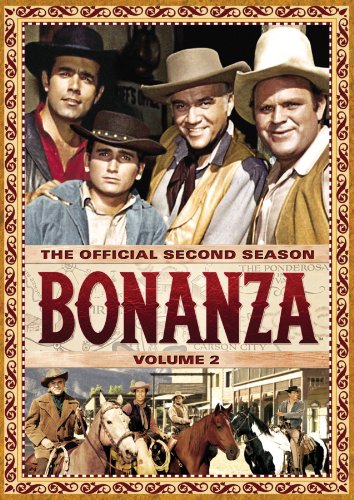
The Cartwright boys continue to do right on the Ponderosa Ranch in the state of Nevada. Having lasted 14 seasons, the series was relatively young in Season 2 but had already established Ben Cartwright and his three boys (from three different mothers) as household names on American television.
Plot wise, a good chunk of the stories revolve around the importance of having land. The Cartwrights hold the most lucrative plot in the area, and many a villain tries to find devious methods of taking it from them. Unlike fellow Old West programs like Gunsmoke, Bonanza took a sometimes comical approach to the resolving these conflicts, and guns were hardly ever drawn.
Posted in: Disc Reviews by William O'Donnell on October 5th, 2011
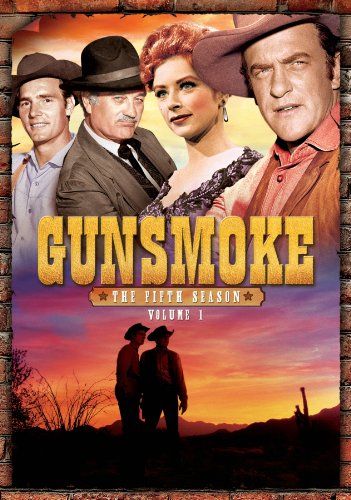
Previously on this site I had reviewed Season 4 of this legendary program (https://upcomingdiscs.com/2010/10/15/gunsmoke-season-4-volume-1/) and Season 5 still predates the major changes that occurred over this show's 20 year run, primarily consisting of supporting cast changes so that review can just about double as fair coverage of this season as well; which I hope conveys a testament to this show's consistency of quality and not to my personal laziness as a writer. Indeed, this season continues to provide entertaining evidence as to why this show lasted so long and remains beloved to this day.
James Arness' Marshall Matt Dillon keeps a stern, watchful eye on the city of Dodge. The stakes were always high in each episode's adventure, and any slip up, be you a hero or villain, could cost you your life. Being a production from the late 1950s we do deal with more than a few character stereotypes. The gypsies are devious, the natives are primitive, and the white yokels are frighteningly ignorant and violent. Dillon, as the final word of the law in all situations, makes a decent mediator and remains without prejudice so long as you keep on the happy side of his law...or you end up on the business end of his gun in many cases
Posted in: Disc Reviews by Gino Sassani on September 7th, 2011
"Where life had no value, death sometimes had its price. That is why the bounty killers appeared."
If you had asked Clint Eastwood about the chances of Fistful Of Dollars being at all successful, he admits he hadn't given it much of a chance. The film took a lot of chances with what was already a tired genre. Add to that the fact that it was a low-budget European effort and there really was no chance that the movie would be remembered a year later. But the film did pretty good money and made a ton of international noise. The men involved ended up with more than a fistful of dollars in their banking accounts. Who could blame them for wanting A Few Dollars More?
Posted in: Disc Reviews by Gino Sassani on September 2nd, 2011
"Everybody here has become very rich, or else they are dead."
In 1964 things were very different from the way they are now. The Hollywood western movie was winding down. The genre had pretty much played itself out and was struggling to maintain even on television. Few people knew who Clint Eastwood was. He had a pretty sweet gig on the television series Rawhide but wasn't anywhere near a household name. Sergio Leone was a name almost no one had heard of. And there was no such thing as a Spaghetti Western. With the release of one very low budget film, all of those things changed practically overnight.
Posted in: Disc Reviews by M. W. Phillips on September 2nd, 2011
“How would you like to use that gun belt for something more than just holding up your pants?”
Although the title of the blu-ray is Return of the Magnificent Seven, the original film’s title sequence just calls it Return of the Seven, and for good reason. There is nothing vaguely magnificent in this movie. This is the type of sequel that gives sequels a bad name.
Posted in: Disc Reviews by M. W. Phillips on August 30th, 2011
“We deal in lead, friend.”
In the fall of 1956, Anthony Quinn watched a special screening of Akira Kurosawa’s The Seven Samurai and had an epiphany; this Japanese masterpiece, inspired by the great American westerns of John Ford, would, itself, make a great American western. Quinn acquired the rights and contacted his then close friend Yul Brynner and pitched the idea of him playing the bad guy and Brynner the good guy. Brynner screened Kurosawa’s film and called in producer Walter Mirisch, who in turn contacted director John Sturges (Bad Day at Black Rock, Gunfight at the OK Corral, The Great Escape). Sturges loved the concept and immediately set about acquiring the rights, ultimately forcing Quinn out of the picture. Quinn sued, but lost.

Posted in: Disc Reviews by David Annandale on July 25th, 2011
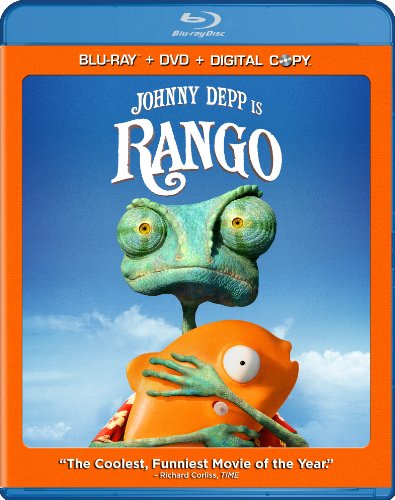
Rango (Johnny Depp) is a chameleon with an enormous imagination. In his terrarium, he has developed a social network with inanimate objects that would be the envy of Castaway’s Tom Hanks. He essentially lives inside his head, but then reality (perhaps – the film maintains a certain ambiguity here) suddenly intervenes and he finds himself cast from his safe, hermetic world. Marooned in the desert, he arrives in the town of Dirt, where his inclination for the dramatic has him claiming to be a sharp-shooting, quick-drawing hero. When he accidentally proves his claim by killing, through sheer stupid luck, a hawk that has been terrorizing the town, he is enlisted by the townspeople to defend them from the tyrants who keep them oppressed and thirsty.
Another day, another self-referential computer-animated film, this one taking on westerns rather than fairy tales. And sure, there are more references than you can shake a stick at, to westerns or otherwise (check out the lightning-fast nod to Depp’s Fear and Loathing in Las Vegas during the highway scene). But this isn’t just a pastiche. The love of classic westerns is palpable, and the film is unapologetic in its adoption of the genre’s convention, but it does take care to fully realize its characters. Visually, the film is extraordinary, displaying a rich palette of colours and moods, an imagination as exuberant as its protagonist’s (a dream sequence becomes exactly what Salvador Dali would have imagined had he been a thirsty chameleon), and the detail work of the animation is bleeding edge. Not everything in the narrative is exactly a surprise, but some pleasures are pleasures precisely because they are familiar, and there are plenty of charming eccentricities to make us forgive the occasional lapses into the been-there-done-that. Certainly one of the better animated films of the year.
Posted in: Disc Reviews by Michael Durr on July 23rd, 2011
When it comes to westerns, I certainly have a love hate relationship. For most westerns, especially anything with Clint Eastwood or spaghetti in the description, I have an extreme loathing and it is honestly hard for me to sit through. But then there is Tombstone which I think is one of the best movies of all time. This summer, I am even excited to go see Cowboys & Aliens. Maybe I just need a western that is out of the ordinary. However, I received Posse to review and by the looks of the cover, this might be a very conventional western or perhaps not.
An old black man (I don't normally get into race, but it is important here) (played by Woody Strode) spins us a story about black cowboys. He tells us to forget about the past and truth. One out of every three cowboys was black. He then goes into a few more facts before telling the tale of Jesse Lee and his posse. It all started long ago during the Spanish-American War, more specifically in Cuba around the year 1898.
Posted in: Disc Reviews by Gino Sassani on July 21st, 2011
The fourth season of The Virginian was a milestone year for the groundbreaking western. Four of the show's regular characters would be appearing in their final episodes. Lee J. Cobb was never completely happy doing the show, and while he always acted professionally, his castmates all knew he wanted to leave. Cobb finally left halfway through this season even though he would remain on the opening credits for the entire year. This would also be the first and last year for Diane Roter as Jennifer Sommers, the Judge's niece. She was a replacement for Roberta Shore's Betsy, who left the previous year but would return for one episode in year four to offer the character closure. Roter was a kind of Annette Funicello lookalike and only really appeared strongly in a handful of episodes. Finally, this was the last season for Randy Boone as Randy Benton. It's your last chance to hear a riff from the young character's guitar.
Posted in: Disc Reviews by Gino Sassani on July 14th, 2011
The story of Jesse James has been told many times over the years. There isn't a medium in the world that hasn't seen its share of tales concerning the infamous outlaw. You could find radio dramas, plays, television shows, films and even songs that recount his exploits. Some of these have been honest and brutal depictions of a lawless man and his gang of thugs who terrorized the West by robbing trains and banks, leaving corpses in their wake. Then there's the romantic telling that picks up on the folk heroes that Jesse and his boys have become over the years. Even in his day he became somewhat of a hero to a generation of those who read about his daring deeds in the papers and pulps. Of course, they likely didn't include those unlucky enough to have stared down the barrel of Jesse's six-shooter. The Long Riders fits into that later category of romantic folk stories.
The film depicts the final days of the gang. It begins with a bank holdup gone wrong and the excommunication of Ed Miller from the gang for starting a shootout and killing a cooperative teller. The Pinkertons get hot on the James/Younger Gang trail, and a lot of innocent folks get killed in the crossfire. The film finally concludes with the shooting of Jesse by Robert Ford.