Western

"As the American Civil War ended, another war was just beginning. The Mexican people were struggling to rid themselves of their foreign emperor - Maximilian. Into this fight rode a handful of Americans, ex-soldiers, adventurers, criminals, all bent on gain. They drifted south in small groups. And some came alone."

Ben Trane (Cooper) was one of those who came alone. He was a southern officer fresh from the defeat of the Confederacy. He's come to Mexico to hire out for the Emperor in fighting the rebellion. Along the way he meets Joe Erin (Lancaster). After a series of unfortunate incidents, he meets up with Joe's gang. Joe figures there's more money to be made by bringing some numbers. The two soon prove themselves to the Mexican government and are hired to escort Countess Marie Duvarre (Darcel) and a wagon filled with gold to the port town of Vera Cruz. There the Countess is expected to go back to Europe and use the money to bring back more soldiers and weapons. Along the way the two men plot with the Countess to steal the money. But the Marquis Henri (Romero) is on to the plan and has laid a trap. The journey is filled with double-crosses and betrayals that will lead to conflict between the two men as their loyalties begin to widen.

"People scare better when they're dyin'"

Mention the name Sergio Leone and you immediately think of Clint Eastwood and their Man With No Name trilogy. The truth is that Leone was the master of the spaghetti western and largely responsible for making Clint what he is today. When the Italian director decided to try his hand at Hollywood, he was welcomed with open arms, except they weren't interested in anything but an American copy of a spaghetti western. Leone had something else in mind. He had a "been there, done that" attitude about the westerns and wanted to do an epic called Once Upon A Time In America. But Hollywood was hearing none of that. So they compromised. If Leone delivered a stylistic western, the studio would spring for the epic he wanted to make. The result of that parlay turned out to be Once Upon A Time In The West.

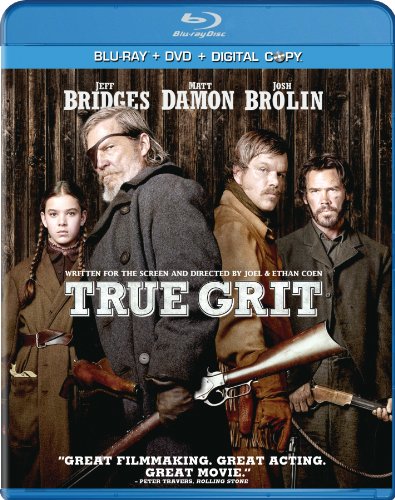
"People do not give it credence that a young girl could leave home and go off in the wintertime to avenge her father's blood. But it did happen."

Just like the book that both this and the 1969 John Wayne film were taken from, the film opens with the sad story of a young girl who has come to Fort Smith to see that justice is done for her father. The words were written by Charlie Portis, a journalist who went on to write a truly great American novel: True Grit.

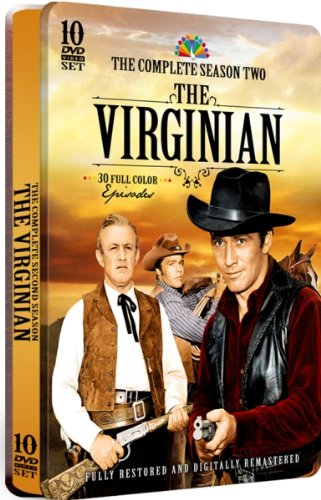
The Virginian set itself apart from the others in two ways. The first was found in the source material. The series was based on a 1902 novel by Owen Winsler, a man who actually lived in the Wyoming badlands during the time the series was set. The source material helps to add a sense of authenticity that might well have been a slight step ahead of the rest. It wasn't as violent as the others, again reflecting a more realistic sense of direction.

Thus was the heart of the original novel. The stories were less about gunfights and more about the obstacles and challenges that these earlier settlers faced. Each, with different interests, tried to carve out a home in the vast wilderness of the open West. These challenges came from many places, and often from his fellow man, but not always. That's the type of tale captured in this long-running western series.

"This is Fairfax County in the state of Virginia. I was born here. It's peaceful, beautiful, and a long long way from Wyoming; beautiful, too, in its special way. Vast, proud and lonely; it's my country now, Wyoming. But not exactly a peaceful one."

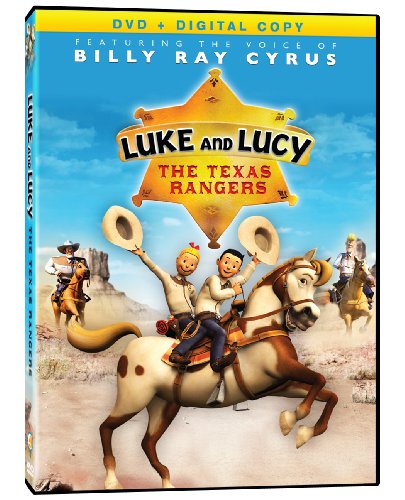
A Wild West overlord is plotting to shrink the world's population. This evil plot is running along smoothly until a shrunken Texas ranger escapes in a whiskey bottle and finds himself saved by a plucky sibling duo named Luke and Lucy, along with their gaggle of wacky friends. The group become honourary rangers and set out to battle evil.

The character design, and over the top sense of adventure, are reminiscent of the Tintin series as these characters are based on those that appeared in Belgian comics under the same Herge banner that Tintin shares. Sadly, the CGI animation takes most all the life out of them with rigid movements and very poor lip syncing. Of course, being originally produced in Dutch, one can forgive some of the mismatched dialogue-to-mouths, but some more work could have been done to smooth it out.

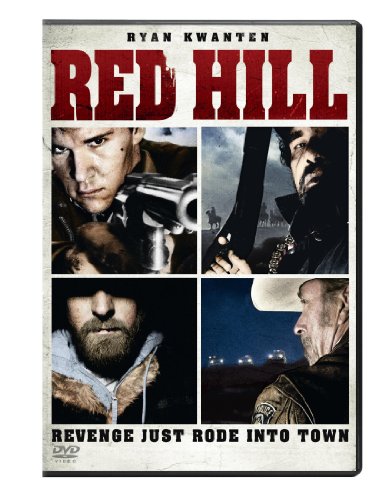
Westerns are fun movies to typically review because they usually don't deviate much from a basic formula. There is usually a criminal and there is usually a good guy out there to shoot that varmint. Technically, that is all there is to it. Furthermore, the budget (unless big stars are involved) is small, making for some creative storytelling. Today, we get to review an Australian western: Red Hill. Let's see if it differs from the typical American one.

We overlook a lush Australian landscape (aren't they all this way?) and pause to look at some horses. Suddenly, there is a disturbance in the distance and the horses run. Dun dun dun. Scene shift. Shane Cooper (played by Ryan Kwanten) is up and getting ready for first day of work. His wife, Alice (yes...Alice Cooper, played by Claire van der Boom) who apparently got her Frankenstein fed is very pregnant. They talk about his first day and soon he goes off to work.

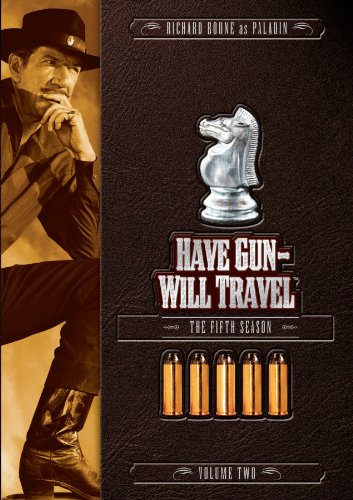
“’Have gun, will travel’ reads the card of a man. A knight without armor in a savage land…”

Those words ended every episode of Have Gun Will Travel, sung by Johnny Western in a time that such words could be sung without irony. Outside of Richard Boone’s black-clad, craggy Rhett Butler gone-to-seed gunfighter, that song was all I could really recall about this venerable Western from television’s golden age. Would it, like so many revisited shows from my youth, ultimately disappoint? Or would it hold up fifty years after it was originally broadcast, viewed as it would be by the far more jaded, cynical man I’ve grown into?

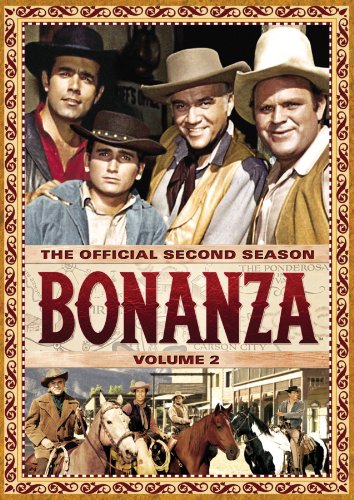
Three-time widower Ben Cartwright  (Greene) runs his famous Ponderosa Ranch with the aid of his three grown sons from three different mothers. There’s Little Joe (Landon), Adam (Roberts) and Hoss (Blocker). Set some time in the mid 1800’s, this long-running series followed the family’s many exploits. In the late 1950’s westerns accounted for six of the top ten programs on TV. Only Gunsmoke had a longer run than Bonanza. From 1959 to 1973, Ben Cartwright and his boys rode across the small screen. Years later in syndication the series re-emerged as Ponderosa, and a handful of TV movies continued the tale into the 90’s.We never have grown tired of the genre that gave us such heroes as John Wayne and Clint Eastwood.

You get the first half of the second season in this 5-disc release complete with 18 episodes. The set is highlighted by some great guest appearances. Jack Lambert, Ben Cooper, The Werewolf Of London himself Henry Hull, James Hong, Dan Duryea, Claude Atkins, Khan himself Ricardo Montalban, Bob Hopkins, Star Trek's Spock Leonard Nimoy, The Creature's favorite babe Julie Adams, and even Holy Guest Star Batman Adam West.

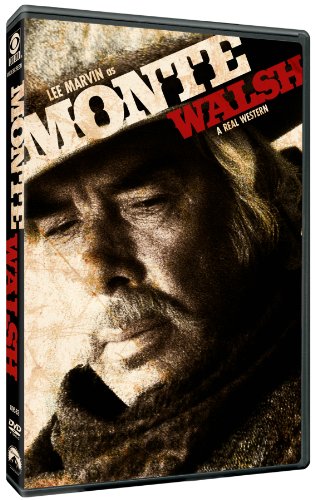
Monte Walsh and Chet Rollins (Lee Marvin and Jack Palance) are two cowboys in an era where their kind is becoming extinct. After a hard winter in the mountains, they discover that most of the ranches they knew have vanished, the land being bought up by Eastern corporations. They find work on the ranch once owned by Jim Davis, though he now answers to accountants back East. And though life, at first, seems all right, bit by bit they witness the end of their era, as a way of life dies, and the men who lived it are pushed to suicide, desperation, robbery and worse.

There were numerous “death of the west” movies in the late 1960s and early 1970s, films whose subjects also reflected the fact that the Western itself, as a genre, was entering a near-terminal decline from which it has never fully recovered (these days, if one Western per year comes out, that's doing pretty well, and yet there was a time when there were more Westerns pumped out than any other genre). Unlike the blaze of glory tales of Sam Peckinpah (The Wild Bunch being the best example), Monte Walsh is more of a tone poem. There is very little plot. We watch a few seasons in Monte's life, see him at work and play, see the tentative romance between him and prostitute Jeanne Moreau, see his sadness over a vanishing world and disappearing friends. Then, an almost subterranean thread involving the increasingly desperate straights of Mitch Ryan rises to the foreground in the final act as tragedy descends.