Fox

Synopsis

Starting in 1937, Peter Lorre starred in a series of eight films about the Japanese detective. In this set are the first, second, fourth and fifth in the franchise. WWII put an end, of course to a series with a Japanese hero played by a German-speaking actor. Whatever one might think of racist stereotypes (and it is best, in viewing such films, to try not to think of them at all), these are enormously entertaining programmers.

Synopsis

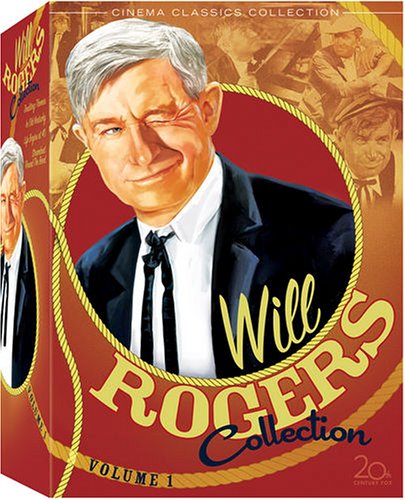
Will Rogers was once the biggest star in Hollywood. Think of any other big name from the late 20's and early 30's, and he outpaced them all. Today, he is little more than a name, and there are plenty of film guides out there that don’t even list his films. Quite the sobering lesson on the evanescent nature of fame. The films in this collection were all made in 1935, the last year of Rogers’ life, before he was killed in a plane crash. These comedies have definitely dated, but Rogers’ charm i... undeniable. He was an inveterate improvisor, but he apparently stuck pretty closely to the script of Doubting Thomas. Dismayed by his wife’s sudden theatrical ambitions, Rogers plots to derail those hopes and keep her in the kitchen, where she belongs (did I mention the films had become a bit dated?). Life Begins at 40 sees Rogers in full aphoristic mode as the crusty, mischievous and independently-minded newspaper editor determined to clear the name of an ex-con employee and triumph over the small town’s evil banker. In Old Kentucky has a feud between two families centred around horse racing. Rogers is the trainer who switches loyalties. Finally, <i <steamboat ‘Round the Bend has con-man Rogers captaining a steamboat as he searches for the half-crazed preacher who can prove that Rogers’ nephew killed a man in self-defense.

Valley of the Dolls is a musical that way way ahead of its time. Based on the novel by Jacqueline Susann, the film tells the story of three aspiring actresses and their attempts at becoming stars. Sure, this is an age old tale, but it had not been told as bluntly an honestly until now. The film starts Barbara Parkins, Patty Duke and Sharon Tate as the actresses in question. Audiences must have been shocked upon going to the theater, as they were much more used to rags to riches musicals such as A Star is Bo...n instead of the brutally honest vision that Dolls presented.

The actresses in this film are mean-spirited, nasty, drug-addicted women who will stop at nothing to get where they want to be, and they don't care what they have to do or who they have to step on to get there. As horrible as these women are, this Hollywood musical strips away all the glitz and glamor to bring the true story of what it takes to make it in show business. It is a groundbreaking film that was nominated for an Academy Award for its wonderful musical numbers. Both the beauty and the ugliness of the business are shown here, and the film completely took me by surprise.

Lately, I've been wondering out loud about what will happen to these over-produced teen pop stars who are thrown all this media exposure by their parents (to the point of exploitation). When are we going to start seeing some Playboy or Maxim photo shoots? When are we going to see someone on Cinemax After Dark, or even Night Calls? I mean, it's obvious at this point that Ashley Simpson can't sing, and she's starting to look more and more like her sister in an attempt to become her, without the appeal. And since there's a rumor floating around that she turned down a multimillion dollar Playboy photo shoot (after the proverbial "great deal of thought"), it seems to be the next logical step.

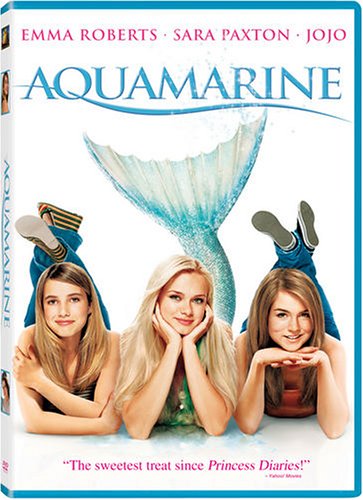
Enter Joanna Levesque (RV), a.k.a. "Jojo". I don't know what song she's famous for, I don't know what she's doing lately, but I know she's been thrown a lot at MTV and Nickelodeon for whatever reason. I know this because I watch copious amounts of both. She plays Hailey in Aquamarine, a bit of a tomboy and a close friend of Claire (Emma Roberts, Blow), who is the granddaughter (I think) of owners of a beach club of some sort, and they both seem to have a crush on Raymond (Jake McDorman, Echoes of Innocence), a local life guard and resident teen hunk.

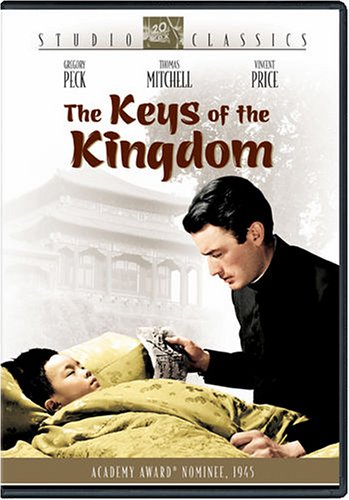
Gregory Peck plays Francis Chisholm. After losing his parents as a young boy, and then his sweetheart (to moral turpitude, it seems), Francis enters the priesthood. His unorthodox ways make him a failure initially, but kindly bishop and mentor Edmund Gwenn sees potential in the man, and sends him off to China to be a missionary. There too, things get off to a rocky start, but a turnaround happens when he saves the son of a local mandarin. His struggles are far from over, but through it all, he remains a triumphantly decent man.And one would expect no less from Gregory Peck, now would we, in this, his screen debut. This is old-fashioned religiosity following in the vein of The Song of Bernadette and Going My Way. It certainly is easy to cynical about it, and there is more than a whiff of cultural imperialism about the affair. Even so, and in spite of the very stately pace, the film is so fundamentally sweet-natured that it is very hard not to be caught up in it.

Audio

A lot has been said about Roger Ebert and Russ Meyer. Ebert has been called the most famous film critic this side of Pauline Kael (he certainly is the most informative one since I've started becoming a wee critic myself), and Meyer certainly found a niche audience directing and producing films with large-breasted women. So when Fox got the two of them together and had them come up with a script that would be a pseudo-followup to The Valley of the Dolls, one would be interested to see what became of it.

The big misconception about Beyond the Valley of the Dolls is that it's a sequel to the Sharon Tate film before it. It's actually more of an homage to the first film (as the introductory title cards discuss), and goes in a different direction, rather than extending the current storylines. Pet (Marcia McBroom, Jesus Christ Superstar), Casey (Cynthia Myers, They Shoot Horses, Don't They?) and Kelly (Dolly Read, That Tender Touch) comprise a band that comes to Los Angeles looking for stardom. They run into their fair share of unique California characters, including Emerson Thorne (Harrison Page, Lionheart), Lance Rocke (Michael Blodgett, Catalina Caper) and perhaps most uniquely, Ronnie Barzell, a.k.a. the Z Man (John La Zar, Over the Wire).

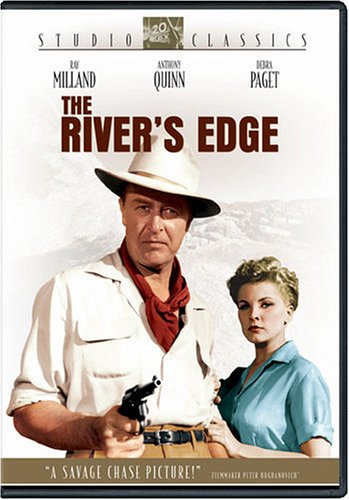
Career criminal Ray Milland shows up at the ranch of Korean vet Anthony Quinn, looking for his old flame, Debra Paget. She is now married to Quinn, but she hasn't adapted well to country life, still carries a torch for Milland, and is in the very process of leaving Quinn. She and Milland rekindle their romance, and are planning to leave town with the million dollars Milland has just scored. When Milland runs over a state trooper, he forces Quinn to guide them through the wilderness to the Mexican border. A struggle for both survival and Paget's love ensues.A welcome reminder of when thrillers didn't have to be two-and-a-half hours long, this is a tight, swiftly paced peace of work. Despite the great physical difference between them, Milland comes across as a worthy adversary for Quinn, there's a great cynical anger to the characters, and the violence is pretty brutal for its era. The location settings tend to make the studio exteriors all the more obvious, but this is a minor quibble This is a fine western noir, worthy of rediscovery.

Audio

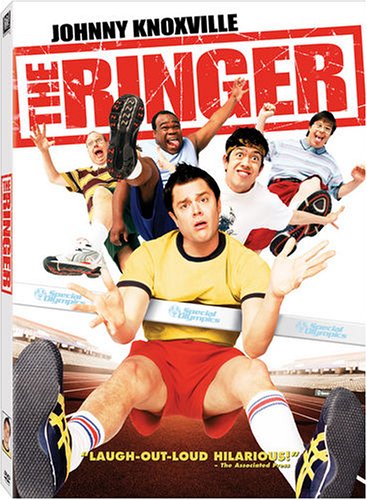
On paper, The Ringer must sound like the most un-PC movie in the history of cinema. After all, Johnny Knoxville from MTV’s Jackass plays a character in need of some cash, so he pretends to be “Jeffy” -- a mentally challenged athlete -- in order to fix the Special Olympics.

However, this movie is produced by the Farrelly Brothers, and as they have done in their past films (There’s Something About Mary, Shallow Hal), the Farrellys treat mentally and physically challenged people with resp...ct -- casting them in large supporting roles -- which allows The Ringer to become an endearing film, rather than the offensive and insulting piece of crap it could have easily become.

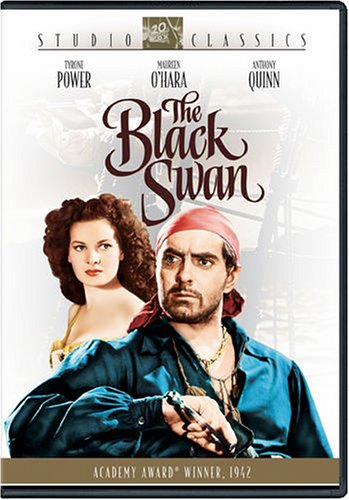
Tyrone Power has been plying his trade as a pirate in the waters near Jamaica. When his former captain becomes the governor of Jamaica, Power goes straight. He has his eye on Maureen O'Hara, who is engaged to a duplicitous aristocrat who is feeding information to unreformed pirate George Sanders (utterly unrecognizable in shaggy red hair and beard). There will be many complications before Power can claim the resisting O'Hara as his own.Compared to the Errol Flynn pirate movies Captain Blood and The Sea Hawk, this one is a bit light on the action, really only getting down to the buckling of swashes in the final act. The romance between Power and O'Hara is a bit difficult to take in this day and age as well, especially in the first part of the film as it dances into rape fantasy territory. But be that as it may, this is still a first-class adventure.

Audio

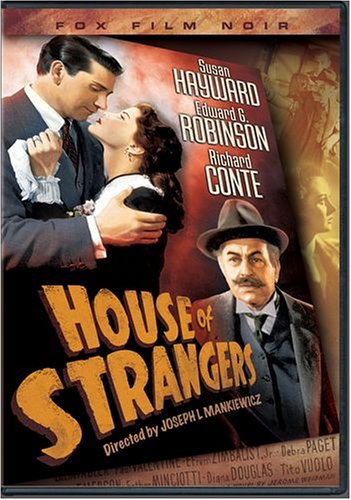
Not having much appreciation for (or just being an aficionado of) the film noir genre, I could probably do one better and say that even if noir was induced on me subliminally, there may be a good chance that I wouldn't even recognize it. So I don't know how cool things like The Blackboard Jungle or some other films are and I can't really rule them out of hand. So when I got House of Strangers to review, I had to give it a try.

Based on a novel by Jerome Weidman (who won a Pulitzer for a Broadway play) and directed by Joseph L. Mankiewicz (who directed a couple of films called Guys and Dolls and Cleopatra), the film centers around several brothers and their father Gino, played by Edward G. Robinson (Soylent Green). Gino's favorite son Max (Richard Conte, The Godfather) is thrown in jail in connection with his father's dealings (he runs a well-known bank in New York). Unbeknownst to Gino, his other sons Pietro (Paul Valentine, Against All Odds), Joe (Luther Adler, Absence of Malice) and Tony (Efrem Zimbalist Jr., Hot Shots!) overthrow Gino in a power play, which leads to Gino's death.