Posted in: Disc Reviews by Archive Authors on June 9th, 2006
Limitations of budget and social conventions of the time prevent Murder, Inc. from being all it can be - still, the performances, and the captivating dynamic between hero (Stuart Whitman) and villain (Peter Falk) result in entertaining fare, so long as this film is allowed to be a movie and not a documentary. Whitman leads a fine cast as the mob lackey, who is constantly manipulated by a tough-talking contract killer. Part of the real life syndicate of hit-men "Murder, Inc.," Falk's baddie steals every ...cene he's in throughout this early career-making performance. He smacks of a young Brando, and comes across as just the type of ice-blooded villain, which gave the 1930's Brownsville mob its infamy. He'll lie, cheat, and steal, to get what he wants - whether it be conning Whitman's assistance to off a stale nightclub comedian (Morey Amsterdam), or brutally raping Whitman's wife (May Britt). And by "brutally," I mean "brutally for the times." The word "rape" is never used, and the explicit nature never goes beyond an aftermath scene, where a disheveled Britt anguishes, "Those filthy hands. Those dirty fingers."
A film like this could be revisited to great effect by a capable director like Scorcese. In fact, stylistically, Murder, Inc. shares many attributes with Scorcese's superior mob epics. It's the kind of film that influences better filmmakers to make better pictures - but I would only use the word "classic" to describe its age, and not its quality. For one, the narration is totally out of place, and - quite obviously - the result of a receding budget. The first bit of narration doesn't come into play until we're past the first act. And when it does finally appear, all we hear is a droll voice with zero personality. We only learn later the narrator is a character in the film - the heroic cop (Henry Morgan), who takes on the entire mob organization. Rather than give the film a documentary effect, the narration serves only to clumsily fill in cracks, where story should be. "Show, don't tell," this isn't. Another weak point is how the best element is often neglected - the Whitman-versus-Falk conflict with Britt caught in between. It seems like every time this story element gets rolling, we cut away to a less interesting sidebar. And when the angle is finally resolved, it happens with such anti-climax that we wonder why we even cared at all.
Posted in: Disc Reviews by Archive Authors on June 7th, 2006
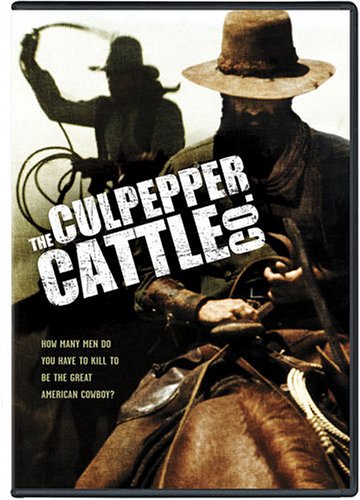
The Culpepper Cattle Company was a surprise for me, and one that I looked forward to immensely. I love a good western, and I'm particularly fond of anything post-Leone. A western doesn't have to be spaghetti, however, for me to like it. I just feel that, for all Sergio's overblown proportions, he did instill an accurate degree of nastiness in his films, which I'm sure was prevalent in that time of American history. Once Sergio came, westerns grew up, even if they were playing closer to the American style of fi...mmaking. Gone were the days of the fired gun, the clenched chest, and the instant kill. A similar renaissance affected the war film genre with the arrival of Saving Private Ryan, and I feel the recent war-time efforts have been much the better for it. After the glut of Saturday morning western chicanery found in John Wayne's early films and others of that period, it was a relief to see westerns on the silver screen with the right amount of intensity. But unfortunately, all good things must come to an end. And The Culpepper Cattle Company falls somewhere in that descent.
That doesn't mean the film is without merit. I enjoyed parts of it very much. It is, most of the time, an interesting coming-of-age tale, as it follows a young boy with a dream. That dream? He wants to be a cowboy. But as the film progresses, he gets a bitter taste of what it means to fulfill that dream. The boy (Gary Grimes) tags along with a gang of cut-throat cattlemen on a drive to Colorado. As they trek westward, the harsh realities of the prairie - be it man-against-man, or man-against-nature - start to set in. Unfortunately, it doesn't get any more interesting than that. One event after another occurs and forms an episodic monotony instead of a coherent storyline. Still, things do heat up for an exciting and well-arc'd conclusion. Where the character ends up from where he started out is a noble writing effort; but everything it takes to get him there is the dull part. The strongest aspect of the film is the ensemble of veteran character actors, led by Billy Green Bush and Bo Hopkins. These are cowboys from the days when all cowboys were straight, and any suggestion otherwise would get you punched in the teeth faster than you could say "Brokeback Mountain." While they don't seem like very open-minded chaps, they do represent a rugged nature that would have been essential to their way of life.
Posted in: Disc Reviews by Archive Authors on June 4th, 2006
Synopsis
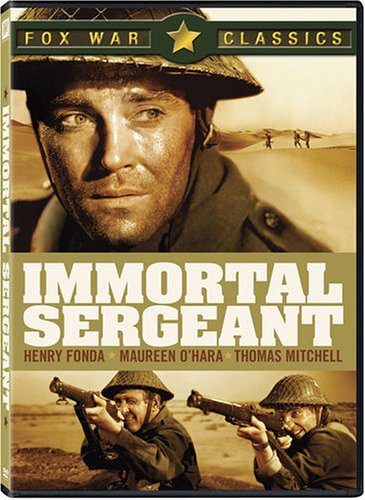
Henry Fonda plays Colin Spence, a diffident, self-effacing Canadian (but of course!) corporal in the British infantry based in Tunisia. Led by the crusty but supremely competent Sergeant Kelly (Irish of course), Spence’s squad is sent out on a recon mission that goes badly awry, and the men are forced to engage in a terrible trek across the burning desert. Spence is forced to assume a leadership role, and along the way has flashbacks to his relationship with Maureen O’Hara, and how his unwil...ingness to take a risk or fight might have wrecked his chances with her.
Posted in: Disc Reviews by Gino Sassani on June 2nd, 2006
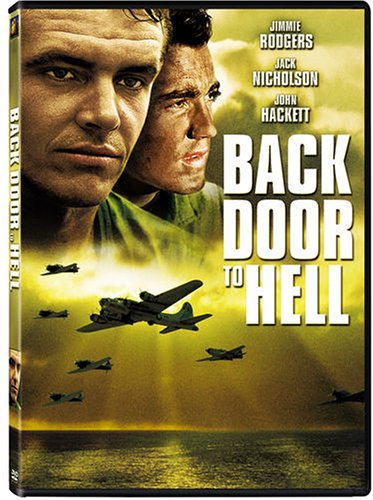
Monte Hellman filmed Back Door To Hell back to back with his better known Flight To Fury. This early Jack Nicholson film plays out very much like the throwaway it seems to have been. It’s certainly a brief affair, clocking in at just 69 minutes. Low budget films can often be impressive masterpieces. I have never seen a war film where that’s been true. After watching Back Door To Hell, nothing’s changed. The location and supporting cast make this at times feel more like Mexico than the Philippines. The settings are strictly back lot looking affairs, even when they are not. Cinematography is very limited and completely unimaginative. There is an odd, cold calmness to everything. Actors deliver their lines mostly in even soft tones. I found these portrayals more than a little unnerving. None of Nicholson’s future brilliance is on display here. I found my attention constantly straying during this film. One thing a war film should never be? Good or bad, it simply can’t afford to be boring.
Video
Posted in: Disc Reviews by Gino Sassani on June 1st, 2006
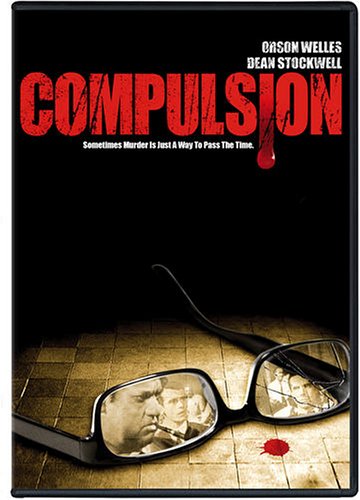
This film’s slogan was “Sometimes murder is just a way to pass the time.” A better way to fill up those empty minutes would be to watch this film. The film is based on a highly publicized real life case out of Chicago. A play was produced in the 1920’s. A book would also be written by Meyer Levin, which is the source material for this film. The story would not end there. It would be made at least twice more, including Hitchcock’s first color film, Rope. The case was perhaps made famous as much for the presence of Clarence Darrow as the defense attorney than for the senseless act of violence it represented.
A college classroom philosophical discussion opens the film and sets the stage for the crime. Judd Steiner (Stockwell) and Artie Strauss (Dillman) are intrigued by the Nietzchean concept of a superman. We’re not talking Clark Kent here. The idea is that a man of superior intellect could, and perhaps should, move through the world acting without the constraints of remorse or common law. These two guys see themselves in this role and commit a brutal murder as a sort of experiment. There really isn’t much of a whodunit. The prosecution soon stumbles upon a pair of eyeglasses that ultimately bring the two men down. Enter world renowned lawyer Wilk (Welles). He quickly finds he can’t argue innocence, so he diverts his attention to keep the young boys away from the gallows. It is in the trial version of the film that interest mounts. Welles delivers one of his best and yet most subtle performances here. The role is akin to Marlon Brando’s in A Dry White Season. His passionate closing statement is likely one of the cinema’s longest monologues.
Posted in: Disc Reviews by Gino Sassani on May 31st, 2006
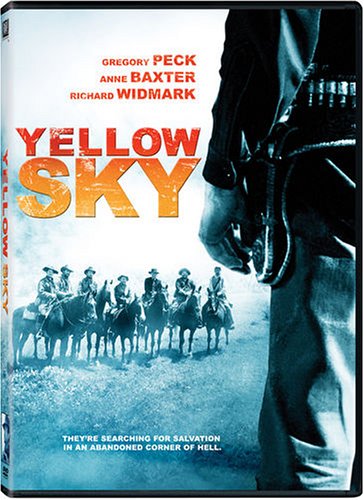
Yellow Sky is one of those near classic Westerns from 1949. For decades the film has flown under the mainstream radar, only to finally be rediscovered on DVD. Gregory Peck is an unlikely choice to play the lead role. Stretch heads a band of thieves that strike from town to town hitting usually banks. The film wastes very little time getting started. We see the gang set up, and soon pull off, one of these heists in the first five minutes. The gang is quickly chased out into the unforgiving desert sun of the Western badlands. It seems the band is done for in true western poetic justice until fortune once again smiles upon them. Fortune in this case is the ghost town of Yellow Sky. Here only an old prospector (Barton) and his young granddaughter (Baxter) reside. It seems the old man’s been hording some gold in the hopes of bringing Yellow Sky back to her glory days. Of course, Stretch’s gang has other plans. The remainder of the film slows down as the gang attempts to pry the gold from the old timer. Stretch has a change of heart, and this redeemed Stretch is less of a stretch for Peck. Here he begins to fit the part. Including the obligatory romance, the film becomes all too predictable. Harry Morgan, billed as Henry Morgan, makes a nice addition to the gang of outlaws. The film was remade in 1967 as The Jackals with the action moved to Africa.
Video
Posted in: Disc Reviews by Archive Authors on May 30th, 2006
Written for the screen and directed by Julian Fellowes (Gosford Park), Separate Lies tells the story of James (Tom Wilkinson, Batman Begins), a high powered lawyer in London who lives in the countryside with his wife Anne (Emily Watson, Breaking the Waves). They have the perfect English house and a dog to match. One day, Anne meets William (Rupert Everett, Shrek 2) and has an affair with him, which turns the trio's lives around in a way that they'd never expect.>
Treading into mild spoiler territory here, so scroll down!
Posted in: Disc Reviews by Gino Sassani on May 30th, 2006
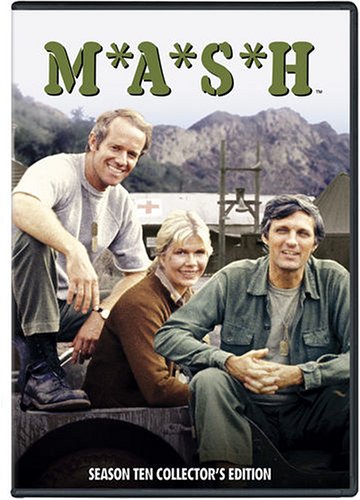
It’s true that MASH was winding down by year 10. Everyone involved already knew that the next year would be the last. This is what separates the true professionals from those in it for the money. Instead of dragging out the concept until there was virtually nothing of quality remaining, the entire cast and crew decided it was time to finish on top. A lot of folks would have simply gone through the motions once the end was in sight. Instead, these guys kept pouring it on. The stories and acting in this season are just as good as in any other. The saddest thing about this release is that there is only one more to come.
For the first time in a while there were no major cast changes in this season. All of the characters from season 9 remain. I think if anything can be said about this particular year it might be that the characters have become a bit more vulnerable. Almost every character comes into a story where they are left questioning themselves. For Hawkeye it is mostly philosophical. For Potter and Winchester there are real questions of limitations. For Houlihan there are a ton of emotional issues when she is stranded on her birthday. BJ has to deal with changes in his wife. Klinger has a close encounter with the spirit of a dead soldier that causes his own inner reflection. Finally, Father Mulcahy has to decide a huge moral issue in one of his best episodes. An AWOL soldier seeks sanctuary in the mess tent after Mass.
Posted in: Disc Reviews by Archive Authors on May 29th, 2006
Synopsis
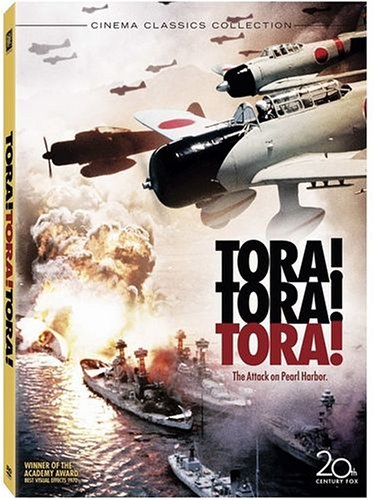
The attack on Pearl Harbor and the days leading up to that fateful event are the subject of the 1970 effort. The narrative jumps back and forth between the Japanese and American perspectives as just enough things go both wrong and right and both sides (the ascendancy of the militant army faction over the reluctant navy in Japan, crucial intelligence always arriving just a bit too late to the right people in States) to make the surprise attack inevitable.
Posted in: Disc Reviews by Gino Sassani on May 25th, 2006
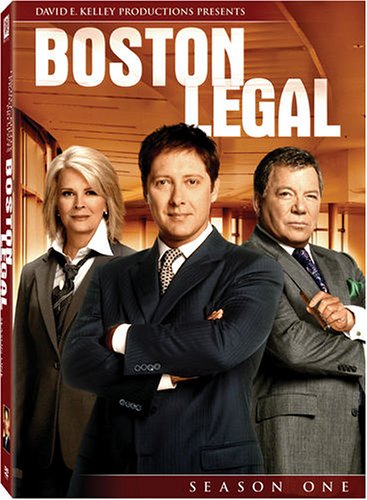
David Kelley’s hit series The Practice ran for 8 seasons. While it may have started slowly, the show was a huge hit for most of its run. This success led to other hits like Boston Public and Ally McBeal. Unfortunately, the end of this series was a rather tragic tale itself. The last year limped along with about half of the cast having been fired. There were public wars of words waged. As Warren Zevon used to say: “Ain’t that pretty at all”. That final season would have been a total failure if not for the introduction of James Spader’s Alan Shore. This unethical cold character with a heart suddenly drew attention away from the conflicts off the screen and brought the attention appropriately back to what was going on on the screen. Spader pulls it off almost through a sheer act of will. By the end of the year it was apparent to everyone that something special was going on here amid these ruins. As the final story arc played out, Shore would meet Denny Crane, played in an almost self parody style by William Shatner. Man, that cat has more lives than Morris. Here Shatner finds a character that is funny as hell. Crane, like Shatner, appears to be the shadow of the man he used to be. At times he seems to have lost all of his marbles. He’s often cruel and incredibly arrogant. Yet, somehow he’s a very lovable character. Shatner does a wonderful job of balancing these foibles with an amazing touch of vulnerability that has created perhaps one of television’s most memorable characters.
Boston Legal is a lot like The Practice in some ways. The writing is at times pure genius. The same kind of moral and social issues are explored, all using the same ensemble concept from the original series. Still, Boston Legal is very unlike The Practice in almost as many ways. Certainly the Shore/Crane relationship has taken center stage, leaving many of the supporting cast in just that, supporting roles. The show also has a wicked wit to it. It’s sarcastic as hell. The big complaint I have is that Kelly can’t seem to control his own fanatical political beliefs. If the show weren’t just that good, I’d have turned it off after one episode. Free speech is one thing, but I do get so tired of Hollywood attempting to jam their liberal superiority down my throat. Believe it or not, there are some very decent and good folks who happen to support the American President. You simply don’t win people over by trying to paint them as ignorant, or worse, evil. I assure you I am neither.