Posted in: Disc Reviews by Gino Sassani on July 5th, 2006
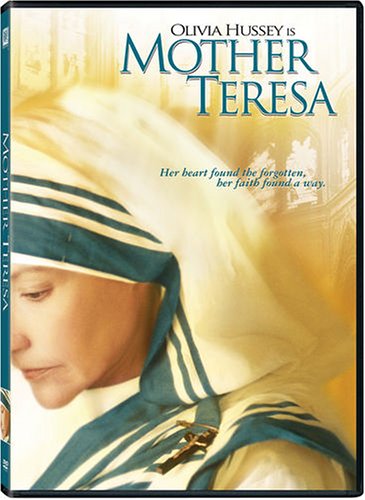
This is a rather hard review to write. How do you separate the subject matter from the film? What reviewer wants to find himself in the unenviable task of critiquing the likes of a future saint? Certainly the filmmakers must have felt the same burden to do the story justice. But did they succeed? The answer is a not so simple.
The choice of Olivia Hussey was a remarkably inspired one. She portrayed the unselfish passion and self sacrifice as if they were emanating from her very soul. From her first moments on screen it is not hard to believe, while perhaps imagined, that we are seeing just a hint of something divine. The supporting cast does a fine job but can’t help but be overshadowed by Hussey. The location cinematography is also handled nicely with a great realistic approach that creates just the right touch of reality to it all. If the film is flawed at all, it is in its length. At 2 hours, it is overlong to maintain such powerful imagery, yet the running time is far too short to do justice to such a life that has touched and inspired the world. The film doesn’t start at the beginning. We find Mother Teresa already a nun and about to begin her mission to help the poor. Nor is that story complete. Huge gaps in time lead us all too quickly to aged and dying saint apparent. You don’t need to be Catholic to appreciate the film. Few would dare to challenge the purity and good works of Mother Teresa’s life. World leaders have been brought to tears, and more importantly to action, because of her example. Many films have spared no expense in graphic f/x to try and show us a face that is truly evil. Few have attempted to bring us such a picture of goodness. This film shows us how simply it can be done. The film is worth a look on those grounds alone.
Posted in: Disc Reviews by Archive Authors on July 4th, 2006
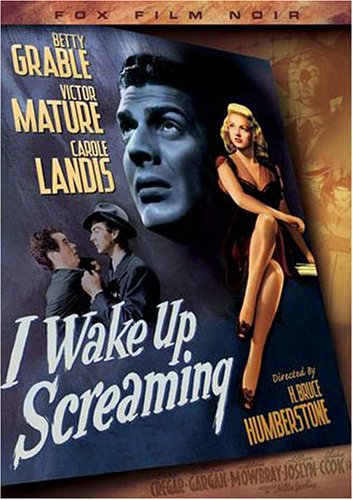
Fox has done a really great thing with their Fox Film Noir line. There are tons of great film noirs from the 40's and 50's, and Fox has done an excellent job of grabbing those classic films and presenting them in great new affordable editions for modern viewers to experience for the first time. I Wake Up Screaming is one of 18 films currently in the series, and I am sure that number will only continue to grow over time.
Betty Grable shows up here in a starring role that is a departure from her u...ual flirty faire. Here she plays a secretary, the sister of a murdered model. The film is told in flashbacks through the police interrogation process, as the investigation into who murdered this mysterious woman slowly unfolds. We discover that Grable's character has fallen in love with the prime suspect, and the more questions the police ask, the deeper the story goes. Plot twists, quick dialog and shady characters fill this film, and the whole sorted affair builds to a gutsy surprise ending.
Posted in: Disc Reviews by Archive Authors on July 1st, 2006
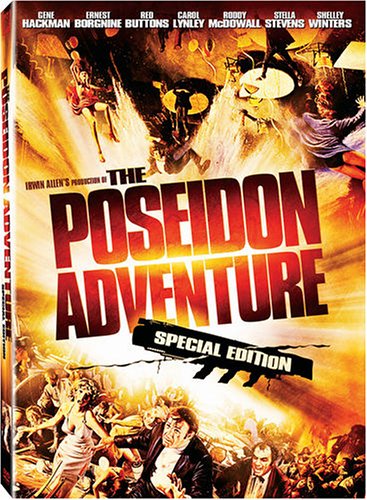
God bless producer Irwin Allen for aiming high in just about everything he did. He would make large scale productions, some focused on disasters (like his next film after this, The Towering Inferno), but he also produced Lost in Space for TV and made other contributions like Voyage to the Bottom of the Sea and an incarnation of The Lost World. He may not have had a DeMille-like grip on his project because the studios had so much control still in the early '70s, but he sure dreamt big, which is always a good thing.
In The Poseidon Adventure, based on the novel from Paul Gallico, the S.S. Poseidon has set sail and its cast and crew will be celebrating New Year's Eve on the water. When captain Leslie Nielsen (Airplane!) receives a notice about a tidal wave from an earthquake, he prepares for the worst. The wave hits the ship and turns it over, and it leaves a handful of passengers left to try and reach the water's surface before the ship sinks. Among those are Reverend Frank Scott (Gene Hackman, fresh off The French Connection), Mike and Linda Rongo (Ernest Borgnine (From Here to Eternity) and Stella Stevens (The Ballad of Cable Hogue), respectively), Belle and Manny Rosen (Shelly Winters, (Lolita) and Jack Albertson (Willy Wonka and the Chocolate Factory), respectively, Acres (Roddy MacDowall, Planet of the Apes) James Martin (Red Buttons, The Longest Day) and Susan Shelby (Pamela Sue Martin, Dynasty).
Posted in: Disc Reviews by Archive Authors on July 1st, 2006
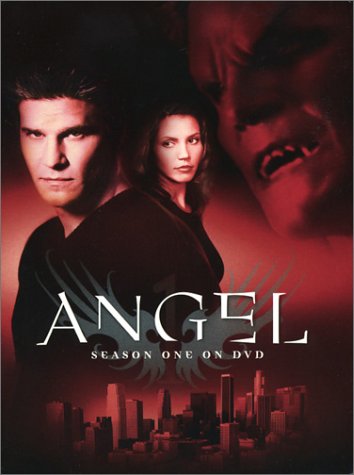
David Boreanaz is better known as the guy who played Sarah Michelle Gellar�s love interest in Buffy the Vampire Slayer for the first three seasons of its existence. Being used sparingly in some parts and shining in his occasional showcase episodes, helped convince Buffy creator Joss Whedon and producer David Greenwalt to give the guy his own spin-off series. And by having the Buffy writers and directors pull some double duty in the beginning before gently phasing in some new creative influences, it's grown into a spin-off show that, in its fourth season now, arguably gives Buffy a run for its dramatic money. Since Angel was a semi-regular on Buffy but was mysterious, it was safe to assume that more things have to be explained for the show to work. The supporting characters had to be given some more depth as well. Buffy cast regulars were brought in for the occasional show, even two, depending on the storyline. Even Faith was brought in as part of two very episodes late in the season that finally gave Buffy and Angel some long-awaited closure.
Initially, the only character that went straight from Buffy to Angel was Cordelia (Charisma Carpenter), but Wesley (Alexis Denisof) became a mid-season addition who was later included in the regular cast. A couple of new characters were introduced in the mix. Kate Lockley (Elisabeth Rohm) was brought in as a Los Angeles detective who really didn't provide much in substance outside from showing up to provide Angel information for cases he was pursuing. Although she did find out about Angel's vampire past which was a nice twist on things.There were a couple of episodes that were done to give her some depth also, and her main conflict was with her father who was also a recently retired LA cop, and the hot and cold relationship the two shared, until his killing by a demon late in the season. Another character named Gunn (J. August Richards) was added in the last 3 episodes of the season, and subsequently became part of the permanent cast just in time for the start of Season 2. Alan Francis Doyle (the late Glenn Quinn) started on the first episode as a half-demon that received visions of people in assistance, which helped Angel in helping people out each week. He was a bit of a mystery in the beginning, until we later find out more about his past (he was married briefly) and his feelings for Cordelia, while having reservations about telling her about his demon side. Sadly, Doyle was killed off of the show in the middle part of the first season, and transferred the power of the visions to Cordelia for future episodes. The recurring protagonist in the show is a legal firm named Wolfram and Hart, a firm that even "Johnnie Cochran wouldn't join", and with mind readers, shamans, and other forces helping them in their pursuit of evil in LA, they seem like the perfect group to have hatred for.
Posted in: Disc Reviews by Gino Sassani on June 27th, 2006
So now we come to the fourth year of NYPD Blue. In the show’s ever-changing look this year was no exception. Most notable is the fact that a new camera operation crew toned down the jumpy camera moves a bit. Style was not sacrificed, but the series is now easier to watch. Smits and Franz are really starting to click now, and we begin to see the special relationship we know will evolve between their characters. This buildup is absolutely necessary for the coming payoff with Simone’s death in later years. Again, several characters came and went, most notably a couple of female detectives. I’ve heard the show described as testosterone heavy, but I can’t believe that could be said of year four.
Greg Metavoy gets a lot more to do starting this year, and I think you’ll find the results entertaining. This is the only character other than Sipowitz to survive the show’s entire run. He’s placed in some awkward moments in year 4. The Simone and Russell romance heats up, and while I tend to think these things cheapen a series, I found this one to be tolerable. It was also quite necessary for the eventual payoff mentioned earlier. As always, NYPD Blue is about Andy, and you won’t be disappointed. The character continues his wonderful growth in this season, mostly aided by the influence of Simone. There’s plenty for every Blue fan out there in this set.
Posted in: Disc Reviews by Archive Authors on June 26th, 2006
Let’s face it. Movies released in January usually aren’t very good. Yes, some of these movies are Oscar hopefuls that are released nation-wide, but only after being released in selected cities to quality for those Oscars. No, we’re talking about stinking piles of crap like Uwe Boll’s Bloodrayne here. Being that January is Hollywood’s cinematic dumping ground, it comes as no surprise that Tristan & Isolde was released during this very same month in 2006.
Delayed for nearly a year, Tristan & ...solde follows a slew of disappointing historical epics, so common sense would tell you that the studio heads looked at this film and dubbed it a risk, with no bankable stars attached. What the studio heads seemed to forget (or miss, because let’s face it -- they’re more concerned with target audiences and opening weekends than quality) Tristan & Isolde is not half bad. In fact, it’s rather good.
Posted in: Disc Reviews by Archive Authors on June 26th, 2006
Once in awhile, a film comes along that really catches you by surprise. Little Manhattan is one of those films. At first glance, it appears to be an updated take on a coming of age film that warms the cockles of your heart and leaves you smiling, but it's actually a bit of a romantic comedy that is timeless and memorable.
Written by Jennifer Flackett and directed by Mark Levin, who are a married writing team whose most notable work was Wimbledon, the focus of Little Manhattan is Gabe (Josh Hutcherson, Kicking and Screaming), who also narrates the film. At first the film starts with Gabe, sitting on his bed with a broken arm, crying over someone named Rosemary (Charlie Ray, in her first acting role). From there, Gabe tells the story of how happy he was before he met Rosemary. He was a happy 10 year old boy, knowing that girls were gross and he was going to be a placekicker with the help of his father (played by Bradley Whitford, Sisterhood of the Traveling Pants). Gabe has known Rosemary for awhile, since kindergarten, but they bump into each other again in a karate class. Gabe suddenly realizes that he has feelings for Rosemary, and wants to be around her as much as possible.

Posted in: Disc Reviews by Archive Authors on June 26th, 2006
Let’s face it. Movies released in January usually aren’t very good. Yes, some of these movies are Oscar hopefuls that are released nation-wide, but only after being released in selected cities to quality for those Oscars. No, we’re talking about stinking piles of crap like Uwe Boll’s Bloodrayne here. Being that January is Hollywood’s cinematic dumping ground, it comes as no surprise that Tristan & Isolde was released during this very same month in 2006.
Delayed for nearly a year, Tristan & ...solde follows a slew of disappointing historical epics, so common sense would tell you that the studio heads looked at this film and dubbed it a risk, with no bankable stars attached. What the studio heads seemed to forget (or miss, because let’s face it -- they’re more concerned with target audiences and opening weekends than quality) Tristan & Isolde is not half bad. In fact, it’s rather good.
Posted in: Disc Reviews by Archive Authors on June 24th, 2006
War movies, in my opinion, are one of the rarities in film, where the most recent pics are usually the best ones. I need only cite films such as Full Metal Jacket, We Were Soldiers, and Saving Private Ryan to argue my cause effectively. But that doesn't mean all of the older ones were bad. Most were because they took more of a silly ra-ra viewpoint in relation to the reality of war. They didn't show the nasty details because, in many ways, they were recruiting tools. But Decision Before Dawn> was one earlier work, which took chances with its dramatization. This 1951 film refuses to jump on any bandwagons, instead telling a captivating, and sometimes tragic, story about a strange kind of hero... one that comes not from within our own ranks, but from those of our World War II enemies. In fact, the main character of Decision Before Dawn is a captured Nazi soldier, who makes the decision to spy for the U.S. army - not for freedom, but redemption.
It's no wonder a film such as this was nominated for the 1951 Best Picture - and it's also no surprise it didn't win. This type of subject matter has never been able to avoid controversy, and the Academy hates to honor controversy. However, director Anatole Litvak's handling of the George Howe novel Call It Treason makes for an exciting and tasteful motion picture that was sure to win over audiences - even in its time - with the tale of Lieutenant Rennick, a German POW, who has agreed to go back to his home country and betray his old side to the Allies. Tension builds as Litvak plays with the possibilities of trust. Neither the Allies nor the Nazis know what to think of Rennick, and for a time, neither do we. But as the film progresses, Rennick shows there may be more to his decision of assisting the Allies than simply the proverbial "get out of jail free" card. He's one well-drawn character at the center of an important motion picture, which dared to paint an uglier face on war, and call in to question the line between treason and heroism.
Posted in: Disc Reviews by Archive Authors on June 23rd, 2006
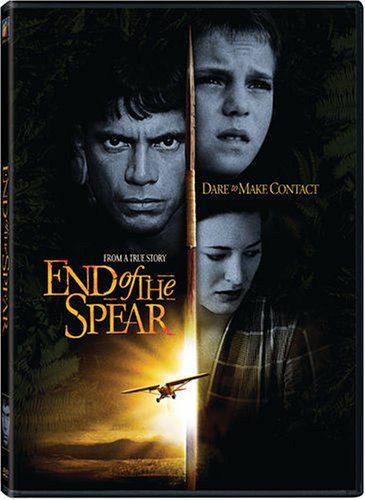
Synopsis
The Waodani tribe of the Amazon is, we are told, so violent that they have almost hunted each other to extinction. Oops. Anyway, in 1956 a group of missionaries and their families arrive to live with the Waodani and do the missionary thing. A misunderstanding leads to the missionaries being slaughtered, but their wives decide to stay. The film follows the journey of the son of one of the five men, and the whole thing is all about forgiveness.