Universal

Peter Jackson is a true visionary. In most circles, such a statement is agreed upon if the subject is the Lord of the Rings trilogy, or his brand new King Kong remake. There are also those who'd rather remember him for his schlocky, disgusting, and dangerously enjoyable efforts Braindead and Bad Taste. Of course, either camp will love his work. It's just a matter of preference as to which type of film they love more. I'd say most find his latest efforts to be superior to those low budget e...rly works. But none of his modern genius would have been possible without The Frighteners, his breakout studio film, which garnered respect and financing from Hollywood heavyweight Robert Zemeckis. By the same token, one might say The Frighteners would have never been possible without his terrific Heavenly Creatures. The debate can rage on for as long as it needs to, but the heart of the matter reveals this: Peter Jackson makes great films, and while he may not be a perfectionist, his work argues to the contrary -- The Frighteners being no exception.

This two-hour director's cut treats its viewers to a hefty 14 minutes of extra footage, and most of it is easily recognizable to those who have seen the theatrical release a couple of times, or once recently. By recognizable, I mean you'll know it's new when you see it. Right away, I want to mention a mild concern I have for the director's cut, and it's the same kind of problem other critics have pointed out about his latest effort King Kong. Most of the deleted scenes add a stigma of excess to the film. It's longer than it probably should be. But at the same time, you find yourself so in love with the picture Jackson puts together that you don't really mind the more meandering pace. In fact, you kind of enjoy it because the new scenes add more of the same rowdy horror-comedy fun, and come across as visually endearing. This film is eye candy, but it also doesn't forsake characterization and plot for the sake of its mayhem.

Synopsis

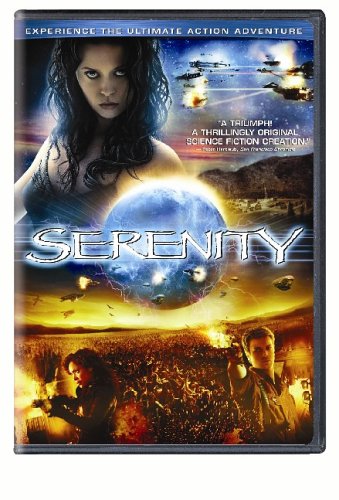
The oppressive Parliament controls human civilization, willing to engage in any atrocity for the sake of a dubious greater good. A teenage girl, developed as a psychic super-weapon and traumatized by some mysterious event, is broken out of Parliament custody by her brother, and the two become part of the fractious crew of the mercenary ship Serenity. This crew is made up of veterans of independent colonies who fought in an unsuccessful war against the Parliament. Captain Malcolm Reynolds is ...eluctant to stick his neck out for the two refugees, but events eventually force him to take a stand.

Cinderella Man tells the heartwarming true story of heavyweight fighter James J. Braddock, a man thought to be washed-up, who rises from the ranks of the forgotten to rebuild the life and potential he lost somewhere along the way. It's also one of Ron Howard's finest films, and with a body of work which includes Backdraft, A Beautiful Mind, Apollo 13, Far and Away, and Ransom, this is a fine accomplishment. Unfortunately, this film's success never rose to the level anyone ant...cipated, and there's nothing worse than when a well-crafted piece such as this falls victim to bad press -- especially when said bad press has almost nothing to do with the film. Firstly, Cinderella Man suffered from the now famous idiotic outburst of its star Russell Crowe. Secondly, there was the debacle over Howard's portrayal of Max Baer, and how that portrayal affected and offended Baer's still-living son (the former Jethro Bodine of TV's Beverly Hillbillies, and successful film producer). Finally -- and perhaps most important of all -- was the lackluster marketing campaign, which made the film look so dull even I was ready to wait for the video. These three factors added together to cause the film an almost embarrassing performance for all there was to recommend it (two Oscar winners in the starring roles, an Oscar winner behind the camera, another Oscar contender in a supporting role -- Paul Giamatti -- and perhaps one of the most inspirational tales in American history).

At one time, James Braddock was a contender. He had the world on a string, a woman who loved him, and several adoring children. But somewhere along the way -- an injury here, a few decision losses there -- his career and his world took a nosedive. After injuring his hand and coasting through a boring fight, he loses his boxing license, and consequently, his meal ticket. At one point, the sky was the limit. But now, left to a dark and desperate world, he struggles to keep the heat on during a brutally encroaching New York winter. He's forced to send his children away just to save their lives from the harsh weather. And at his lowest point, he succumbs to the very thing he stands against -- welfare. After finding himself all but forced to sign up for social assistance, he becomes determined to turn it all around. All he needs is the opportunity, which comes in a supposedly one-time shot against a top heavyweight contender. No one expects Braddock to win, but when he does, it sets in motion a chain of events, which position him into a very real chance for a shot at the deadly world heavyweight champion Max Baer, who was responsible for the deaths of more than one man in his storied career. Whether Braddock becomes one of those victims, I will leave for the uninitiated to discover. But the enjoyment of Cinderella Man depends not on winning or losing, but on the inspiration of Braddock's overwhelming comeback. He rose from the proverbial canvas at the same time as a nation did, and it's not entirely implausible that he lended a hand -- however small -- in getting this country back on its feet.

Synopsis

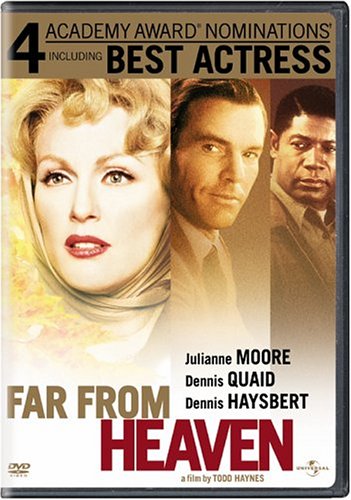
I haven’t seen The Hours. And I haven’t seen Chicago. And while all the Oscar talk seemed to revolve around either Kidman or Zellweger, after seeing Far From Heaven, I’ve gotta think that the wrong woman got the brass ring. Or gold little guy, whatever. Julianne Moore (who was also nominated in The Hours) does an outstanding job in this movie, set in 1957 Hartford. Moore plays Kathy Whitaker, the wife of a man (Dennis Quaid, Innerspace) who she surprises at work w...th dinner one night. The tables are turned when she discovers him in the arms (and mouth) of another man. What sets this movie apart from other films which are set in the 50’s or 60’s is the amazing grasp that writer-director Todd Haynes (Velvet Goldmine) has on the times in terms of his story. The word "homosexuality" isn’t uttered for some time after Kathy walks in on Frank. Frank (Quaid) seeks therapy after consulting his wife, and he talks of his "problem" as if he were talking about alcoholism. Moore’s friend Eleanor (Patricia Clarkson, The Green Mile) talks about another person being "light in the loafers." Eventually, Moore finds comfort when interacting with her gardener, Raymond (Dennis Haysbert, 24), who is widowed, with a daughter. The looks and reactions she receives from the townspeople when it comes to her talking with, even touching Raymond, are astonishing, almost ridiculous. Frank even voices his displeasure at this in a jaw-dropping scene. All the while, Kathy tries to maintain the good appearance of her household, holding a dinner party for guests, keeping Frank’s behavior a secret to the public, and later, almost accepts Frank’s homosexuality in order not to disrupt the life she’s become accustomed to. After the dinner party, Frank hits Kathy, and Eleanor comes over the next day, to find the bruise on Kathy, and Kathy’s reticence in not admitting the fact that Frank hit her, disappoints Eleanor, and to a lesser extent, Kathy. There is a scene where Kathy and Frank are in Miami, and we see Kathy at the swimming pool, wearing rose colored sunglasses. Those sunglasses sum up Kathy’s existence, doing what she can to keep up her good community standing, despite robbing herself of the pleasing times she has with Raymond.

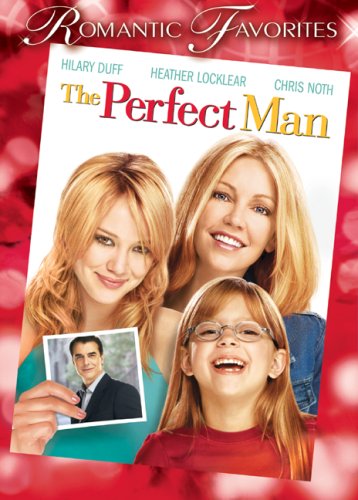
Jean Hamilton, after having a bad relationship, decides to move to New York City with her two daughters. We quickly learn that this particular mother feels the need to move after EVERY bad relationship. The whiny eldest daughter gets sick of it, so she decides to set up her mom with an imaginary guy so she can get her mother on the possible right path.

The Perfect Man is the type of film that you watch once and literally cry through. No, it's not the type of film that you cry because it is really s...d. It's the type of film that you cry through because it's so pathetically bad. The film contains so many countless scenes where the characters do such ridculous things to each other that are, apparently, suppose to be funny. How can harming each other be considered funny? Apparently this film was made for all those teenage people who A. Love Hilary Duff for some reason, B. Love silly romantic comedies, and C. Need a stupid, mundane, boring film to make themselves feel better about their own lives.

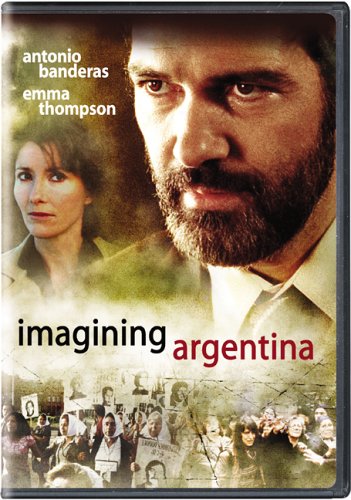
The year is 1976. Buenos Aires, Argentina. A ruthless dictatorship has just begun, where people who speak out against the government are “disappeared.”

One of the “disappeared” is newspaper columnist, Cecilia Rueda (Emma Thompson). Her recent column denounces the government for kidnapping some young men who were in a disagreement over a bus fare. When her husband Carlos (Antonio Banderas) returns home and can’t find her, he goes to the police only to receive little help.

Synopsis

The orphanage school of Saint Ange in the French Alps is forced to close in the wake of the death of one of its students. The only people left behind are the cook, a disturbed young woman who has been there since she was a child, and the newly arrived Virginie Ledoyen, who has been hired to clean the place, but is on the run from her own past, trying to conceal an already quite advanced pregnancy. Ledoyen hasn’t been there long when she becomes aware of other presences in the school – “the s...ary children” – and she starts to investigate the school’s dark past.

1955 was a very significant year in the life of filmmaker Alfred Hitchcock. He received his American citizenship and he changed the face of the young television industry forever. Alfred Hitchcock Presents came before all of the other classic anthology shows. The show combined Hitch’s trademark gallows humor with his unerring instinct for suspenseful storytelling. The show was the first overnight success, drawing millions of viewers with its first episode, no small feat for 1955.

Hitchcock was ahead of his time. He was one of the first to believe that you could apply the same standards of big budget film making with the limited scope of the newly discovered smaller screen. While Hitchcock did rely on some very talented people to provide the day to day work on the series, his presence could always be felt in every detail. Hitch himself was active in selecting stories as well as cast. The show was both entertaining and thought provoking. Hitch himself began and ended each show with some clever observations and sketches that made him a household name. He tempted fate by constantly poking fun at his own sponsors, a habit that was not always taken in good fun. Hitch also poked fun at the moral code that existed at the time for television. Bad guys were never allowed to get away with their crimes. Instead of adjusting his scripts, Hitch demanded they be unchanged. To “settle the score” as he used to call it, he would inform us of some unfortunate luck the bad guy fell into after the events of the story.

Synopsis

In between the other new stuff that’s come out (and the older stuff I’ve picked up), I wanted to try and whittle down the archives, so huzzah for small victories.

Synopsis and Comments

Apparently “Land of the Dead” was created for an audience that the producers of the movie (and writer Romero) consider to be no more intelligent than the zombies that populate Romero’s world. We shuffle into the theatre, clutching out-sized drinks like totems from the outside world, moaning piteously that they cost us five bucks to get. Unnnghhhhhh. Mooooovie. RRRrrrrgghhh.