Weinstein Company

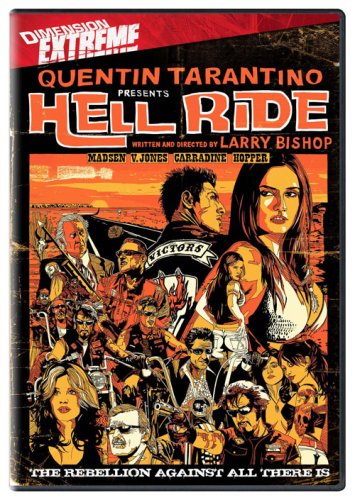
Larry Bishop’s Hell Ride plays like a childhood fantasy I might have had in the third grade had I known more about boobies and the joy they bring to my basest male desires. As a film, however, it’s terrible. It’s like Bishop set out to honor the bad movie genre by laying a turd so rancid the qualities of those other films shine brightly alongside it. Sitting down to watch Hell Ride a second time after having seen it in theaters and not really knowing what to think about it then, the benefit of time has taught me how awful this debut truly is.


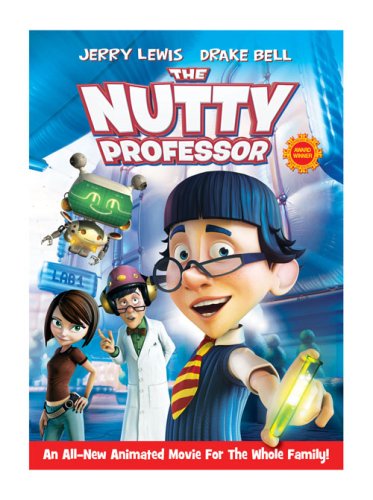
There seems to be some confusion over the title of this 2008 direct to video release. The release is simply called The Nutty Professor, like the original Jerry Lewis vehicle from 1963. It appears the working title of the film was The Nutty Professor 2: Facing The Fear. It is still listed under that title in the IMDB. Whatever the title, you should know that this isn’t your father’s Nutty Professor. This version is a CG animation feature, but don’t expect Shrek or Pixar quality work here. It’s a considerably lower budget affair, and that shows pretty clearly in the final product.


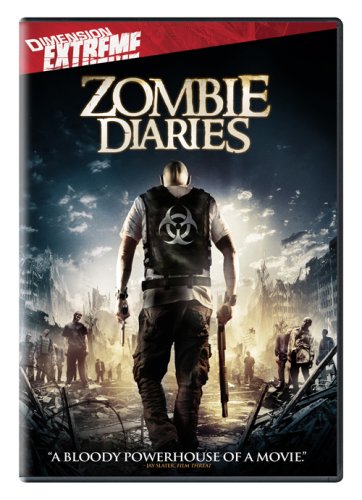
December 3, 2008 11:07 A.M.: Dear Diary. Today I had a very harrowing experience. I think this event has left me feeling rather shaken, and I’m not sure if I’ll be able to forget the horrors I have just witnessed. It all started when I decided to watch the new direct to video horror film Zombie Diaries. I just couldn’t wait. As I picked up the box and read the interesting description, my heart just went pitter patter in my chest. The box promised the best zombie film since 28 Days Later, maybe even the best zombie movie ever. Well, I’ll tell you what, dear diary, that was something I just had to see. So, without hesitation, and maybe shaking somewhat in unbridled anticipation, I placed the disc into my player and watched restlessly through the start-up screens. When I was finally presented with the play option I nearly dropped the DVD remote, I was so eager to press play. It took some effort, but I was able to calm myself enough to work the small buttons of the remote. That FBI warning came on, and as I watched with baited breath, it happened.


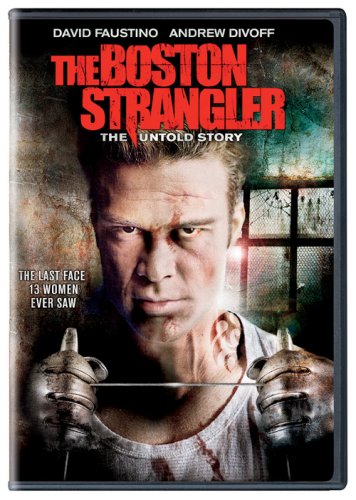
The first huge mistake this new film on The Boston Strangler makes is in the casting. If I were to mention to you The Boston Strangler and Bundy in the same sentence, who would you think about for the latter reference? I’d bet most of you would be thinking about Ted, the infamous serial killer finally electrocuted here in sunny Florida a few years back. Unfortunately that’s not who I’m talking about here. It’s none other than Bud Bundy, that hapless young pervert from Married With Children. That’s right, folks. David Faustino plays Albert De Salvo, the suspected killer. He comes across as a completely clueless idiot for the entire film. Of course, the rest of the cast is equally bad. The police department is represented by Timothy Oman as Captain Parker and John Marsden as the lead detective. If these guys are indicative of the way the investigation was handled, it’s no wonder the crime was never solved. They completely sleepwalk through the parts with about as much passion as if they were eating a cheese sandwich. Could they have found two more disinterested actors? The only spark to the film at all is a somewhat dim one in Frank Asarian, the potential “real” killer in the film, played by Kostas Sommer. He’s incredibly stiff and also lacks any life, but he provides some of the film’s miniscule tension moments. Finally, the entire cast suffered from what can only be an intentional exaggeration of the Boston accents. If this wasn’t intended, it is the absolute worst fake accents I’ve ever heard. That coming from a Sarducci fan and someone who has seen a lot of cheap Dracula films. I looked in the credits for the name of the dialog coach and the smartest thing he/she ever did was to waive credit.


Welcome to Gino’s school of film art. Today I’m going to teach you how to make a modern art film. You know the kind. The type of film that no one really likes, but a lot of folks pretend to like because they think it makes them look cool. Just think how cool you’ll look when you can make one of those pretentious pieces of crap and watch phony critics go on and on about how brilliant it was. Meanwhile you laugh your behind off and cash in on the phony baloney. You might even grab yourself a film festival award, which along with $5 will get you a coffee at Starbucks. Follow these quick and easy steps and pretty soon you’ll be the talk of the town… Tinsel Town, that is. Movie stars. Swimming pools.


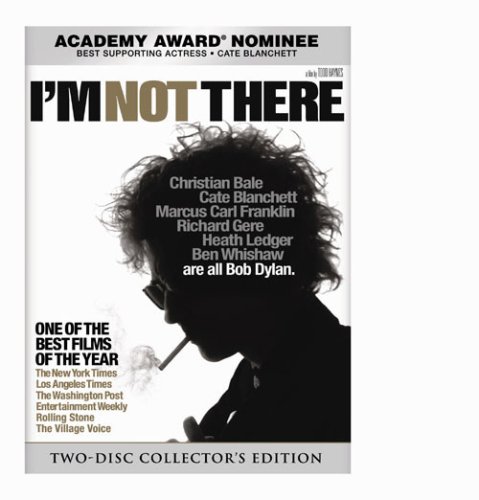
Todd Haynes continues to dazzle and amaze with his body of work. In Velvet Goldmine, he told the story of a fictitious glam-rock band in David Bowie/Ziggy Stardust style. Far From Heaven found him taking the Douglas Sirk films of the ‘50s into a nontraditional turn. In his follow-up film I’m Not There, his first directorial effect in five years, Haynes examines the persona and essence of Bob Dylan without actually really using the name or the words together at all in the film in a film released in 2007, where features like No Country For Old Men and There Will Be Blood earned a slew of awards, I’m Not There was an understated gem, and yet summing it up is a little difficult.

First off, while I’m Not There is a film inspired by the life of Bob Dylan, semantically it’s not a biopic. It examines the more notable images created by Dylan; one of the adolescent who portrayed himself to be the poor white kid who liked the work of Woody Guthrie and who, ironically enough, is named Woody (Marcus Carl Franklin, Be Kind Rewind). Arthur Rimbaud (Ben Whishaw, Layer Cake) is the mid-‘60s Dylan and de facto narrator whose words appear to be lifted from magazine articles of the era; Jack Rollins (Christian Bale, Batman Begins) is the folk hero and later born-again Christian-era Dylan; ironically Rollins is played by Robbie Clark (Heath Ledger, Brokeback Mountain), who watches his marriage deteriorate while he deals with the period of fame he has wrought; and Cate Blanchett (Elizabeth) plays the electric Dylan, touring in England, addicted to pills and alienating his acoustic fans. In his later years, Billy the Kid (Richard Gere, Pretty Woman) plays Dylan as the aging anonymous hero in the west, which in a way Dylan seems to want to do in reality. While none of these interpretations can be claimed to be accurate, they are, as Haynes says, fleeting glimpses of the image that Dylan created for himself. Using surrealistic and style choices influenced by Fellini and Goddard, Haynes helps make the worlds of Dylan all the more emotionally affecting.

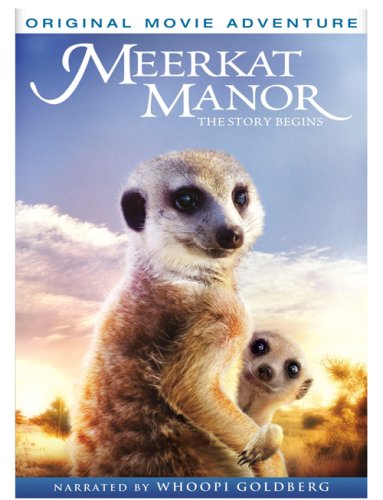
So I find out I’m going to review a film called Meerkat Manor. My research tells me it’s actually a television show on Animal Planet, but I still didn’t know much. Was this some kind of animal version of The Tudors? And what exactly is a meerkat, anyway? The answer to all of these questions arrived one sunny morning via UPS on my front door. I yawned my way to the door and picked up the nondescript package that fell over with a flop as I opened my home to the bright Florida sunshine. “What’s this?” I asked myself. What wonderful adventure would I embark on only to relay the details of my trip to you, the readers of upcomingdiscs.com. I tore open the package and suddenly I was face to face with a real honest to goodness meerkat. Turns out that meerkats are a kind of mongoose that live in the Kalahari in Africa. They have this creepy habit of standing on their hind legs and hanging out. It was a lot like my old neighborhood corner where I grew up. They look like hoods. They watch you with those beady little eyes, all the while looking like they’re trying to figure out who’s got the legs for the third race this afternoon. And I was about to spend some quality time with the meerkats of the hood… I mean manor.


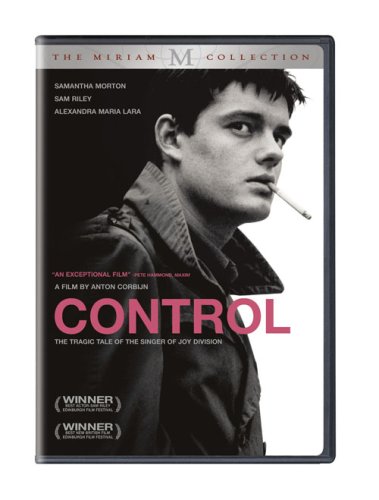
It’s nice when a movie lives up to its expectations and even surpasses them because it rarely seems to happen anymore. Such is the case with Anton Corbijn’s Ian Curtis bio-pic, Control.

I’ve been waiting to see Control for a long time. From the start, the film sounded interesting, since I am a huge fan of post-punk alternative rock music, the genre that Ian Curtis and Joy Division practically invented in the late 1970’s. But when I heard that long-time band collaborator and renowned music video director Anton Corbijn was directing the film, my anticipation rose to even higher levels.

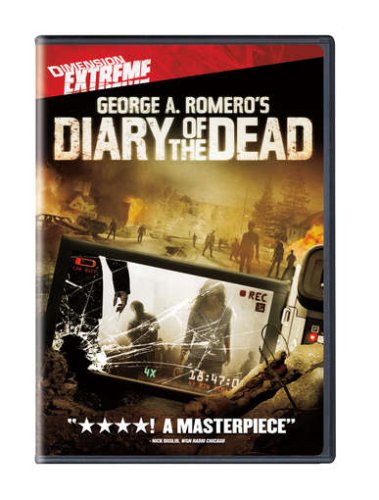
It’s ironic that 28 Days Later and the Dawn of the Dead remake (which was originally a George Romero film), have jump-started Romero’s long-running “Dead” series that started in 1968 with Night of the Living Dead.

Since 28 Days Later and the Dawn remake were released, Romero has released two new installments: Land of the Dead in 2005, and now Diary of the Dead in 2007.

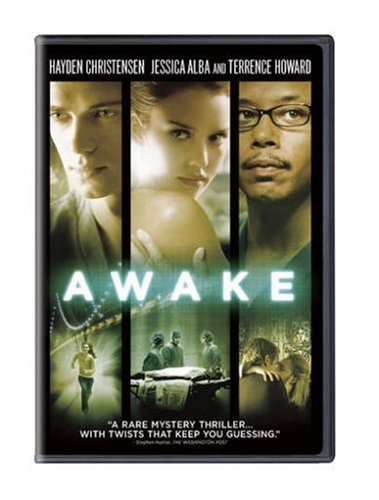
Anesthetic Awareness is a phenomenon where a surgical patient is completely aware and able to feel pain while under anesthesia. It occurs in about 5 out of every 1000 patients, with about half of those 5 aware enough to feel excruciating pain. Apparently the condition is not readily noticeable by the surgical team and is only discovered through recounts of the experience after the procedure. Patients are often able to tell doctors details of conversations they had while the patient was supposed to be completely out of it. Sounds like a creepy idea for a thriller, doesn’t it? It sure does.