1.33:1 Fullscreen

"How did The Bible come to be? The Bible wasn't always a book or even a series of books. In the beginning there wasn't even a written language. The prophets and holy men who roamed these lands seeking the truth and preaching God's word as they perceived it were talking to illiterate audiences who could only be reached by the witnessed testimony and the spoken word."

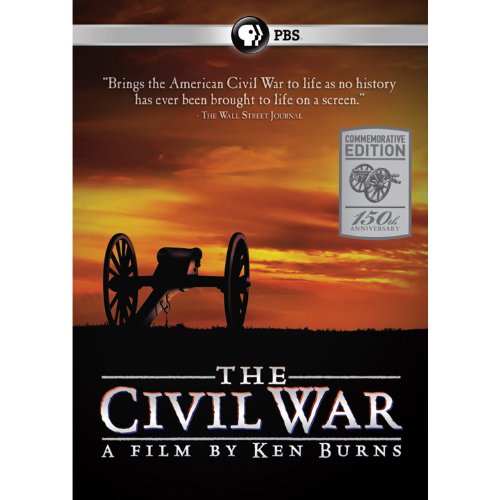
I have been reviewing various discs for plenty of years now. As a rule, I’ve stayed away from most documentaries as I know that unless they involve video games, I will probably use them for a sleep aid. That is not to say I can’t enjoy them, I just know my track record. Then, I received the grand mother of all documentaries, The Civil War by Ken Burns with an anniversary edition to boot. Yep, this is going to be a long and bumpy ride, let’s hold on shall we?

“To understand our history is to understand the Civil War”, Shelby Foote (Writer and Historian).

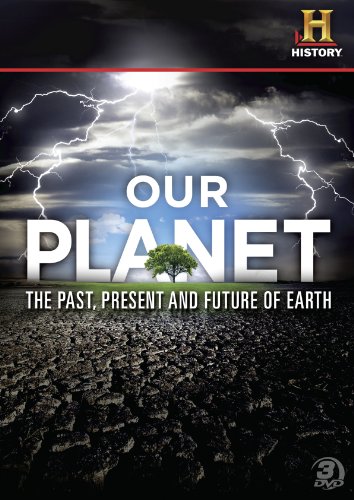
Our Planet is a merging of a large handful of documentaries that originally aired on the History Channel. Here they are packaged together to thematically display the “Past, Present, and Future of Earth.”

HOW THE EARTH WAS MADE

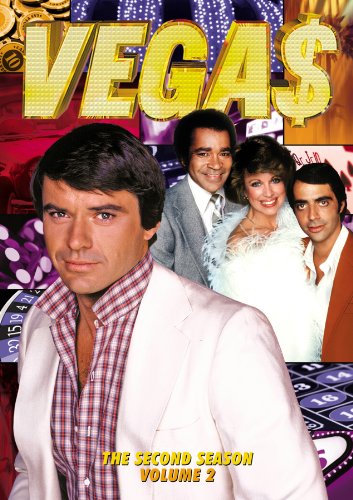
By 1978 the television detective model had been nearly complete and possibly already a cliché. Dan Tanna might have well been the complete model as far as the formula goes. It was almost as if you could go down a checklist and, like Dr. Frankenstein creating a monster, check off the necessary elements. The scripts could then almost write themselves, and you let the show fly on autopilot for three seasons or so until someone decides to look behind the curtain.

So let’s go down that checklist, shall we?

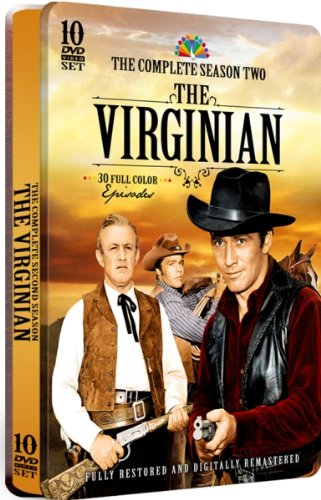
The Virginian set itself apart from the others in two ways. The first was found in the source material. The series was based on a 1902 novel by Owen Winsler, a man who actually lived in the Wyoming badlands during the time the series was set. The source material helps to add a sense of authenticity that might well have been a slight step ahead of the rest. It wasn't as violent as the others, again reflecting a more realistic sense of direction.

Thus was the heart of the original novel. The stories were less about gunfights and more about the obstacles and challenges that these earlier settlers faced. Each, with different interests, tried to carve out a home in the vast wilderness of the open West. These challenges came from many places, and often from his fellow man, but not always. That's the type of tale captured in this long-running western series.

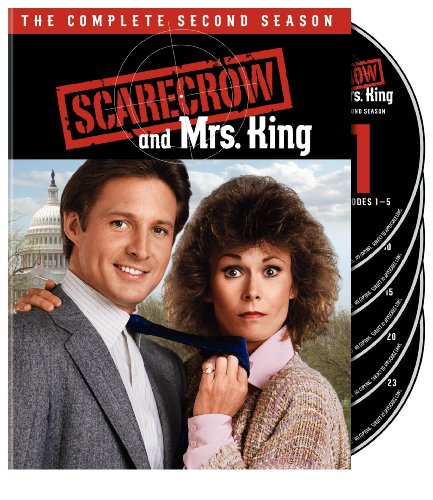
While Scarecrow And Mrs. King first aired in 1983, this show is really one of the last of the 1970's crime dramas. It was an early attempt to bring in more of the female audience that seemed reluctant to join the popular detective shows of the era. While not really a "detective" show (they were spies), it employed a lot of the 1970's conventions. Even the film footage has that distinct style from those days and type of shows. The idea worked, and the series did bring in a sizeable female audience, but it never really caught on with the guy crowd who found it a bit too relationship-heavy. The two leads were chosen less for their character appeal than for their apparent "easy on the eyes" look. Again more fodder for the chick crowd. The show was always rather lighthearted, even if the material was somewhat serious cold war espionage. The two shared a banter that revealed a kind of love/hate relationship and the expected sexual tension that would eventually lead to the two getting hitched. And while the series only lasted four seasons, the formula would end up being tweaked to bring us the more successful Moonlighting with Bruce Willis and Cybill Shepherd, which took the idea into the 80's with slicker production values but still a mainly female appeal.

Amanda King (Jackson) is a recent divorcée with two sons and a nosy mother (Garland) who lives with her. She has a boyfriend named Dean who works as a meteorologist at a local Washington DC television station, whom you never actually get to see. While at the train station, she suddenly finds herself embroiled in an espionage plot when a package is handed to her on the platform. Then she meets government agent Lee Stetson (Boxleitner) who works under the codename Scarecrow. She's intrigued by Scarecrow and agrees to help him in his current case. Of course, she ends up in a more permanent role with "The Agency", taking a job at their cover corporation The International Federal Film Company. Every week we find Amanda trying to balance her new role as a spy with trying to raise her kids, have a normal dating relationship, and keep her cover safe from her particularly prying mother. The results are often quite funny. There is also Scarecrow's partner, Francine (Smith), who is somewhat jealous of Amanda and Lee.

"This is Fairfax County in the state of Virginia. I was born here. It's peaceful, beautiful, and a long long way from Wyoming; beautiful, too, in its special way. Vast, proud and lonely; it's my country now, Wyoming. But not exactly a peaceful one."

"Good morning, young Prince."

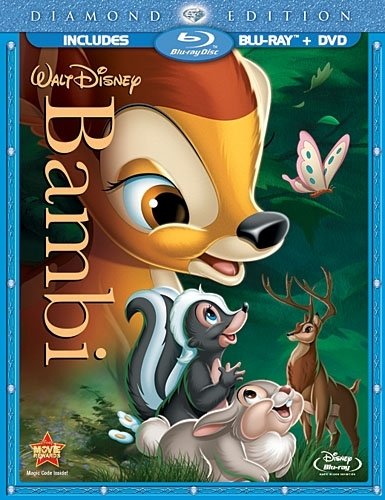
The forest is alive with the news. It travels from tree to tree, from animal to animal. A new prince has been born, and the creatures of the woods gather to welcome the young fawn. His name is Bambi, and he soon wins the hearts of the entire population of the forest. From his first attempts to stand on his wobbly legs to his discovery of the things that surround him in this brand new world, Bambi takes us on an emotional journey through the circle of life.

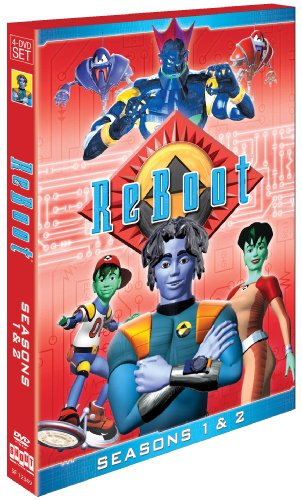
In this day and age, we take computer animation for granted. Pixar, Futuarama? We have seen it a million times. What about if I told you that over 15 years ago, there was a cartoon that was the first of its kind to be one hundred percent computer animation? Well, you might dismiss it or figure it was not much to look at. You would be wrong. Let us take a look at history boys n girls and discover the wonder that can only be known as Reboot.

Bob is a Guardian. He works for the Mainframe safeguarding the vital data and sprites (people and animals) that inhabit his sector. His two closest friends are Dot Matrix and Enzo Matrix. Dot runs a local diner called Dot’s Diner and is in on most of the action in the sector. She is also seen as a leader and tends to help out fellow sprites in need. Enzo is her younger brother and idolizes Bob. He also has a dog named Frisket.

Haunted my recurring nightmares, crippled Melissa (Mona Proust), the heiress to a huge fortune, falls under the care of Dr. Orloff (William Berger). Unforunately, Orloff doesn't have Melissa's best interests at heart. Still enraged over having failed to win the lover of Melissa's mother, Orloff enacts his revenge by using his hypnotic powers to transform Melissa into a killing machine. One by one, the distinctly unsavory members of Melissa's family fall under the knife.

A 1973 effort by Jess Franco, the god-emperor of Eurosleaze, this is a pretty handsome film. Franco doesn't abuse the zoom lens quite as much as elsewhere, and he makes excellent use of his Gothic settings, especially in a remarkably strong stalk-and-kill sequence late in the film. There are quite a number of truly beautiful scenes, showing what Franco is capable of when he's interested. Meanwhile, the violence and nudity are very restrained by Franco standards, but the characters are just as depraved and twisted as ever (that's a good thing). The score (by Franco), meanwhile, varies from the disturbingly effective (abstract soundscapes punching home the nightmare Melissa is trapped in) to the WTF laughable (a folk song so dire it will live forever). This isn't Franco's best work, but it has a lot going for it, and fans are strongly advised to check it out, with two strong caveats in mind. One is that the subtitles are horrendous. The grammar is all over the map, vocabulary is mind-boggling (one character is “condoned as a pedophile”), and the subs go missing altogether for the entire sequence that explains Orloff's motivation! That's helpful! The other problem is the picture quality, about which more below.