Posted in: Disc Reviews by David Annandale on July 31st, 2010
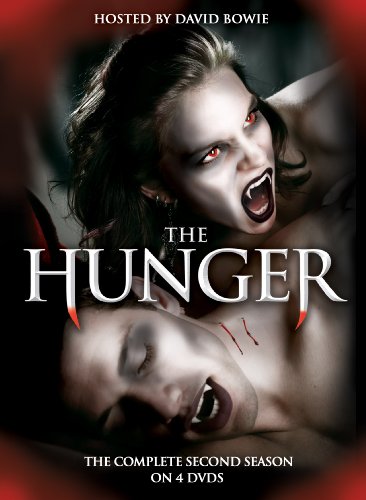
The second (and final) season of this erotic horror anthology series follows the pattern set down by the first. David Bowie replaces Terence Stamp as host, and takes up the job of briefly uttering portentous statements before each story rolls. These stories star such luminaries as Giovanni Ribisi, Eric Roberts, Jennifer Beals and Lori Petty, and are based on tales by a pretty impressive line-up of line-up of writers: Poppy Z. Brite, Kim Newman, David J. Schow, Gemma Files and Ramsey Campbell, to name but a few.
As before, the erotic fixations give the series a clear identity, but also narrow its focus so that a marathon viewing of episodes would be a bit tiresome. But again, as before, the talent involved means horror fans would be remiss to pass the series up without giving it a serious look.
Posted in: Disc Reviews by David Annandale on July 31st, 2010
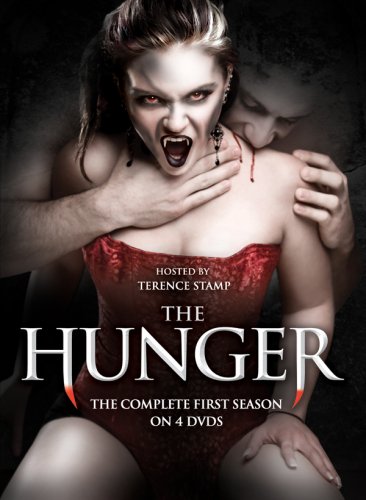
In 1983, director Tony Scott wasn't quite as prone to self-caricature as he is today, but he was already enamored of glossy, pretty surfaces, and if nothing else, his vampire movie The Hunger was glossy and pretty. The film arguably remains the most high-profile mixture of eroticism and horror, its place in libidinal history cemented by the love scene between Susan Sarandon, Catherine Deneuve, and Deneuve's body double. The film's lasting cult appeal resulted in a short-lived TV horror anthology series, presented by brothers Tony and Ridley Scott, and running two seasons (1997-8 and 1999-2000). Here we have Season 1, hosted by Terence Stamp.

The series' mandate was to present glossy sex-and-horror tales in a half-hour format. In this respect, it follows in the footsteps of The Hitchhiker (1983-91), but the intervening years mean generally better production values for The Hunger. An annoyingly long opening credit sequence leads to an enigmatic 30-second intro from Stamp (everything set to the sort of flashy cutting and visual excess that sure feels like it was directed by Tony Scott, even if it wasn't). The actual stories are notable for their talent on both sides of the camera – directors such as Russell Mulcahy, Patricia Rozema, and Tony Scott; actors like Daniel Craig, Karen Black, and Jason Flemyng. Even more interesting is the fact that just about every story is either adapted from a short story by a notable writer (Robert Aickman, F. Paul Wilson, Brian Lumley, Edgar Allen Poe) or scripted by one (Harlan Ellison, David Schow). The limitations of TV and budget are still present (beware some extremely ill-advised CGI), and the centrality of sex to the narratives mean that things can feel repetitious if you watch many episodes back to back. On the other hand, there is also some genuinely disturbing imagery here (check out the climax to “Necros”). In small doses, then, worth watching.
Posted in: Disc Reviews by Michael Durr on July 26th, 2010
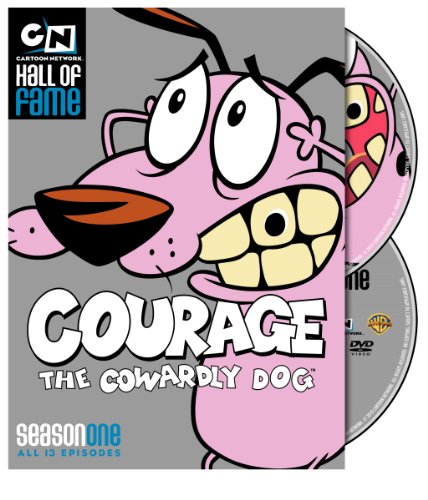
The Cartoon Network Hall of Fame seems to be expanding. Some of you might remember my review of Johnny Bravo Season One which was one of the first titles under this distinction. Courage the Cowardly Dog seems to be the most recent entry in this series and we can only hope that it is as good as ole JB, the king of people who sound like Elvis and excessive machoism.
Courage is a very special dog. He was abandoned as a puppy after his parents were sent into outer space. He was later found by Muriel Bagge, an elderly woman and taken into her home in Nowhere, Kansas. Courage’s personality is totally unlike his namesake. He is unfortunately a coward in every sense of the word. However, this lack of “courage” is what probably keeps him alive.
Posted in: Disc Reviews by David Annandale on July 26th, 2010
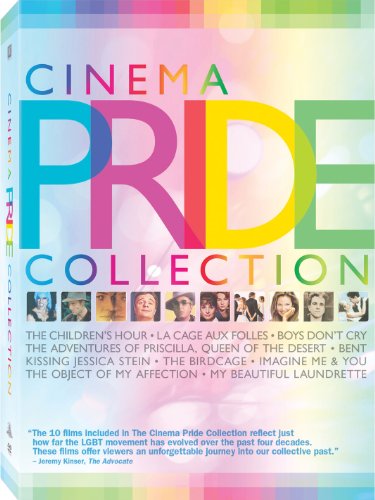
As the name suggests, this is a collection of ten movies on LGBT themes. In chronological order, here's what we have:
The Children's Hour (1961): Shirley MacLaine and Audrey Hepburn are the headmistresses of a girl's school, and their lives are turned upside down when one ghastly little child accuses them of being romantically involved. It is clear, though, the MacLaine would very much like to be. This was director William Wyler's second stab at adapting Lilllian Hellman's play, and this time was able actually to deal with the play's central issue, rather than disguise it as he had to
Posted in: Disc Reviews by Archive Authors on July 22nd, 2010
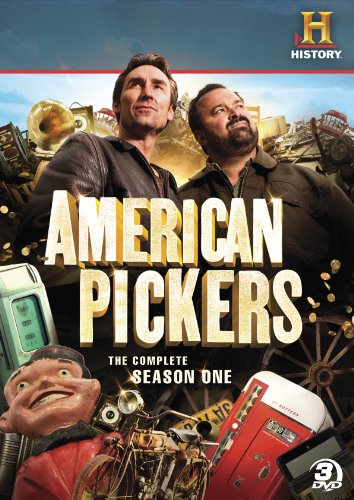
American Pickers revolves around two “gifted” pickers: Mike Wolfe and Frank Fritz. The thesis of the show is that these two men comb the back roads of the Midwest searching for hidden treasures and collectible items. The people they encounter along the way are far from garden variety with the majority of them having stacks upon stacks of junk cascading out of their property. These two men barter and haggle over pricing on many different things with each item earning them a considerable profit. The question arises through these exchanges, does morality come into play?
The two leads are relatively uncharismatic; Mike is slightly more comfortable on camera than Frank. However, the majority of their conversations in their van are cringe-worthy. The typical episode involves Frank and Mike going “freestyling” or going to leads that their secretary sets up for them. “Freestyling” is when Frank and Mike drive around areas until they see a house that catches their eye. After they proposition the owner of the property, they begin the picking and deal making. Once they obtain the pieces that they are seeking, audiences are given a breakdown of the cost of the piece and what they value it at.
Posted in: Disc Reviews by Michael Durr on July 21st, 2010
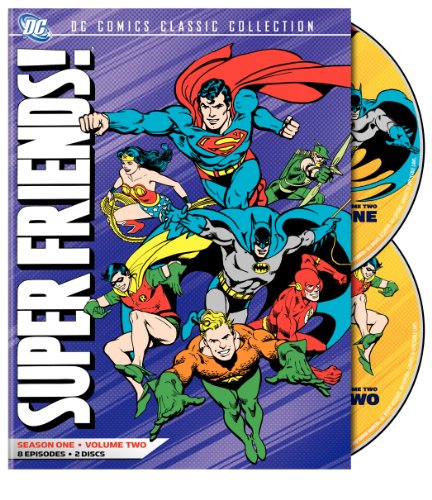
The Super Friends as a cartoon show had a long and sketchy past. It started out in the 1970’s and ran in nearly a dozen different incantations and over a hundred episodes until 1986 when it was put down for the last time. The original episodes that ran from 1973 until 1974 were unique, they ran for an hour with commercials and focused on one core story. Eight of them are provided here.
Meanwhile, at the Hall of Justice the TroubAlert computer sounds. It seems that there is an environmental disturbance and only the Super Friends can help. The current roster of Super Friends involves the Man of Steel: Superman, the Dynamic Duo: Batman and Robin, the Amazon princess: Wonder Woman, and the King of the Sea (no, not Charlie the Tuna): Aquaman. They also have three friends who act as sidekicks: Wendy, Marvin, and Wonderdog.
Posted in: Disc Reviews by William O'Donnell on July 20th, 2010
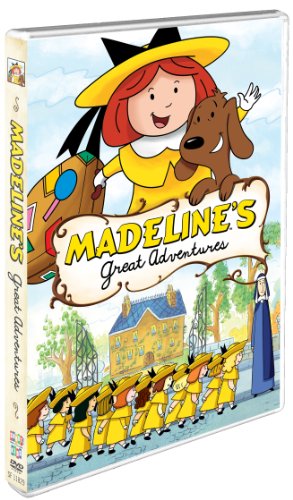
This compilation of cartoons takes from different Madeline series', produced from about 1993 to 2001. Each episode is in the half-hour long format, with different title cards, theme songs and narrators, but all following the same format of rhyming narration, and imaginative story lines, songs peppered throughout, and a couple even dipping into the supernatural.
Posted in: Disc Reviews by William O'Donnell on July 20th, 2010
The Real McCoys was a major TV hit during its run of 1957-1963. Starring three-time Oscar winner Walter Brennen and a pre-Rambo Richard Crenna. Led by Grandpa, the family move from Virginia to California (sound a touch familiar?) and is comprised of brothers and sisters that range in age from their twenties right down to eleven. This series paved the way fir rural comedies, especially the Beverly Hillbillies, proceeding it, and Brennen's voice set the bar for wiley Southern farmer characters for a generation.
Posted in: Disc Reviews by Gino Sassani on July 20th, 2010
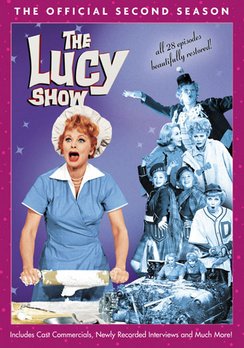
This was Lucille Ball’s follow-up to I Love Lucy. Here Ball is a widowed mother of two, sharing her home with best friend Vivian Vance, who is a divorced mother of one. All the other members of household are, of course, faced with the disasters triggered by Lucy. I screened this set immediately after viewing its close contemporary, Petticoat Junction, and the difference between the two was instructive. There are plenty of hokey gags and situations on The Lucy Show, but there is an enormous difference between the shows, thanks to the comic genius of Lucille Ball. Her energy fills each episode, her timing is spot-on, but there is also her commitment to a type of physical comedy that to this day remains pretty much the exclusive domain of male performers. Not only does she make this style her own, she grounds it in a female reality. There is a reason she was so beloved a performer, and why her work still stands up today.
The second season offers up even more laughs. While the show was filmed in color, the episodes still aired originally in black and white. Here they are in full color on this 4-disc collection. Some highlights of the season include: What could go wrong when Lucy and Viv start their own children's party business? Watch Kiddie Parties, Inc. and find out. Gale Gordon joins the cast as Lucy's new nemesis Mr. Mooney in the two part episode Lucy Gets Locked In The Vault. Mr. Mooney would go on to be the perfect foil for Lucy, and this is the genesis of the show most of us remember to this very day. In Lucy And The Bank Scandal, Lucy is convinced that Mr. Mooney has stolen ten grand and has buried it in his own back yard. Now the girls grab some shovels to recover the missing dough. Lucy and Viv have their sights set on the same guy and enroll in an art class to impress the man. But, when Viv lands a date, Lucy's going to make sure things don't go so well in Lucy Goes To Art Class. In the two-part shows Lucy Teaches Ethel Merman To Sing and Ethel Merman And The Boy Scout Show, guest star Merman shows why she was the queen of Broadway for so long. It's one of the show's most famous classic moments. Lucy takes Mooney to court to shut up his barking dog in Lucy Is Her Own Lawyer. Lucy and Viv are baking contest rivals in Lucy Enters A Baking Contest. The all out food fight will remind you of those old Three Stooges gags.
Posted in: Disc Reviews by Gino Sassani on July 20th, 2010
The fifth season of Matlock brought more of the same. If you’re a fan, that’s very good news indeed. What is that, you ask? Imagine Sheriff Andy Taylor older and now an attorney, and you pretty much have the setup for Matlock. Forget for a second that both characters were played by Andy Griffith. That’s not all they have in common. Matlock is every bit the “southern gentleman” that Taylor was. He might be a little smarter, but he walks and talks like Andy Taylor.
Matlock began life as a television movie from Dean Hargrove, who brought us Columbo. Hargrove would later work the same magic with Dick Van Dyke in Diagnosis Murder. In fact, the two shows could easily have been companion pieces. Both featured sit-com stars from the 1950’s and 60’s that had become somewhat iconic characters. Both would don the role of professionals. Both shows would subscribe to the “formula” mode of storytelling. Diary Of A Perfect Murder would set up the Matlock formula. It’s simple, really. Matlock was a lawyer in Atlanta. Some wronged defendant, usually charged with murder, would show up asking for Matlock’s help. Matlock and his team would investigate the crime with an eye toward, as OJ Simpson is fond of saying, finding the real killer. His team consisted of his daughter Charlene, herself a competent lawyer, and Tyler Hudson (Holliday), his private investigator. In the pilot the Matlock character was less Andy Taylor and a little more slick at first. I’m sure that while it was intended to show Matlock’s prowess as a high-priced attorney, somewhere along the line it became obvious that the show’s finest asset was Griffith himself and that southern charm he was already famous for. Whatever the reason, you can see the character soften significantly during the early episodes of the season. And that decision was a smart one, as Matlock would continue for nearly a decade.