Posted in: Disc Reviews by David Annandale on June 8th, 2010
A spin-off from Diff'rent Strokes, The Facts of Life centered around four residents of the Eastland Academy for Girls and their headmistress, Mrs. Garrett (Charlotte Rae). The four girls were characterized in strokes as broad as they way their physical types were presented: Blair (Lisa Welchel), rich, spoiled and blonde; Jo (Nancy McKeon), tomboy and brunette; Tootie, nosy and African-American; Natalie (Mindy Cohn), fun-loving and overweight.
The actual humour in the series is pretty pitiful – in other words, standard sitcom quips that might pass for wit if you're about five. However, like its parent show, it would consistently tackle difficult subjects. In this season, that means the likes of abortion, drunk driving, and hearing loss. Nothing subtle, and much that is painfully earnest here, but at least there is also a little bit of ambition in the stories, so credit where credit is due. The lead-in to the season was the TV movie, The Facts of Life Goes to Paris. While the dire nature of the humour is even more apparent here, now that the laugh track has been stripped away, the shooting was actually done on location, which is, frankly, more than I was expecting.
Posted in: Disc Reviews by Michael Durr on June 7th, 2010
In countries all over the world, there is still the prevalent issue of not being able to read. Even in advanced countries such as the United States, there are reports that suggest that many adults don’t ever pick up another book after leaving college. This reviewer was fortunate enough to have two adults in his life that read to him all the time when he was an infant and thus developed a desire and ability to read very early on. But for those who don’t have that luxury, perhaps they can find entertaining television programs such as Ghostwriter.
Jamal Jenkins (played by Sheldon Turnipseed) and his father (played by Samuel L. Jackson) are working in the basement of his family’s brownstone. Jamal’s father finds an old trunk that he was looking for and starts to pull it out. The father nor Jamal notices that the trunk knocks over an old book and the pages release a spirit. As they leave, the spirit follows Jamal.
Posted in: Disc Reviews by Michael Durr on May 31st, 2010
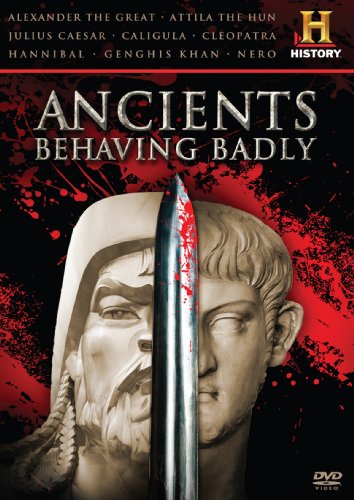
Many people look around today and say we are perhaps going through one of the most corrupt times in the history of the world. Government spending is out of control, rights seem to going by the waste side and human liberties are forgotten in travesties of justice. But what they don't know is that many years ago, life was cheap and rulers often gained absolute power by the most despicable of methods. However, what some people forget, the History Channel does remember Ancients Behaving Badly.
Ancients Behaving Badly is a documentary series on the History Channel that chooses an infamous leader from ancient history and goes into great detail about their rule. Let's take for example, Caligula, the first leader presented and a fairly easy target to spend time on. Caligula, the third Roman emperor who despite living only a shade under four years in power broke all the rules and was famous for debauchery and murder on the grandest scale.
Posted in: Disc Reviews by Gino Sassani on May 28th, 2010
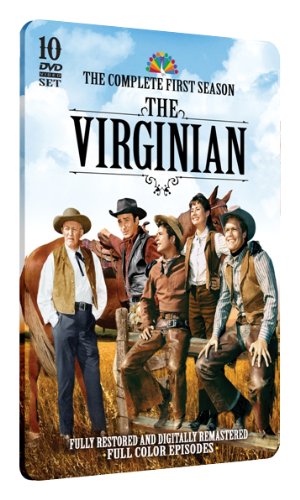
"This is Fairfax County in the state of Virginia. I was born here. It's peaceful, beautiful, and a long long way from Wyoming; beautiful, too in its special way. Vast, proud and lonely; it's my country now, Wyoming. But not exactly a peaceful one."
Posted in: Disc Reviews by Gino Sassani on May 24th, 2010
I grew up on the Peanuts creations of Charles M. Schulz. Most of us have, in some way or another. His newspaper comic strip is one of the longest-running and most successful strips of all time. The work has been translated into every language currently spoken on the planet. The images of Charlie Brown, Snoopy, Linus, and the rest of the Peanuts gang have appeared on just about any kind of product imaginable. Our pop culture contains too many references to the strip to mention briefly. For me, it was the television specials starting in the mid 1960s that brought the gang into my life. The classics are running annually, still after nearly 50 years. A Charlie Brown Christmas and It’s The Great Pumpkin, Charlie Brown are the most mentioned and certainly beloved by generations of children and adults. I thought I never missed an airing.
Now Warner Home Video has brought together a special collection of the cartoon specials that started it all. It includes a couple annual greats and a few that I don’t really remember so much. Now we get into the second volume of the 1970’s specials. The two discs include the following Peanuts specials:
Posted in: Disc Reviews by Michael Durr on May 13th, 2010
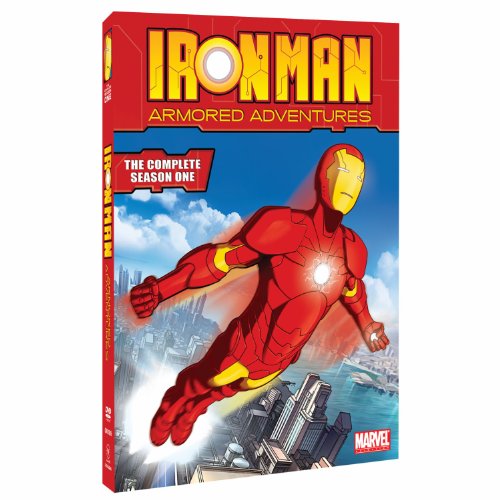
Many of you probably read my review for Iron Man 1994 Animated Adventures on DVD earlier this week. In that review, I told a story of two very different seasons of Iron Man. Well, Iron Man Armored Adventures is even more different because it deals with Tony Stark as a teenager. There is no telling whether this teenage Tony will be like a younger version of the suave and sophisticated playboy or play out like a mechanized version of Peter Parker from the most recent Spectacular Spider-Man show.
Tony Stark isn’t a typical teenage boy. He spends his days coming up with cutting edge technology that is going to help and change the world. His best friend, Rhodey goes to the local school and helps Tony as needed. Howard Stark is Tony’s father and is the head of Stark Industries. However, there are others within Stark Industries that wish to use the inventions for war rather than peace.
Posted in: Disc Reviews by Gino Sassani on May 11th, 2010
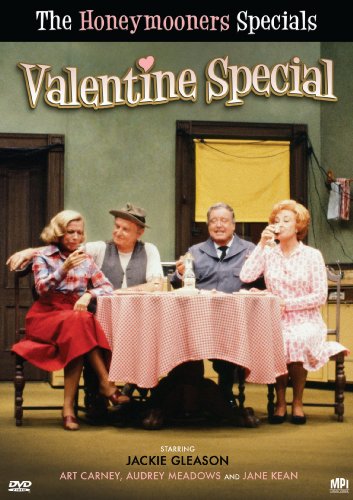
It's hard to believe that one of the most popular comedy shows of the 1950's was not really a show at all, at least not in the way that we think of a television series today. The show began its life in 1951 as a segment on the popular Cavalcade of Stars. At that time only Jackie Gleason and Art Carney starred in their familiar roles. Alice was played by Pert Kelton. The series took its more recognizable look when it became part of The Jackie Gleason Show in 1955. That's also when Joyce Randolph joined the series as Trixie Norton. The series would take up a half hour of the slot. The second half was taken up by a larger variety of pieces, usually a series called Stage Show. The show would come and go, with other cast members coming and going over time. Even Art Carney had left The Jackie Gleason Show at one time, only to return in 1957 to the role. The show's history is a complicated one to which entire books have been devoted over the years. It wasn't until syndication that the series was really a show unto itself. The original 39 episodes were joined with nearly 70 re-edited versions of the other various incarnations of the show have made up what most of us today think of as The Honeymooners. The final original versions of the show ended in 1971; both Audrey Meadows and Joyce Randolph were gone by then, replaced by Sheila MacRae and Jane Kean respectively.
But this show that wasn't really a show had legs. The syndicated versions became hugely popular, and new generations of fans were being indoctrinated with each new package. The show even survived on pay television at Showtime for a while in the 1990's when the 70 newly-formed "Lost Episodes" first aired. But the fever just never died. The show would influence a large number of series that would follow. Even the animated world of cartoons wasn't safe. The Flintstones would come along and become a prehistoric cartoon show that was basically the same down to the characters. Fred and Barney couldn't have been closer to Ralph and Norton if their names had been the same. Today, comedians constantly recall The Honeymooners and Jackie Gleason as their inspiration. To more than one generation of television viewers, Gleason really was "The Great One".
Posted in: Disc Reviews by Gino Sassani on May 11th, 2010
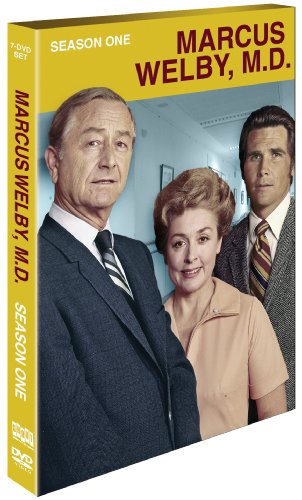
Perry Mason did it for lawyers. Marcus Welby did it for doctors. From 1969 to 1976 and beyond Robert Young was the face of the television doctor. The actor was so identified with his part that he dealt with fans and their medical questions his entire life following his portrayal of Marcus Welby. In those days there wasn't a medical doctor on the planet, real or fictional, who was more recognizable than Welby. The show pretty much wrote the book on the television medical drama. It doesn't matter if your a fan of House, ER, Grey's Anatomy, or any of a hundred other medical dramas that have come and gone since that time, each of those shows owes more than a little of it's existence to Marcus Welby, MD.
In the 1950's Robert Young was that model parent in Father Knows Best. It's likely that audiences first fell in love with his wise and caring style. There was something about both the character and in the man himself that just caused America to trust him. It was no surprise that when the Marcus Welby creators were looking for a doctor that could, above all, exhibit those same qualities that Robert Young would get the call. And it didn't matter that Young considered himself retired from show business for the last 6 years. But Marcus Welby was a role he just couldn't turn down. It was another gentle character with wisdom and common sense beyond his years. The Doc was a general practitioner in California. To him his patients were people. He would treat the individual as well as whatever ailment was proving to be the problem. He took the tough cases, often seeing some slight symptom that others would miss. That's because he paid attention to his patients, and they couldn't help but trust him with their lives. More times than not, that trust was rewarded with a full recovery. But, even when Welby couldn't beat a disease or injury, he always added something to the patient’s life. It might be helping them to come to terms with their own mortality. He might heal a family rift. Sometimes he just offered a kind word at just the right time.
Posted in: Disc Reviews by Michael Durr on May 10th, 2010
In September of 1993, an animated series using the wonders of stop-motion animation was broadcast on ABC. The name of the series was called Bump in the Night. It would run for twenty six episodes, spanning over two seasons. It was created and directed by Ken Pontac and David Bleiman. It also featured the vocal stylings of Jim Cummings, a man perhaps most famous for his Winnie the Pooh performance.
Mr. Bumpy (for his warts) is a small, green and purple monster who lives under the bed of a ten year old boy. He loves to eat socks, dust bunnies, snot filled tissues and other assorted things most people would consider disgusting. His disposition can be easily described as vile but yet easy going. Oh yeah, if you haven’t figured it out yet, he doesn’t brush his teeth.
Posted in: Disc Reviews by Gino Sassani on May 10th, 2010
I grew up on Bill Cosby. He was everywhere when I was a kid. Fat Albert And The Cosby Kids were on my television every Saturday morning. My parents had all of his records, and I can remember borrowing them when I finally got a player of my own. I played Chicken Heart so often I think I wore away the grooves on the track. Of course, you youngsters out there have no idea what I'm talking about when I mention grooves and wearing them out. That also means that you remember a very different Bill Cosby show. Most of us think about that huge hit in the 80's. Cosby played a doctor, and he was married to a lawyer and this wealthy family had a ton of kids. The show was an instant hit. But it wasn't the first attempt at situation comedy from Bill Cosby. Back in 1968 he was the star of a very different comedy series on television. It was The Bill Cosby Show.
In this series Cos played Chet Kincaid, a high school gym teacher and athletic coach. It wasn't really a stretch, you see, because The Cos actually studied PE at Temple University with his eye toward just such a possible career. Of course, stardom interfered with those plans, and I don't think anyone has been complaining too much. The series is too eclectic for its own good. While Chet's career should be the focus, many of the episode take him out of the school and place him in oddball situations. Episodes deal with his aunt's will and a missing Abe Lincoln letter, a flood while Chet deals with a neighbor in labor, and Chet leading a group of inner-city kids on a failed attempt to get out and camp in nature. From the start, you can see that Cos is trying to bring a more intimate approach to his comedy, but it usually misses the mark completely. His natural charm and demeanor carry the day, but there's a reason why the series only lasted three seasons. He would hone those skills later to deliver one of the biggest shows in television history.