Posted in: Disc Reviews by Gino Sassani on August 24th, 2009
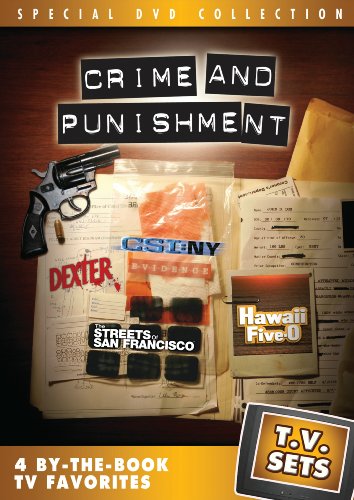
It’s a disc loaded with pilots. No, you won’t find any daring men and their flying machines here. These pilots owe more to Philo T. Farnsworth than The Wright Brothers. Farnsworth transmitted the first televised image in 1927. In case you’re wondering, that image was a dollar bill. These pilots follow in those footsteps; that’s because these pilots are television shows. They’re the first episodes of some of the best action series to appear on CBS over the last few decades. Going back as far as the 1960’s, these shows represent a nice cross section of television action entertainment.
Posted in: Disc Reviews by David Annandale on August 21st, 2009
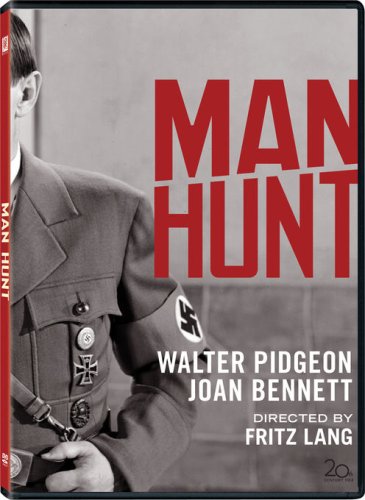
Shortly before World War II, British officer Alan Thorndike (Walter Pidgeon), vacationing in Bavaria, puts his sterling hunting skills to use by framing Adolf Hitler in his gun sights. He pulls the trigger on an empty barrel, not really planning to perform an assassination. Then, after a moment's hesitation, he loads the gun, but is captured before anything history-changing occurs. The Gestapo leader Major Quive-Smith (George Sanders) wants him to confess to being an assassin working for the British government. Thondike refuses. He manages to escape, and Quive-Smith's forces (including the always sinister John Carradine) pursue Thorndike to England, where he falls in with innocent Cockney lass Jerry (Joan Bennett).
Posted in: Disc Reviews by Gino Sassani on August 13th, 2009
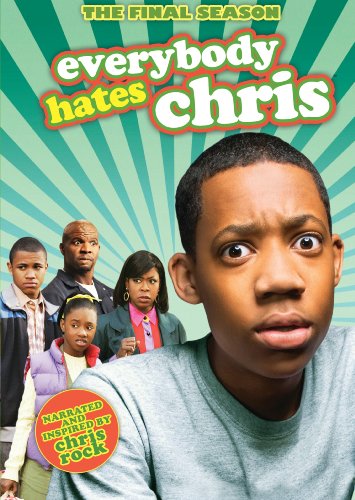
Chris Rock has been one of those comedians that either hits a home run or strikes completely out. I’ve seen quite a bit of his stand-up and found I loved it or hated it. He’s not afraid to play the race card. Hell, Chris plays the whole dang deck at times, and Everybody Hates Chris is no different. The comedy is based, loosely I’m sure, on the young adolescent life of Chris Rock. It’s a black comedy that will bring back memories of those 1970’s shows we all watched as kids. Like Good Times and even Sanford And Son, the show is loaded with stereotypes. All of the white characters are bumbling fools who are often played as racists themselves. Chris’s school teacher, Mrs. Morello (Mazarella), is the most obvious example. She’s constantly trying to talk “hood” with the boys and making politically incorrect observations loaded with outrageous clichés. Of course, it’s all in fun, and if you’re willing to overlook the often sensitive language and plots, you’re in for some laughs along the way. I like that the show never really takes itself seriously and challenges the viewer to simply lighten up. Basically, this ain’t no Cosby Show.
Chris Rock narrates each episode from his current place in life. The interjections are often humorous commentary on the pains of growing up, particularly black. At times Chris is just annoying, and he tries too often to be over the top. Tyler James Williams plays the young Chris. He kind of looks like him enough, and I can see some of Rock’s mannerisms in the boy. Terry Crews is the standout actor, playing Chris Rock’s father, Julius. The big guy always seems to mean well but doesn’t always have his stuff together. He could have been a young Fred Sanford. Tichina Arnold is Mom and the domineering force in the life of our young comedian to be. She’s best known for her excellent turn as Pamela in Martin, another stand-up sit-com vehicle. Chris’s siblings are played by Tequan Richmond and Imani Hakim. Hakim is absolutely hilarious and seems so much older than her age as an actor. She manages the little sister act, while all the while you know there is so much going on there. She’s a constant burst of energy and often exhausting to watch. A very promising young actress. Finally, Vincent Martella plays Greg, the token white dude. He’s Chris’s best bud and is honestly the most stereotypical white kid I’ve seen on television. Together it’s a good ensemble, and the show can be quite clever at its best, simply funny at its worst.
Posted in: Disc Reviews by Gino Sassani on August 13th, 2009
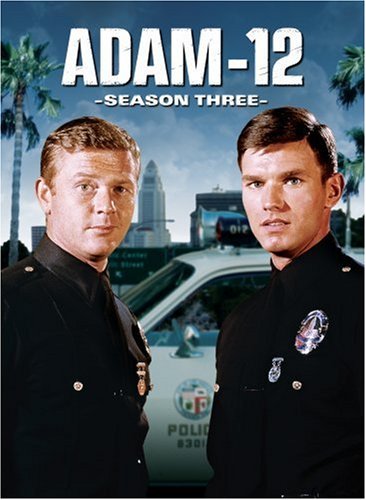
Jack Webb invented the modern television police procedural with the creation of Dragnet, first as a radio play and eventually as a successful television series. The series told the tale of a pair of L.A. detectives. There wasn’t any flair or action sequences. No car chases and no gun fights. When Jack Webb turned his attention to the patrol officer, he realized that some of that formula would have to change. But he wouldn’t tweak it very much. There was the occasional gunfire, but it was rare and was never the focus of any given story. Instead Webb concentrated on the actual procedures and duties of the everyday patrol officers, thus the invention of the procedural drama. It was no small step for television audiences and was likely very much responsible for the shape of the young medium and the shows that would follow up to this very day. Now the episodes might seem quite tame by today’s standards, and I don’t doubt that many of you might even get a chuckle at the no nonsense dialog that has become a Jack Webb trademark. Still, you won’t get a truer look behind the curtain than Adam 12. It was a show very much of its time.
Adam 12 debuted on NBC in 1968 and ran until May of 1975. The show never really changed at all for its 7 seasons. It starred Martin Milner as officer Pete Malloy and science fiction genre veteran Kent McCord as officer Jim Reed. They rolled in the black and white that bore the call letters Adam 12. They were headquarted at L.A.’s Rampart precinct, the same area as Jack Webb’s sister show about firefighters and paramedics, Emergency. The two shows shared a rather odd relationship. They did cross over and appeared to exist in the same universe; however, an episode of Emergency once featured a storyline where the paramedics where trying to watch a nail biter climax on Adam 12 only to be called away at the crucial moment. They spent the rest of the day trying to find out what happened. Yet they would meet the characters as real police officers in their own pilot. The firefighters would also appear on an episode of Adam 12. If that’s all rather a little confusing, blame the complicated world of Jack Webb.
Posted in: Disc Reviews by Michael Durr on August 10th, 2009
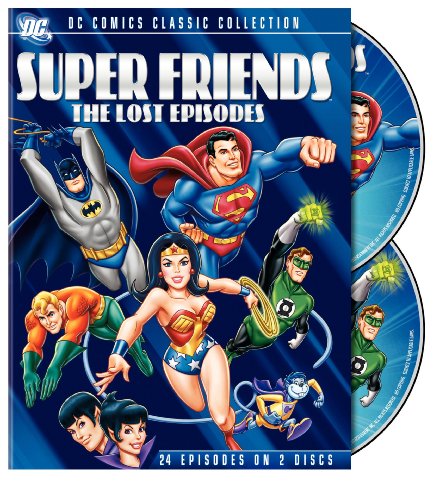
The Super Friends as a cartoon show had a long and sketchy past. It started out in the 1970’s and ran in nearly a dozen different incantations and over a hundred episodes until 1986 when it was put down for the last time. In the 1983-84 season, the series had been cancelled officially for a second time. This was due to the fact that they did not wish to compete with the syndication run of the original episodes that was already on air. Hence, the new episodes were dropped and didn’t appear until many years later. Here, the people at WB have compiled these 8 episodes (24 shorts) into a 2-disc set and dubbed them the “Lost Episodes.”
As mentioned, there are twenty-four shorts for this lost season of Super Friends. They run the gambit of subjects, villains, and heroes. In episodes such as “The Krypton Syndrome”, Superman is thrown into a time warp and has to deal with the impending doom of his home planet: Krypton. However, the decision he makes leads to some rather disturbing consequences.
Posted in: Disc Reviews by David Annandale on August 10th, 2009
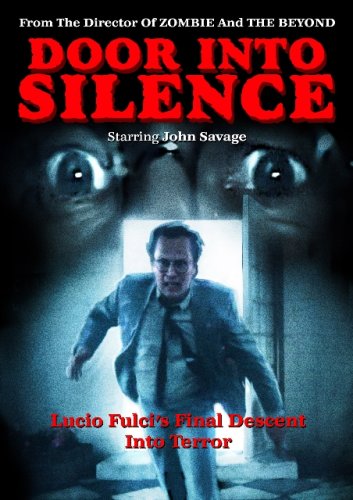
After an opening, fragmentary montage of a traffic accident, we encounter Melvin Devereux (John Savage), standing in front of his father's grave, making a few cynical remarks apparently in the wake of dad's funeral. Then, after a strange conversation with a mysterious woman (Sandi Schultz), Devereux begins to make his way home. But his route is blocked by one obstacle after another, and his journey becomes ever longer and ever more frustrating as he drives down the empty roads of the Louisiana countryside. He is then plagued by a hearse, which will not let him overtake, and that turns up wherever he goes. Soon he becomes obsessed with catching the hearse, after seeing his name on the coffin inside.
Posted in: Disc Reviews by David Annandale on August 5th, 2009
I, of all people, should know that one person's cultural detritus is another's fond nostalgia, and what better example of that can there be than this release. A strange mix of athletic contest, pro-wrestling posturing and silly gimmick game show, this series (which has recently been reborn) pitted hard-bodied contestants against the even-more-hard-bodied (at least in appearance) Gladiators of the title. Some contests involve knocking each off a beam, or dodging tennis balls fired from a gun while trying to get in a shot of one's own. Or then there's swinging in on a rope in the attempt to knock the Gladiator off a pedestal. It's all pretty silly, made even more so by the straight-faced colour commentary. If the intent was to satirize sports broadcast generally, then this is quite brilliantly funny, at least at first, but the joke can't sustain itself over multiple seasons. Basically, it is what it is. If you enjoyed the show when it first ran, then perhaps you'll enjoy it again (but is there anything less intended for multiple viewings than a game show?). If you are unfamiliar with the concept, probably best to stay that way. For the benefit of the completists out there, it should be noted that this set begins halfway through Season 1.
Posted in: Disc Reviews by Gino Sassani on August 5th, 2009
Imagine waking up one morning to find a newspaper on your front porch. Here in Tampa, the fact that the paper is actually on your front porch is miracle enough. Imagine further that this ordinary looking paper isn’t today’s paper at all, but rather tomorrow’s edition. If you could trust that what you held was the genuine article, so to speak, just think of the possibilities. For most of us our thoughts turn to the myriad ways in which we could enrich ourselves: sports scores, lottery numbers, even stock tips. If, however, you’re less selfish, there is an equally endless number of ways in which you could help your fellow man, or woman as the case may be. You would have advance knowledge of tragic accidents, crimes, and other unfortunate events about to befall your fellow human travelers. That’s the essence of Early Edition.
Gary Hobson (Chandler) is having some bad luck. His wife kicks him out of the house, on their wedding anniversary, no less. He ends up forced to live in a cheap hotel room. One morning he discovers that a mysterious orange tabby has left a gift by his door. Instead of the usual rodent surprise, Gary finds a copy of the local newspaper. This paper happens to be dated tomorrow. At first Gary doesn’t even notice the odd date as he attempts to go about his busy stockbroker life. It isn’t until Gary’s attempt to follow the price of wheat that he is finally alerted to his special edition of the paper. His buddy Chuck (Stevens) wants to use the paper to check out a few sports results. Gary avoids the temptation and refuses to allow his friend to have the paper. Instead he uses the information to assist another friend, Marissa (Davis – Williams), who’s in desperate need of a windfall. Together they become a team. As the event repeats itself, the three work to find ways to help others with their advance knowledge. There’s a little comedic tension, as Chuck is always trying to get his own taste out of the information. Marissa, grateful for the help she received, is far more keen on passing the good deed along.
Posted in: Disc Reviews by David Annandale on July 29th, 2009
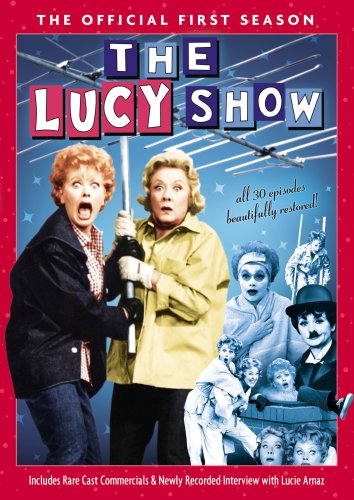
This was Lucille Ball's follow-up to I Love Lucy, and the first season is, apparently, the most highly regarded one. Here Ball is a widowed mother of two, sharing her home with best friend Vivian Vance, who is a divorced mother of one. All the other members of household are, of course, faced with the disasters triggered by Lucy. I screened this set immediately after viewing its close contemporary, Petticoat Junction, and the difference between the two was instructive. There are plenty of hoary gags and situations on The Lucy Show, but there is an enormous difference between the shows thanks to the comic genius of Lucille Ball. Her energy fills each episode, her timing is spot-on, but there is also her commitment to a type of physical comedy that to this day remains pretty much the exclusive domain of male performers. Not only does she make this style her own, she grounds it in a female reality. There is a reason she was so beloved a performer, and why her work still stands up today.

Though the image is a bit soft, with features losing definition in long shots, the picture is still looking remarkably good for television from 1962-63. The black-and-white tones are very warm, and the grain, though present, is minor. There is no edge enhancement to deal with. It is, frankly, very unlikely that these episodes have ever looked better.
Posted in: Disc Reviews by David Annandale on July 28th, 2009
Once upon a time, there was an age of TV where hit shows where women in their 20s played high school students, and an entire episode could revolve around the burning crisis of whether the dog that followed one daughter home could stay. It is from this era that Petticoat Junction hails. This series about a widowed mother and her three daughters tending the Shady Rest Hotel ran for seven years, and begat both Green Acres and The Beverly Hillbillies, in that characters from all three series would interact with each other.
So our principle cast here consists of mother Kate Bradley (Bea Benaderet), daughters Billie Jo (the flirt, played by Jeannine Riley), Bobbie Jo (the bookworm, played by Pat Woodell, who would leave after this season), and Betty Jo (the tomboy, played by Linda Kaye Henning, daughter of series creator Paul Henning). Throwing in his two bits is lazy Uncle Joe (Edgar Buchanan). Joining the cast this season is Higgins the dog, who would subsequently star as Benji, and thus eclipse his human co-stars.