1.33:1 Fullscreen

Since the events of 911 there has been a lot more appreciation, at least publicly, for the real life heroes who populate fire and police stations all over the country. Few jobs offer so little reward for such high risk all in the name of protecting our society from harm. It’s likely no coincidence that while Third Watch began a couple of years before those events, it reached its peak in popularity in the months and years that followed. A better than average procedural drama, Third Watch offered a look at both police officers and firefighters along with their paramedics. You could call it a cross between Hill Street Blues and Emergency.

The police officers and the fire fighters are all members of New York’s 55th Precinct. The Precinct carries the nickname of Camelot. While they work from separate facilities, they are across the street from each other and their duties often find them working together. The two houses share a bond, but there are also moments of stress and rivalry. But when there’s a crisis, these men and women are the best and get the job done.

I grew up on the Peanuts creations of Charles M. Schulz. Most of us have, in some way or another. His newspaper comic strip is one of the longest running and most successful strips of all time. The work has been translated into every language currently spoken on the planet. The images of Charlie Brown, Snoopy, Linus, and the rest of the Peanuts gang have appeared on just about any kind of product imaginable. Our pop culture contains too many references to the strip to mention briefly. For me, it was the television specials starting in the mid 1960’s that brought the gang into my life. The classics are running annually, still after nearly 50 years. A Charlie Brown Christmas and It’s The Great Pumpkin, Charlie Brown are the most mentioned and certainly beloved by generations of children and adults. I thought I never missed an airing.

Now Warner Home Video has brought together a special collection of the cartoon specials that started it all. It includes those annual greats and a few that I don’t really remember so much. The two discs include the following Peanuts specials:

The third season of Matlock brought more of the same. If you’re a fan, that’s very good news indeed. What is that, you ask? Imagine Sheriff Andy Taylor older and now an attorney, and you pretty much have the setup for Matlock. Forget for a second that both characters were played by Andy Griffith. That’s not all they have in common. Matlock is every bit the “southern gentleman” that Taylor was. He might be a little smarter, but he walks and talks like Andy Taylor.

Matlock began life as a television movie from Dean Hargrove, who brought us Columbo. Hargrove would later work the same magic with Dick Van Dyke in Diagnosis Murder. In fact the two shows could easily have been companion pieces. Both featured sit-com stars from the 1950’s and 60’s that had become somewhat iconic characters. Both would don the role of professionals. Both shows would subscribe to the “formula” mode of storytelling. Diary Of A Perfect Murder would set up the Matlock formula. It’s simple, really. Matlock was a lawyer in Atlanta. Some wronged defendant, usually charged with murder, would show up asking for Matlock’s help. Matlock and his team would investigate the crime with an eye toward, as OJ Simpson is fond of saying, finding the real killer. His team consisted of his daughter Charlene, herself a competent lawyer, and Tyler Hudson (Holliday), his private investigator. In the pilot the Matlock character was less Andy Taylor and a little more slick at first. I’m sure that while it was intended to show Matlock’s prowess as a high priced attorney, somewhere along the line it became obvious that the show’s finest asset was Griffith himself and that southern charm he was already famous for. Whatever the reason, you can see the character soften significantly during the early episodes of the season. And that decision was a smart one, as Matlock would continue for nearly a decade.

This, the final season of the series, opens with Samantha (Elizabeth Montgomery) and Darrin (Dick Sargent) on a European tour. This means stock shots of various European landmarks before we return to rather unconvincingly dressed-up studio backlots. There are a few two-parters in the mix, including the opening episodes, where Samantha is zapped back to the court of Henry VIII, and a late-season adventure where the time travel goes the other way, and George Washington is brought forward to the present. Special note should be made of Episode 3, where the Loch Ness Monster shows up, in all his googly-eyed, man-in-a-costume glory.

There's a certain brazenness, it seems to me, for any show, even a budget-conscious one in 1972, to limit itself to the special effects technology of 1896. Indeed, there is nary a moment that couldn't have been accomplished by Georges Méliès. As for the humour, well, it's very much of its period – in other words, it creaks very badly, with the laugh track kicking in at every single line. I remember watching this show as a kid, and getting some fun out of it, though preferring the identically themed I Dream of Jeannie (for reasons now that I cannot recall). Basically, this is mildly entertaining for the nostalgic, but not much more.

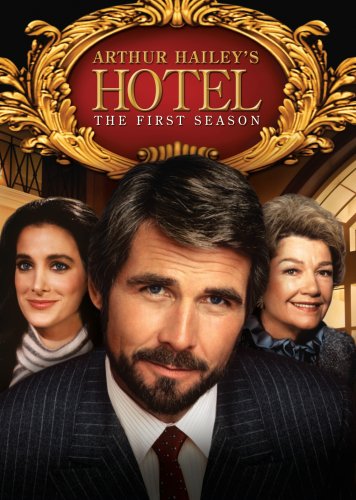
As a Henry Mancini score swells with unapologetic cheese, we are swept into the world of the luxurious St. Gregory Hotel in San Francisco. Owned by aging matriarch Bette Davis (replaced, when she had to pull out due to illness, by Anne Baxter, as her sister-in-law), the Hotel's General Manager is James Brolin, who has lots of time to wander around the lobby greeting the various guest stars. In other words, he's Mr. Roarke to the St. Gregory's Fantasy Island. What follows is pure fromage of the Aaron Spelling variety, with every other guest star a fading Familiar Face, no end of improbable crises, painful comic relief, unintentional comedy gold in the dramatic moments, and much of the feel of a 1970s disaster movie minus, sadly, the disaster itself (but you can always re-watch The Towering Inferno to make yourself feel better).


The colours are strong, and the picture quality is generally what one would expect for a mid-80s television program. The grain is minimal, but the image is a bit soft – features and details tend to bleach out and disappear when in the middle distance. That said, the transfer gets the job done, and looks true to original broadcast quality.

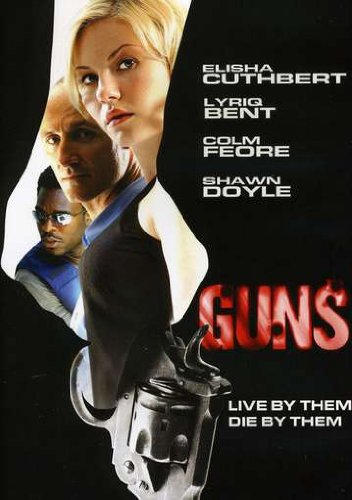
Guns is a Canadian TV mini-series that came to fruition in late 2008. The premise of the series is slightly convoluted.  Paul Duguid (Colm Feore) is a legitimate arms dealer that sells to governments around the world. However, Duguid also sells illegal weapons to gangs around Toronto as well. Duguid comes under police scrutiny when his son Bobby (Gregory Smith) goes to a street level gun dealer’s house that is under police surveillance.  Bobby also becomes implicated in the murder of the father of a U.S. Senator.  During all of these events, Bobby’s girlfriend Frances (Elisha Cuthbert) volunteers to smuggle guns across the border.  The multiple storylines on display here work well in a TV mini series.  However, when shown in 180 minutes on a DVD, they are difficult to appreciate.

Released just in time for the global financial meltdown, this hymn to designer products features Isla Fisher, who demonstrated her comedic talent by stealing Wedding Crashers from both Vince Vaughn and Owen Wilson – no small achievement. Here she plays Rebecca Bloomwood, a compulsive shopper who, while hoping to land a job working at a fashion magazine, accidentally finds herself hired on a columnist at the sister publication, a rather less glamorous financial mag. Her columns, couching financial advice in shopping metaphors, become a surprising hit, and sparks begin to fly with her editor (Hugh Dancy). Meanwhile, a relentless debt collector is dogging her heels.

Combining Sex and the City voice-overs and clothes with Bridget Jones insecurities, the film sets out to be, I suppose, some sort of female fantasy. And sure, just as we are expected to buy Seth Rogen as a babe magnet in the male POV rom-coms, one can be fairly asked to do some heavy suspension of disbelief exercises when it comes to the match here, too. But why, as seems to be so often the case, are the female characters presented as ADD idiots? It becomes very hard to like Rebecca when, with her career (and quite possibly that of the man who is giving her a shot at the journalistic brass ring) hanging in the balance, she would rather rampage at a sample sale then do her work. Fisher throws herself into the part with enormous energy, but she is working with empty, predictable, numbing material.

Transformers are something near and dear to my heart. I grew up with them, watched all of the episodes, read many of the comics and watched the animated movie more times than I care to think about. When the original Rhino DVD set came out a few years back, I bought all of the volumes despite the hardship that roughly $50 a volume would cost me. Now, with the 25th anniversary of Transformers upon us, Shout Factory has gained the rights to the series and has re-released the first season to coincide with the release of the second live-action film. Is this simply an attempt to cash in on the mega movie hit of the summer? We shall see.

A civil war is ongoing on the planet of Cybertron. Fierce battles between the Autobots and the Decepticons have tore the planet apart and the energy sources at critical levels. The heroic Autobots decide to go to the planet Earth on the theory that these resources exist there for them to be able to use. However, the Decepticons decide to follow. Once in space, the Decepticons attack under the leadership of Megatron. Optimus Prime and the Autobots try to hold them off but soon both sides crash into the Earth.

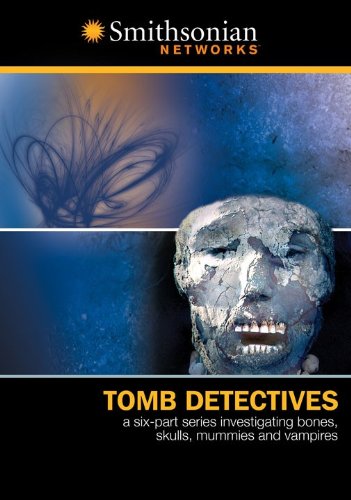
The whole trick to watching the new educational series from the Smithsonian Channel is to keep your head. Someone once said that was the key to battle, to keep your head while those around you are losing theirs. Well, it appears a ton of folks have been losing their heads for centuries. On the surface Tomb Detectives is a real life Bones. The half hour episodes explore ancient bodies, usually merely skeletal remains, and attempt to answer some basic questions: How did they die? What was their life like? What kind of cultural traditions might have been involved with the death? Was this an execution or an inevitable result of battle? Where these ancient victims the willing participants in a religious sacrifice, or were there criminal elements at play? The series gives you a close up look at these remains and then introduces you to a team of scientists who will attempt to answer these burning questions. It’s sort of like the team from CSI trying to solve murders that are as much as 2000 or more years old. Of course, there is no statute of limitations on murder. We follow the team into the lab where various experiments provide clues to these answers. There are often very low budget dramatizations of the various theories the scientists come up with. The first two stories deal exclusively with ancient beheadings, and the theme pops up pretty consistently throughout the rest of the series. Someone has a serious head fetish here.

The episodes pretty much play out as your standard cable documentary with a bit more drama added on for effect. As we are introduced to each scientist there’s a freeze screen and an X-Files scroll that tells us who they are and what their specialty happens to be. Unfortunately, even in 26 minutes there is a ton of repetition in these shows. We see the same dramatization scenes over and over. There’s a lot of dry in the lab talk that might put you to sleep if the images themselves weren’t enough of an eye-opener. The show attempts to delve into a little history surrounding the discoveries in an attempt to put the find into some historical perspective. The narration, however, tends to point out the obvious and isn’t incredibly entertaining. In the end it’s a matter of seen one, seen them all kind of a thing. Your best bet is to try and catch the episodes on rerun at the Smithsonian Channel.

“Back to the days of the Gold Rush, as Sergeant Preston with his wonder dog, Yukon King, meets the challenges of the Yukon … A land inflamed with gold. Men who came quickly learned the heroism of sacrifice and the treachery of greed.”

These words first reached across the radio airwaves in 1947. Children and adults alike would gather around the warm glow of their large radios to hear the exploits of Canadian Mounties Sergeant Preston and his trusty companions Rex, his horse, and Yukon King, his Alaskan Malamute. When the early days of television arrived, it was no surprise that the more successful radio dramas would become some of the first television shows. Sergeant Preston was part of that transition wave of the new medium of television. Although filmed in color, the series ran in black and white, which was the only format available to the homeowner in those days. Now through the release of the series on DVD, we get to see the series for the first time in color.