Posted in: Disc Reviews by Gino Sassani on September 5th, 2008
There has to be something wrong with anyone who doesn’t have at least a small soft spot in their hearts for Tim Burton’s A Nightmare Before Christmas. The film will assuredly earn its rightful place as a classic as more years roll by. The film just works on so many levels. Danny Elfman deserves as much credit as
Posted in: Disc Reviews by Archive Authors on July 14th, 2008
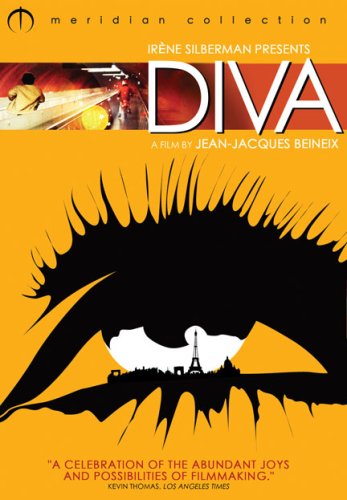
I don’t remember that much about Diva growing up; it was a film that I heard about as a kid, and a lot of people liked it, but that was the first time I can honestly say I was exposed to the arthouse film, and that it was something that I wanted to find out more about. Through the years, I’ve seen many a foreign or independent film, however the one that started all of it off for me I hadn’t seen, until now.
Diva was adapted from the Daniel Odier novel by Jean-Jacques Beineix, who previously directed a documentary version of The Diving Bell and the Butterfly long before Julian Schnabel put together a dramatic version of Jean-Dominique Bauby’s life. The story of Diva is a little complicated, but I’ll give it a go; a young messenger attends the concert of an opera singer, and creates a recording of the performance, which is a rarity for the singer, who normally frowns on recording her work. A line is said in the film along the lines of “art shapes itself around business, when business should actually shape itself around art.” A woman is murdered and drops a separate recording that is criminally linked to the police, and the tape winds up with the messenger. When the messenger, named Jules, is spotted recording the singer’s concert, they threaten him and demand to obtain the tape, so that it can be sold to the highest bidder. Unbeknownst to Jules, the participants of the other tape include a crooked police chief, who wants to try and get the other tape by any means necessary.
Posted in: Disc Reviews by Gino Sassani on June 30th, 2008
Meerkat Manor is back for a third season on DVD. You’re invited back into the South African desert with the famous Whiskers Clan. Animal Planet has themselves a relatively big hit here with Meerkat Manor. OK, so, it’s not exactly The Sopranos or The Shield, but it does have a modestly dedicated audience. Seems that folks just can’t get enough of these fur balls. They’ve set up blogs and websites dedicated to the antics of the celebrated Whiskers. If you, like them and are dying to see what these lil’ guys are up to next, wait no longer. Fast on the heels of the prequel film, The Story Begins, Meerkat Manor is here again. Of course, all of this is strictly in the interest of scientific study. Sure it is! Don’t worry, I won’t tell a soul.
Posted in: Disc Reviews by Gino Sassani on June 17th, 2008
The voices aren’t the same. The animation has lost that classic charm. The story is completely contrived. What remains is a dim reflection of a few beloved characters from a bygone year of vintage Disney magic. This sequel of the classic Disney telling of Rudyard Kipling’s The Jungle Book looks more like a direct to video knockoff. I was actually quite amazed to note the film did have a box office run.
Posted in: Disc Reviews by David Annandale on June 12th, 2008
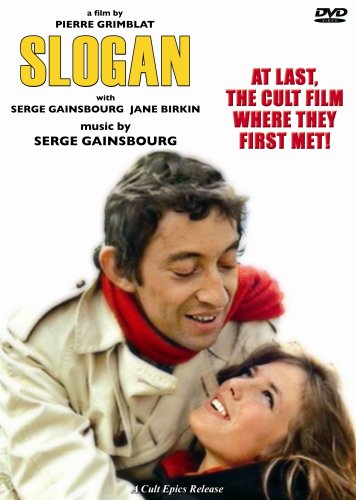
Serge Gainsbourg and Jane Birkin were the “it” couple in France during the late 60s and early 70s. This is the film that brought them together, their To Have and Have Not, if you will. Musician Gainsbourg (who, for the uninitiated, had a singing style that was a cross between Leonard Cohen and Tom Waits) plays a married director of successful TV commercials. He begins an affair with an 18-year-old (Birkin). Their relationship hits most of the predictable moments of such movie romances from that period.
And it is almost completely uninteresting. There is zero chemistry between the leads, but neither has much by way of screen presence to start with. Gainsbourg is startlingly ugly, and Birkin is strikingly beautiful, but that's hardly enough to keep us watching. Neither character is remotely likeable, and the self-referential moments in the film were smug clichés already in 1969. The film holds some interest as a pop culture trivia answer, but for anyone unfamiliar with Gainsbourg and Birkin, it's an intolerable bore.
Posted in: Disc Reviews by Gino Sassani on May 13th, 2008
12 Angry Men is one of those rare films that appears to defy all the
Posted in: Disc Reviews by David Annandale on February 22nd, 2008
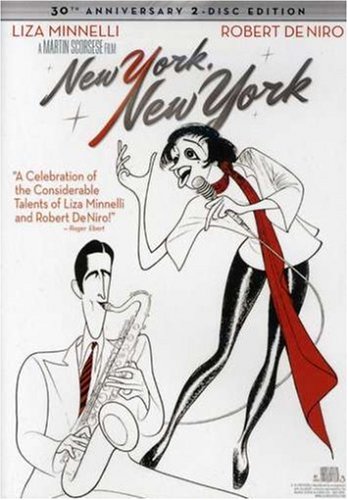
World War II has just ended, and the recently discharged Robert De Niro hits New York on the prowl for sex. He runs up against WAC Liza Minnelli, and the more she resists his advances, the more determined he becomes. There is more: he is a saxophonist, and she (of course) is a singer). So begins a tempestuous relationship between two artists whose enormous talents and equally enormous personalities mean they can neither live with nor without each other.
The idea of Martin Scorsese taking on the form of the classic musical is so bizarre that it had to happen, and here it is. Scorsese’s conceit is ingenious: all the conventions are there (the meet cute, the songs, the artificial sets and colours), but they collide with the naturalism of the performances and the emotions. A perfect case in point: wandering the streets at night, De Niro sees a sailor and his girl perform a dance together. It is a classic musical moment, but the only sound is that of a train passing. It is a scene of extraordinary beauty, grit, and cinematic truth. And it belongs in an extraordinary film.
Posted in: Disc Reviews by Archive Authors on February 19th, 2008
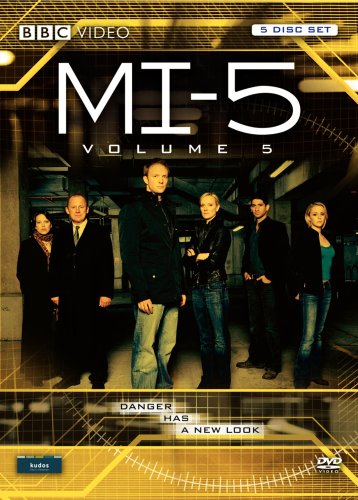
When MI-5 first hit American shores, Alias was in full swing, and the comparisons were inevitable. After all, both were sy shows set in a post September 11 world, and both were slick, fun thrillers. Fast forward to 2006, however, and the landscape has changed dramatically. Alias is now off the air, having crashed in spectacular fashion, yet MI-5 is still going strong. In fact, the show just seems to keep getting better and better.

I had my concerns when all the key members of the original cast departed one by one, but as the show goes on, I am realizing that the story lines here are much bigger than any one cast can handle. High pressure jobs such as these virtually demand a high rate of turnover, and the actors who come in to play these new characters are always first-rate. While early seasons dealt with your typical spy stories, more recent efforts are starting to tackle much larger issues of governance, such as terrorism and the delicate balance of power that holds a democracy together.
Posted in: Disc Reviews by Archive Authors on October 28th, 2007
Very few of us know A Clockwork Orange as the 1962 novel by Anthony Burgess, instead we know it as the 1971 Stanley Kubrick film adaptation. Not only did Kubrick direct this cult classic, he also wrote the adapted screenplay and produced it. There’s no doubt that Kubrick put a lot into this movie, and by now we all know the results. A Clockwork Orange is a perfect example of Kubrick’s career, highly controversial. After the cult hit 2001: A Space Odyssey, it was crucial for Kubrick to keep the audience on the edge of their seats, and what better way to do that than adapt A Clockwork Orange. There are those who would call this movie trash, and of course there are those who absolutely love it, then of course there’s everyone in between. Well A Clockwork Orange isn’t new news to me, it’s release on HD DVD already looks to impress.
The film takes place in a then futuristic England (ca. 1995) and follows the life of demented youth Alex DeLarge (Malcom McDowell, I Spy) who’s passions are Beethoven, rape, and violence. He leads a gang of thugs who share the same pleasures as him, including fights with rival gangs, beating defenseless tramps, and a violent home invasion. On another occasion while Alex should be at school he instead picks up women and takes them to bed. Eventually his gang members overthrow him and leave him knocked out at the scene of a robbery, where he is found and in turn sentenced to 14 years in prison. But after 2 years he is given the chance to be let out early if he participates in a newly formed aversion therapy technique. After time he is rendered incapable of committing violence, and returns home where everything is turned upside down. His parents have essentially replaced him, his old friends beat on him, and is incapable of fighting back. The real question at hand is, was he cured, or just made into a victim? Well if you watch the film you're sure to make your own assumptions and interpretations of its ending.
Posted in: Disc Reviews by David Annandale on October 26th, 2007
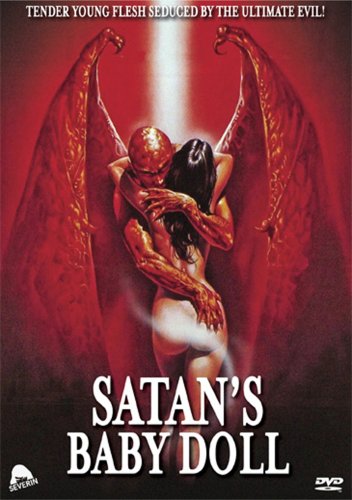
Mario Bianchi’s film is a 1982 remake of the recently reviewed Malabimba. The spirit of a newly deceased woman possesses her daughter, and proceeds to wreak havoc in the gothic castle that is the family’s domicile. Of course, given that the father is a murderous drug-addict, there isn’t that much for the possessed teen to do, as far as the plot itself is concerned. Curiously, this effort is less lurid than its predecessor (barring a couple of insanely OTT performances), with less nudity and taboo-busting, and also a rather less interesting deconstruction of respectable society. Plotting and motivation are haphazard at best. Still, it’s a not-unentertaining late-period Italian gothic, blessed with handsome sets.
Audio