1.66:1 Widescreen

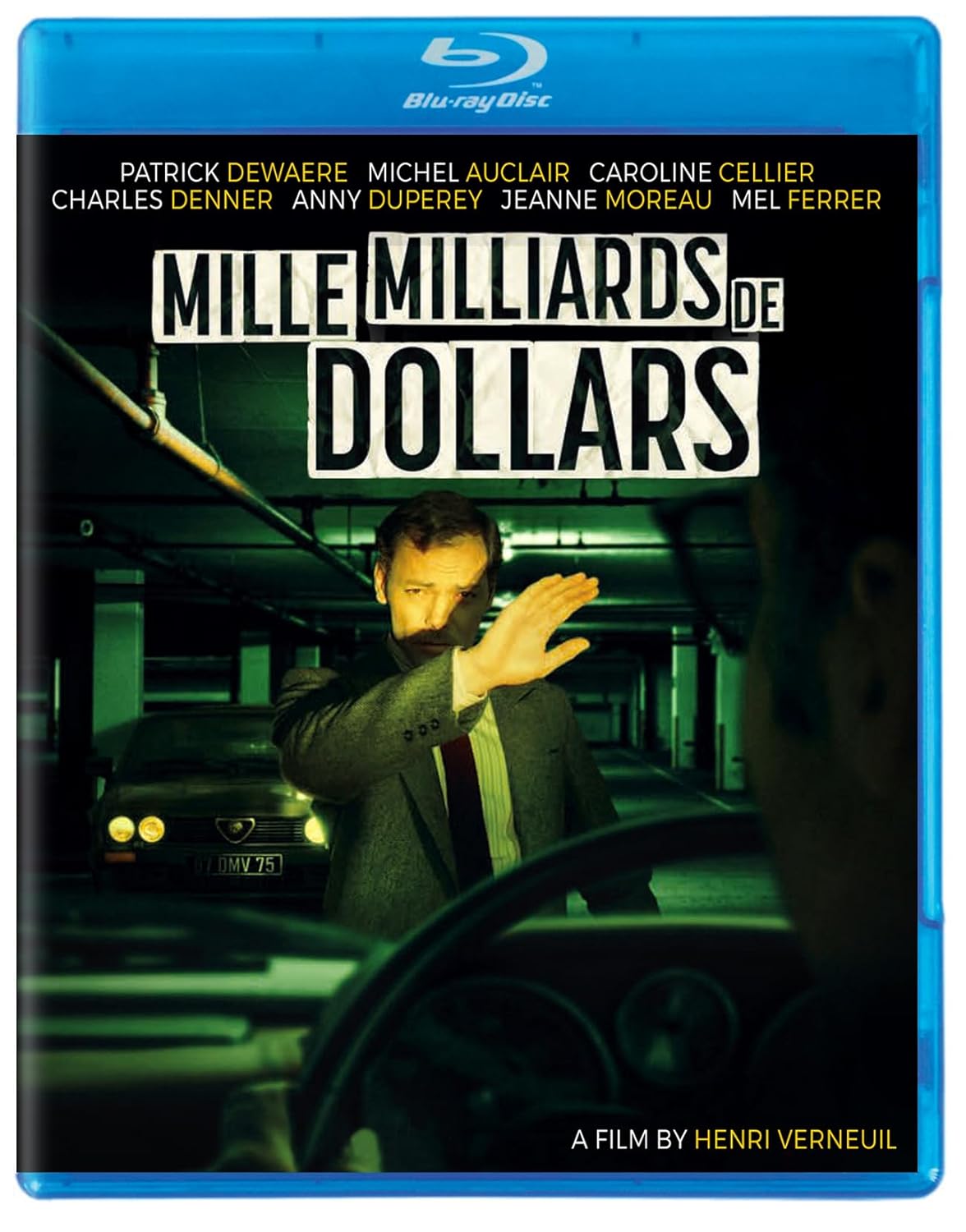
While times may have changed a bit, many countries, especially in the 1970's up until the turn of the century looked down in disgust at those from the United States, from the way they looked, to way they acted, right down to the language they spoke.  However, one of the things they most feared was that the US was going to take over their companies and do things the "American" way.  Today, we take a look at a film called Mille Milliards de Dollars.  In this film, we are introduced to the GTI, the Garson Texas International company, who are secretly taking over France Electronics, one of the biggest companies in Paris.  It's quite the scandal and should be a very interesting film.  Let's take a look.

We start the film with a call to the La Tribune switchboard.  They are looking for Mr. Paul Kerjean (played by Patrick Dewaere), and it appears to be a personal call.  Seems like the right time to put this person on hold and cue up the credits with some opening music.  Kerjean seems preoccupied for a little while (or simply a clever way to play more credits) and finally answers the phone to hear a mysterious voice.  The voice does not want to give his name, but wants to meet at a nearby parking garage to provide some very important information.

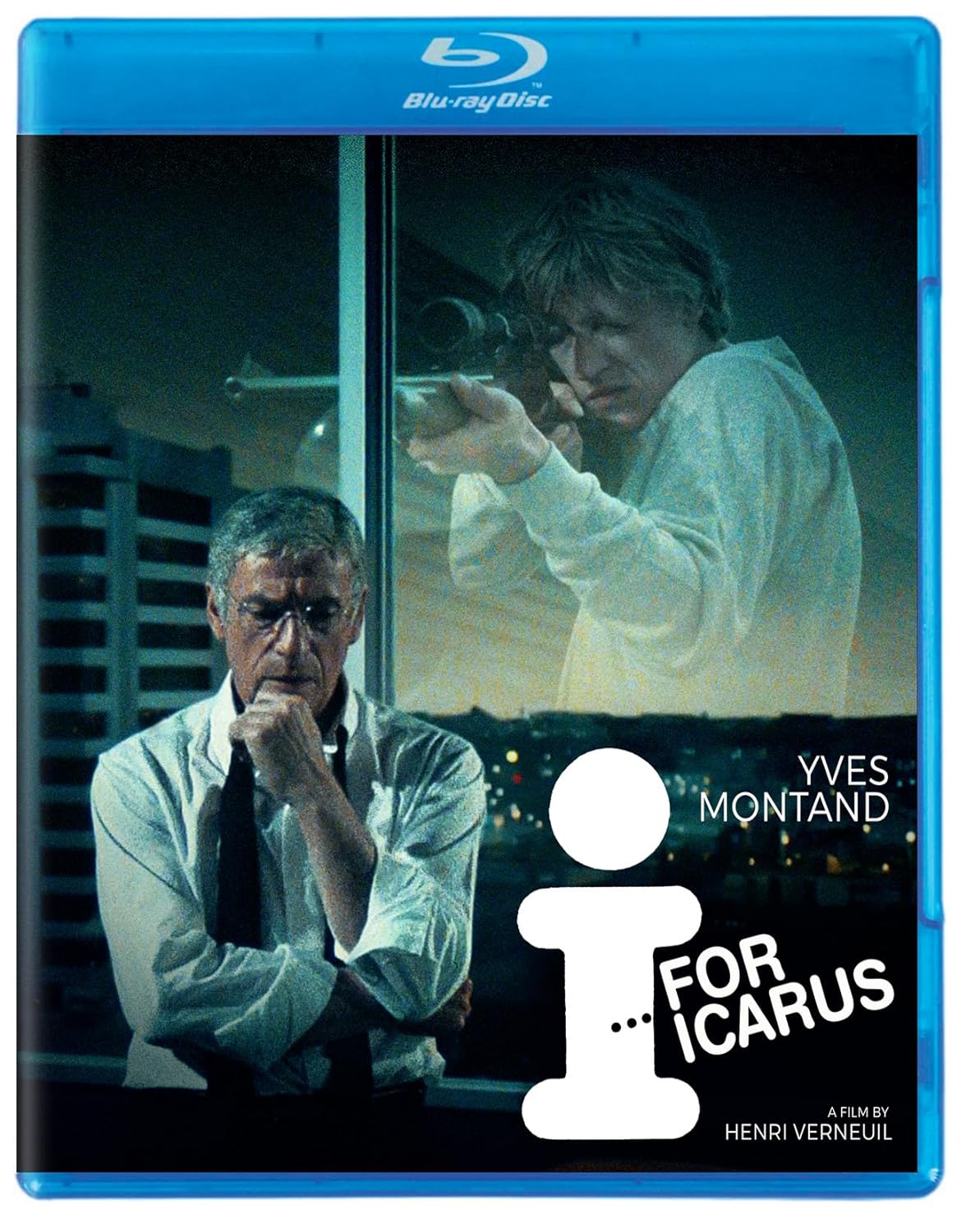
On November 22nd, 1963; President John F. Kennedy was assassinated in Dallas, TX at approximately 12:30pm.  Quite possibly everything else about the event can be disputed in such a manner, and I won't even attempt to confirm one theory or disapprove another.  We have had movie after movie about this assassination, taking it in about every angle imaginable.  Those movies are not regulated to the United States, either, as other countries have also dabbled in the storytelling of this infamous event.  Many times these foreign productions treat it as a fictionalized event set in their own country, but the similarities are often so obvious that it cannot be disputed.  Today's film is I ... For Icarus, a French film that explores the controversy behind the assassination of President Marc Jarry, who was killed by Karl Eric Daslow.  Attorney General Henri Volney disputes the lone gunman theory, and this is the story of that investigation.  That sounds awfully familiar; let's take a look.

The movie starts out with a simple phrase that essentially reads that this story is true as a I have imagined it from beginning to end.  Ennio Morricone's score is queued up as we launch into the credits.  Before I go further, I found it odd that they listed all of the people involved in the making of the film in alphabetical order before the movie even started.  That alone runs for several minutes before the movie even starts.  Anyway, on with the show.

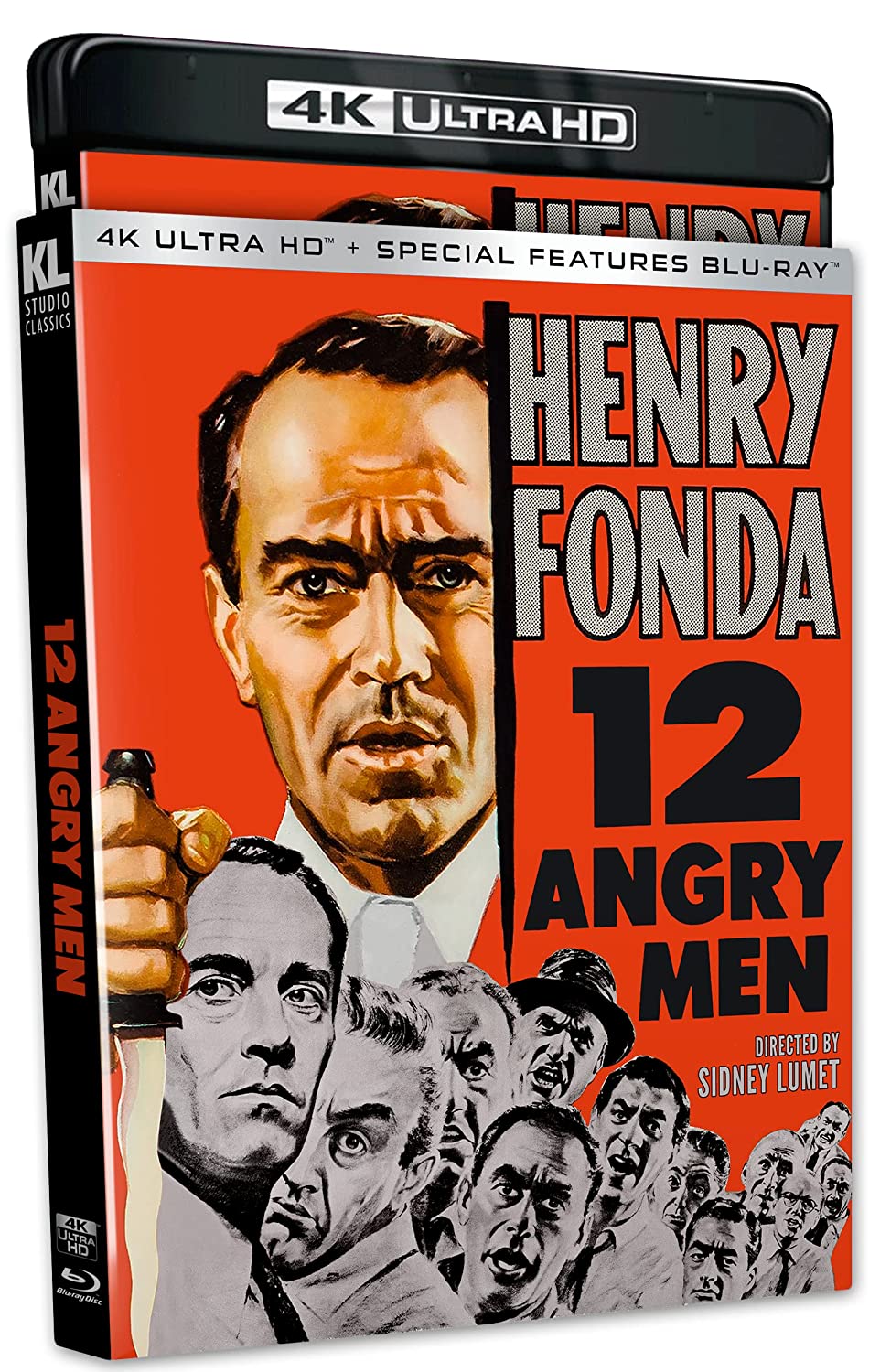
12 Angry Men is one of those rare films that appears to defy all the Hollywood constants and yet become one of the best films of its kind ever made. The setting is entirely too claustrophobic. With the exception of two bookend scenes, the entire film takes place in the tight quarters of a jury deliberation room. The story had only a couple of years earlier been the subject of a live television drama, so the story was far from a fresh idea. The director was a complete unknown who had not at that point directed a major picture. Enter Henry Fonda, the only member of the cast who was a strong A-list name. He was also the driving force behind getting the film made. He produced the film and was involved with most of the major decisions. With all of these elements going against it, you would expect the film to fail miserably, and that’s exactly what it did. During its premier run, the film only lasted a week and was a complete financial failure. It happens all the time, and we would expect the story to end there, but it didn’t.

Enter the 1970’s. There was a rush of independent television stations that were looking for anything and everything to fill up air time. This constant need for programming meant pretty much any film that could be had cheaply was bought and aired, often for an almost nauseating number of showings. 12 Angry Men was one such film, but something amazing happened. People began to notice just how brilliant the film actually was. By then that first time director, Sidney Lumet, had gone on to rather remarkable success. Films like Fail-Safe, Dog Day Afternoon, Serpico, Murder On The Orient Express, and Network had exposed just how much talent the young man actually had. Suddenly the kid from Philly was hot, and the public became interested in his earliest work. Everyone discovered what Fonda already knew back in 1957: Lumet was a genius. These television airings led to revival screenings at local movie houses, and before the first year of the 1980’s this one-time failed film was an admired classic.

"This rare Texas air will fix you right up."

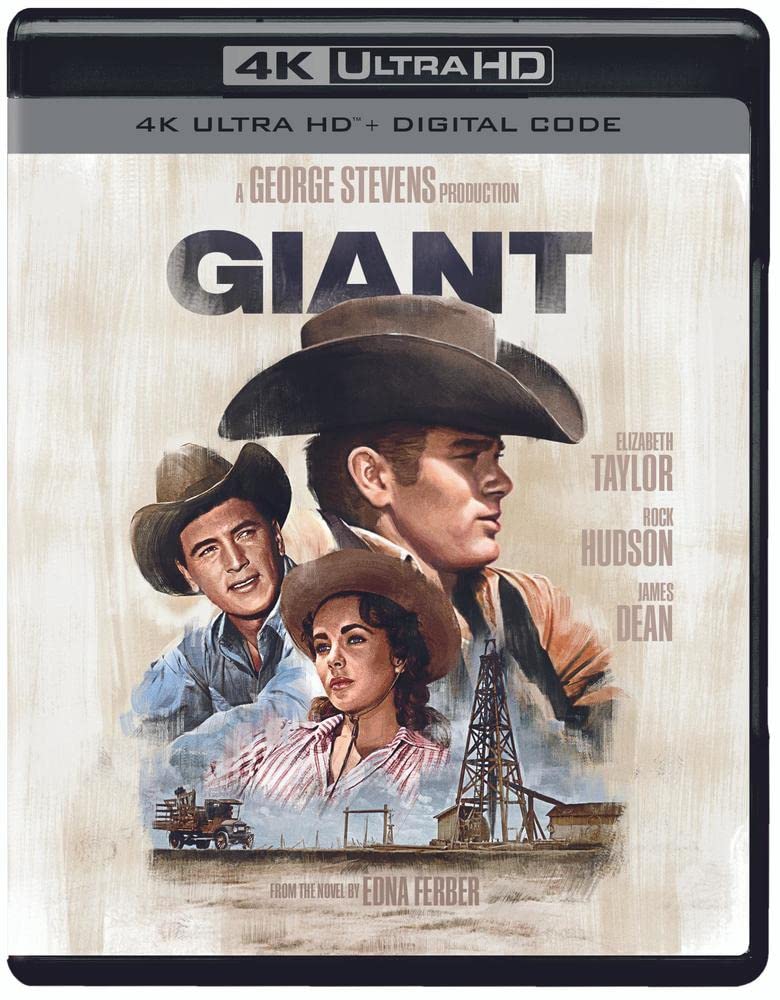
Until The Exorcist came along in 1973, Giant was Warner Brothers’ highest grossing film at the box office. It was also the last film made by James Dean, who killed himself in a car crash two weeks before production, requiring the services of Nick Adams to step in and provide some of the voice ADR work for Dean. The film earned an at-that-time record 10 Oscar nominations. You would think that a film of this kind of historical importance and success would have been well cared for over the years since 1956. You would have been badly mistaken if you had that belief. Instead the film was allowed to deteriorate to a point where the restoration experts originally thought it could not be salvaged. After great effort and searches for better elements, the film has been pieced back together and given an impressive 4K release, and the result is an image that appears to be something of a miracle, now available to the public with Warner Brothers release of Giant on UHD Blu-ray in its native and natural 4K.

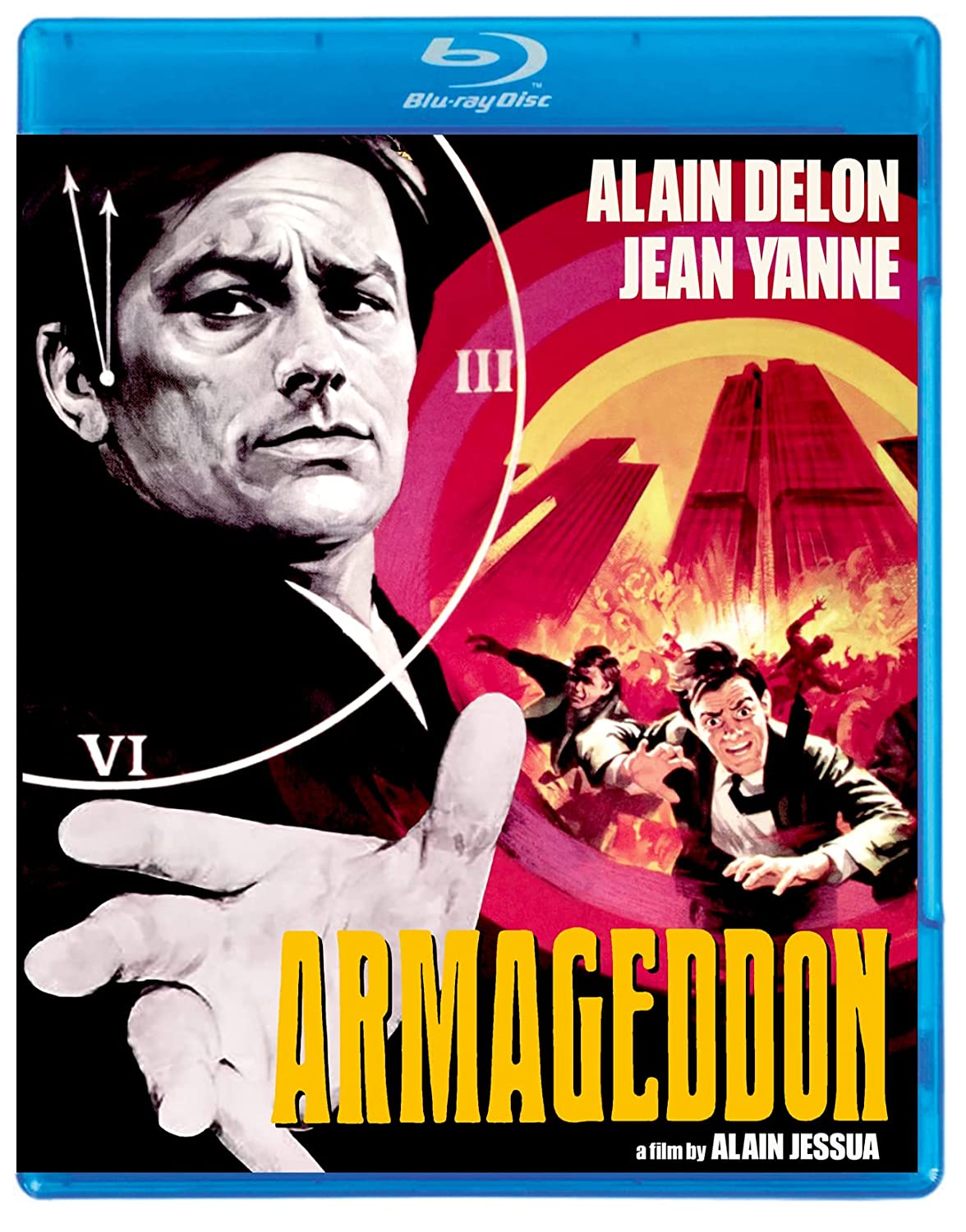
The power of the media is indeed one of the most powerful forces on Earth.  They have the ability to manipulate regardless of where the truth actually lies.  This exists on all sides of the political spectrum regardless of country, creed, or faith.  It is truly sad that such fabrication actually exists and even more unfortunate that people will take it in hook, line, and sinker.  Our film today, Armageddon, takes place in France, but plays havoc with manipulating those all over Western Europe by using the media to instill fear.  Fear of mortality, fear of losing life, a fear that makes the strongest person into a blithering child.  Let us take a look.
A SOS car stops, and a repairman by the name of Louis Carrier (played by Jean Yanne) steps out.  He yells at his friend, Einstein (played by Renato Salvatori) who is picking up trash that he just inherited 250,000 bucks.  It seems that his brother died and left behind a life insurance policy.  Furthermore, it is his lucky break, and he is saying goodbye to his dear friend.  Einstein asks him what he is going to do, and Louis replies, "Make the headlines."  Let's roll those credits.

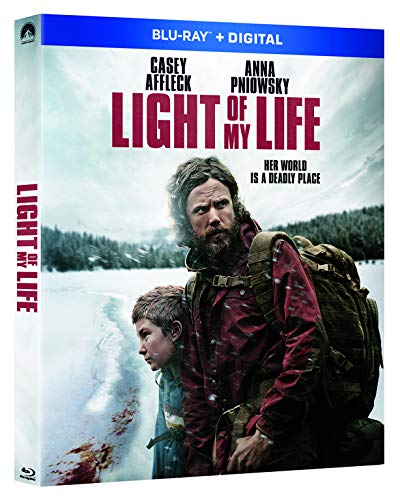
I wonder how this film would have been received if The Road simply didn’t exist.  It’s just about impossible to watch this film and not see the striking similarities between the films, though Light of My Life definitely isn’t as grim or as brutal as The RoadLight of My Life is the directorial debut from Casey Affleck, who seems to be following in his brother’s footsteps by taking the step behind the camera.  How does he fare behind the camera?  He definitely shows that he has a solid eye when setting up his shots and telling a story, though there is certainly room for him to improve.  It’s a bold move to make a post-apocalyptic film your first feature and decide to star in the film as well, but for me I was glad to see him take such a risk, and I’m impressed he almost nailed it. The film takes us into a world where most of the world’s female population has been killed off by some sort of a disease.  While the world isn’t quite in shambles, we definitely see that society has quickly crumbled as cities struggle to thrive. Rag (Anna Pniowsky) has somehow managed to survive this vicious disease, and with the aid of her Dad (Casey Affleck) he’s kept her alive and has been training her to survive in this hostile environment.  This is pretty much a father’s worst nightmare for his daughter to grow up in, and we get to see how her father deals with everything from suspicious travelers to simply educating her on puberty.  By keeping the film focused on the relationship between the father and daughter, the film excels at getting us involved and attached to this pair, but we also know in this type of film there are some inevitable bad things to come.  Here is the problem: the film manages to pull its punches when it comes to the danger of the world they exist in. Sure, things are hinted at, but for a majority of the film everything feels like it’s building to something that never occurs.

Do things need to be as bleak or as in-your-face as The Road for this to be good?  No, but for a film that has an R rating this feels like a very neutered film that just is afraid to go dark.  It’s obvious this film wants to be about a father’s love and show the extent a father will go to protect their child, but really I don’t believe this father figure would survive in this world or succeed at protecting his child as well as he has.  We don’t get to see Rag as a hunter, or having much if any ability to defend herself if someone were to attack her. You’d think these would be things he’d want to teach her, but instead he’s invested in teaching her to run and hide.

After Robert Eggers received best director out of Sundance, The Witch became a film that went on my radar. Following the release of the trailer to the film I was hooked; its startling yet beautiful imagery was enough to get my attention.  As buzz built around the film as it continued to awe audiences in various festivals, my anticipation for this film was getting out of control.  Could a film really be this great? Is it possible to make a film that still shocks and terrifies audiences?  By the time I found myself getting to this screening, The Witch now was a film that unfairly had something to prove to me, I poked the bear and dared this film to blow me away. As the lights dimmed and the film played out, I came away with more than I asked for.

The film transports us to New England in the 1630’s.  What is important to keep in mind is the time period. This is a time when scientific reason had no place and the settlers of the time were ruled by their faith.  The land that surrounded the villages was mostly untouched, and in the darkness, evil was believed to lurk.  Robert Eggers beautifully captures the time period here, everything from the sets, the costumes, to even the Old English dialect used by the characters is authentic and helps immerse us into this time. One of my few nitpicks with the film is that the language is so authentic I had trouble with some of the dialog, as did others around me. Perhaps subtitles could have been used, but I’m afraid it would have taken me out of this world created for us.

Even though I like to think I've seen more movies than the average bear, I'll admit to having somewhat of a blind spot when it comes to world cinema. So I'm a little ashamed to say I hadn't even heard of Paolo and Vittorio Taviani — the Italian filmmaking brothers who have worked together all their lives and started making movies in the 1950s — before I picked up this handy three-pack from the Cohen Media Group. The Taviani Brothers Collection features three of the siblings' most acclaimed work: Padre Padrone, The Night of the Shooting Stars, and Kaos.

Obedience is the air you breathe.”

There's the legal system...procedure...the almost-theatrical aspect of the law. And behind all that...”

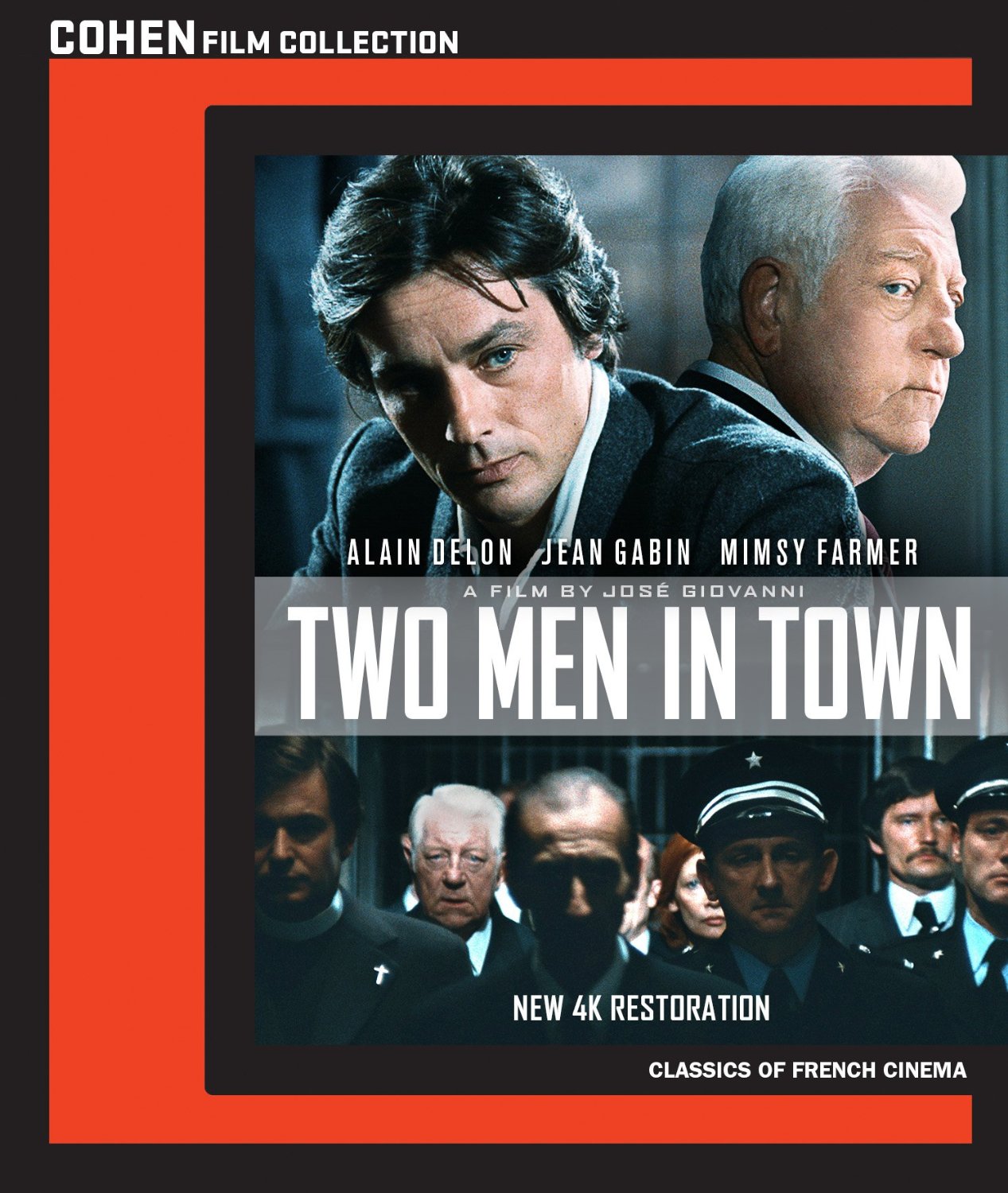
Those words are wearily spoken (in voiceover) by Germain Cazeneuve before we even realize the character is a social worker/passionate prisoner advocate. They also hang in the air until the conclusion of Two Men in Town/Deux Hommes dans la Ville, a blistering takedown of the French judicial system and capital punishment. (France used the guillotine to execute prisoners up until 1981, which is the year the country abolished the death penalty.)

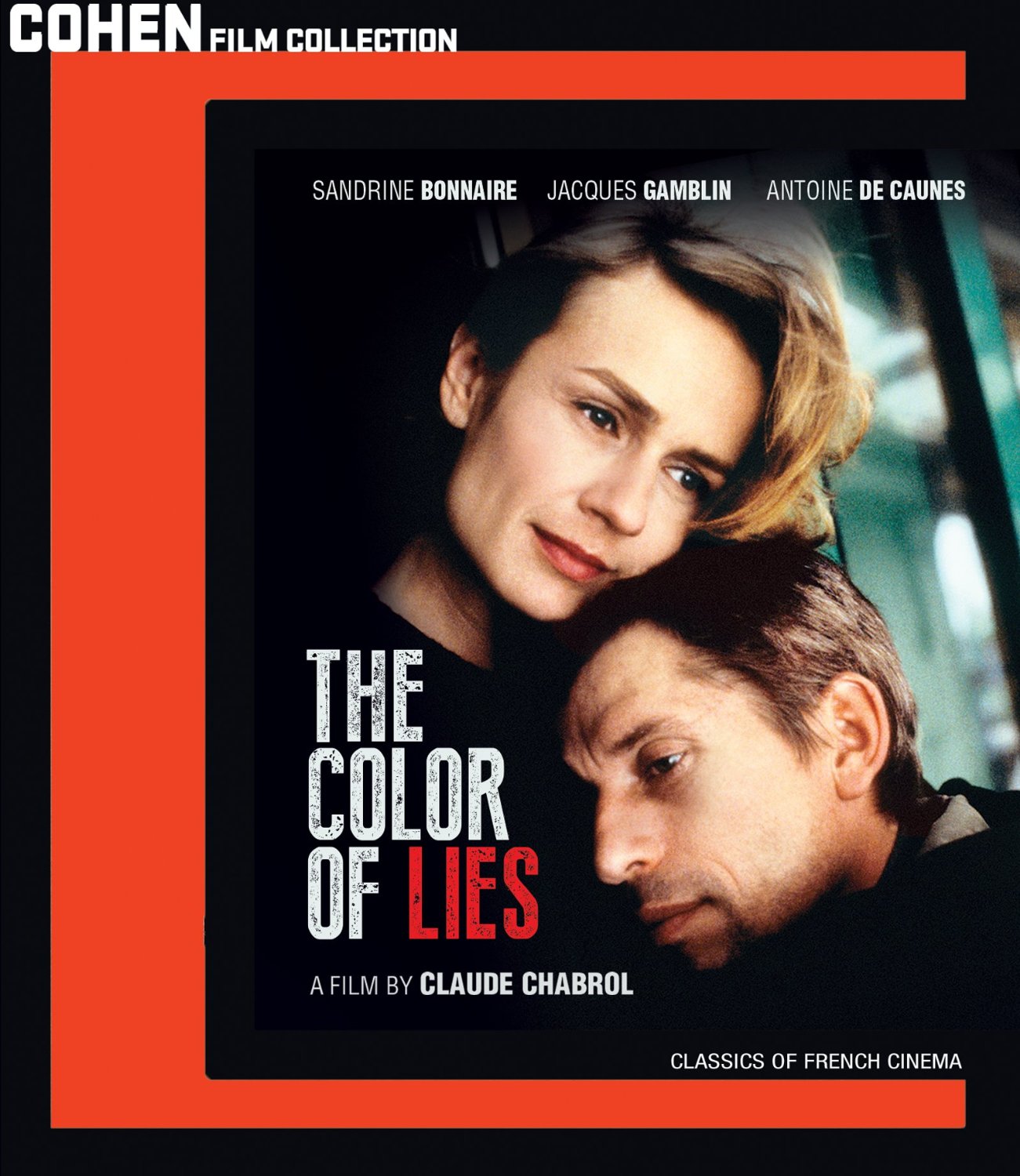
On the surface, The Color of Lies resembles many other murder mysteries set in a close-knit community. The 1999 film, however, is a late-career effort from Claude Chabrol, the French New Wave director who first gained acclaim alongside contemporaries like Jean-Luc Godard and Francois Truffaut in the late 1950s. So it’s not surprising to learn The Color of Lies is really a subtle, stylish exploration of the various ways people deceive each other.

The body of a 10-year-old girl is found near the home of struggling artist Rene Sterne (Jacques Gamblin) and his wife Vivianne (Sandrine Bonnaire). Rene was the girl’s art teacher and quickly becomes the prime suspect in an investigation conducted by Inspector Lesage (Valeria Bruni Tedeschi), the town’s new police chief. Despite the fact that Inspector Lesage has zero hard evidence connecting Rene to the crime, he becomes a pariah in his small Breton village and gradually loses the rest of his art students. And if things weren’t bad enough for Rene, he also has to contend with vain local celebrity Germain-Roland Desmot (Antoine de Caunes), who is aggressively pursuing Rene’s wife. (It doesn’t help that Vivianne isn’t exactly rebuffing Desmot’s advances.)