1.85:1 Widescreen

If you're the kind of person who feels the need to understand, at least, what kind of film you're watching, then this movie must be avoided at all costs. It wasn't until the bonus features when I discovered that this was, in reality, intended as a dark comedy more than anything else. There were certainly signs in the movie that might have led me to that conclusion, not the least of which is a 2-minute Iguana Cam moment that had me questioning what might have found its way into my iced tea. The other clue should have been the over the top caricature of a character I found in the performance of Nicolas Cage. But then, the trouble with Cage is, you really never know for sure when he's kidding around or trying to be drop dead serious. In any case, even armed with that information, I'm not sure it's possible to pin this film down to any particular genre or style.

Part of the problem comes from the movie's title. We are immediately led to believe that this movie might have something to do with the Harvey Keitel film, Bad Lieutenant. It does not. Even director Herzog was very unhappy with the studio’s decision to tie the film to those expectations by using the franchise title. Of course, it was intended to add some kind of name value recognition to the project. It didn't really work at all. The film only played at just under a hundred screens and pulled in less than $2 million of its $25 million budget. So no one was buying the misleading name. You'd think many times that number would have checked it out just to see what Cage was up to.

"We're back..."

The Chipmunks began life oddly enough as a singing group, of sorts. They were the brainchild of struggling songwriter Ross Bagdasarian and were named after the three chief executives at Liberty records. His own alter ego David Seville’s name came from his World War II Army station in Spain. The Chipmunks first appeared in a 1958 record called The Witch Doctor, but wouldn’t officially become The Chipmunks until later that year when The Chipmunks Christmas Song was released. It is for that Christmas music that I most remember the group. They first appeared as puppets on The Ed Sullivan Show. Alvin and the boys got their own television show in 1961. When Ross died in 1972, the Chipmunks would continue on under the guidance of his son. In 1983 The Chipmunks had yet another popular cartoon show and had appeared in countless specials and films. Today they are pretty much a hallmark at the holidays, and a Christmas song collection just wouldn’t be complete without them.

When you first look at the title for this entry in After Dark's 4th annual 8 Films To Die For, you probably have summed up images of a dank and foreboding cemetery where unspeakable horrors rise from their resting places to torment the, albeit temporarily, living. This is definitely a little bit of a case of false advertising and the misleading use of a title. These Graves are sisters, Megan (Grant) and Abby (Murray), to be exact. They're the kind of sisters that do everything together. You know the type. They almost speak in a secret language and appear to be soul mates. But Megan is a bit more outgoing and has gotten herself a job in New York, far away from the sisters' home in Arizona. Abby is a bit more introverted and is having a hard time dealing with the inevitable loss of her sister. So the two decide to have one more blast together. It's time for a road trip to visit the world's largest thermometer. Oh boy. Any horror fan worth his remote knows that the girls are likely not going to make it to see the big thermometer, and they'd be correct. They get sidetracked in a small town called Unity where they are encouraged to visit the abandoned gold mine called Skull City Mine.

Something very strange lives at the mine, and the town's folk have been feeding it tourists. The creature or entity is a dirt cloud that devours the hapless victim's soul. Unfortunately, the creature isn't capable of killing its prey, so the townsfolk have to pitch in and commit a little murder in order to satiate the beast. The Graves sisters are lambs being led to the slaughter. Of course, these two girls just wouldn't be enough slaughter fodder for the full running time of a respectable movie, so the filmmakers have populated the mine with other lovely co-eds to provide a bevy of interesting kills to amp up the movie's gore meter. Fortunately for the girls, the creature is willing to eat anybody, even its own followers if they should happen to find themselves dead. And the Graves sisters are all too happy to help some of them find their way to that cooperative condition.

If you're reading this review, you must surely already know what the movie is about. We're talking, after all, about what must surely be the single most celebrated case of mistaken identity in the history of film. Cary Grant stands up in a lounge at just the wrong moment and is mistaken for a man who doesn't exist. That utterly perverse mix of chance and paradox, leading to ever more dangerous situations for Grant, in an ever more complicated tangle of battling conspiracies, is so utterly Hitchcockian, it might just as well be trademarked.

The film is also very funny, as so much of Hitchcock's work is. Of course, much of his humour is black as pitch, and that mordant wit is certainly still present here, but there is also a joviality to the proceedings, due in no small measure to the presence of Cary Grant. Unlike the Jimmy Stewart of Vertigo and Rear Window, whose screen image of fundamental decency makes the deeply flawed, pathological aspects of his characters even more painful and weighty, Grant here keeps things light, as his character is just as aware of the absurdity of his perils as we are, and is just as likely to be amused. But if this is Hitchcock working in a lighter vein, that astounding perversity keeps poking through. What are we to make, for instance, of that creepily close relationship Grant has with his mother?

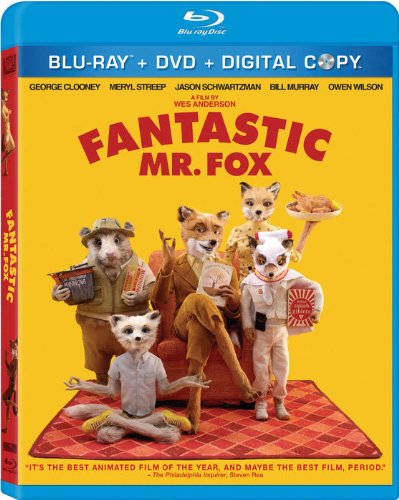
"Boggis, and Bunce and Bean. One fat, one short, and one lean. These horrible crooks, so different in looks, were none the less equally mean."

Roald Dahl was one of the more eccentric writers to come upon the scene. While he often wrote for children, his work is most decidedly dark and often quite sinister. He's most known for such tales as Charlie And The Chocolate Factory. His work has not been adapted to film as often as you might suspect given his popularity. The most famous was certainly Gene Wilder's Willy Wonka And The Chocolate Factory, which was far brighter and more cheerful than the original work. It took Tim Burton and his trademark brand of darkness to create the story Dahl intended in a more recent film which used the correct title of the work. This is not the first stop motion film to be adapted from his stories. Quite a few years ago we were given James And The Giant Peach, which enjoyed little box office acclaim. Wes Anderson is obviously a Dahl fan and immersed himself in the author's world as he prepared his screenplay for Fantastic Mr. Fox. The effort shows in the way Anderson captures Dahl’s pointed wit and social sarcasm. I think that if you're looking for something Dahl himself might have created, this is your movie.

It seems like yesterday, but about a year ago; my cat of 14 years had died. Her name was Burns. She had survived through my college years and the worst period in my life during my 20’s. Sarah had come into my life at that point and I guess my cat finally realized she could let go. Burns was always a loyal companion and there to bring me up when I needed it. I never had a better pet than her, and I probably never will. Hachi, A Dog’s Tale is another story about a faithful animal, adapted from a Japanese true story.

It’s hero day at a local school. One student named Ronnie (played by Kevin DeCoste) starts to spin the tale about his hero: Hachi. Hachi is a dog that was actually owned by his grandfather, Parker (played by Richard Gere). We then start to flash back to a Japanese man shipping an Akita dog that travels cross county and ends up in Rhode Island.

I'm sure that somewhere inside of Jared Hess's mind all of this makes perfect sense. I get the feeling that after he completed Gentlemen Broncos the writer/director/producer sat down to a screening with a group of his friends and the congregation rolled in the aisles with laughter. I'm equally sure that when his friends went home they were left scratching their heads. Somewhere in Hollywood a corner drugstore made a killing in aspirin or something stronger. In his own private world, where they all get the joke, Gentlemen Broncos might not be so bad. As for this reviewer, it was perhaps one of the worst films I've ever had the displeasure of watching. I'm putting in for hazard pay on this one, guys. This film will subject you to images that you'll pay good money not to have in your heads. Once again, a payday for the drugstores who likely made about as much off this movie as the film produced at its limited box office run. For anyone out there ready to accuse me of "not getting it" or some such defense of "your" movie. Look at the film's gross take of $113,000 against a $10 million budget and talk to me then.

Benjamin (Angarano) is a young awkward boy who likes to write fantasy stories. He's socially inept, helped in no small part in his problems by a neurotic mother who babies him and designs incredibly bad nightgowns. She ends up sending him to a writers’ camp where he gets to meet his idol, writer and illustrator Chevalier (Clement) who is really quite too full of himself to be believed. Chevalier is out of ideas, and he's about to get dropped by his agent if he doesn't come up with something good, and soon. When Benjamin submits his story Yeast Wars: The Bronco Years to a writing contest at the camp, Chevalier decides this is just the story he's looking for. He changes a few names and submits the story as his own. Meanwhile Benjamin has sold the film rights to his story to amateur filmmaking couple Tabitha (Feiffer) and Lonnie (Jimenez) who turn it into a gay space opera with incredibly poor filmmaking. The stuff is about to hit the fan as the two versions of the story are about to collide with Benjamin in the middle of it all.

I have to admit that I approached Old Dogs as cautiously as I'd approach a rabid junkyard dog. With a story that sounds like another retelling of Three Men And A Baby and the setup, and director, of Disney's Wild Hogs, it seemed pretty apparent that this film was not going to offer anything terribly new or exciting. When I started watching the film I discovered that I was pretty much right. This is very much Three Men And A Baby meets Wild Hogs. More importantly, I was also correct in believing the film wouldn't offer up anything all that original or new. What I didn't expect, and what will make this a film worth watching for you anyway, is that the delivery here is actually pretty special.

The story itself couldn't be any more contrived. Charlie (Travolta) and Dan (Williams) have been best friends and business partners for over 30 years. They run a sports marketing firm and have done pretty well, even if they're not the millionaires they always hoped they would be. They are the kind of Bromance couple that are always there for each other. In a story that Dan likes to tell clients to "break the ice", we learn that 7 years earlier Dan got divorced and it nearly tore him apart. Charlie pestered him into taking a carefree Florida vacation where a one night stand led to a quickie marriage and annulment as well as an embarrassing tattoo, which was supposed to shout “Free Man” across his hairy chest, but due to a mixup in translation with the tattoo artist says “Freemont” instead. Now the boys are on the verge of a $47 million deal with a huge Japanese company that will finally get them the riches they've been seeking. Feeling on a bit of a high, Dan decides to set up a meet with Vicki (Preston) to see if he can fan the old romance flames once more. He gets more than he expected, however. Vicki has twins, Zach (Rayburn) and Emily (Travolta) and, predictably, they are Dan's. Coincidentally, Vicki is about to serve 2 weeks in jail for a political activism stunt, and Dan ends up crushing the hands of her hand model friend, who just so happens to have been her babysitter for her time in stir. Dan, feeling suddenly fatherly, agrees to take the kids in an attempt to bond with his newly discovered family. The rest is pretty much what you would expect. Dan and "Uncle" Charlie try to seal the big deal and learn to care for the kids with the usual hijinks and comedic results. Because this is, after all, a Disney film, we know that the movie is going to end with one of those warm life lessons and everything is going to work out fine. Who does storybook endings better, right?

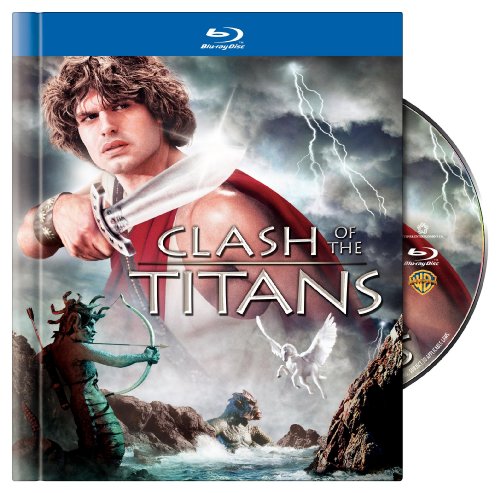
"Perseus and Andromeda will be happy together. Have fine sons... rule wisely... And to perpetuate the story of his courage, I command that from henceforth, he will be set among the stars and constellations. He, Perseus, the lovely Andromeda, the noble Pegasus, and even the vain Cassiopeia. Let the stars be named after then forever. As long as man shall walk the Earth and search the night sky in wonder, they will remember the courage of Perseus forever. Even if we, the gods, are abandoned or forgotten, the stars will never fade. Never. They will burn till the end of the time."

Talk about your perfect storm. You take the master of stop motion technology, Ray Harryhausen, and you combine those creature animation talents with one of the oldest stories surviving today in Perseus and Andromeda. How can the combination not be magical? The story has always been a favorite of mine, likely because I was born on the Summer Solstice, the critical moment of this story. I was preordained to love this film. The truth is that this film never got quite the recognition it so richly deserved. Now, on the cusp of a computer generated remake, it was my unmitigated privilege and joy to watch the original 1981 film in the glory of high definition.

Nia Vardalos casts herself across from her My Big Fat Greek Wedding love interest James Corbett, in an attempt to rekindle the magic that was the unlikely Big Fat phenomenon. As star, writer, and director, the weight of the film falls onto her shoulders and thankfully she has enough carry to drag a rather sparse plot from beginning to end with a some genuine laughs.