2.35:1 Widescreen

"He paws fiercely, rejoicing in his strength and charges into the fray. He laughs at fear, afraid of nothing. He does not shy away from the sword. The quiver rattles against his side, along with the flashing spear and lance. In frenzied excitement, he eats up the ground. He cannot stand still when the trumpet sounds."

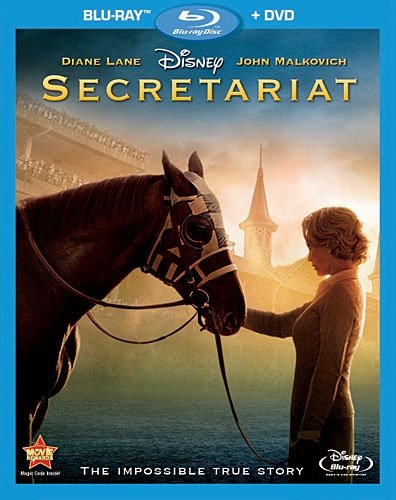
Disney has a grand tradition of putting out a certain kind of sports film. You know the type well. There is a champion that must overcome incredible odds and usually their own flaws to rise to the top of their game. Secretariat fits that mold, but only to a point. Usually the movie centers on the athletes themselves, and it's something from within that must change or conquer. With this film, the champion is a horse, and while that often doesn't stop the folks at Disney from allowing us to hear from their perspective, this is based on a true story and remains firmly planted into a reality, of sorts. But, we can't hear from Secretariat himself. Instead this is really the story of his owner Penny Chenery, and it's not a very flattering story at all. I'm afraid that I didn't find myself cheering for the hero this time, and therein lies the fatal flaw of Disney's latest rise-of-a-champion story.

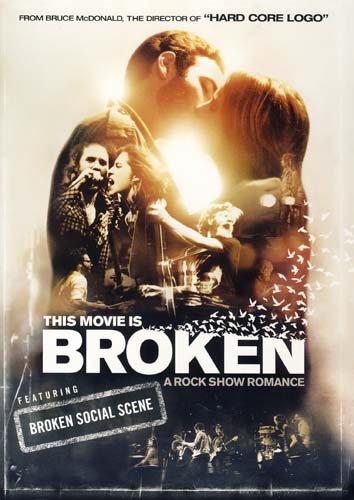
Not quite a concert film, not quite a drama. This film follows a young man named Bruno, who sleeps with his life long crush, the night before she moves from Toronto to Paris. On this final night, Broken Social Scene are playing a free show and Bruno uses a connection to get backstage passes as a last ditch effort to win over his crush. All the while, we are treated to a multi camera view of that very same concert, running the duration of the entire film.

Some concert films separate the songs with behind the scenes moments of the band leading up to that same show, but here we are separated from all that with the fictional romance plot. As things progresses, the music does what a soundtrack is supposed to do, and highlights the emotions of the scenes it accompanies, but since we are privy to the live performance of that same soundtrack, the passion of the musicians playing syncs up with whatever the actors are doing or feeling. There is a symbioses between the concert and the drama, making each better than they ever would have been simply on their own.

"Dear Screenwriter,

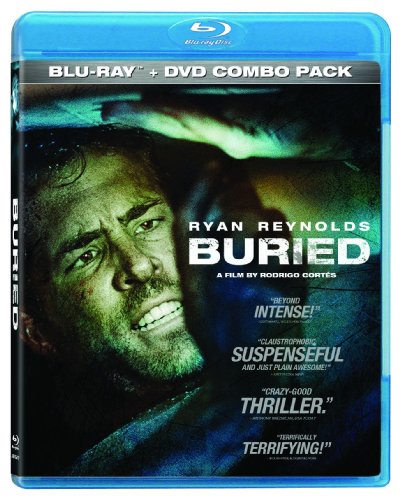
"Here’s your writing prompt: You are to write a feature-length screenplay with only one on-screen character. This character is to remain in only one location for the entire duration of the film, and that one location must be a 2' x 7' wooden box. You cannot use flashbacks, cut-aways, or any other narrative device that would take the action outside that box. Sound impossible? It’s not. In fact, all this exactly describes the film BURIED."

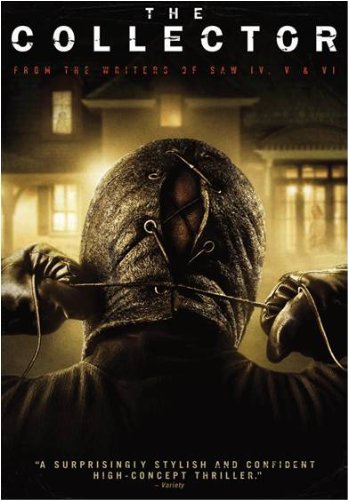
An ex-con trying to pull one last heist is sucked into a booby trapped house and must face against a madman who is torturing the family within. The makers of 3 SAW films (and not the first three) have ventured into familiar territory of nonsense gore, whisper thin plot, and then even more nonsense gore.

The title of the film, and a couple lines of dialogue, suggest our madman is a collector of people...and perhaps animals (?). How does this fact play into the film's action? It doesn't really. If he is indeed a collector, then he certainly has no sense of “mint condition” as he spends his entire time damaging and removing pieces of the very things he plans to collect. In fact, if the title could change to “The Trapper,” then suddenly the film might make more sense for it is all about the elaborate traps he sets, and how they are designed to horribly maim, and even kill in a couple of cases. He doesn't seem to be collecting anything. Yes, one of his previous victims is kept in a crate, but even that character explains that he's just bait to lure in the types of people he wants. This “Collector” has gone to insane lengths setting up this family's house with booby traps, and seems to want nothing more than to torture and kill, not collect.

There’s no doubt that Kevin Costner’s name has been attached to some pretty crappy projects during his career – Waterworld, The Postman, and 3000 Miles to Graceland to name a few – and it’s unfortunate, because the aforementioned dirt loafs have tarnished the fine film that we’re here to discuss, Dances With Wolves. Heck, even I had horrid recollections of the film from viewing it years ago in theaters. However, this review forced me to check the film out again and I actually found myself…enjoying it – and enjoying it immensely. What was going on here? Time has definitely been kind to Dances With Wolves – it has aged like a fine wine. However, it seems that Costner’s later career choices had clouded my memories of the film, and thankfully, I was able to watch it again to find out how wrong I have been. It’s a good thing too, as I might have deprived myself of this film forever had it not been for this review.

For such a “bad” film, it actually racked up during the 1990 Academy Awards ceremony, as Dances With Wolves took home seven Oscars (Director, Adapted Screenplay, Cinematography, Sound, Score, and Editing) and had a worldwide gross of over $300 million when it was all said and done. (Heck, $300 million is a load in today’s dollars.) For a debut director, who before was only thought of as a marginally decent actor, that’s not a bad way to start a career behind the camera.

"If you're going to face the fires of Hell, you need to be prepared."

And that's exactly what someone should have told the folks behind the horror thriller Case 39. This has been one of those cursed films from the very beginning. The film appears to have begun production way back in 2006. It appears the film was done, at least in one form, by 2007, but there were reshoots and pick-ups for so long that it's going to be hard to imagine what the film might have originally been intended to look like. A fire on the set destroyed quite a bit of the set; fortunately no one was badly injured. The movie took so long to make that the life changes are quite noticeable in the characters. When the film did finally reach the box office on October 1st in 2010, the numbers were very disappointing. The film only took in $13 million with a budget that is listed at $26 million but was likely considerably more than that when you put it all together.

"I love it when a plan comes together."

I love it when a movie comes together that offers you some value for your entertainment dollar and manages to touch a bit on the old nostalgia strings along the way. I'm not going to try to convince you that the new A-Team film is a great movie. It's not even close. But neither was the series a great series. What I am going to try to convince you to do is go out and at least rent a copy of the A-Team movie and allow it to do exactly what it was intended to do ... take you for a little ride while jogging those old memories just enough to bring the occasional smile to your face. Think about it. Could you really ask a movie to do anything more?

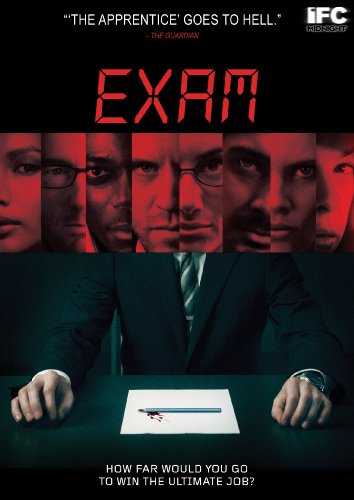
8 corporate hopefuls gather at a mysterious location and are instructed to take one final exam as a final test to see which one will walk away with a prestigious job at a major company. The trouble is their exam papers are blank, and it would seem that there is not even a question to answer. For 80 minutes each must solve the puzzle without being disqualified by breaking one of the few rules, all of which double as a riddle/clue to solving the exam question and answer.

There are no set changes, no flashbacks to see more about the character's past, not a single thing that takes us outside of the tiny exam room. As our young hopefuls are slowly eliminated from the competition, the story becomes all the more engaging. The cryptic, “think WAY outside the box” puzzle solving (along with an interesting science fiction angle to the story that is revealed about midway through) makes this film resemble a film like Cube more than 12 Angry Men. Normally a film like this would hinge on the characters, but the riddles and their manner of deducing then trying to solve them is ample for maintaining the audience's interest. Like how the setting was far more interesting than the characters in Cube, the riddles are more interesting than who is trying to solve them.

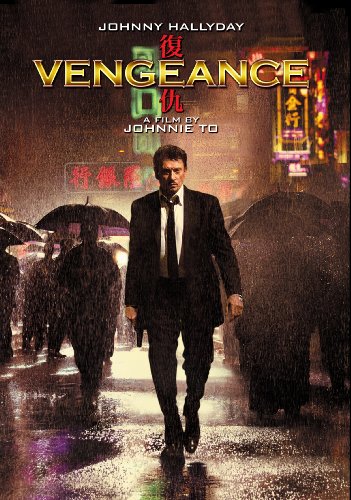
In Macao, a trio of gunmen butcher a family. Only the mother survives (barely), and her father (aging French rocker Johnny Hallyday, looking as hardboiled and grotesque as Mickey Rourke), a restaurateur who knows altogether too much about how to get by in the violent underworld, comes to town and sets out on a mission of vengeance. He hires a trio of hit men, and works with them in tracking down his enemies. They have to do so quickly, though, because Hallyday has been shot before, and the bullet lodged in his brain is gradually stealing his memory away. He wants his revenge while he can still remember why it is necessary.

Johnnie To's crime thriller is as stylized as anything John Woo did in his prime, and shows, post-Woo, that there are still new ways of choreographing violent shoot-outs. A massive showdown in a junkyard is a set-piece of such visual beauty as to be worth the price of admission in and of itself. The mix of gangster film, revenge saga, Memento, and fable will understandably be a bit rich for some palates, but taken in the right spirit, this is intense, deliriously excessive entertainment.

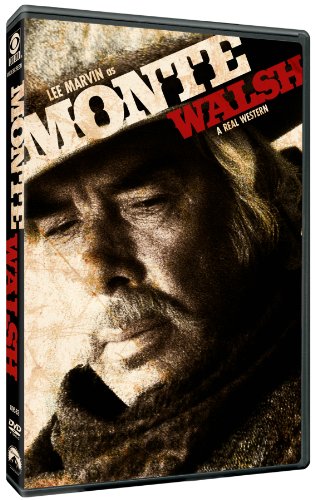
Monte Walsh and Chet Rollins (Lee Marvin and Jack Palance) are two cowboys in an era where their kind is becoming extinct. After a hard winter in the mountains, they discover that most of the ranches they knew have vanished, the land being bought up by Eastern corporations. They find work on the ranch once owned by Jim Davis, though he now answers to accountants back East. And though life, at first, seems all right, bit by bit they witness the end of their era, as a way of life dies, and the men who lived it are pushed to suicide, desperation, robbery and worse.


There were numerous “death of the west” movies in the late 1960s and early 1970s, films whose subjects also reflected the fact that the Western itself, as a genre, was entering a near-terminal decline from which it has never fully recovered (these days, if one Western per year comes out, that's doing pretty well, and yet there was a time when there were more Westerns pumped out than any other genre). Unlike the blaze of glory tales of Sam Peckinpah (The Wild Bunch being the best example), Monte Walsh is more of a tone poem. There is very little plot. We watch a few seasons in Monte's life, see him at work and play, see the tentative romance between him and prostitute Jeanne Moreau, see his sadness over a vanishing world and disappearing friends. Then, an almost subterranean thread involving the increasingly desperate straights of Mitch Ryan rises to the foreground in the final act as tragedy descends.