2.40:1 Widescreen (16:9)

"I have come to tell you a story..."

Director Phillip Noyce is no stranger to the spy-and-espionage genre. His father was an intelligence officer with the Australian government, and he spent many years of his childhood listening to tales of derring-do. He often recounts in interviews how he would play spy as a young man. He would pick out some stranger he'd see while out and about. For the next several hours he would follow that person, noting their actions, all the while practicing not getting caught. He'll tell you that his nerve got the best of him or he might have very well found himself following in the footsteps of his father. Perhaps someone else would have been making films about his exploits. Instead he gravitated to the next best thing. He decided to make movies about such things. Some of those films like Clear And Present Danger and Patriot Games are solid examples of the genre. Others might not be quite so successful at the box office but are often better than their numbers might indicate. Count Salt in that category. Salt was obviously intended to start a new franchise. The ending doesn't even hide the setup for another film. But the reality is that the movie made only about $118 million on a $110 million budget. $7 million might sound like a lot of money to you or me, but in Hollywood those aren't the kinds of numbers on which solid franchises are built. Too bad, really, because Salt is a pretty entertaining film.

Written by Diane Tillis

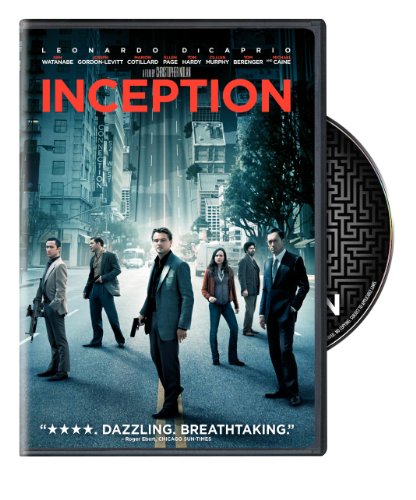
It is hard to talk about Inception without spoiling something. It is also hard to read any review and get a full feel for the film. Inception truly needs to be seen to understand why it is so amazing. On one level, it is an incredible action film that revolves around the heist scenario set in exotic locations such as France and Japan. On another level, the core purpose of the film is a complex discovery into dreams and the subconscious, and the consequences that come with manipulating the mind of another person. Inception is packed with inventive action, high drama, ideas and emotion. It is a masterpiece; whether it makes a billion dollars or not, it is a triumph for mainstream cinema. As the complexities of the film unravel themselves on the screen, Inception stands as a reminder that there is more to mainstream cinema than mindless entertainment. It forces the audience to think and question everything they are experiencing. If you give Inception the opportunity, I promise you will not be disappointed. In fact, you will want to talk more and more about the film once the credits roll to figure out what it all means. This is a sign of great cinema! Just for precaution, possible spoilers ahead!!

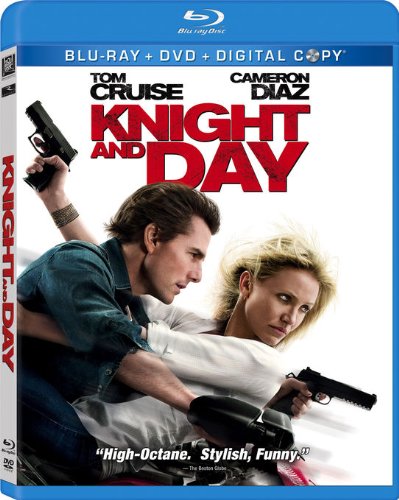
A suave Tom Cruise and a flustered Cameron Diaz (wow, what a stretch for both actors) bump into each other at Wichita airport, and a few minutes later do so again. Diaz thinks she might be on to something with the charming hunk, but she is more accurately into something, and in far out of her depth, as the plain flight turns into a gun battle and forced landing. Before she knows it, she doesn't know where to turn and whom to trust: the various menacing government officials (headed up by a sinister Peter Sarsgaard), or the cheery but possibly psychotic rogue Cruise. There will be many a narrow escape and an international location visited before she knows the answer.

Tom Cruise's return to action-adventure films was almost more notable for the off-screen backstory than the on-screen action. This, of course, was the film he chose to do when he backed out of the darker-edged Salt, where he was replaced by the rather more convincing Angelina Jolie, and which proceeded to beat Knight and Day at the domestic box office. (In fairness, neither film was a giant hit, and the overall worldwide business of both was pretty close.)

"The war between sorcerers was fought in the shadows of history, and the fate of mankind rested with the just and powerful Merlin. He taught his secrets to three trusted apprentices, Balthazar, Veronica and Horvath. He should have trusted only two."

It was one of the most memorable Walt Disney moments in the long history of animation. The Sorcerer's Apprentice segment in Fantasia would become the most recognizable piece of the film. It would be released many times over the years since 1940, so that even people who had never even heard of Fantasia recognized Mickey Mouse as the sorcerer's apprentice who abused the power he had learned to bring a broom to life and do his chores while he slept. The magic got out of his control and mayhem ensued. The images linger still. Now the combination of Jerry Bruckheimer, Jon Turteltaub, and The Walt Disney Studios has teamed up for a new adventure film very loosely based on that original material. This is the same team that brought us the National Treasure films and part of the team that continues to bring us the Pirates Of The Caribbean films. If you liked those franchise films, you can expect more of the same in The Sorcerer's Apprentice.

As one could expect, I read a lot of books when I was a kid. I stuck with the classics from Ronald Dahl, Tolkien, and even Charles Dickens . But among all of the male authors in this boy's life, I also read a few female ones too. One stands out in particular, Beverly Cleary. From Henry Huggins to Runaway Ralph and the beloved Dear Mr. Henshaw , I clearly enjoyed her work. But I must confess, I even read the beloved Ramona books, so naturally I was delighted to see Ramona and Beezus on my doorstep.

Ramona Quimby (played by Joey King) is 8 and three quarters and attends the third grade. She would be a normal student if it weren't for one thing: her overactive imagination. It gets her into trouble more often than not and leaves her at the mercy of her third grade class. Apparently, it also leads to less than desirable grades and a report card that she has to hide when she gets home.

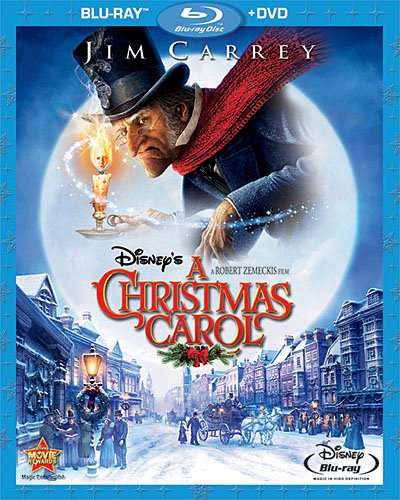
It was in 1843 that celebrated writer Charles Dickens created one of the most iconic symbols of Christmas with his publication of A Christmas Carol. It was a cautionary tale for an industrial revolution that was getting caught up in its material worship. Dickens intended the story both to entertain and to put the spotlight on what he considered already then was an over-commercialization of the Christmas season. Little did he know that his very story would become a huge part of that commercialization. While the writer gave us many memorable characters like Oliver Twist, David Copperfield, and Little Nell, perhaps none have become so well known as Scrooge and Tiny Tim. It's certainly true that no other story has been used as much in film, television and on the stage.

For most modern folks it all started in 1951, almost 100 years after the story's publication, with the definitive film staring Alastair Sim. That movie has captured the hearts of several generations. But it didn't begin nor did it stop there. The three Christmas ghosts have haunted over 100 film and television versions over the years. Even Fred Sanford was visited by the specters, resulting in at least a temporary temperance of his biting grouchiness. With such a classic tale, it was only a matter of time before the computer-animated genre and the motion-capture technology were used to deliver a new movie for the holiday masses. Thank our lucky stars, my gentle reader, that it was Walt Disney Studios that took up the task. The results could have been rather unfortunate.

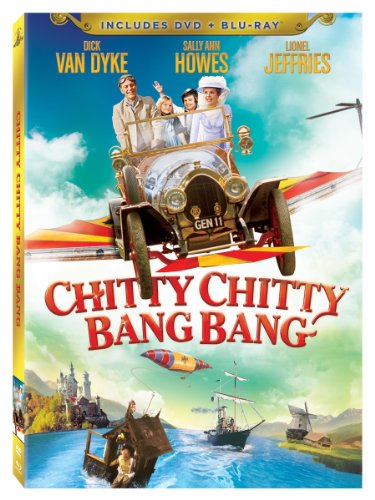
His name was Fleming, Ian Fleming, and he would go on to create the most famous spy in literary history. James Bond would actually be based on Fleming's own experience in Her Majesty's Secret Service. But Fleming had another side. It's hard to believe that the man who gave us such ubervillians as Dr. No and Goldfinger brought us one of the most enchanting children's stories of our time. Chitty Chitty Bang Bang's bond association doesn't end with its celebrated author. Albert "Cubby" Broccoli might have been just as instrumental for the success of Bond as Fleming himself. It was Broccoli who saw the potential and snapped up the rights to the spy series. He turned it into the famous Bond film series that still carries on the same traditions today, only at the hands of his daughter Barbara Broccoli. So it is only fitting somehow that Cubby would be the one to bring Fleming's children's story to life in movies, as well. The Bond associations don't end there. Director Ken Hughes brought us Casino Royale. The comic villain of the movie would be almost unrecognizably played by Gert Frobe, none other than Auric Goldfinger himself.

MGM has long been known for its epic musicals. The studio had a reputation for sparing no expense while delivering some of the most sweeping musical films known to mankind. Complete with complicated dance numbers and casts of thousands, the MGM grand-style musical was once something to behold. But Chitty Chitty Bang Bang wasn't really the model for these impressive spectacles at all. In fact, this movie follows more closely the Walt Disney model that it is one of the most misidentified films in the popular conscience. In a survey taken in the 1980's, only 1 out of 4 respondents correctly identified the film as an MGM production. The rest were confident that Uncle Walt and his Mouse House had given us the popular children's musical.

When Wes Craven delivered his first Nightmare On Elm Street film back in 1984, there wasn't much expectation for the film to do anything but deliver a little profit for the new independent studio New Line Cinema. The film did quite a bit better than that. It made the small studio into a player in the industry with the budget to make mainstream films that would have never been possible if not for Craven's little Nightmare. You could say that The Lord Of The Rings owes its very existence, at least in the form of the Peter Jackson films, to Freddy Krueger. Of course, the studio just couldn't help itself, and they continued to cash in on the franchise time after time. After the 7th film, it appeared that even the fans were about done with Freddy Krueger. A misguided attempt to pit Freddy against Friday The 13th's Jason might have pulled in good money at first. But the film ultimately disappointed, and a follow-up became very unlikely, indeed. But, like all good cinema monsters, you can't keep a good fiend down. A Nightmare On Elm Street joined the increasingly long line of horror films that received the remake/reboot/reimagining/regurgitation treatment.

A lot of the 70's and 80's slasher films have been remade by now. All of the big franchise names have been reborn. Michael Myers, Jason, Leatherface, and now Freddy Krueger have all been given the reanimation treatment. With most of these bad guys, there was little problem with replacing the man behind the mask. No one actor had played any of these characters exclusively throughout the franchise run. While Kane Hodder came closest with both Freddy and Leatherface, he was not the only performer under the hood for either monster. Freddy Krueger was different, however. In all of the Nightmare films of the original run, Robert Englund had been the only actor to play Freddy. There was an attempt to replace him in the early goings of the second film, but the filmmakers discovered rather quickly that you can't just put a stuntman in the makeup and turn him loose. Freddy had a personality that had become quite intermingled with that of Englund. So the very first question that had to be answered when the subject of a do-over came up was who was it going to be in the red and green sweater wielding that knife glove. Could anyone but Robert Englund make the part work?

A hitman is getting into his senior years; a notable luxury for someone in his line of work. To feel more secure, he plans to pull off one last job before calling it quits. In order for this film to have an interesting plot something surely must go wrong, and it does. Now reunited with his son, who is aspiring to learn from dear ole (estranged) dad and elevate himself in the crime world, Charlie Valentine hopes to settles things in one way or another.

Gangster films either have too much Scorsese or too much Tarantino in them, and not enough originality. With a slew of typical scenarios, over-wrought tough guy dialogue and enough self-congratulatory bravado to make Joe Pesci blush, this film is hardly bringing anything fresh to the table.

Written by Diane Tillis

As the title suggests, Attack on Darfur depicts the genocide occurring in Darfur, and it doesn’t get more real than this.