DVD

Try this plot on for size: Gordo, an ape owned by carnival sideshow barker the Great Lampini (Paul Richichi), gets loose and rampages about Long Island, raping and killing and stealing cars (!). Meanwhile, the moronic detective in charge of the murder case dismisses the idea that an ape is the culprit, and casts his racist eye on the unfortunate Duane Jones (Christopher Hoskins, whose character is named after Night of the Living Dead's lead).

Though made in 1997, this shot-on-super-8 effort does its level best to come across as the Lost 70s Grindhouse Flick, and it has to be said that it does a pretty credible job in capturing that trash aesthetic. There is also wit on display, most prominently in Lampini's deliberately overwrought and baroque dialogue. The film does, though, take its time getting to the rampage: nearly half its 77-minute running time has elapsed before the attacks begin. That first thirty minutes consists largely of people arguing, which has varying entertainment value. The gore scenes have a charming DIY feel, but there is a nastiness to the attacks on women that, as with Blitzkrieg: Escape from Stalag 69 (director/co-writer Keith Crocker's other recently released effort), is in some ways more off-putting than those of its inspirations, given how much of the rest of the film works as a goofy comedy.

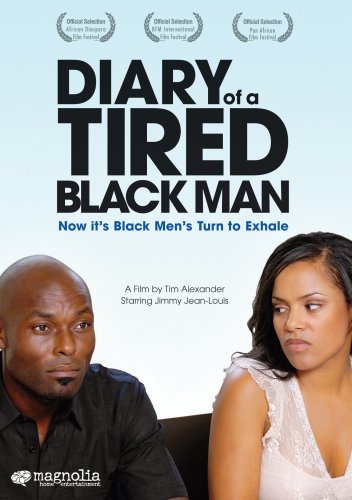
With Robert Rodriguez releasing films where he directs, writes, scores, edits and produces some people humor themselves into believing that anyone can do the same.  With Diary of a Tired Black Man, Tim Alexander attempts to accomplish a similar feat.  Jimmy Jean-Louis headlines the small cast as James who recently divorced his wife Tonya (Paula Lema)of four years. Alexander directed an internet clip that dealt with this relationship and from that 3 minute clip he adapted it into a feature film.  The story evolves into a complex investigation of relationships from the black male perspective. 


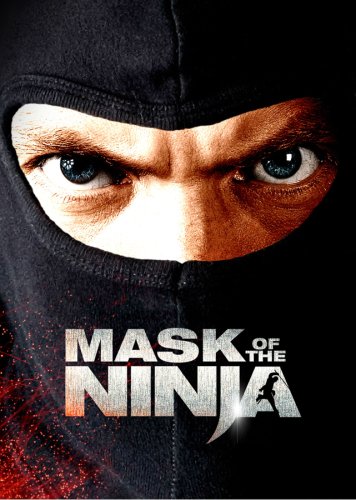
Bradford May, oh Bradford May. I have a good history of watching movies directed by Mr. May from a couple of Darkman sequels to the more recent Ring of Death. His style is pure popcorn and an attitude of leave your brain cells by the door. It is only fitting that I was interested in seeing another flick with his name on it. This one was called Mask of the Ninja. Right away, it sounded like a classic Bradford May movie. However, after watching it, I realized that Bradford had broken some laws in his production. He had broken the sacred five rules of portraying a ninja.

Danny (played by Dominic Rains ) is a cop impersonating a typical street punk who pushes illegal drugs. He gets caught wearing a wire when an undercover cop playing the guitar for the local band makes the save. His name is Detective Jack Barrett (played by Casper Van Dien). In the middle of the arrest, Danny gets a call from his girlfriend: Miko (played by Kristy Wu) who sounds like she is in dire trouble. Jack takes the call instead and decides to investigate what exactly is going on.

The sleaze of the grindhouse era inspires a special kind of love. Warped, dubious, indefensible, yet real all the same. Part of that love is a nostalgia from those bad old days. But it takes an even more special brand of that special love to seek to recreate forgotten exploitation genres, and yet that is what we have here: the first Nazisploitation flick in close to thirty years.

With Nazi hunters closing in, former SS commandant Helmut Schultz recounts to a priest his activities as the ruler of Stalag 69. In the closing days of the war, he performs terrible scientific experiments, along with the expected torture, on an international (and co-ed) group of POWs. Said prisoners, meanwhile, plot their escape and their revenge.

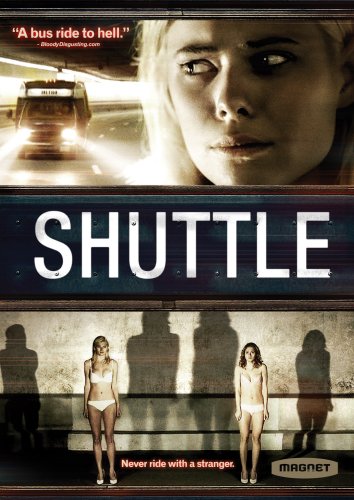
We all knew it had to happen eventually. With the success of the “torture porn” films like the Hostel and Saw series, we had to expect that there would be some lightweight twists and turns on the thriving genre. Shuttle is one of those attempts. It gingerly treads on the now familiar ground of the aforementioned films, but each time it makes the obvious moves in that direction, it pulls back and stalls. Edward Anderson is the writer and director of this mess. It was first attempt at either, and it shows, very badly. He couldn’t decide if he was making a traditional slasher film or one of the more trendy “torture porn” exorcises. So, he ends up doing neither effectively.

The setup was pretty much what we’ve already seen a hundred times. Two young women are on their way home from a Mexican vacation. It hasn’t been going all that well, and the plane ride back to the States was bumpy and plagued by horrible weather. Mel (List) is apparently engaged, and Jules (Goodman) is apparently her best friend. It’s late, and they just want to get home. They opt to accept a ride from a shuttle driver (Curran), who offers to take them for half price, instead of accepting a ride from two guys they just met. They figure the shuttle would be safer. But, of course, if that were true we couldn’t have 106 minutes of movie. By the time this hell ride is over you’re gonna wish they’d just taken the offered ride. The girls would be home safely in their beds, or perhaps the guys’ beds, and your life would now be 100 minutes or so longer to do some of those things you’ve promised yourself needed to be done.

Donkey Punch was partially funded by the British Lottery. That means you might have actually lost twice. Once if you bought a losing ticket, and again if you watched this movie made possible by your gambling itch. Mama always said nothing good comes out of gambling. Turns out she was right. If this is what the British Lottery Authority is doing with the money, you’re better off going to a bookie. At least Mario “The Shark” Cabliario will spend the money on something worthwhile, like women and booze.

The movie begins with three young women on a tropical vacation. They meet three guys at a bar, who claim to have a yacht parked (okay docked) nearby. The dudes wanna know if the chicks wanna party. They say definitely not. Are you kidding? Of course, they say yes. Turns out these fine upstanding lads crew a yacht for some rich guy who is out of town. That leaves them alone with the toys. Kind of reminds me of the Jimmy Buffet song, Gypsies In The Palace. After a few drinks and a few drugs, the trio and one of the guys’ brother head below to make out. If these scenes get tiresome, bring a book to your theater. The sex scene rambles on for over 20 minutes. Finally, the lame brother decides to take a turn with one of the girls. He’s not too bright. He decides to try a stunt his brother told him about called a donkey punch. Apparently it’s this sexual myth. While having sex with a chick you smack her so hard upside the head that it breaks her neck. Why, I have no idea, but the kid tries it and kills the girl. Now everyone panics. The guys, for the most part, want to dump the girl in the ocean and claim she got so drunk and high that she fell overboard. The girls, understandably, aren’t too keen on that idea. At first they don’t even know how it happened, and assume she overdosed or something. Unfortunately, one of the guys was videotaping the entire orgy and caught the donkey punch on tape. The next half hour is a battle between the factions to gain possession of the tape.

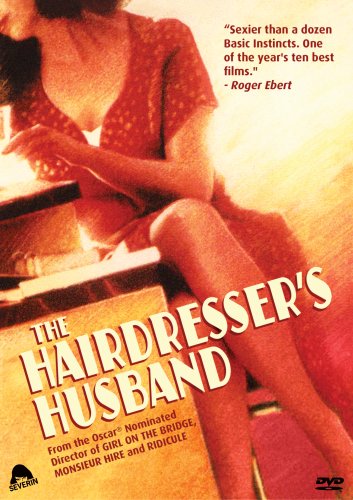
A middle-aged man (Jean Rochefort) recounts his youthful sexual awakening to the charms of the local hairdresser. Developing a fixation on the erotics of a women cutting men's hair, he resolves to marry a hairdresser, and decades later, he gets his wish. His wife is the lovely Anna Galiena, and once wed, they rarely leave her little shop (indeed, they also get married there).

Writer/director Patrice Leconte is dealing with a pretty specialized fetish here, but he in the early goings, he actually comes close to making us understand Rochefort's obsession. Leconte's precise attention to sensual details sells us the young boy's developing passion, but in the long run, the older Rochefort's inclination is rather harder to take seriously, or even be that interested in. The couple's idyllic life in the salon is obviously not mean to be seen in any realist sense, but even as a parable, it's rather thin. Rochefort spends his days doing crossword puzzles while Galiena reads gossip magazines, gazing adoringly at her as she tends to various customers (whose eccentricities feel like the inevitable conventions of this sort of art film, even as they do provide a necessary spark of life to the very still narrative), and launching, at the drop of a hat, into improvised dances to Arab music. This last quality is supposed to be charming, but by the third number (in a short, 82-minute film), it is simply irritating. Having created a situation where, once the courtship is accomplished (a matter of mere minutes of screen time), nothing can happen, Leconte decides to wrap things up with a conclusion that is clearly supposed to be poignant, but is utterly fatuous. The film is delicately wrought, and quite lovely, but also fundamentally empty-headed. In the end, it comes across as little more than a precious presentation of a middle-aged, rather misogynist fantasy.

Jim Carrey’s life and career are in a sort of mid-life crisis. He has avoided doing his usual goofball comedy films and opted for more serious roles. His appearance in Number 23 was a bit of a shock for most of us, but he pulled it off reasonably well. Even his more recent comedies have often been less about one crazy character and more about the story elements. It seems that he has decided it was time to return to the parts that made him a household name with Yes Man. But after watching Yes Man,,I have to wonder if maybe that genre has passed him by. For the first time, you really start to see age catching up on the crazy actor, and while he still has tremendous timing, he doesn’t look altogether quite right when he brings out the twisted faces and expressions anymore. It’s not a dig at Carrey at all. Still, it can’t be very good for a comedy, particularly one with a romantic element to it, when your first reaction is that the lead’s starting to look a little old. It’s not even that he looks bad. He just might need to tone down the goofy and concentrate on being more sincere. When Carrey takes that approach in this film he’s far more believable and, yes, that much more funny.

The story is almost a direct riff from his Liar Liar plot. In this one Carrey plays Carl Allen. Carl is a loan officer at a local bank. He was divorced three years ago, but he still hasn’t gotten over it. He’s become somewhat reclusive and self absorbed. He finds all manner of excuses to avoid doing anything with his friends. Instead he spends each night falling asleep watching rented movies on television. What’s worse is that he doesn’t even know that he’s miserable. One day at lunch a former coworker, Nick (Higgens) approaches him as he’s eating lunch in front of the bank. He tells Carl about how a motivational seminar has changed his life. He invites Carl to come to a workshop, but Carl drops his usual no thanks on him. But later Carl begins to realize how detached he’s become and has a scrooge-like epiphany at just how lonely he is. So, predictably, Carl goes to the seminar. Here motivational Guru Terrance (Stamp) preaches the gospel of Yes. He challenges Carl to merely accept every opportunity that comes his way. He commits him to a covenant to say yes to anything. As soon as Carl leaves the building the expected situations arise, where most sane people would say no. In a series of Yes’s that involve a homeless man, Carl begins to have second thoughts when his affirmative replies appear to put him in a bad situation. That is, until he meets Allison (Deschanel). Suddenly his new life appears to bring him a bounty of experiences and pleasures. As you might expect, it’s all leading to some rather uncomfortable consequences. But, as all “feel good” films must, Carrey eventually learns to live his new life in moderation and lives happily ever after.

This is the fourth film in the Poison Ivy series and its star power has descended from Drew Barrymore, to Alyssa Milano, to Jaime Presley, and has finally fallen on Degrassi: The Next Generation actress Miriam McDonald; which is sure to fulfill a handful of strange Canuck fantasies.

McDonald plays Daisy, the new girl on campus who is apparently a "tom-girl" because she wears jeans...and is from the country (I guess). It's a fish-out-of-water story to start where she is scoffed at by the cool girls for showing up in a taxi, and gets a meet-cute moment with the richest boy on campus. She turns out to be the biggest prospect in the whole Political Science Department, despite being a freshman, which makes her a target of the "Ivys."


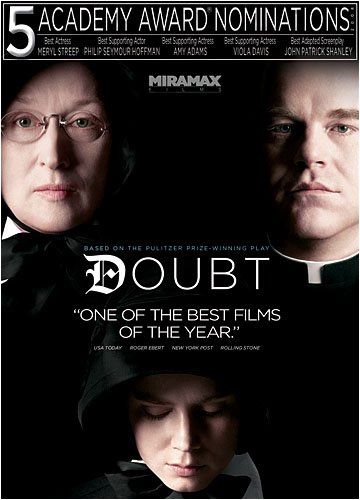
John Patrick Shanley brings his thought provoking play to the big screen in 2008’s best picture, in my book, Doubt. The Academy likely shied away from the controversial content, likely because it doesn’t make it clear this priest must have done what he’s accused of doing. Many of the actors received deserved nominations, but the film was generally snubbed in the final verdict. While I enjoyed Slumdog Millionaire, for Doubt to not even get the Best Picture nomination is a crime.