DVD

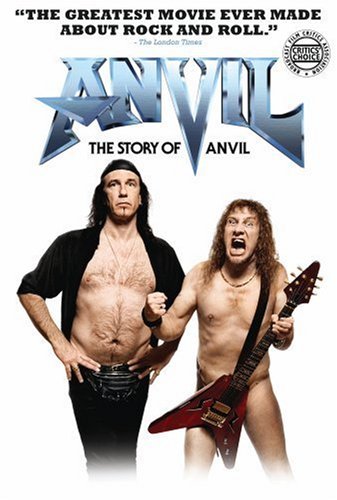
Decades after their moment in the sun in 1984, Canadian heavy metal band Anvil plugs along, playing bars and releasing CDs that barely sell, still hoping for that break that bypassed them while landing on their festival cohorts Whitesnake, Bon Jovi and the Scorpions. The documentary charts their new European tour that starts off promisingly but disintegrates into a disaster of Spinal Tap proportions, their struggle to produce and promote another new album, and a climactic return to the site of their past glory. While the opening minutes might engage laughter as one expects a real-life version of This Is Spinal Tap, the laughter is choked off almost immediately and replace by sympathy and real hope that these guys catch a break. They are not clowns – they have real talent – and the beyond-all-measure optimism of lead singer “Lips” is heartbreaking. A rock documentary to rank with the best of them, and one that proves that the absence of fame can be as compelling as its presence.

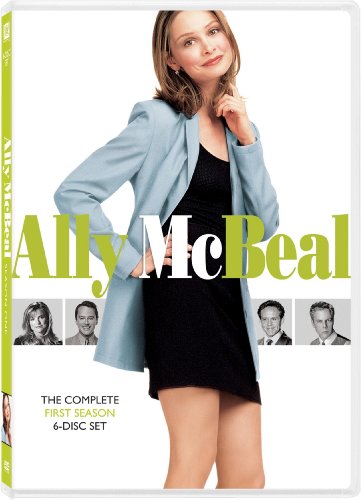
It is true, I’m not a big fan of lawyer shows. A long time ago when I was about twelve years old, my future vocation wish was to become a lawyer. I visited lawyers, I talked to them for what seemed like hours. Except it wasn’t hours at all, it was more like thirty minutes. My realization then was that I wasn’t cut out for the business and went into what I do now. However, after watching Ally McBeal for a season of episodes, I come to the realization that I’m so very glad that I didn’t stick around.

Ally McBeal (played by Calista Flockhart) has just lost her job at her law firm. It seems that a co-worker decided to touch her rear in an unprofessional manner. The co-worker decided to say it was OCD and unfortunately Ally found herself on the streets. She is immediately picked up by an old colleague of hers named Richard Fish (played by Greg Germann) and invited to work at his firm.

“Man lives in the sunlit world of what he believes to be reality. But, there is, unseen by most, an underworld, a place that is just as real but not so brightly lit, a darkside.”

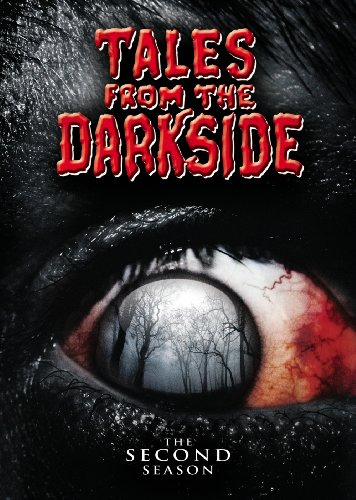
I have been waiting a long time for this release. Tales From The Darkside. Not since the likes of Rod Serling’s Twilight Zone or The Outer Limits has there been a really good sci-fi/horror anthology until 1984’s Tales. Not to say that each episode was a winner. In fact, most were pretty weak and relatively lame, but when this show was good, it was very good. These tales weren’t any ordinary specter spectaculars, but were told by spectacular story writers, directors, and producers. Look at just this first season and you’ll find some of the top names in the field involved in one way or another. You’ll see the likes of: Stephen King, Tom Savini, George Romero, Robert Bloch, Frank De Palma, and Harlan Ellison. The tales often came with a twist or at least a big finale in the end. Much like a train’s headlight in a long tunnel; you might have seen it coming from a mile away, but it’s hard to avoid the impact.

“Dr. Hood is a high priority asset. He’s a brilliant biophysicist, but he spends most of his time in his head. About a year ago some radical group had his car bombed. You want to see him blush? Ask him where the shrapnel is. You see, he’s got this annoying habit of telling the truth, and the truth hurts a lot of people’s pocketbooks. And no, I’m not free for dinner.”

The Eleventh Hour is based on a British series of the same title that stared Star Trek’s Patrick Stewart as Dr. Hood and lasted only 4 episodes. So, someone in America decided that if we took a far less charismatic actor and redid the same show in the States, it might be a hit. Someone was wrong. The first problem was the timing. The American version of the series came on at the same time as J.J. Abrams entered the scene with Fringe. Compared side by side, The Eleventh Hour didn’t stand a chance. Fringe offered us far more compelling characters and a bit of science fiction fancy to allow ourselves to escape in the adventure. The cases of this series, while also at the edge of science, are far more down to earth and not nearly as interesting. The show also suffers from an impossibly awkward pace. Dr. Hood will stop at times and begin to deliver a college lecture using some items at hand to illustrate his point. We already get this with Numb3rs, and most minds can’t afford to be numbed twice in one week.

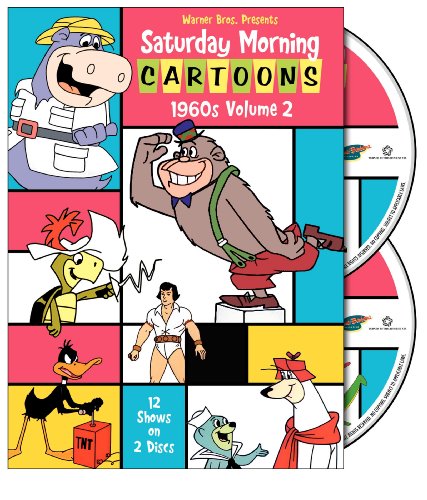
As a child growing up in the 1970’s I remember quite vividly the Saturday morning cartoon experience. It’s what we all lived for. We’d wake up early and pour out a bowl of sugar and milk, reaching for some cheap toy that was buried in the cereal box like Blackbeard’s own chest of gold. Then we would entertain ourselves with zany characters, superheroes, and action filled adventures until the noon news programs would begin and it was time to take our playtime outside. It was a far more innocent age, and we didn’t have video games to play. These were our video games. If they appear simple and at times crude, perhaps they were. But these were something of our very own. Watching them today, they don’t hold the same kind of magic they did then. That doesn’t mean it isn’t fun to revisit those days from time to time. It wasn’t the cartoons that were always special. But, Saturday morning … man, that was something special.

These cartoons are mostly Hanna Barbera shows which dominated the Warner archive from that era. No question this group contains some of the most recognizable characters from my childhood. Certainly, there some of the very well known titles from Bugs to The Roadrunner. I’m glad to see a few other characters added here like El Kabong and Atom Ant. It’s a very eclectic collection, to be sure, so you should find a little something for everyone.

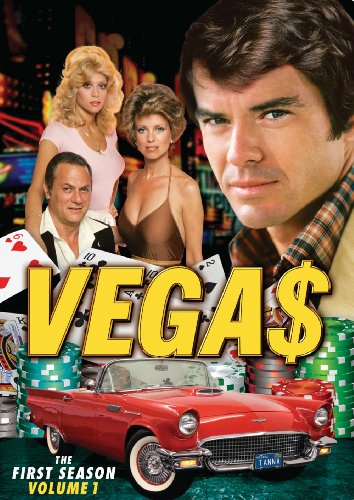
By 1978 the television detective model had been nearly complete and possibly already a cliché. Dan Tanna might have well been the complete model as far as the formula goes. It was almost as if you could go down a checklist and, like Dr. Frankenstein creating a monster, you would check off the necessary elements. The scripts could then almost write themselves, and you let the show fly on autopilot for three seasons or so until someone decides to look behind the curtain.

So let’s go down that checklist, shall we?

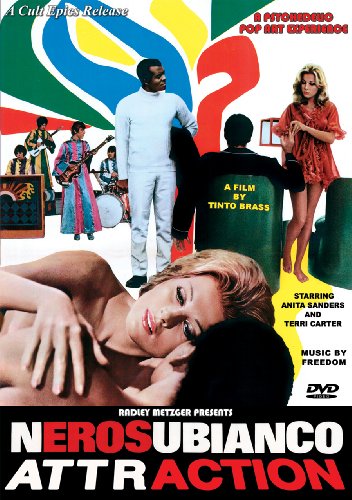
Only the most foolhardy of mortals would attempt a plot summary of this film, and I'm not quite that crazy. This is Tinto Brass's 1969 effort, coming between 1967's Deadly Sweet and 1970's The Howl. The former is a mad, pop-culture collage of noir elements, while the latter is a hallucinatory picaresque. This one is the most plot-free of the the lot. The original title is Nerosubianco, an untranslatable pun that combines “black on white” with the word “eros” (Attraction – note the word contains “action” – is an honorable attempt, and better than the theatrical title of “The Artful Penetration of Barbara,” which is what appears on the screen here, with the new name showing up as a subtitle), and that's about as much as can be summarized: this is an interracial romance. Beyond that, we have an exercise in pure formalism, an eye-popping collection of images and incidents as abstract as they are psychedelic.

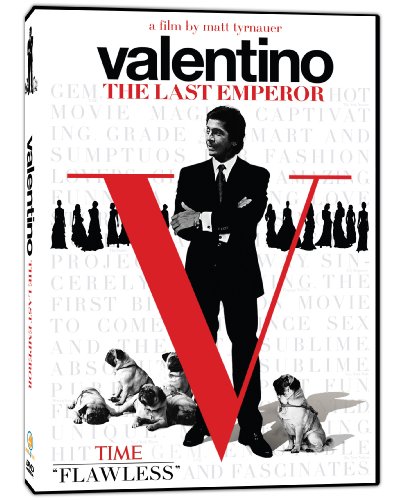
No one who knows me will find it terribly surprising to hear me admit that I know very little about the fashion industry, nor do I have a particular interest in it. Having said that, I was, to my pleasant surprise, gripped by this documentary. It tracks the final year of legendary designer Valentino's career as he prepares his new line and the big celebration of his 45 years in the business. But there are clouds on the horizon, too. He and his partner Giancarlo Giammetti are no longer the owners of the Valentino company, and the pressures of the new corporate world are bearing down. The films is thus a fascinating look behind the scenes of numerous facets of the Valentino's world: his life, how he works, his explosive temper, and the sad fact that the world of design is changing in ways that are forcing individual creative artists to the margins. Well worth watching.

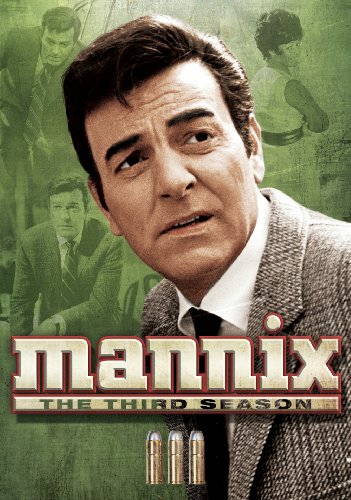
It sounds like nothing new. Hard boiled detective uses computers and other forms of technology to solve cases. It isn’t anything new, except the detective in question is Joe Mannix, and the series started in 1967. The computer that Mannix used took up an entire room and was queried using cardboard punch cards. This wasn’t science fiction. We’re not talking some newly discovered Irwin Allen series. Mannix didn’t go after aliens or robots. This was a down to earth gritty detective show. Mike Connors played the tough as nails detective. He was perfect for the part and blended into the role seamlessly for 8 years.

The show was created by the team of Link and Levinson, who later gave us the detective in the rumpled raincoat, Columbo. It was groundbreaking in so many areas. While it might not be remembered today as one of the top detective shows, there can be no argument about the impact Mannix had on the genre. A decade later one of my favorite television detectives, Jim Rockford, would borrow rather heavily from Mannix. Like Rockford, Mannix was getting beat up a lot. They both had the same sense of style, wearing rather ugly sport jackets. Neither was afraid to bend the rules, or the law, when necessary. Again like Rockford, Mannix often falls for the wrong girl at the wrong time. Mannix was good with a gun and equally adept with his fists. The show received a ton of controversy from the start for the amount of violence it employed. Tame by today’s standards, Mannix was quite aggressive for its time. The joke was that the show’s producers mandated a fight or car chase every 15 minutes whether it was needed or not. I’m sure that wasn’t true, but nonetheless the show opened the floodgates for the detective shows that followed. In this first season, Mannix worked for the enigmatic detective agency, Intertect. They supplied him with the latest in modern technology and with his cases. His main company contact was Lou Wickersham, played by Joseph Campanella. Now Mannix is on his own and begins to resemble more and more these detectives that would eventually follow in his tire tracks.

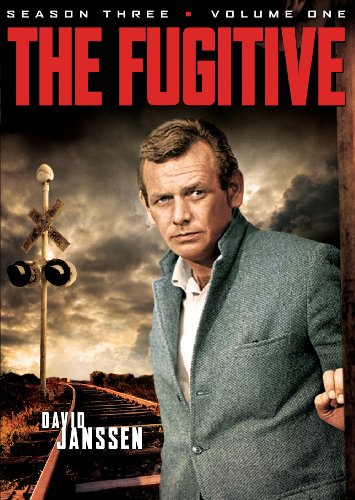
“The man is Richard Kimble and, not surprisingly, the man is tired. Tired of looking over his shoulder, the ready lie of the buses and freight trains. Richard Kimble is tired of running…”

The elusive “one armed man” is one of the best known television icons of all time. The plight of Dr. Richard Kimball has been the subject of numerous imitations and even a feature film staring Harrison Ford as Kimball and Tommy Lee Jones as his pursuer. Tim Daly left the ranks of comedy to fill the shoes of Kimball in a very short lived revival series. While some of these efforts managed to capture the essence of The Fugitive, none can truly compare to the real thing.