Posts by David Annandale

It hardly needs to be pointed out that the DVD revolution has been a boon for fans of European horror. Where once we had to make do with grainy bootleg VHS copies of the works of Argento, Fulci and Bava, now we can pick up beautifully transferred copies of pristine prints of uncut versions. Life is good. What has also followed is a massive increase in the availability of films by the less commercially successful, more niche-oriented directors – I’m thinking particularly of Jess Franco here. Franco, through sheer volume of work alone, retains the crown of king of erotic horror. But he does have a serious competitor, whose films are finally becoming easily available on disc. I refer here to Jean Rollin.

Like Franco, Rollin operates on a shoestring budget, and has moved back and forth between relatively mainstream exploitation (to coin an oxymoron) and outright porn. There are even instances where who directed what film can be confusing (as in Virgin Among the Living Dead, where Franco’s original film was reworked later with zombie footage shot by Rollin). The peak of Rollin’s creativity was the 1970s, which saw the release of his erotic vampire films (Lèvres de sang, La vampire nue, Requiem pour un vampire and so on). His films are characterized by striking pictorial beauty, economical but nonetheless effective surrealism, and rather perfunctory (at times, it would seem, improvised) plots and dialogue. One of his best, 1979's Fascination, was released by Redemption at the end of October.

It must be at least five minutes since I last complained about ill-advised remakes, so it's past time I returned to the subject. It was recently brought to my attention that yet another remake of The Lodger is in the works. The trailer is up on YouTube for those of you with a masochistic bent to examine. Now, far be it from me to prejudge a film based solely on the trailer, but I'm going to do it anyway.

The first version of The Lodger was an early Hitchcock effort from 1927. Lead Ivor Novello would return to the part five years later for the first sound version of the story, but the most prominent incarnation is the John Brahm take from 1944, with Laird Cregar as the titular lodger. Said character is, for those unfamiliar with the tale, Jack the Ripper, who rents a room in a middle-class neighbourhood, and subsequently develops an unhealthy interest in the daughter of the household, even as she, like a moth to a flame, is fascinated by him. Cregar gives us a man driven by his suppressed by raging sexual conflicts to terrible violence, and creates a monster who is nevertheless recognizably human. The audience actually comes very close to sympathizing with the murderer, and we KNOW he's the killer. Thus, Merle Oberon's interest in him (which, in the 1944 film at least, stops short of becoming romantic interest, since police detective George Sanders is on hand to provide that) is all the more understandable, since she doesn't know (though she might suspect) what we do.

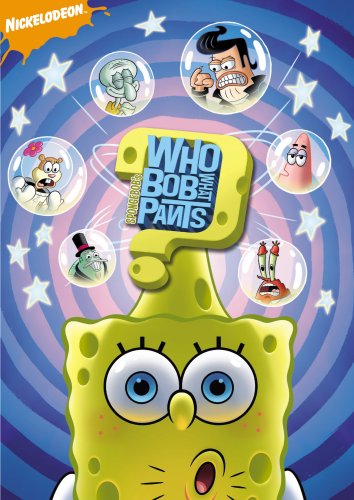
Another cheery bit of nonsense in this release, consisting of a half-dozen SpongeBob cartoons. The disc gets its title from the first episode, “What Ever Happened to SpongeBob?” In this story, our hero, rejected by all his friends for his consistent screw-ups winds up, after an amnesia-inducing bonk on the head, becoming the hero of a crime-ridden metropolis. Weird and funny stuff, and the same is true for the other pieces. That said, there's even less of a connection than usual between the pieces, not even a hint of a thematic commonality that has usually been the case with these releases. What we have are six apparently randomly chosen episodes, adding up to 78 minutes of silliness.

Audio

When I wrote about Curse of the Mummy’s Tomb, I said I would get around to talking about Terence Fisher’s The Gorgon (1964). So today I will. Curse is an example of Hammer at its most workmanlike. The movie, as I said, is fun but slight. The Gorgon, on the other hand, is Hammer and Fisher at their best, a film of considerable beauty and resonance.

After a young artist’s girlfriend is killed and turned to stone, and he hangs himself, the inquest declares the deaths the result of a crime of passion. The artist’s father, understandably skeptical, refuses to leave the little town of Vandorf after the inquest, despite the villagers’ hostility. He discovers the existence of Megara the gorgon, but at the cost of his life. His second son (Martin Pasco) arrives to continue the investigation, and after a near miss that nearly costs him his life, he is joined by his mentor (Christopher Lee), while falling in love with his nurse (Barbara Shelley). The road to true love does not run smoothly, however, as the film makes it quite clear midway through that Shelley is in fact Megara. She doesn’t know this herself, but local doctor Peter Cushing certainly does, but his obsessive love for Shelley leads him to cover everything up.

No, this isn't the Patrick Swayze vehicle. Instead, it's another golden opportunity for Richard Widmark to unleash his patented psycho act. Here he plays Jefty, playboy owner of the titular establishment. His right-hand man is Pete (Cornel Wilde), who is the serious-minded half of the partnership. Said partnership is strained when Jefty brings back the latest singer for the club, one Lily (Ida Lupino, in superb hard-boiled form). Pete thinks she's bad news, and she is, only not in the way any of the three suspect. Jefty decides he's in love with her, but she only has eyes for Pete, and he, despite misgivings, reciprocates. Jefty doesn't take rejection well. Not well at all...

The cast is terrific, bouncing cynical zingers off each other with aplomb. Wilde does well as the world-weary Pete, but Lupino and Widmark own the field, and their final confrontation is one for the books. Enormous fun for noir fans, and especially for lovers of Widmark as a terrifying nutjob.

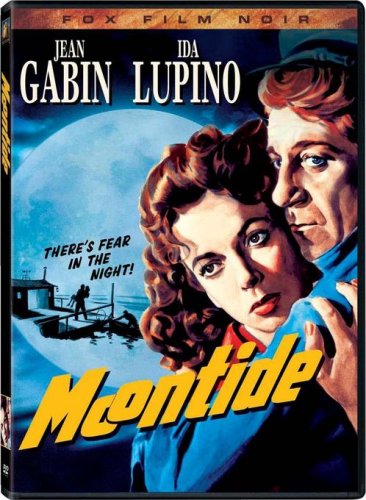
Jean Gabin, in his American debut, plays Bobo, a French sailor who has been knocking around the States for quite some time in the company of Tiny (Thomas Mitchell). Their wandering comes to a stop when, the day after a night of drunken excess that he cannot remember, Bobo sees Anna (Ida Lupino) wading into the waves to commit suicide. He rescues her, and before long the two are living together on the bait barge where he is working, and fall in love. Dark clouds are on the horizon, however. A local man was murdered, and Tiny, resentful that his meal ticket has been taken from him, darkly hints to Anna that Bobo might be responsible, even though he doesn't know it himself.

Moontide was originally a Fritz Lang project, and as the accompanying documentary demonstrates, his influence is still felt in the finished project, notably during the climactic stalking sequence. Gabin, though a masterful presence, nonetheless seems almost as much a fish out of water as his character, and it doesn't really come as a surprise that neither he nor Hollywood wound up caring much for the other, and he would return to the greener pastures of France. Claude Rains is on hand as a wisdom-dispensing night watchman – hardly a stretch for him, but it's always a pleasure to hear his mellifluous tones. The real stretch, and indeed revelation here, is Thomas Mitchell – the man whose speciality was the cuddly, avuncular Irishman here becomes a twisted monster of childish, violent rage, giving us a real nail-biter of a denouement.

Rip-offs. In the realm of the psychotronic, we love them and loathe them in equal measure. There are those strange and rare moments where the rip-off not only beats the original to the theatres, it out-grosses its rival and turns out to be better, to boot, as was the case with Death Race 2000 triumphing over Rollerball. At the other end of the scale, there are the innumerable “mockbusters” pumped out by The Asylum (Death Racers, The Day the Earth Stopped, Transmorphers, Snakes on a Train, and so on), which actually manage to degrade the term “rip-off” (though I have to say, the climax of Snakes on a Train, where a giant snake eats a train, remains one of the most unusual sights I’ve encountered in the last few years).

Back in the 70s, a little something called Jaws inspired innumerable imitators. Most were execrable. One, Piranha, actually managed to become its own wonderfully oddball work, thanks to the warped sense of humour of Joe Dante, John Sayles, et al. But today, let’s consider a far lesser work: the 1977 Italian exercise in cheese known as Tentacles (released a while back as a double-bill with Empire of the Ants as part of the MGM Midnite Movie series).


Time for a book recommendation.

Years ago (1992 to be precise), Christopher Golden edited Cut! Horror Writers on Horror Film. In and among the various essays in this fascinating tome were those special joys for the dip-in-dip-out reader: the list. John Skipp and Craig Spector offered “Death’s Rich Pageantry, or Skipp & Spector’s Handy-Dandy Splatterpunk Guide to the Horrors of Non-horror Film.” And Stanley Wiater contributed an essential guide for the daredevil viewer: “Disturbo 13: The Most Disturbing Horror Films Ever Made” (collect ‘em all!).

Small town Connecticut. A beloved priest is gunned down in the middle of a busy street, and the pressure is on for the police to find the killer. The new regime at city hall needs a conviction, and doesn't care too much about the niceties. When a suspect (Arthur Kennedy) is at last found, police chief Lee J. Cobb isn't entirely happy with the case, but he passes it on to DA Dana Andrews, who is under even more political pressure. At first pleased with the case, Andrews becomes uncertain the more he looks into it, and startles everyone (not least the defence attorney) by entering a plea of innocent at the beginning of the trial. Politicians and lynch mobs are soon baying at his door.

Elia Kazan's 1947 thriller is, as commentators Alain Silver and James Ursini point out, very much in the vein of the docu-noir. There is lots of procedural action going on here, and the voice-of-god narrator is frequently on hand to explain things to us. What is perhaps most interesting about the film, though, is that the case itself becomes of secondary importance to the political machinations. This isn't so much about the possible conviction of an innocent man, so much as it is about the mechanisms that make such a thing possible in the first place. Given what the future would hold for Kazan and his involvement with the HUAC hearings, the witch hunt scenes here take on additional, troubling, resonance.

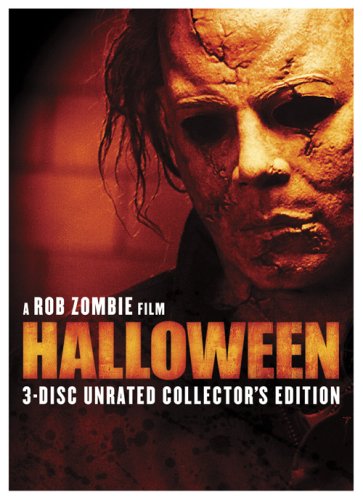
Rob Zombie’s enthusiastic but terminally misguided remake scores yet another DVD release. This one is identical to the previous unrated edition, apart from the fact that there’s an extra disc. More on that later. But in the meantime, as everything else is the same, that will also be true for this review. What follows is what I said about the last version.

“The trailer trash Myers family (inexplicably living in a pretty big house) is a powder keg waiting to go off, what with the rampaging abuse and a young Michael (the admittedly creepy Daeg Faerch) butchering small animals and looking like he’s mad as hell and soon not going to take it anymore. Snap he does, going on a killing spree, before he is captured and locked up for years, while eccetric shrink Dr. Loomis (a shameless Malcolm McDowell) making a career out of trying to learn what makes him tick. Growing to Godzilla proportions, Michael makes his escape, and proceeds to pick up his spree where he left off in his home town of Haddonfield.