Posts by David Annandale

A few weeks ago, I sung the praises of Forrest J. Ackerman and the childhood joys his Famous Monsters of Filmland gave me. Now comes sad word, already up on numerous websites, that he is ailing, and the end is very soon. (I have seen some statements that, in fact, he passed on yesterday, but nothing, fortunately, that strikes me as authoritative, as of yet.)

Assuming, then, that it isn’t too late, I will also pass on that he is receiving cards at the following address:

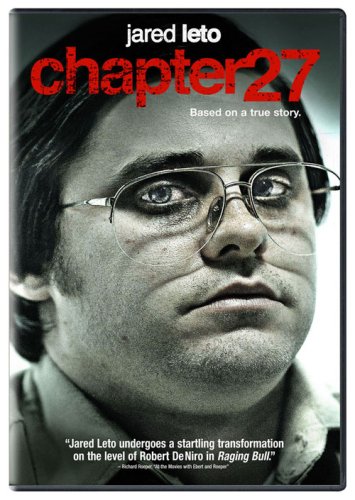
A combination of controversial subject matter and the physical transformation of Jared Leto garnered this film considerable attention (positive and negative). Leto here morphs into an uncannily accurate physical recreation of Mark David Chapman. The film follows Chapman on his fateful trip to New York City. Over the course of three days, he hangs around outside John Lennon's home, becomes friendly with fellow fan Lindsay Lohan, and endlessly ruminates about how the events in his life are paralleling The Catcher in the Rye, and (rather less explicitly) why he's going to kill Lennon.

Leto is unrecognizable, and disappears completely into the role. But is the film a good one? It is somewhat limited by the fact that nothing much happened during Chapman's stay in NYC prior to the murder, and so nothing much happens here, either, beyond Chapman acting so obviously insane it's a wonder no one had him locked up within minutes of arrival. Does the film give us some insight into the mind of the killer? Only a little. It hints at motivation, but those hints are only really clear if you're already pretty familiar with the case. In other words, the picture doesn't bring anything new to the table. It's a striking work, but not an altogether successful one.

Consider this column a companion piece to my review of Last House on the Beach. I mention therein that the finale of the film obviously inspired (to put it politely) that of Quentin Tarantino’s Death Proof. I shouldn’t really use this opportunity to beat up on Death Proof all over again. But what struck me even more than the similarities between the two scenes was their instructive differences.

So, if you haven’t seen either of the films yet, consider this entire column a spoiler and leave now. Thank you.

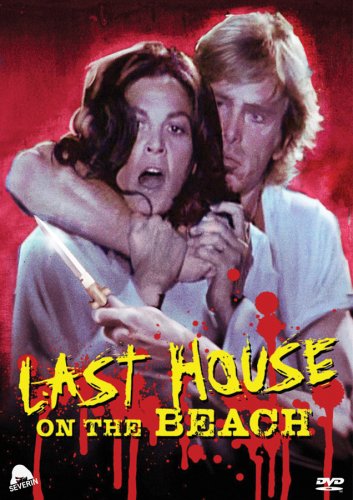
After a violent bank robbery, a trio of criminals descend upon the beach house retreat of a nun and her students. The bad guys take the women hostage, and make themselves at home, tormenting, raping and abusing to their hearts’ content, pushing their victims ever further over the edge.

At the level of plot, not a lot goes on here. The villains are ensconced at the beach house within the first ten minutes, and then story does little more than go through variations of torment until the inevitable retaliation. Nonetheless, there is a fair bit of interest here. The assaults, though very unpleasant and extremely nasty in their content, are, however, filmed with a certain restraint, with the camera concentrating on the faces of attackers and victims rather than on their bodies. Ray Lovelock’s gang leader is a deceptively pleasant pretty boy, and his character arc consistently plays out against expectations. And then there’s the climax, which turns up again almost beat for beat at the end of Quentin Tarantino’s Death Proof.

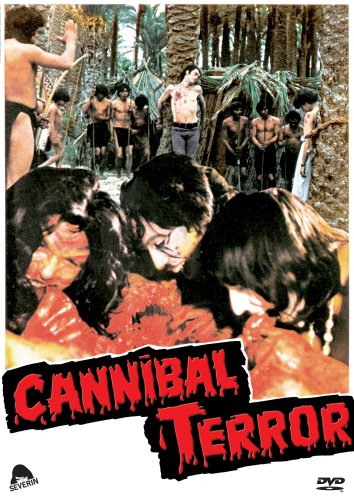
Two inept thieves and their prostitute girlfriend decide to hit the big time, crime-wise, by kidnapping the little girl (clearly and disturbingly dubbed by an adult) of an automobile tycoon. When their contact manages to get himself run over by a car while crossing the street, they have to hightail it out of town until the heat cools (or something like that – don't press me too hard for clear logic in this film). So off they head to what I suppose is the South American jungle, by my goodness there seem to be a lot of pine trees in the jungle. There they hole up at the home of a friend-of-a-friend, a middle-aged man who has the role Jess Franco would be playing if this were a Jess Franco film. He has a beautiful wife, and one of the thieves takes it in his head to rape her. So their host now has vengeance on his mind, and there are cannibals (you were wondering when I was going to get to them, weren't you?) lurking in the woods.

This is the sort of movie that makes life worth living. Sure, you could throw away your 90 minutes on something that is actually good, but in that case you would miss the following: cannibalism sequences where, once the victim has been killed, the carcass being gutted is very, very obviously that of a pig; the most pasty-skinned, European looking cannibals on record, complete with gruesome 70s hairstyles (I swear Sonny Bono is among their number); characters trudging through the brush, ignoring the road visible not three yards from them; and of course, the truck that cruises by in the background of the cannibal village, supposedly deep in the heart of darkness, but clearly a stone's throw from a highway and a beach (look for this wonderful moment at the 92 minute mark). And I haven't even said a word about the hilariously chipper, gratingly hummable Euro soundtrack.

Oh God, here we go again with another When I Was A Wee Lad memory. Sorry. But When I Was A Wee Lad, two of my favorite books were The Hammer Horror Film Omnibus, and The Second Hammer Horror Film Omnibus. Written by John Burke, each volume contained four novelizations of Hammer films, and for many a year, this was the only way I could experience the stories. It would be a long time before I saw the films in question. Still, most of those films I got under my belt some time ago, but one remained stubbornly out of reach, seen once on TV and then never again, VHS and then DVD releases apparently never on the horizon. That film was Curse of the Mummy’s Tomb (1964), and the wait is finally over. It appears as one of four films on the Icons of Horror: Hammer Films 2-disc set. Accompanying it are The Gorgon (also novelized by Burke, and more about it another time), The Two Faces of Dr. Jekyll, and Scream of Fear.

The plot sees the inevitable turn-of-the-century expedition to Egypt find a lost tomb (that of Ra-Antef in this instance), dig everything up, then suffer tragedy. The father of the heroine is killed in the opening scene, and hireling Michael Ripper (in an all-too-brief bit, though his presence is as welcome as ever) is also murdered when the expedition headquarters are ransacked. More trouble ensues when the principal backer of the work, American impresario Alexander King (Fred Clark) decides not to turn the findings over to a museum, but mount a road show instead. On the way back to England, hero John Bray (a rather bland Ronald Howard) and his callow fiancee Annette Dubois (Jeanne Roland) encounter the dashing playboy Adam Beauchamp (Terence Morgan), who turns out to know a surprising amount of Ancient Egyptian lore, and has his sights set on Annette. Back in England, the expected curse plays out, as one character after another is slaughtered by the mummy of Ra-Antef (Dickie Owen).

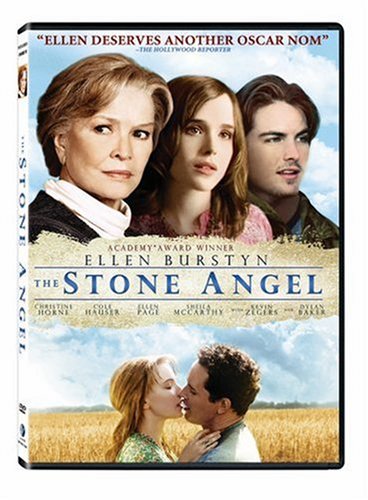
Hagar Shipley (Ellen Burstyn) is in her twilight years, and her son (Dylan Baker) is trying to get her into a home. Fiercely independent, possessed of a will that has been both a strength and a weakness (making life miserable for herself and all around her), Hagar fights back. She also looks back on her life, and in the flashbacks (where the young Hagar is played by Christine Horne) we see the tragic relationships that have brought us to the fractious family we see now.

I’m not sure if one can split the world into Stone Angel people and Diviners people, but when it comes to Margaret Laurence novels, I’ve always been of the latter, finding Hagar too hard a character to warm up to. Nor did I find it much easier in the film, though Burstyn does turn in a compelling performance. She is working, unfortunately, with a script heavy on the voice-over (which does Laurence’s prose no favours – much of it simply sounds awkward transposed off the page in this way). There’s a bit too much of the portentous, and a bit too much of a cast enunciating in an overly precise way for my liking.

Just the other week, I was singing the praises of [REC]. Today, I come to bury its American remake, Quarantine. At first glance, Quarantine is a virtual photocopy of its model. Scene follows scene in the same order, to the same (intended effect), to the same final shot. And yet somehow, the whole thing falls flat. How can this be? If the movies are identical, why aren’t they identically effective?Because they aren’t really identical, of course, at least not where it really counts, and every change Quarantine rings is a poor decision. First, there is the running time. Quarantine runs about a quarter of an hour longer than [REC], and every minute is sorely felt. Scenes go on just a little bit too long, and then tension and pace leak away. The original barrels in, assaults the viewer, and wraps up. Quarantine has the temerity to bore us, and thereby unintentionally demonstrates what a fine art editing is.Next, there is the question of sound design. The original, as I wrote before, features among the most terrifying aural attacks in recent memory. Quarantine somehow emasculates the sound, largely eliminating, as far as I could tell, the disturbing yowls of the infected/possessed. With the possible exception of the musical, the horror film is perhaps the cinematic genre whose impact on the viewer is most heavily dependent on sound, and Quarantine fumbles the ball.As for the visuals, both films are, of course, exercises in hand-held camera fake vérité. Quarantine, it seems to me, uses far more close-ups, and the overall effect is to make it far more (and needlessly) difficult to make out what is happening on the screen.Then there’s the plot. While this is the element where Quarantine deviates the least from its model, it does make one significant change. As our remaining characters enter the top floor apartment at the climax of the film, they find a collection of newspaper clippings that provide as much of an explanation as we’re going to get as to what is going on. Where [REC] strongly hinted at a supernatural agent, Quarantine opts for a far more prosaic doomsday virus. Yawn. So much for ambiguity, not to mention the chill of dark poetry that informs the resolution of the original.And speaking of finales, without giving too much away, there’s the problem of the final threat. This being, in [REC], is seen just enough to hint at terrible nightmares, and its barely glimpsed movements are jagged and most disturbing. Quarantine gives us far too close a look at its menace. Between too much visibility and the mundane explanation, what stands before us is not particularly scary. In fact, it’s rather silly.Taken on its own, Quarantine is not a terrible film. It’s entertaining, and its foundation is solid enough to resist complete disaster. But it is also pretty damn pedestrian, while the original was brilliant. And that, though utterly expected, is still sad.

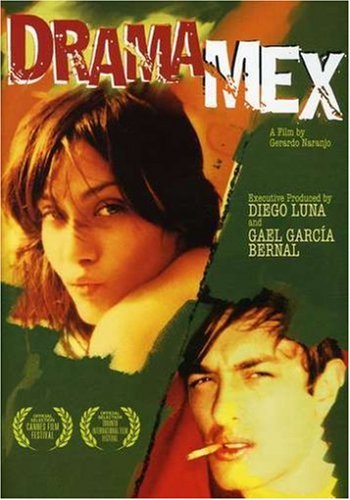
Very much in the tradition of such other overheated Mexican emotional dramas as Amores Perros and Y Tu Mamá También, Drama/Mex gives us two intertwining plot strands, each dealing with relationships as tormented as they are sexual. In one, upper-class Fernanda’s bad boy ex-lover Chino resurfaces, takes her violently, but she doesn’t exactly hate it, and this has, as one might imagine, some awkward consequences for her relationship with current boyfriend Gonzalo. Meanwhile, a middle-aged man, guilt-ridden over what he has done to his daughter (take a guess), is contemplating suicide when he runs into a precocious teenage hustler. In other words, basically enough material to give Sarah Palin a fatal coronary.

Audio

The other day, I was watching Pathology, a release from Fox that is terminally mediocre, but is surprisingly gory for what is, minor-to-nil theatrical release aside, essentially a mainstream release. I won’t rehash its silly, empty-headed plot here, other to suggest that you look to spend your entertainment dollar elsewhere. What interests me about the film is that gore. As our characters about their titular activities, corpses are opened up and messed around with in a manner that, not too long ago, would have been unthinkable outside the realm of the more extreme exploitation flicks. For quite a while, since the horror film was revived at the end of the 90s, much of the chatter about violence in the films conveniently forgot just how graphic the situation was in the 70s and 80s, but over the last few years, the gap has been bridged. But that’s not what I want to talk about here. It isn’t the quantity of gore or its explicit nature that I’m ruminating about. Rather, is it still possible to distinguish the genuine, wholesome sleaze from its production-line counterpart emerging from the major studios.


In this light, a double bill of Pathology and Joe D’Amato’s Beyond the Darkness might be instructive, in that both films feature much gutting of corpses, including that of the protagonist’s beloved. They are both silly, dumb films with despicable heroes. And yet, there is still, I would argue, a wide gulf between the two films. Idiotic and incoherent as it is, D’Amato’s film still covers one with an oily film. You definitely need a shower after watching this. Post Pathology, all you’ll need is a sympathetic ear in which to pour your complaints.