Posts by David Annandale

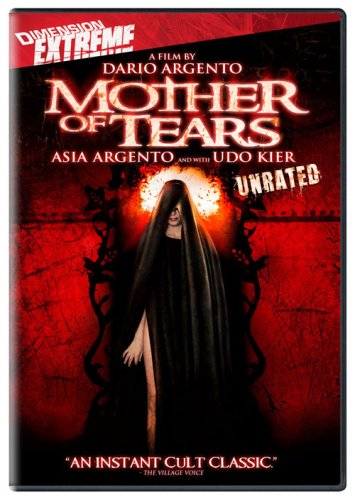
A group of exotic dancers head off to a resort in the hills, ostensibly to shoot a film, but instead fall into evil clutches. The torture begins for them and that point, but it began for the audience prior to the opening credits. While the monologue that begins the film hints that there might have been an idea buried somewhere in here concerning the abusive objectification of women through history, the film decides to incarnate that idea rather than critique it, and do so very clumsily at that. The makeup effects are beyond risible, and the cinematography consists primarily of headache-inducing shaky close-ups. Another nail in the coffin of the torture porn subgenre.

Audio

The latest issue of Rue Morgue has hit the stands, and its cover story is a celebration of the fiftieth anniversary of Famous Monsters of Filmland. Naturally, there is plenty celebrating the man behind the world’s first horror/SF magazine, Forrest J. Ackerman. Permit me, then, to take advantage of the occasion to do a little celebrating myself.

That Ackerman is the most important fan in the history of fantastic film is one of those facts so obvious as to hardly bear repeating; to do so is tantamount to announcing that the sun is warm. So rather than belabor the point, let me simply give a bit of historical perspective. Consider this passage:

And now, another bit of musing on Mario Bava, brought on by a recent screening of Lisa and the Devil.

Coming in 1972, this was late in Bava’s career, and from a period when seeing his films the way he intended became very difficult. Until recently, when the original print resurfaced, this has been most commonly seen under the title The House of Exorcism, an exercise in butchery by producer Alfred Leone, which not only removed much of Bava’s footage, but replaced it with a ridiculous Exorcist rip-off. Fortunately, Bava’s original film has been restored to us. It is a prime example of that moment in European cinema where the distinction between horror film and art-house production vanished.


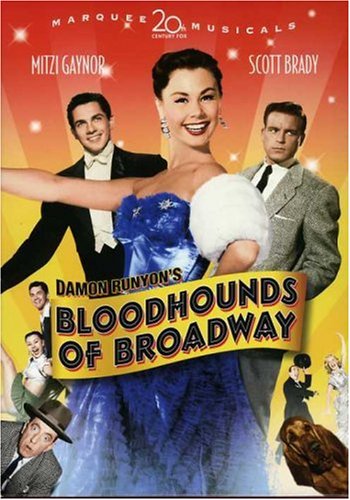
Damon Runyon’s stories would most famously make it into musical form in 1955 with Guys and Dolls. But in the meantime, this 1952 effort featured many of the same sorts of characters – wise-cracking-but-harmless gangsters and their glamorous molls. Here, Numbers Foster (Scott Brady) hightails it out of town to avoid a Congressional hearing, and on the way back, he picks up country songbird Emily Ann Stackerlee (Mitzi Gaynor), much to the displeasure of New York girlfriend Yvonne (Marguerite Chapman). Heavier on plot and lighter on numbers than some other musicals of the period, this is a jovial effort, but understandably in the shadow of its more famous cousin.

Audio

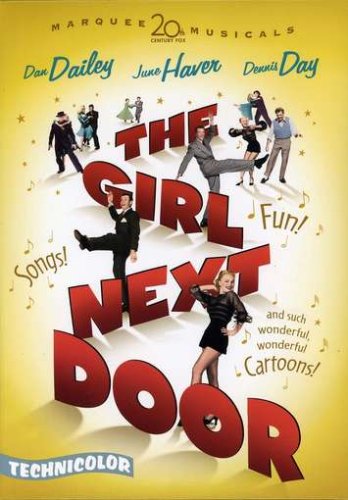
Star of song and stage Jeannie Laird (June Haver) returns from a triumphant tour to settle down in her new suburban home. Next door is widowed cartoonist Bill Carter (Dan Dailey), and sparks fly between the glamorous star and the low-key nice guy. The course of true love doesn’t run smoothly, however, due to Bill’s son Joe (Billy Gray, of The Day the Earth Stood Still), who doesn’t take kindly to the new woman in his father’s life.

Though the romance may play out as expected, it’s still interesting to see such domestic issues dealt with in the context of a musical. Meanwhile, spirited and imaginative song-and-dance routines are on order. An intriguing entry in the Marquee Musicals series.

I can’t quite decide how I feel about Paul W. S. Anderson. On the one hand, he clearly has a great deal of affection for his inspirations, and since most of his filmography, as either a director or producer, consists of adaptations, this is to the good. He is, for instance, one of the few filmmakers who actually seems to respect video games, even if his Resident Evil films consciously depart from the games’ story arc in a fairly massive way. Unlike Stephen Sommers, he does not feel the need to trivialize his material by giving up on the suspense and going for the cheap laugh.

However, his most interesting work remains his original material. Event Horizon, though wearing its influences on its sleeve, is still a nifty and nasty little exercise in SF/horror, and is head and shoulders above AVP. Weak as that entry was, it at least afforded the creatures a modicum of dignity, and didn’t descend to the Jason-like antics of AVP:Requiem (leading candidate for most meaningless title ever).

This is going to be half a review, and half nostalgia.

In 1980, Dario Argento’s Inferno was released, and, bizarrely, it was one of the films profiled on a kid’s SF TV show I watched back then. The scenes on display sent my terrified little self fleeing from the room. But the images I saw stayed with me, as did the spookily elegant poster I saw on Paris theatre marquees in the weeks that followed: a purple-and-blue skull with a single drop of blood forming at the still-fleshy lips.

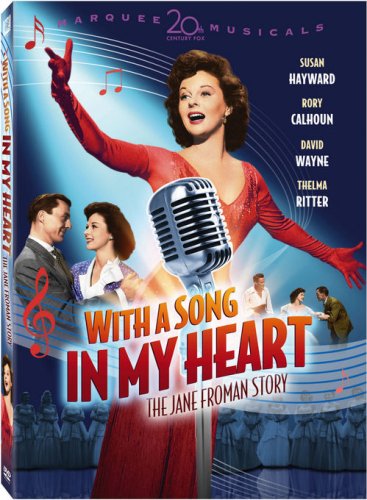
A mixture of biopic and musical, this vehicle stars Susan Hayward as Jane Froman, an incredibly popular singing star in the 40s who had to battle back from terrible wounds suffered in a plane crash after her first performance for American troops overseas during WWII. The film begins with Froman’s triumphant comeback, and flashes back to the events leading up to this. The pic is efficiently put together, and Hayward’s lip-synching (Froman dubbed in her own singing) is unusually convincing. But the crash itself is disappointingly undramatic.

Audio

We have all encountered films that are less intelligent than they think they are. My favourite example of this syndrome would probably be Contact, the deeply serious Jodie Foster vehicle, directed by Robert Zemeckis, and adapted from the Carl Sagan novel. The film keeps the novel’s primary weakness (the ending, which, smacks of a writer who hasn’t worked out a full outline before starting) and introduces some unintentionally funny visual elements (the alien-inspired technology looks suspiciously like it was designed by Wile E. Coyote, and the first time out works like was designed by him, too). But the film’s biggest sin was not that it has some very silly aspects, but that it is completely unaware of same, and really seems to believe that it is Important Art. Similarly, M. Night Shyamalan has become the undisputed King of Movies Less Intelligent Than They Think They Are.

But what of the converse? Are there films that are more intelligent than they think they are? Or at least, less stupid? Let me put forward the modest proposal that there are. Exhibit A is Massimo Pupillo’s The Bloody Pit of Horror (1965, out on DVD from a variety of sources). This mid-period Italian Gothic tells the charming story of a busload of cover models who descend on a castle that happens to be the home of the obsessed Mickey Hargitay (best known as the husband of Jayne Mansfield, and these days, as the father of Mariska Hargitay). As the models pose to be photographed in and around various torture devices, their host flips out, becomes convinced he is the reincarnation of one Crimson Executioner, and starts using the devices for real on the unfortunate women.

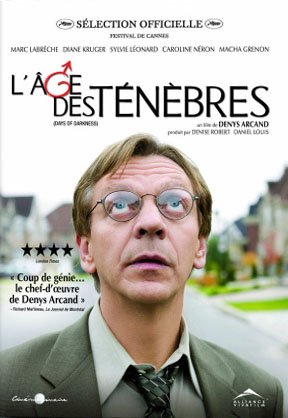
Denys Arcand’s conclusion to the loose trilogy whose first two parts were The Decline of the American Empire and The Barbarian Invasions takes place in a near-future Quebec of soulless bureaucracy and nonexistent human relations. Our hero (Marck Labrèche) is a civil servant with a wife whose job leaves no time for him, two iPod-dependent teenage daughters, and a giant suburban house that is not a home. He retreats from his dead-end life into a series of fantasies which see him as hero, shiek, rock star, celebrated novelist, and so on, always with women rushing to have sex with him.

There is sour diversion here, but this is not deep satire. The jokes are hardly fresh (smokers hiding from guards and dogs). Then there’s the attitude towards women. While one might argue that the fantasy figures are precisely that, and meant to reflect the character’s problems, not the director’s, the fact that the women in the real world of the film are a clutch of castrating harpies makes one suspect that the filmmaker is rather too sympathetic to his protagonist’s worldview. Of course, there is an absolutely terrific film dealing with a weak civil servant escaping into fantasy while labouring in a future society of absurd, Kafkaesque totalitarian bureaucracy. But it’s called Brazil.