Posts by David Annandale

A few weeks ago, I nattered on about how Mario Bava’s Blood and Black Lace differs markedly from the very slasher genre it helped create. The same is true of Bay of Blood, though the comparison is rather more complicated.

The connection between Bay of Blood (AKA Twitch of the Death Nerve) and the slashers is one of the purest examples of superficiality one could think of. Many of the murders in Bava’s film were lifted holus bolus by the first couple of Friday the 13th films (machete to the face, love-making couple speared in bed, and so forth). However, the fact that the films have near-identical murders turns out to be as irrelevant as the fact that they both take place in similarly sylvan environments. For the uninitiated, Bay of Blood does not offer one killer, but many. Everyone is killing off everyone else in a battle to possess a valuable lake-front property. There is no motivation so pure as revenge here. Greed is what is driving the characters.

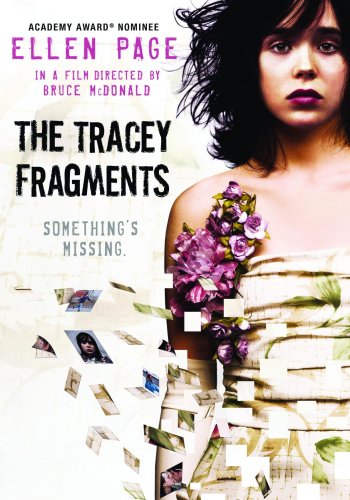
Current indie It-girl Ellen Page stars in this pre-Juno effort as a similarly headstrong teenager but whose life is far, far worse simply being pregnant. Here she comes from a dysfunctional home, her high school would be called a snake pit if that weren’t disrespectful to snakes, and her baby brother has disappeared while she was supposed to be taking care of him. She plunges into the underbelly of Toronto in a quest to find him, and an unending picaresque nightmare ensues.

But this isn’t called The Tracey Fragments for nothing, and the above summary fails to convey the actual experience of the film. Director Bruce McDonald breaks the screen up into fragments, and Tracey’s story unfolds as a kaleidoscope of multiple frames and shattered chronology. It’s a technique that won’t work for everyone, and that can be horribly misused, but here I found it both intense and exciting. In fact, it made some of the more familiar and/or hard to take/swallow aspects of the narrative itself much more palatable.

Apparently, achieving just the right level of success can work against you. This would appear to be the case of the recent Spanish horror effort [REC]. Co-directed by Jaume Balagueró (who gave us the underrated Darkness and The Nameless) and Paco Plaza, this was one of Spain’s biggest box-office hits last year. Does that earn it a theatrical North American release? Not a bit of it. Instead, it earns itself a remake, under the title Quarantine. Though there are, apparently, some changes being made (the unfortunate jettisoning of the supernatural angle being one), from the looks of things, the new version is going to be a pointlessly exact retread (and speaking of pointless, why give us a trailer that shows the very last shot of the film?). Not only is [REC] not gracing the theatres, it is also being deprived, at least for now, of a domestic DVD release. But if I might speak a word to the wise, it is available as a Region 2 release, so those of you with region-free players know what to do.


Going through the effort of seeing [REC] is well worth it, because it is another example of the new wave of European horror at its finest. The set-up is becoming familiar by this point: in the vein of Cannibal Holocaust, The Blair Witch Project and Cloverfield, we have a verité conceit. In this instance, we are seeing everything through the lens of the cameraman for While You Were Asleep, and lightweight news program where the reporter follows around the people who work the night shift. Tonight, she is profiling firemen, and we are along for the ride when a call comes in about a woman trapped in an apartment. The routine assignment becomes everything but when the woman savagely attacks an attending officer. Then residents, media and rescuers are sealed in the building by the authorities. What follows is not unknown territory. We are basically in cannibalistic zombie territory, though these folks have the rage and savagery of the infected in 28 Days Later, and the manner of infection (not to mention the aforementioned pronounced hint of the supernatural) also echoes Demons. Once the bad stuff starts happening, it happens at a frenetic pace, and the skill of the directors in deploying familiar material is astonishing. What we have here is another example of how anything old can be made fresh and vital is handled with inspiration and brio.

No, this is not the movie that promised to show us men turned inside out. It is, in fact, a curious mixture of genocide documentary and concert film. The performance is by rockers System of a Down. The lead singer’s grandparents were survivors of the Armenian Genocide, and so that atrocity is the primary focus of the film, which cuts between concert footage, personal interviews, grisly documents and academic talking heads. By extension, the film also takes a stand against all forms of genocide, and is an explicit invitation to the audience to get involved in the fight for justice.

The mixture of elements is unorthodox, to put it mildly, and the effect is a bit bizarre. There are many moving, heartfelt and sharply observed moments, but one is also left with the feeling of having watched well-meaning but overly earnest and slightly naive agit-prop. Then again, it’s hard to resent the important work the film is trying to do.

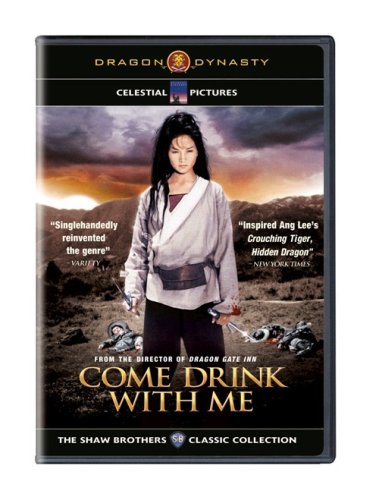
There's much ado on the case's copy that this was a major inspiration for Crouching Tiger, Hidden Dragon, and the similarities are hard to miss. Like Ang Lee's film, this 1966 effort is a lush period piece with gorgeous, rich colours and elaborate wire work. And, as in the later film, the central character is a female warrior, in this case an officer of the law sent to rescue a kidnapped victim from a clan of ruthless (but not always terribly bright) bandits. There’s a male aid here, too, in the form of an apparent drunken bum who is, of course, in reality a martial arts master.

There is a lot of pleasure to be had here, and the film has considerable charm, though some viewers might be put off by the sometimes jarring juxtaposition of silly, knockabout comedy and harsh violence. Modern viewers might also be a bit disappointed in the fight scenes, which don’t have the grace of the later movie, and they can also be very brief. Nonetheless, a good time at the flicks.

Mario Bava is undergoing something of a revival of interest these days, what with Tim Lucas’ magisterial book Mario Bava: All the Colors of the Dark and the recent Anchor Bay box sets. Over the last little bit, I’ve been re-watching some of Bava’s films, along with a friend who hasn’t seen them before, and I was struck by a comment he made about Blood and Black Lace: that this was the first horror film he’d seen where the victims had no existence other than as victims. This is true, and it made me think about some of the other things that distinguish Bava’s films from the films they would influence.

Released in 1964, Blood and Black Lace is an early giallo. Its Italian title translates as “Six Women for the Assassin,” which is an even more accurate description of what the film is all about. Allow me to quote Phil Hardy on the film: “Bava’s work operates almost exclusively on the level of cinematic style. His films are as plotless and scriptless as it is possible for non-avant-garde cinema to be, using the strict minimum necessary to motivate the mise-en-scène of lusciously flamboyant sado-voyeuristic operas. In this picture the audience is no longer asked to care about who gets killed – the title announces and summarizes the action – and the killer, in his featureless mask, is merely the faceless representative of the male spectator as he stalks, one after another, a series of women guilty of nothing less than provoking desire.”

Flipping through the latest issue of Rue Morgue, I happened on a capsule review that mentioned how most grindhouse fare (whether actual or neo) rarely delivered on its promises. This is, of course, absolutely true, and I don’t for a moment pretend that this comes as news to anyone reading these words. I do want to consider this factor from two angles, though.

The first is that the fact that we all know this is in itself telling. Many film fans of my generation would have likely grown up knowing ONLY of the promises. We would see the posters and the ads in the paper, but whether because we were too young, or the movies weren’t playing nearby, or for a dozen other possible reasons, we would never actually get to see the movies themselves. Result: near-mythical status for these forbidden-fruit films. But now, thanks to the magical world of the DVD, just about every film we could ever imagine is now available in immaculate prints. This is a double-edged sword. On the one hand, we can finally see these movies. On the other, seeing them invariably punctures the mythological bubble. Nonetheless, it is now easier than it has ever been before to see just about anything, anytime. How’s that for a golden age?

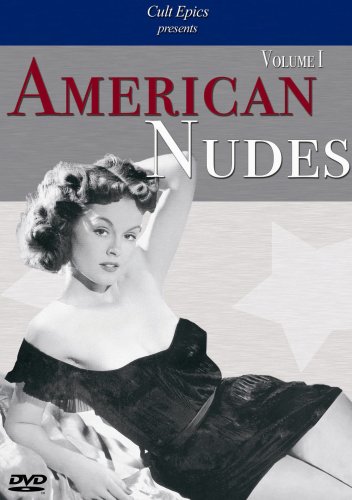
Cult Epics continues its erotic archival work with these two collections of short films. Volume 1 consists of pieces from the 1940s (with at least one from 1938 thrown in), while Volume 2 deals with the 50s. The former has such amusing “documentary” shorts as “They Wear No Clothes” (*gasp*) and various comedy routines. The latter has the inevitable Irving Klaw shorts. None of these films are by any definition “good,” but they are fascinating records of the state of American sexuality at that time. Watching all of these at one sitting would be quite the chore, but then, when was the last time you read an encyclopaedia straight through? There is a similar documentary value here.

Audio

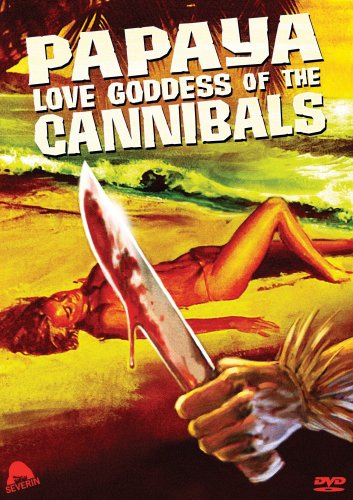
Severin continues their serious play to be the go-to company for Eurosleaze with this, one of Joe D’Amato’s better efforts. We first meet Papaya (Melissa Chimenti) as she luxuriates on the beach, makes love with a fellow in a cabana – and then orally castrates him, whereupon she walks away as two minions torch the cabana. Fantasy Island, this ain’t. The action then shifts to Sara (Sirpa Lane of The Beast fame), a journalist we first see revelling in a cock fight. She hooks up with Vincent (Maurice Poli), a nuclear power executive with whom she has had a casual fling before. The two of them are drawn into Papaya’s web of sex and blood ritual. She is, in fact, part of a political group fighting back against the power company’s expropriations and pollution by any means necessary.

Obviously, not your usual softcore romp, and a rather more interesting storyline than most of D’Amato’s Black Emanuelle series. The characters are still utterly without affect, which casts a vaguely surreal miasma over the proceedings. The sex scenes are pretty risible, but the film actually becomes quite watchable despite these scenes being its primary reason for being. D’Amato’s heightened interest turns up in the editing, in the careful creation of atmosphere, and most of all in the no-punches-pulled working out of the film’s ideas. Papaya raises, if rather clumsily, some hard questions about the nature of exoticism and the justifications for violence. Believe it or not, this is one to think about and discuss.

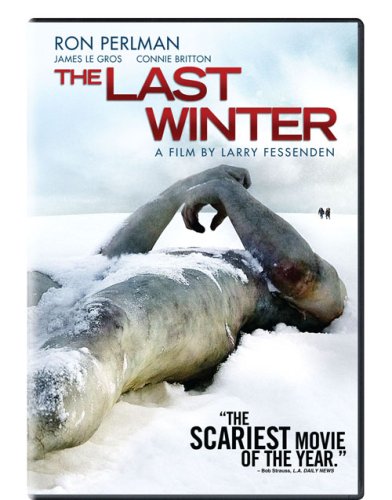
A few years ago, I had the pleasure of reviewing Larry Fessenden’s Wendigo for this site. Recently out on DVD is his much belated follow-up, The Last Winter (not to be confused with the Canadian coming-of-age tale of the same name). I’m happy to report that the skill Fessenden showed in Wendigo is very much on display in his new feature.

Ron Perlman headlines as Ed Pollack, the company man whose job it is to make an oil-drilling project in northern Alaska a reality. His potential nemesis at the camp is James Hoffman (James LeGros), an environmental activist the company hired in an obvious stab at green credibility. Hoffman is concerned not just with what the drilling is likely to do to the pristine landscape, but also with issues already happening. The permafrost is melting and it’s raining in the Arctic in February, for instance. These are all serious problems, but then it appears that the melting land has unleashed something evil, and the team at the camp begin to die one by one.