Posts by David Annandale

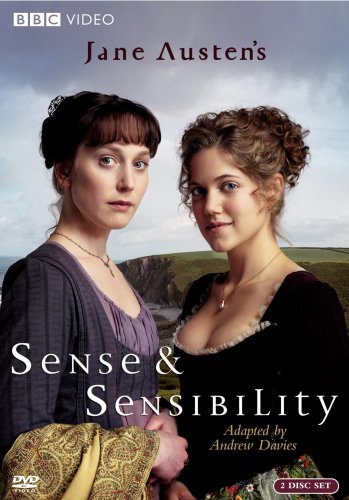
This BBC mini-series has the unenviable task of winning over audiences very likely familiar with Ang Lee and Emma Thompson’s excellent theatrical adaptation of the Jane Austen novel. And the opening scene might very alarm many a viewer: the rather steamy seduction on display does not, at first blush, seem to fit in to the comedy of manners one is expecting. The post-credit sequence is also rather more gothically melodramatic than one might anticipate (or hope for). Thereafter, however, the series settles into a tone more befitting Austen. The script is by Andrew Davies, easily one of the best scribes British television has to offer. He has graced us with contemporary pieces such as a version of Othello set amidst the members of the London Metropolitan Police and the House of Cards trilogy (an adaptation that is superior to its source material), as well as superb period adaptations (Middlemarch, for example). Here, his acid wit finds kindred spirit in Austen, and the result is very fine indeed.

Audio

Last week, as I was writing about lost films, I was musing about the many films I had read about in my youth but had never seen. Many of those from the early decades of film history are, I assumed, lost forever. I was thinking particularly of the really early stuff, and particularly of the films of Georges Méliès. While many of his films are still extant (and I have extolled the previous Kino release previously), many of those I had wished to see were those Denis Gifford describes in his Pictorial History of Horror Movies. A prime example would be The Merry Frolics of Satan (1906). The single still in the book – of carriage drawn by a skeletal horse with an accordion-like torso – has always fascinated me. So I was going to mention this film as an example of the lost but lamented. Just to be on the safe side, though, I did a quick search, and discovered, to my delight, that it is NOT lost. To my further delight, I found it on a collection which can best be described as mind-blowing.

There have been a number of Méliès collections to date, but not one, I feel safe in stating, has come close to what is on offer in Georges Méliès: First Wizard of Cinema (1896-1913). Five discs. 782 minutes. 173 films. These are, it seems, all the known surviving films, arranged in chronological order, boasting new scores, and, where possible, narrations following the original English text written by Méliès. Those narrations underline just one of the charming, fascinating aspects of these films. They are very clearly documents of cinema aborning, and the language of visual storytelling is only just being created. Méliès was a man of the theatre, and that way of thinking and visualizing carries through in his films. For all that he created the special effects extravaganza, his films are also redolent of filmed theatre: static camera, everything in medium long shot (as if we were in a good seat at the theatre), entire scenes played out in what is in effect (if not reality) a single continuous shot. The spoken narrations are thus often necessary for the audience to make sense of what is happening on the screen. For instance, because of the lack of close-ups and the like, the meeting of the astronomers at the beginning of A Trip to the Moon (1902) is nothing more than wildly gesticulating chaos, and no clear narrative is possible to discern without the narrator telling us where to look. As Méliès’ career was winding down, D.W. Griffith was busy pushing cinematic storytelling to full maturity, taking visual storytelling to a level of sophistication that is still what we are most familiar with today. But this very shortcoming in Méliès’ technique is part of the his work’s appeal: when we watch these films, we become conscious of seeing a new art-form in mid-formation.

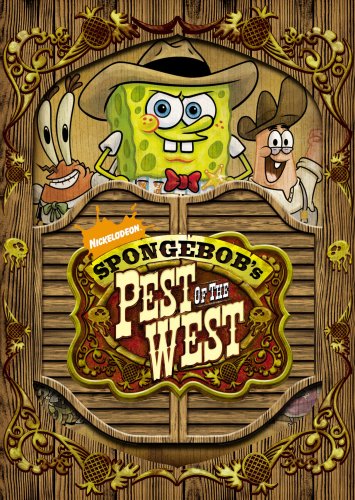
If it's Wednesday, that must mean another batch of SpongeBob cartoons. The lead-off here is the is title episode, a 22-minute piece that recounts the adventures of SpongeBuck SquarePants, our hero's 19th-Century ancestor. The rest of the episodes are an eclectic bunch, and the thematic consistency is less than that of some other collections (there is a vague adventure link that runs through several of the stories). At any rate, the silliness is just as engaging and bizarre as ever, and there are plenty of quick absurdist sight gags to keep you chuckling.

Audio

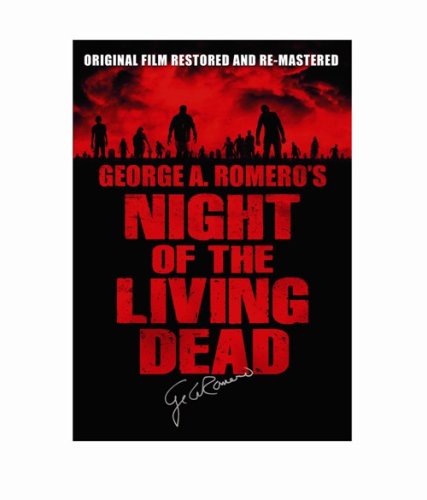
Some years back, I reviewed Elite's Millennium Edition of the NOTLD. That was certainly the most definitive edition at that time. So now we have another deluxe edition. How does it stack up? Before we get to that, a few (largely unnecessary) words about the film. There's a blurb on the box that calls this “the most influential horror film since Psycho,” and there is a great deal of truth to that. As has been pointed out before, the film single-handedly transformed the mythology of the zombie, changing the monster from mindless slave to flesh-eating ghoul. I can't think of any other instance where a mythology was changed so completely and with such finality. And there are plenty of reasons why it had such impact. Sure, there's the gore. And while the intestine-gobbling was pretty intense for 1968, H.G. Lewis had been pumping out gore films just as (if not more) excessive for half a decade. Unlike Lewis' films, George Romero's picture is extremely well made. The pace is lightning-fast (we have our heroine pursued by a zombie less than ten minutes into the film); the cinematography is imaginative, with plenty of energetic editing and lively camera work; and the lighting is dramatic exercise in stark high contrast. I haven't even mentioned the intelligence of the script. So let's just place this among the greatest horror films ever made and leave it at that.

Audio

So the news this week was very exciting for fans of vintage films, and especially for those whose dreams are haunted by thoughts of lost films rediscovered. Hot on the heels of Kino's announcement of a new DVD release of Fritz Lang's Metropolis, due next year and apparently a further improvement on their previous (superb) release, came word that a completely uncut version of the film had been found in Argentina. That, friends and neighbours, is BIG. The full three-hour-plus version of the film hasn't been seen since the original release, and not everywhere at that. In recent years, we've seen some pretty fine editions of the film, but all of them have had to make do with extensive summaries and mouth-watering stills to fill in the gaps. Certain characters that barely show up, if at all, in what has been seen to date, actually have quite substantial roles in the full version. And now it has been found. True, it's in pretty rough shape, but it exists, and no doubt a full restoration effort is underway. Kino has apparently said that the found footage might well be added to the forthcoming DVD.


So let's savour the thought for a moment. An uncut Metropolis. Who would have thought that we would ever see the day. I know I didn't. One can't but think that just about every lost film that might be found, has been found, and then this happens. One begins to hope again. Maybe other mythical beasts will turn up after all.

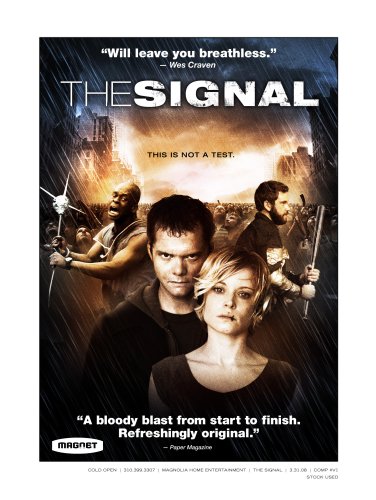
We’re all familiar with the zombie movie, most particularly the post-1968 zombie flick. That was the year George Romero permanently transformed the zombie into a flesh-eating ghoul – perhaps the only instance of a long-standing monster having its rules of behaviour altered almost beyond recognition, and to the point that there have been virtually no NON-flesh-eating zombies on film since Night of the Living Dead. But that’s a topic for another time. Co-existing with the neo-zombie movie, and sometimes fusing with it (as in 28 Days Later and its sequel), is the tale of mass psychosis. A recent example is the 2007 film The Signal, directed by David Bruckner, Jacob Gentry and Dan Bush.

In the nondescript city of Terminus (no doubt twinned with Racoon City), a strange signal is broadcast across all media. It has the effect of turning anyone who watches it into a murderous loon. Chaos descends quickly as one might imagine. The film is structured as three semi-distinct but overlapping stories (not entirely unlike Pulp Fiction, as has been pointed out elsewhere, though The Signal is far more linear than Tarantino’s movie). In the first, Anessa Ramsey leaves the home of her lover (Justin Welborn) to find her husband (A.J. Bowen) descending into the signal’s embrace. In the maelstrom of violence that erupts, she ultimately flees the apartment, unable to trust anyone. The second story is Bowen’s, as he tries to find his wife, and falls in with two other people in various stages of signal-mesmerism. This segment, often blackly funny, shows us the behaviour of the psychotics from their own perspective, and drives home the fact that they believe their actions to be entirely rational. In the third story, we track Welborn’s struggle with Bowen as he tries to find and rescue Ramsey.

Well, I’m back, with apologies for a couple of weeks’ absence, and with some more facile musings. I’ve dumped all over M. Night Shyamalan in this space before, and it would be tempting to do it again, but I haven’t actually seen The Happening yet, so I won’t officially trash it right this minute. However, the vox populi has spoken, and the movie is officially a bomb, which makes three in a row for our boy, following up the atrocities of The Village and Lady in the Water. Which means it might, perhaps be time for a re-evaluation of the auteur, perhaps even time for a different branch of fandom to claim him for their own.

Let’s put Shyamalan side by side with Edward D. Wood, Jr. Now Wood is the Supreme Deity of Badfilm. There are pretenders to the throne (most notably Doris Wishman), but Wood still rules over all. There are other filmmakers who are arguably just as incompetent, but, as has been argued before, what distinguishes Wood from his peers in badness is the fact that his films are earnestly meant. He wasn’t just pumping out hackwork. He was attempting, in his own charmingly misbegotten fashion, to create art. He had messages. He had things to say, even if no one else understood a blessed word.

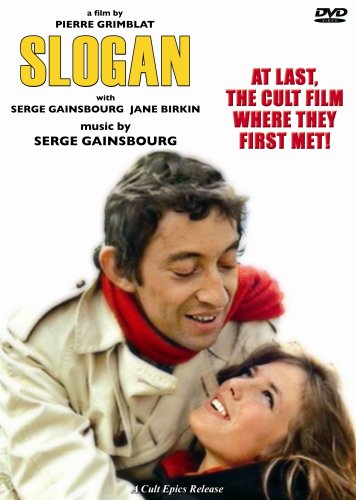
Serge Gainsbourg and Jane Birkin were the “it” couple in France during the late 60s and early 70s. This is the film that brought them together, their To Have and Have Not, if you will. Musician Gainsbourg (who, for the uninitiated, had a singing style that was a cross between Leonard Cohen and Tom Waits) plays a married director of successful TV commercials. He begins an affair with an 18-year-old (Birkin). Their relationship hits most of the predictable moments of such movie romances from that period.

And it is almost completely uninteresting. There is zero chemistry between the leads, but neither has much by way of screen presence to start with. Gainsbourg is startlingly ugly, and Birkin is strikingly beautiful, but that's hardly enough to keep us watching. Neither character is remotely likeable, and the self-referential moments in the film were smug clichés already in 1969. The film holds some interest as a pop culture trivia answer, but for anyone unfamiliar with Gainsbourg and Birkin, it's an intolerable bore.

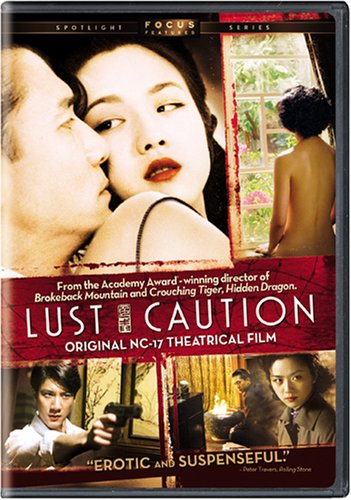
Tang Wei plays a student who is a member of a radical theatre troupe during the Sino-Japanese War. She and her cohorts determine to assassinate a prominent collaborator (Tony Leung). In order to get create the opportunity for the killing, our heroine must infiltrate Leung's household. She is on the threshold of becoming his mistress when he leaves Hong Kong for Shanghai. Three years later, now backed by the Resistance, she makes a new attempt. But she hasn't counted on the entanglements of passion in the affair she has embarked on.

Ang Lee's film was widely seen as both sumptuously beautiful but too leisurely for its own good, and there is something to that position. The story takes its sweet time, and the affair itself, along with its transgressive (by mainstream standards) sex scenes, doesn’t properly begin until over 90 minutes into the film. On the other hand, so much of the film is unspoken, left for the viewer to read between the lines (and Tony Leung is a master of conveying deeply repressed pain) that there is a lot going on, even when the images are still. And when the paroxysms of violence and sex do come, they are explosive.

Airport 1975 is the most famously bad of the franchise. It’s the one that gets all the attention. But in fairness, The Concorde: Airport ‘79 should not be ignored. Let’s give it a moment in the spotlight, shall we? Yes, let’s, if for no other reason that George Kennedy’s Joe Patroni character finally moves to centre stage.

The plot arguably outdoes the underwater-plane gambit of the previous film. The Concorde is in the middle of a goodwill flight in the lead-up to the Moscow Olympics. (So already history was about to blindside the movie, but never mind, carry on.) This particular plane has just been purchased by an American company, and Kennedy, whose character has mysteriously morphed from engineer to executive and now to pilot, is going to be at the helm, along with French pilot Alain Delon. The latter is romantically involved with flight attendant Sylvia (Emmanuelle) Kristel. Their relationship is undergoing some rather vaguely defined problems. Anyway, the big problems concern another relationship. News anchor Susan Blakely has just come by evidence that her beau, tycoon Robert Wagner, has been involved in all sorts of illegal arms sales and other skullduggery. Being an idiot, however, Blakely doesn’t blow the whistle immediately. Wagner decides to take care of the problem by downing the Concorde. What follows bears more than passing resemblance to Wile E. Coyote’s repeated attempts to exterminate the Road Runner. Only less realistic.