Posts by Gino Sassani

"What I am about to tell you sounds crazy. But you have to listen to me. Your very lives depend on it. You see, this isn't the first time."

No, this isn't the first time. Tom Cruise seems to be making a habit of these science fiction action movies of late. There was Oblivion and War Of The Worlds, and quite frankly Edge Of Tomorrow looked to be pretty much more of the same. But there's a huge difference between this film and the previous two. Edge Of Tomorrow is actually good. What looks on the surface to be just Groundhog Day with futuristic toys turns out to be a redemption story that I actually never saw coming.

When something is successful, it doesn't take long for everyone else to try to find out just what those secret spices are and attempt to cash in on the wave. In 1963 NBC started one of those waves with The Virginian. While it wasn't exactly the start of the western television tsunami, it was one of the longer-lasting ratings winners after the big two (Gunsmoke and Bonanza). By 1968 CBS was looking for a way to copy that success. One of The Virginian's unique qualities was its 90-minute running time. Many westerns ran just 30 minutes with plenty of hour-long shows. CBS decided that perhaps it was the more-is-better model that worked so well for The Virginian and came out with their own 90-minute western. That was The Cimarron Strip. It was good, but it was no Virginian, and the timing couldn't have been worse. Westerns were making way for the cop and detective shows, and The Cimarron Strip lasted but a season.

Marshal Jim Crown (Whitman) was a lawman in the untamed territory between the Kansas Territory and the wild Indian lands. It was a narrow strip of land that had been widely neglected by the law until Crown's arrival. He arrived to find the jailhouse had been taken over by Scotsman MacGreger (Herbert) who was using it for his still which had just blown to pieces, taking the jailhouse with it. MacGreger was part owner in the local pub/hotel/restaurant. Also newly arrived in town was Dulcey Coopersmith, who was from England by way of Rhode Island. She was searching for the father she never met. Unfortunately, she was too late. He was once also the co-owner of The Wayfarer Inn with MacGreger, but he had died. Dulcey quickly settled in as co-owner, and Marshall Crown ended up setting up shop there as well because of the blown-up jail.

We first came to know Paul Hogan as the "Shrimp On The Barbie" guy. He was doing television and radio ads for Australian tourism. A smart fellow, he saw that the ad character was popular and rode an enormous wave of an Australian fad that hit America in the 1980's.. Suddenly there were Australian bands like Men At Work teaching us about vegemite sandwiches on the top of the music charts. We got steak, not shrimp, on our barbie with a chain of Australian-themed steakhouses appropriately called Outback "no rules, just right" started up by a Florida group. Pop culture became inundated with catch phrases like "no worries" and "G'Day". Australia was cool, and we even had an "Australian" neighbor we all later found out was faking it for years. No doubt anything Aussie was considered cool. It was in that light that Hogan parlayed his tourism ads into an over-the-top Aussie character named Michael J. "Crocodile” Dundee.

The film was an almost instant hit. It pulled in a rather sweet $175 million at the domestic box office. Remember, this was a 1987 comedy with no real known American stars. Of course there was going to be a sequel. That film pulled in considerably less, but still a respectable $110 million. Those two films have now been brought to Blu-ray as a two-disc set from Paramount. The third film was called Crocodile Dundee In Los Angeles and tanked big time with an embarrassing $25 million box office total. That was 2001, and the Aussie fad has long since passed. It's no surprise that the collection only includes the first two films. These are absolutely worth watching and having.

"Senior year is supposed to be the best year of your life. Did you know that? Yeah, if you survive it."

It's a new season, and the girls face new dangers. You have to give the writers some credit here. While the whole A thing can get a little old, they do a good job of changing the dynamics between the Liars’ relationships both inside and outside their group. Foes can become friends, and friends often turn out to be foes. There is a lot more turmoil inside of the group as each of the Liars takes a turn being a bit of an outsider for a short while.

Long before Clint Eastwood was making our day as Dirty Harry or even roaming the badlands without a name for Sergio Leone, he was working the cattle drive on Rawhide. Rawhide was created to take advantage of the huge Western film and television wave that Hollywood had been riding for nearly a decade. With huge ratings for Gunsmoke and Bonanza among others, Rawhide was a bit of an unlikely success. Here the show explored the West on an endless cattle drive to get a few thousand steer to market. Along the way the crew would find themselves involved in someone else’s troubles or meet trouble head on themselves. The cattle drive theme would rely on the changing landscape to distinguish the show from other more sedentary westerns. More like Wagon Train, the constant movement always gave a sense of action even when there wasn’t much. Of course, there was a large number of changing support players along on the drive. Every operation needs cooks, ropers, and red-shirts.

A very young Clint Eastwood played Rowdy Yates. Unlike any cowboy you ever saw, Rowdy had slicked-up hair and looked more like a biker than a cowhand. He was the greenhorn in the bunch, usually finding each experience a learning opportunity. He had an almost naïve charm that made him popular. The original cast featured Eric Fleming as Gil, the trail boss. The third main character was Pete Nolan, played by Sheb Wooley. Sheb formed a good relationship with Eastwood that would be rewarded years later when Eastwood created a role for him in The Outlaw Josey Wales. I didn’t really watch the show even in its limited syndication run, so knew most of it by reputation only. Of course, I knew the Frankie Laine theme that has been used for everything from selling cars to western spoofs. The tune was also a moderate radio and record hit in the day.

“It’s been a long time getting from there to here.”

But it's finally arrived. We now have all four seasons of Star Trek: Enterprise on high-definition Blu-ray collections. On the surface, this was the easiest show to release on Blu-ray. It's the only Trek series already in widescreen format, and it's the only one to have been filmed, at least partially, in high definition to begin with. There was a risk, however. The series has gotten some of the most mixed reviews of any of the shows in the franchise. The truth is, it's been getting kinder buzz in the years since it left the air. In fact, most people, myself included, feel that Enterprise was at its very best when it was taken off the air. But cancelled it was, and for the first time in almost 18 years there was not going to be a Star Trek television series on the air. What started with Star Trek: The Next Generation finally came to an end with the final episode of Enterprise.

Just when you think you'd heard about everything there was to hear about World War II, the Smithsonian Channel offers some insight into a few "lesser-known” events of the war. Mix in a little conspiracy theory that's become all the rage since Dan Brown's novels hit the best seller list. What you end up with is a DVD like Secrets Of The Third Reich. The release cobbles together four episodes each telling a unique story that may or may not be completely true. With the use of reenactments, historical footage and interviews with survivors and their kin, the episodes attempt to explain some of these stories in a somewhat new light. The results are decidedly mixed, and no conclusive answers are really provided.

You get the following episodes:

"The First World War shaped the 20th century. It sparked the Russian Revolution, and it launched America as a world power. The fault lines from its failed peace settlement led to a second terrible world war barely 20 years later. We all live with its unresolved consequences..."

The First World War long existed in the shadow of the second. When it was fought, the term World War was not yet in existence. Until after the Second World War, it was referred to mostly as The Great War. The footage from this war is far more rare. Most of us have seen little of it. Clips from the Second World War have been used over and over for countless documentaries. There are no longer any survivors left alive from that Great War. You won't find them interviewed on television, and you won't hear their stories told to the extent you've heard accounts of other conflicts. The results of that war do still live with us today, but how many of us truly understand any of it? The First World War: The Complete Series changes all of that. It's appropriate as we honor our brave soldiers on Memorial Day and as we begin to live through the 100 year anniversaries of that war to look back... and remember.

"You and I have a lot of catching up to do. What's the last thing you remember?"

In 2006 director Bryan Singer appeared to have turned his back on the film franchise he had brought to life. After two successful runs at the X-Men universe Singer was primed and ready for a third when a certain Man Of Steel caught his eye. At seemingly, the last minute Singer dropped out of the third X-Men film to direct the dubious return of Superman. I actually like Superman Returns better than most. I wonder how much of the film's hatred might have been directed at its director, considered a traitor by many fans. I never really looked at it quite that way. It's a business, after all, and people come and go. Still, I'm not sure that Singer didn't feel a need for redemption or at least that he might have had some unfinished business. X-Men: Days Of Future Past should wash away any hard feelings fans might still harbor. This is one heck of an apology!

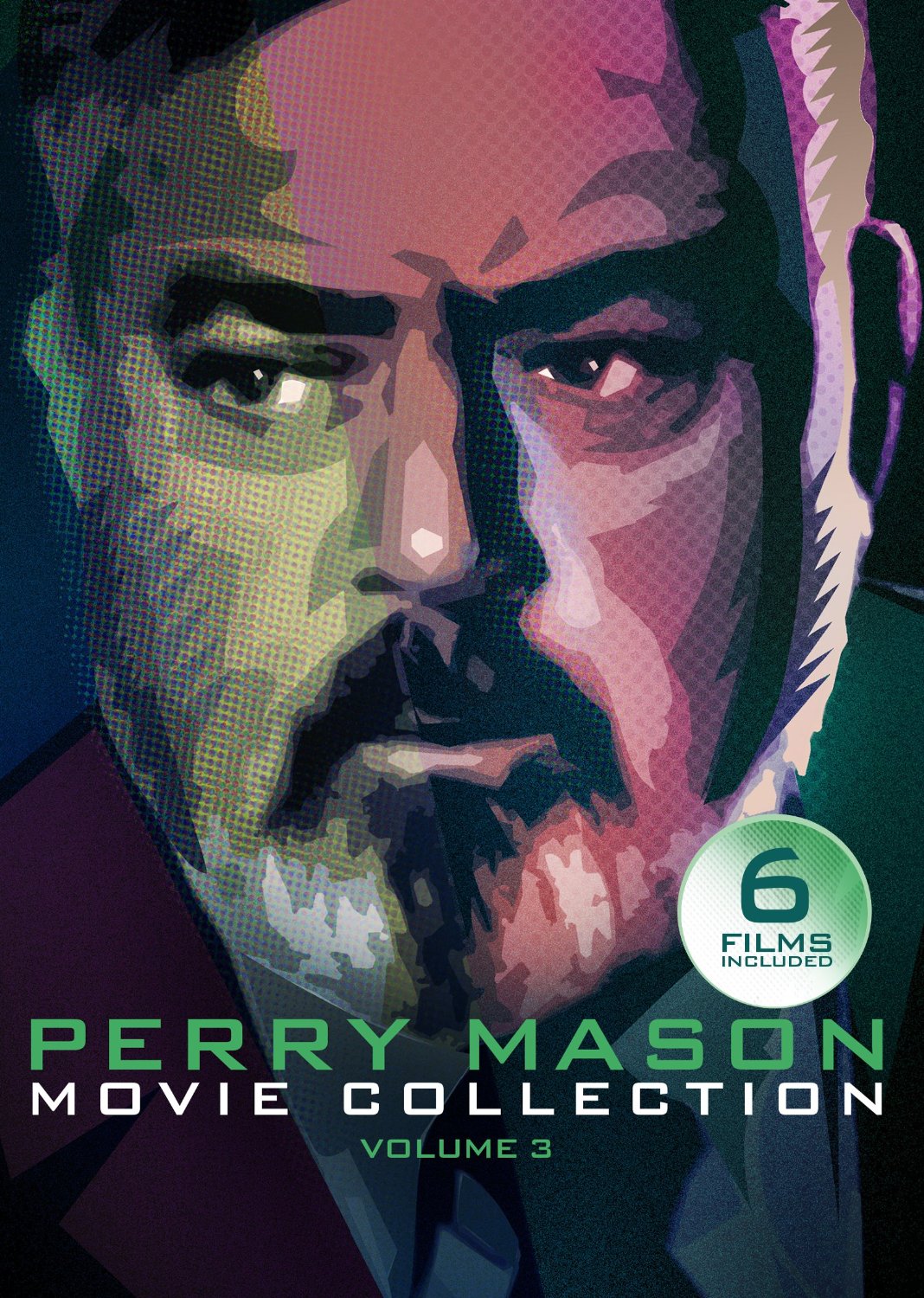
Erle Stanley Gardner wrote crime fiction, and while many of his 100 or so works are unknown to most of us, he created a character who has become as identified with criminal lawyers as any other in fiction. It was in these crime novels that Perry Mason first faced a courtroom. He developed a style where he would investigate these terrible crimes his clients were on trial for. He would find the real killer, and in what has become a Hollywood cliché, reveal his findings in a crucial moment during the trial. While we may not remember the novels, we all remember the man in the persona of Raymond Burr.  Burr had a commanding presence on our screens and enjoyed a well-deserved 11-year run as the clever lawyer. What makes this run so amazing is that the show followed pretty much the same pattern the entire time. We always know what’s going to happen, but we wait eagerly for that gotcha moment when Perry faces the witness on the stand. We know when he’s got the guy squarely in his sights, and we can’t sit still waiting for him to pull the trigger. OK, so maybe that’s a little over the top, but so was Perry Mason. From the moment you heard that distinctive theme, the stage was set. To say that Perry Mason defined the lawyer show for decades would be an understatement. Folks like Matlock and shows like The Practice are strikingly similar to Perry Mason.

Perry Mason officially ended in May of 1966, but that wasn't going to be the end. Twenty years later the surviving cast members reunited for Perry Mason Returns. It was Perry and Della back together again. Both Raymond Burr and Barbara Hale returned to their roles. William Hopper had died in 1970, so William Katt joined the reunion as Paul Drake, Jr. Katt might not have really been Drake's son; he was Hale's son. When Katt left the films he was replaced by William R. Moses as Ken Malansky. Ken was a young law student helped by Perry once when he was framed in law school for a rival's murder. He ends up being both a legal assistant and investigator for Perry in the reunion films. Ken's girlfriend is Amy, played by Baywatch's Alexandra Hastings. Amy was a rich girl who had too much time on her hands. It led to her involving herself in Ken's investigations. The films also often starred James McEachin as Lt. Brock, the cop on many of the cases.  M*A*S*H's David Ogden Stiers would often play his rival in the prosecutor's office Michael Reston. The team would continue to do 30 television movies from 1985-1995. CBS has now begun to package these reunion films in collections like this. You get six films on three discs. The discs appear in a plastic case, and the cases are held by a cardboard slipcase.