Posted in: Disc Reviews by Michael Durr on August 22nd, 2011
In my life, I have always made a habit rooting for the underdog. Whether it would be in the business world with a small company or at the NCAA March Madness tournament with a Cinderella team, I always like to see the unexpected. It happens in movies too for the most part, I routed for Rocky, I routed for the Indians in Major League (didn’t root for Rudy though, that was too much even for me.) But what would I think of the little soldier in Little Big Soldier? Well, we will have to see.
It is the year 227 B.C., battles are waged, and wars carry on. Land is gained, people are lost. However, we as the viewer are interested in one large battle between the Liang and the Wei that involves over 3000 people. There are those three thousand people that are soon annihilated by each other in an attempt to win for the other side. It is then when we join the action in progress with bodies lining the earth as far as the eyes can see. The ground is silent until we see one body move in the distance.
Posted in: Disc Reviews by David Annandale on June 13th, 2011
Jean-Hugues Anglade plays Zorg (yup, that's his name), a handyman living in a beach-front house, scribbling away quietly in his spare time. Not so quiet is his tempestuous affair with Betty (Béatrice Dalle in her debut), whose passions overwhelm both of them. First, she moves in on him with no warning. Then, when she discovers his writing, she decides they must move to Paris so he can have a career as a writer. To make sure Zorg complies, she burns his house to the ground. Once in Paris, her plans for him fall apart, and so, bit by bit, does she.

Writer/director Jean-Jacques Beineix has both audience and characters sweltering from the get-go, setting the tone for another French tale of amour fou. Angalde and Dalle inhabit their characters perfectly (though one might be forgive for wondering what exactly Zorg sees in Betty, beyond the physically obvious). The film is stylish and dramatic, and if, at 185 minutes, it outstays its welcomd, it doesn't do so by much.
Posted in: Disc Reviews by David Annandale on June 6th, 2011
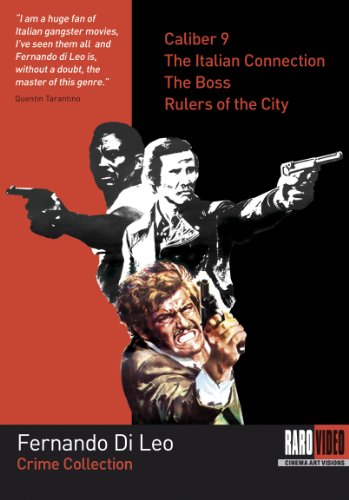
Looking for a something a bit different for you gangster flick fix? Then look no further than this box set of gritty, thematically linked Italian crime pictures from director Fernando Di Leo. Things don't get much more delightfully 70s than this.
Caliber 9 headlines Gastone Moschin as Ugo Piazza, a mob tough guy just out of prison. Everyone believes he stole 300 grand from the the mafia, which leads to no end of beatings and threats of worse. The old gang forces Ugo to work for them again, in order to keep an eye on him, and he tells girlfriend Barbara Bouchet that his plan is to find out who really took the money.
Posted in: Disc Reviews by Michael Durr on June 5th, 2011
Many times when you see a trailer over and over, one has to ask themselves: Do they really want to see the movie or is repetition to the point of acceptance playing its fatal card? In the case of Legend of the Fist: Return of Chen Zhen, I had seen the trailer several times in front of Ip Man and the sequel. I wasn’t sure if I was anxious for the movie, so much that I really wanted to see Donnie Yen go absolutely crazy with his kicks and amazing martial arts.
The First World War is going on across Europe. The Allied Forces aren’t doing so well. In 1917, one hundred and fifty thousand workers were dispatched by the Chinese government to help the Allied Forces. Each of these workers were given a wristband for identification and the imprint left behind by these markers were symbols of survival. These workers fought and also did manual labor on the lines. We join the story with a mighty blast as we start our story in France.
Posted in: Disc Reviews by David Annandale on May 17th, 2011
Clowns have been a recurring obsession for Fellini, by the director's own admission, and after having been memorable presences in his films (perhaps most notably in La Strada), here they have an entire film devoted to them. Fellini here offers a mixture of biography, documentary and comedy. The film opens with a young boy (meant to be Fellini) first encountering (and being frightened by) clowns at the circus. Fellini's narration recounts how the clowns reminded him of real characters from the village of his youth, which cues recreations of those people, their actions essentially circus clown routines transposed to world outside the circus tent. Fellini then heads off to Paris in search of clowns and their history.
Fellini incorporates many clowning routines, and how well the gags work will, of course, depend on the individual viewer. But the value here is less that gags than the history and broader meaning of the circus itself. What clowns mean, what we take from them, what the different figures represent – these are the kinds of meditations the film engages in, and there is a great deal of melancholy and poignancy to go along with the broad slapstick. A fascinating piece then, originally done for Italian television.
Posted in: Disc Reviews by Michael Durr on April 23rd, 2011
There are usually two schools of thought when it comes to judging sequels. One tends to be very harsh on the proceedings expecting it to surpass the original (which it hardly ever does) in all aspects of film-making. The other still expects a good film but realizes that this sort of thing is usually financially driven and just hopes for something that can favorable stand against the original. I happen to be in the later crowd. But, I certainly found myself inching towards the former when I received the blu-ray package to review Ip Man 2, Legend of the Grandmaster. Let's go inside, shall we?
Ip Man (played Donnie Yen)has escaped from Foshan and has made way with his family to the Hong Kong of the 1950's. His wife, Cheung Wing-Sing (played by Lynn Hung) is pregnant with her second child. However, the family is barely making ends meet. Cheung can't work much and Ip Man's martial arts school isn't going as well as planned. They can hardly cover rent and school fees for their son, Ip Chun (played by Li Chak).
Posted in: Disc Reviews by David Annandale on April 10th, 2011
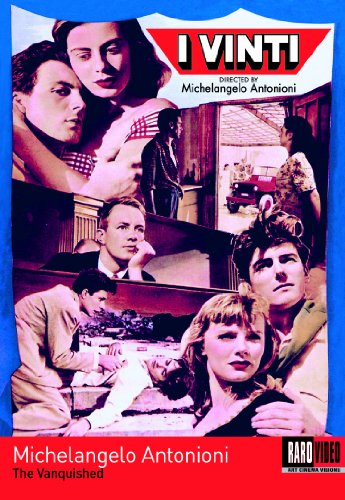
A stern, hectoring narrator laments the state of the Young People of Today's Modern World, and ascribes their terminal amorality to their having come of age during the World War Two. Having set the stage, he then withdraws until the end, that we might draw the proper moral conclusions from a trio of tales (inspired, loosely, by actual cases) that show the terrible depths to which the Young People of Today's Modern World have plunged.
The first is set in France, where a group of teens head off for a day in the countryside. Their goal is to murder one of their own, believing that a) he is about to betray them by taking off to Canada; and b) that all his fanciful tales are true, and that he is fabulously rich. In the second story, a young man from a good home in Rome is involved, for no very good reason beyond selfishness, with cigarette smugglers. Barely escaping from a police raid, he guns one man down and is badly injured himself. We then follow him through the day as he slowly stumbles toward his destiny. The last story takes us to England, where a fellow, utterly convinced of his own superiority, courts a newspaper's interest first by letting a reporter know about a body he has found, and later by boasting he killed the woman himself, believing that his crime is so perfect that he can confess to the police and then recant without suffering any particular inconvenience.
Posted in: Disc Reviews by David Annandale on April 5th, 2011
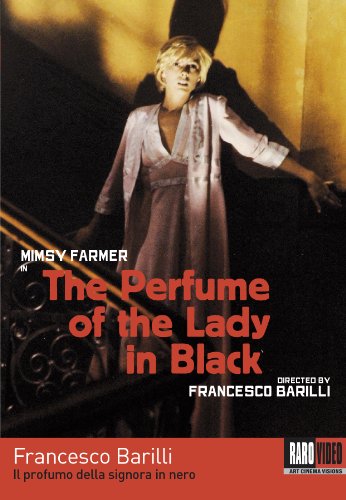
Three years after her unsettling turn in Dario Argento's Four Flies on Grey Velvet (1971), Mimsy Farmer headlined this giallo-related effort by director/co-writer Francesco Barilli. She plays a successful chemist on the verge of a psychotic break. She has been haunted since her childhood by the death of her father, and she has recurring memories (or are they fantasies?) of her mother in the arms of a sinister man. Her sense of reality crumbles as objects and people from her past appear and vanish. She retreats deeper and deeper into a paranoid shell. But just because you're paranoid doesn't mean they aren't out to get you, and there are signs that she may be the victim of a sinister conspiracy.
By the time Barilli's film reaches its admittedly chilling finale, it has ceased to make a lick of sense. This isn't necessarily a bad thing: many gialli (and related Italian horror films) follow a logic that belongs to dreams rather than the real world. But even as Barilli adopts a stately pace (all of the violence in the film is reserved for the last fifteen minutes), he also tries to do too much, as if he were trying to fuse Repulsion with The Wicker Man. The film's head-scratching aspects get in the way of the fist-in-the-gut denouement, or at least prevent it from having quite the impact it deserves. However, the film is handsomely shot, and the ending is sufficiently powerful that it will linger in the mind.
Posted in: Disc Reviews by Bob Ross on March 17th, 2011
Connections between Eastern and Western cinema aren’t new, but they do seem to be proliferating. Back in 1964, Italian maestro Sergio Leone borrowed from Japanese genius Akira Kurosawa, turning Yojimbo into A Fistful of Dollars. Just last year, Korean writer-director Lee Jeong-Beom looked to the West for multiple influences, and the result is The Man From Nowhere, a psychological action-thriller that alternately engages, confuses and kicks major butt.
The film was a late-summer hit in its homeland, but it’s probably OK that the rest of the world had to wait until now for this technically superb Blu-Ray release. Subtitled gangster yarns don’t sell well in the American market – at least not the ones that rely on gritty plotting instead of high-wire special effects. In other words, this is no Crouching Tiger, kids. That’s more of a Chinese development. Like Leone’s Man With No Name, The Man From Nowhere is an enigmatic antihero, and the main reason you root for him is because everyone else in the picture – rival gangs and creepy cops – is more disturbed than he is. The exception is an innocent young girl who becomes a kidnap victim whom our hero vows to rescue.
Posted in: Disc Reviews by David Annandale on March 3rd, 2011
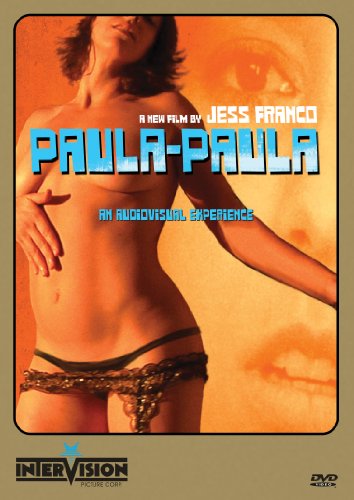
Paula (Carmen Montes), a dancer at a strip club, is arrested for the murder of Paula (Paula Davis), a fellow dancer. The arresting officer (Lina Romay) questions the near-catatonic Paula, and the rest of the film is a slow-motion, flashback of the dead Paula dancing, the two women making love, and the murder. Once the slow-mo begins, there is no further dialogue, except for a cryptic fable that Paula tells to the camera.
Jess Franco's latest effort is his most minimalist, and in some ways most personal, film to date. There is no set to speak of: the film was obviously shot in Franco and Romay's apartment, which doubles for both the home of the Paulas and, perhaps, the police station. I say “perhaps” because the notion of any definable space is a very tenuous one in this film. The only set dressing consists of a few aluminum screens, which play a role in the zero-budgeted surrealist effects. As has been pointed out elsewhere, there is nothing groundbreaking about the effects the Franco conjures here. The kaleidoscopic images, frequently involving Davis fusing and splitting from her double, would not have been out of place in the 1960s, and aren't going to break the back of even the most basic computer editing suite today.