Foreign

“People always work from the assumption that children are telling the truth.”

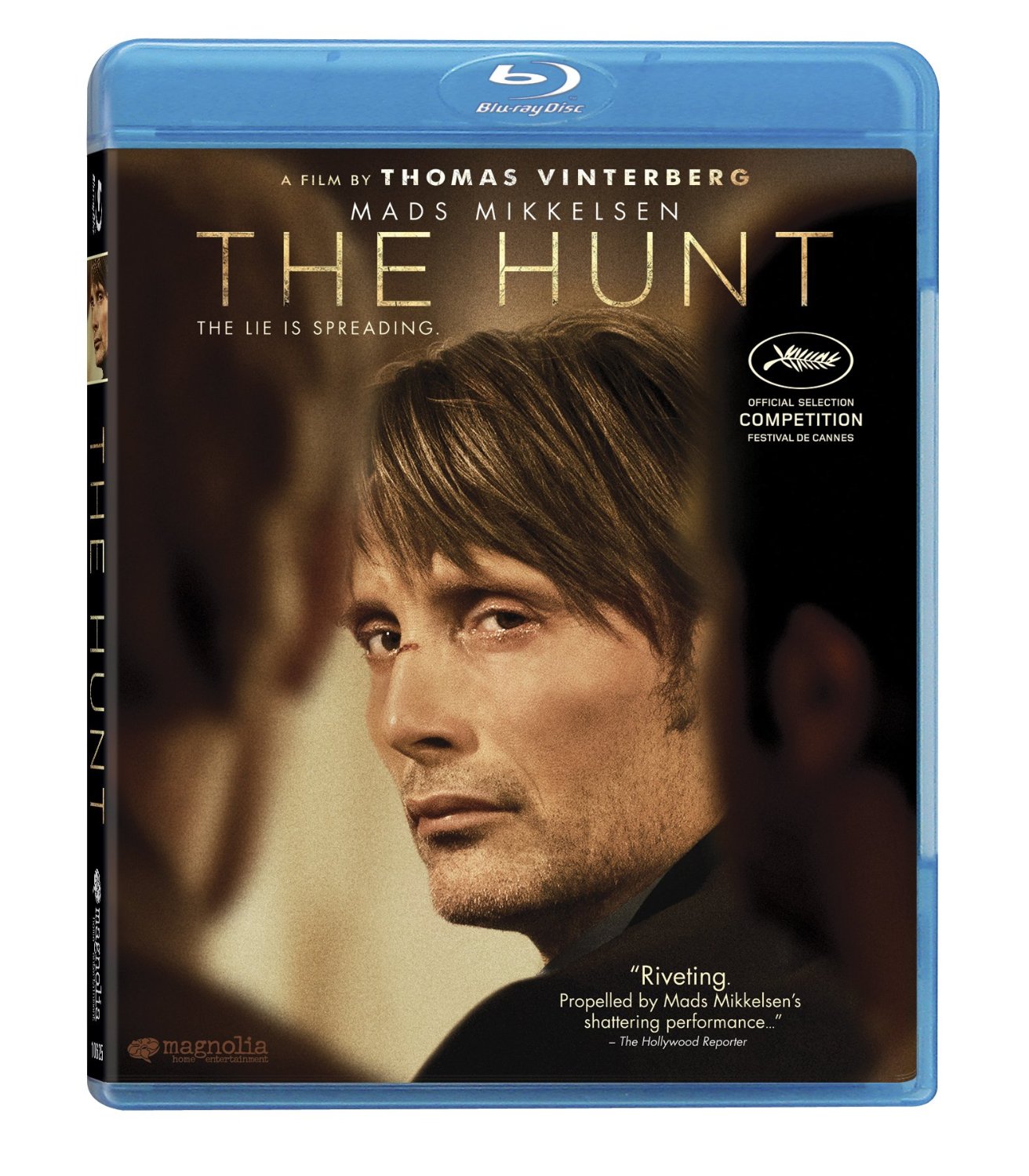
Kids really do say the darndest things! Popular kindergarten teacher Lucas finds this out the hard way after his life is shattered in The Hunt, an outstanding and indelible Danish drama that will almost surely pick up a Best Foreign Language Film Oscar nomination when the nods are announced in about a month. The film tackles a touchy (no pun intended) subject with great care. It also raises a number of provocative points about perception versus reality.

High concepts don’t come much loftier than the one behind Starbuck. An underachieving slacker learns he has fathered 533 children thanks to frequent deposits at a sperm bank 20 years earlier. In fact, the premise was so nice, writer/director Ken Scott decided to do it twice. Vince Vaughn will star in an American remake later this year called Delivery Man. Whether you’re excited for the new film or you think it looks stupid, I highly recommend you give the funny and touching French-Canadian original a look.

David Wozniak (Patrick Huard) is a charming screw-up in his early forties who works as a delivery guy for his family’s butcher shop. He’s the kind of clueless dolt who thinks growing pot in his apartment to pay off personal debts is a solid idea. David also has a fed-up girlfriend named Valerie (Julie LeBreton) who just found out she is pregnant and doesn’t believe David has what it takes to be a father.

“Midnight is the most evil part of the night. If someone dies at 23:59 hours, his soul will not rest in peace and will return to the mortal world.”

Every culture has its own set of ghost stories. They’re usually passed around very late at night by a group of very impressionable young people. That’s precisely where 23:59 — an atmospheric and thoroughly effective Malaysian/Singaporean horror flick — picks up, with a group of army recruits on an island training camp sitting around telling spooky tales. The only thing missing was the campfire.

When it comes to martial artists out of Thailand, the big go-to name people seem to know is Tony Jaa (Ong-Bak).  But Thailand has another martial arts star, and after finishing This Girl is Badass I’m convinced Jeeja Yanin is going to be the bigger star.  Most may recognize Jeeja from the 2008 film Chocolate; after the last thirty minutes of that film I was ready to see her in more action.  Though she’s had other titles released since Chocolate, This Girl is Badass gets to be the follow-up film since her 2008 release.

Now, I don’t know how many of you remember the bike messenger flick Premium Rush, but the plot for that runs very closely to the plot for This Girl is Badass.  Jeeja plays a bike messenger, Jukkalan, who also delivers packages for two rivaling crime bosses to make some extra cash. Once she gets found out, she gets caught in the middle of this smuggling war.  What I wasn’t ready for was for this to be a comedy that reminded me of the old Zucker brothers and Mel Brooks’s films (only not nearly as good).  The crime bosses are good and hard to take seriously, one being an obese man with a very effeminate voice, the other an older man with a foot fetish.

In 1363, the Black Plague had done its damage, leaving most infected areas uninhabitable. Escape — known in Norway as Flukt — is the story of a family that sets out into the countryside to get away from the plague and hopefully find a new place to rebuild their lives. But just as I’m thinking this is going to be a movie about sticking together and fighting to survive the elements, it shifts gears to something far darker but not all that original.

The small family is attacked and most are brutally slain; only Signe (Isabel Christine Andeasen), the daughter, manages to survive. Instead of simply killing the girl, the attackers decide to keep her around. When this decision was made by the attackers my mind instantly went to thinking they were going to torture and rape the girl. It seems extreme, but after seeing these attackers shoot down a young boy with a crossbow, well it should be safe to assume these killers are ruthless. Insert twist; back at their camp they have a little girl named Frigg. It seems all they want is for Frigg to have a sister.

Donnie Yen continues to deliver one great martial arts film after the other, easily making him the most entertaining martial arts star for quite some time.  Sure, there are those who cling to the idea of Bruce Lee being “the best” or perhaps mentioning Jackie Chan or Jet Li for more modern viewers.  But for me it’s Yen, and I have no problem saying he may be the best martial arts star of all time.  His work with Ip Man, Seven Swords, and Flash Point are staples in a career that has been going since 1984.  With Dragon you can check off another hit for Yen; though it may not be as action-packed as some of his previous releases, what we get instead is a fun detective story that asks the question, can a man that has committed atrocious crimes be capable of change?

Dragon opens up in a small village in 1917 China.  The village is quaint; everyone has their place in keeping the village alive and running.  For money the village makes paper; it’s not enough to exactly have everyone living the high life, but that isn’t what you’d expect in this village that probably hasn’t changed much in the past hundred years.  But everything changes when two thieves come into the village and attempt to rob it.  Liu Jin-xi (Yen) reluctantly stops the robbery, and in the process a “fight” breaks out which results in the death of the two thieves.  Was it simply luck on Jin-xi’s part, or is his simpleminded act of heroism a ruse, and beneath it all could he possibly be a trained killer?  This is left to Xu Bai-jiu (Takeshi Kaneshiro Red Cliff and House of Flying Daggers), an investigator sent to the village to decide if it was all an act of self defense.

Sometimes a movie comes along that rises above simple entertainment and actually has something to say.  The Big Picture is the kind of movie that has profound ideas about love, family, and the pursuit of your dreams.  Is it possible to really have it all?  The perfect spouse, the perfect family and live out your lifelong passion and dream?  Many who have families, especially when starting young, can understand the idea of sacrifice for their families; it doesn’t mean they just cast their hopes and dreams aside, but once marriage and children are involved the direction your life may take was never the direction you had planned at all.  And it’s this life and compromise director Eric Lartigau thrusts us into.

When we first meet Paul (Romain Duris) he is a happy family man with a beautiful wife, Sarah (Marina Fois), and two children.  Though he is a successful lawyer, his passion is photography.  He continues to snap photos and develop them in his personal lab, but he understands the risk of setting out to be a freelance photographer and simply can’t give up the security of his job with the law firm.  Unfortunately, though, Sarah is not so content with her idyllic life and has dreams of her own as well as other desires she wishes to fulfill outside of the marriage.  As Paul discovers his wife’s infidelity and that it was with a close friend, he begins to crack, and with good reason.  Things only get worse when Paul confronts Greg (the man Sarah is having the affair with); their minor altercation leads to Paul accidently killing him.

“I’ve changed a lot. I’m not the same woman.”

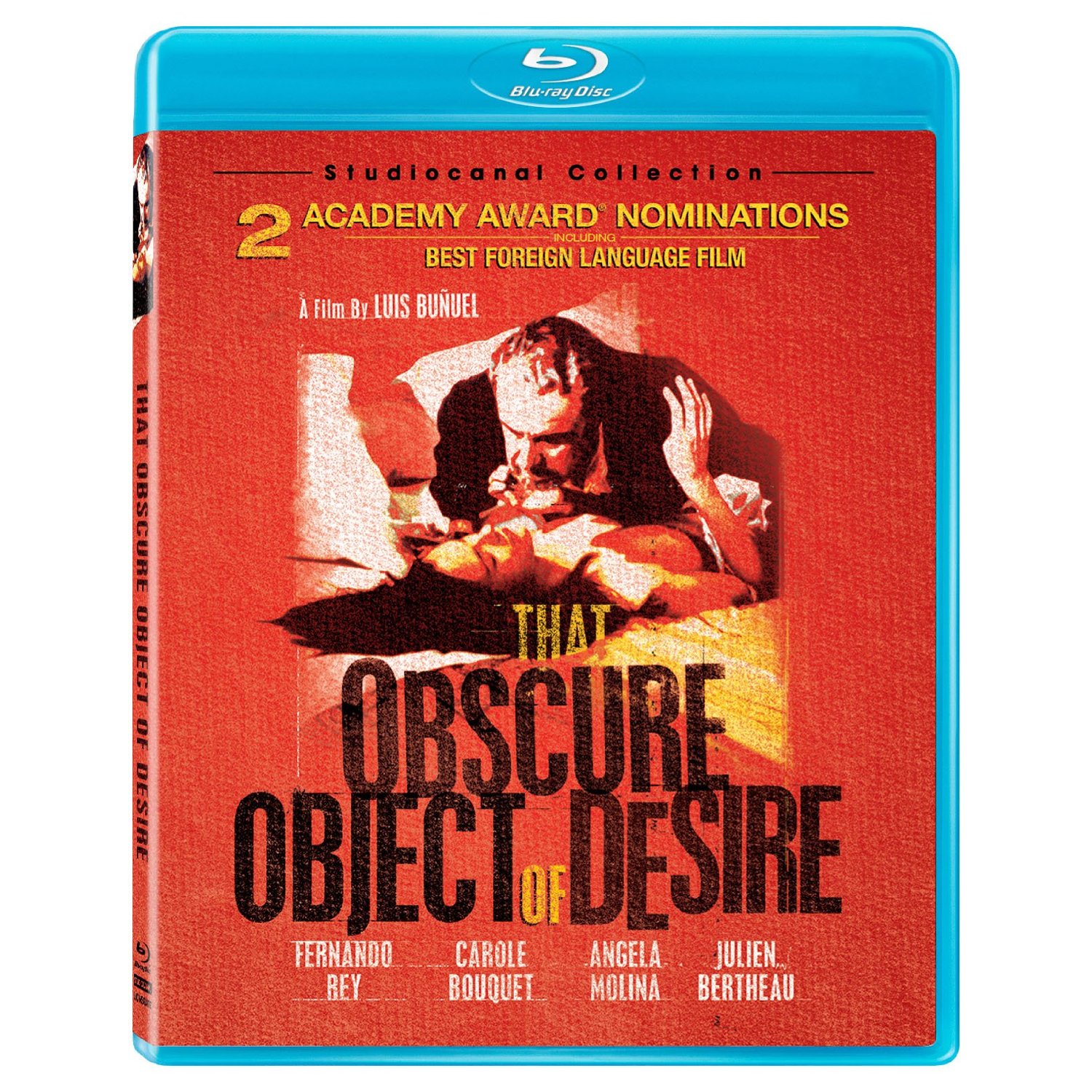
Early on in Luis Buñuel’s surrealist gem, a mild-mannered older gentleman named Mathieu douses a beautiful, battered woman with a bucket of water as she desperately attempts to board the train he’s riding. His fellow passengers are stunned, but also understandably intrigued. What possible sequence of events could’ve led Mathieu to this cold and cartoonish gesture? It’s an irresistible hook, and Mathieu proceeds to regale the other travelers — and, by extension, the movie’s audience — with the tale of “the foulest woman who ever lived.”

Mia is a successful architect who has recently become engaged to her boyfriend Tim. While attending her father's own engagement party she starts a flirtation with her soon-to-be sister in law. From there, a full on romance blossoms that looks to tear apart all she had established with her fiancée, and the rest of her family.

This is not really a typical romance story. Rather, it is a tale of how a woman acknowledges, then painfully accepts her true feelings and desires. Mia is a lesbian who has not accepted her identity as such until Frida, the aforementioned future sister-in-law, seduces it out of her. There is a ton at stake that goes well beyond flirtation. Mia has not come out to her family, and this revelation ruins her engagement and creates a strange link between hers and Frida's family since they are on the brink of becoming related by law.

Ever wonder what a martial arts epic directed by Baz “Moulin Rouge” Luhrmann would look like? Me neither. But that’s pretty much what we get with Legendary Amazons, (loosely) based on the exploits of the Yang family during the Song Dynasty. The story has an intriguing hook — the men of the Yang clan are massacred in battle, leaving their women to throw on armor and take to the battlefield — but is ultimately bogged down by its cartoonish tone and embarrassingly bad production values.

For the cartoonish tone, we can probably thank/blame producer Jackie Chan since the Hong Kong superstar has crafted a wildly successful career out of injecting comedy into the martial arts genre. (Legendary Amazons even has Chan’s signature bloopers during the end credits; although the actress who fell off a horse and hit the ground hard didn’t seem to be laughing.)