Posted in: Disc Reviews by J C on September 3rd, 2012
"A military mystery that lasted 2,000 years."
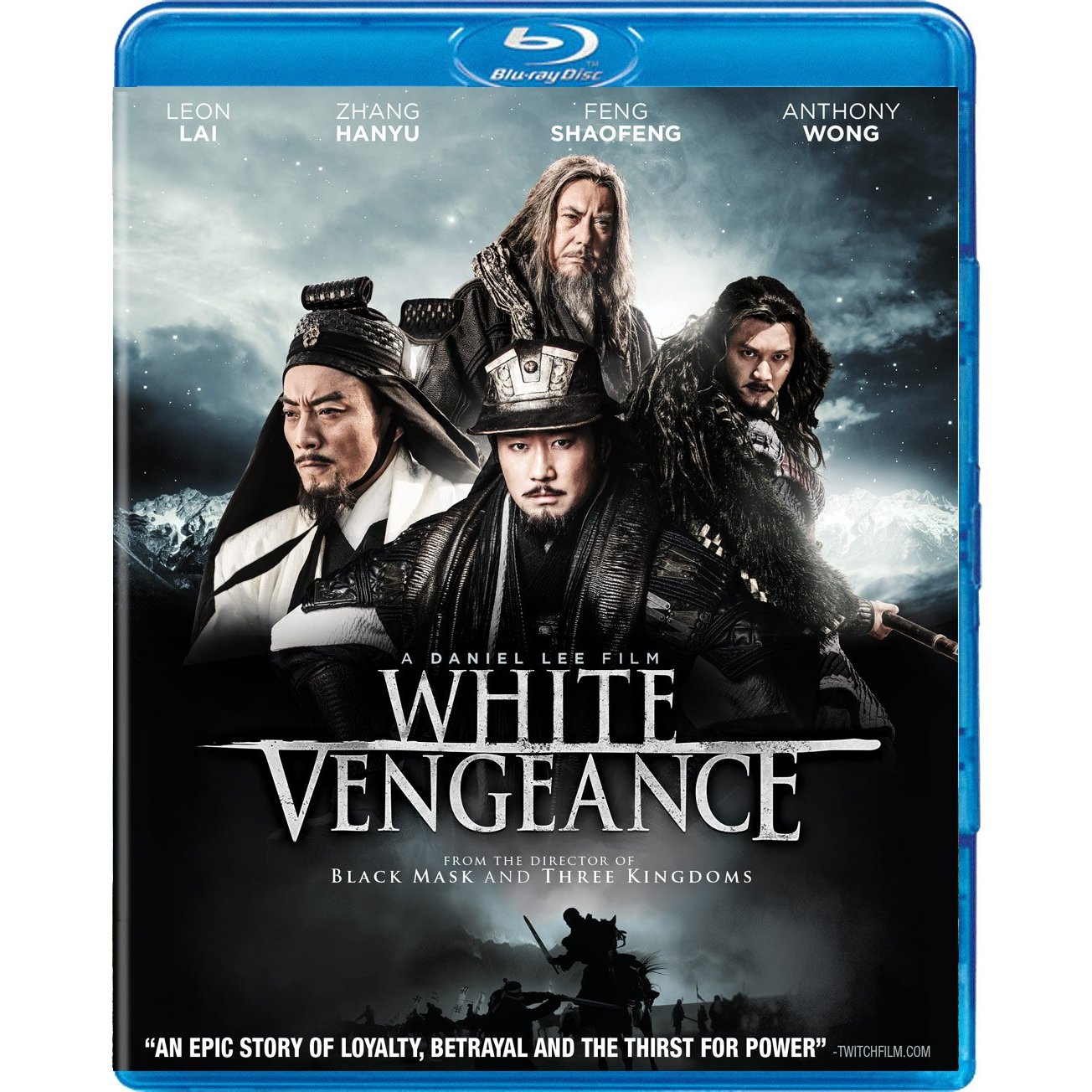
White Vengeance assumes a certain level of knowledge about ancient Chinese history that, except for all you ancient Chinese history scholars reading this review, most of us don’t have. As a result, the film’s disorienting opening act had me constantly backtracking to figure out who was who, and why they were betraying or trying to assassinate each other. In other words, I started to feel like getting to the end of this ambitious movie might take a little under 2,000 years.

Posted in: Disc Reviews by M. W. Phillips on August 29th, 2012
“We decided to tour round Serbia. We’ll go to villages. It will be interesting to see farmers’ reactions to our sexual provocations. Sexual education for Serbs. Widening the horizons. This is our guerilla mission.”
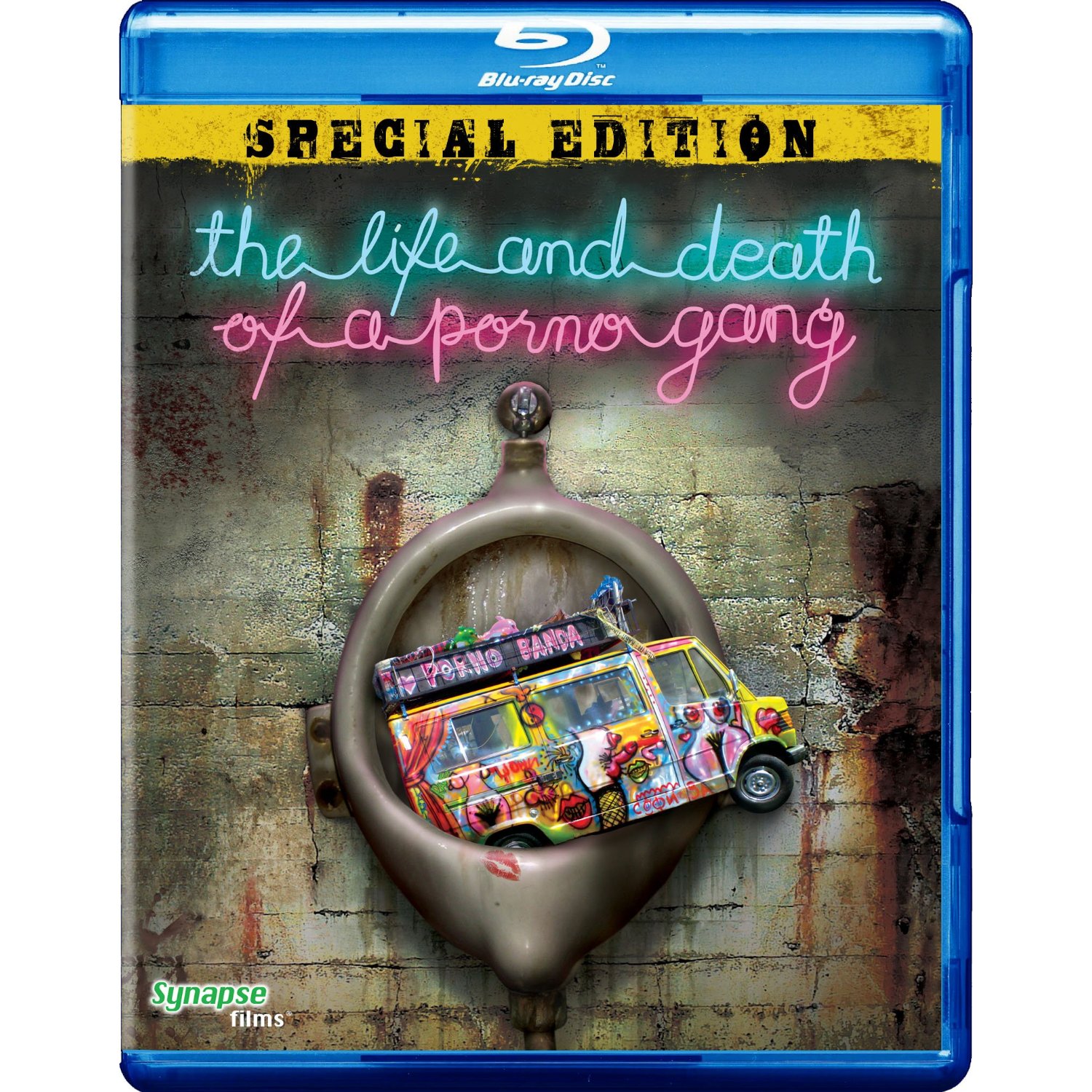
I like to think I am not a prude. My taste in film runs to the controversial, and I don’t shy away from extreme cinema. I think Salò, or the 120 Days of Sodom and Caligula are masterpieces; A Serbian Film impressed and affected me, although I have no intention of watching it again. Even the brief inserts of hardcore porn in “mainstream” movies like Shortbus, Antichrist, Brown Bunny or the previously mentioned Caligula don’t offend me, but I must admit I found The Life and Death of a Porno Gang unpleasant and soulless.
Posted in: Disc Reviews by J C on July 21st, 2012
"An Asian man wearing a German uniform was discovered by the U.S. military at Normandy on D-Day. Upon questioning, he was identified as a Korean."
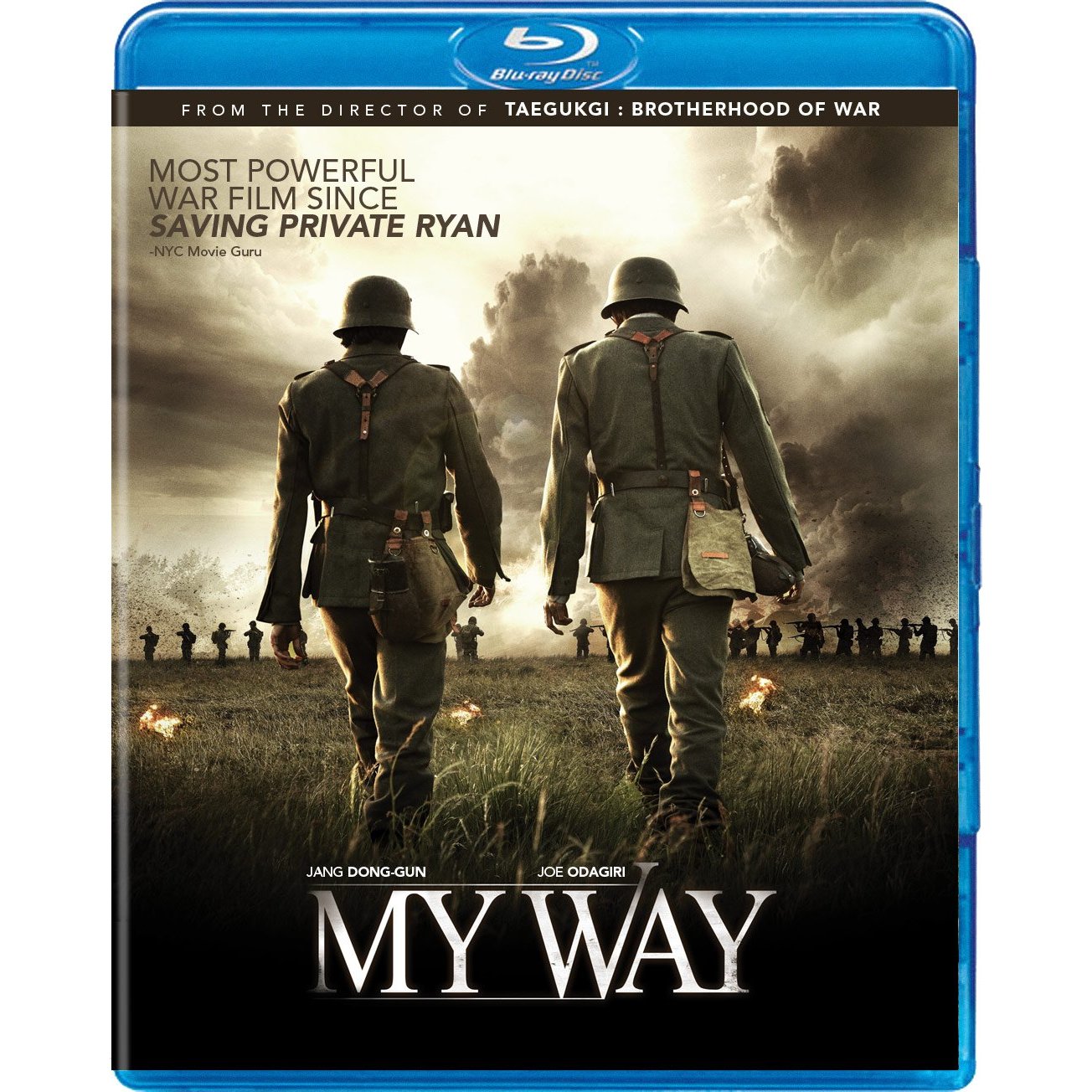
My Way cannily opens with this bit of real-life information. As the movie reaches its heartbreaking conclusion, we know only one of a pair of lifelong rivals-turned-friends — one Korean, one Japanese — will make it to the end.
Posted in: Disc Reviews by J C on July 17th, 2012
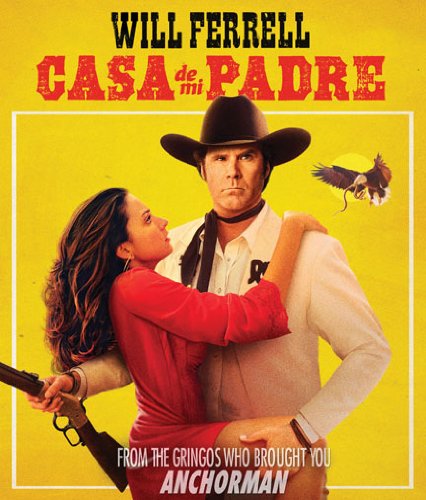
All funny ideas are not created equal. A concept that may have audiences laughing their heads off for a few minutes could wind up being absolutely torturous when stretched to feature film length. Few people know this better than Will Ferrell, one of the most popular and successful Saturday Night Live alumni of all time. He's cracked people up on the small-screen and in multiple comedic blockbusters. Ferrell's latest, Casa de mi Padre, seems like a classic example of an idea that would be extremely funny as a skit or a fake trailer, but becomes annoying over a prolonged period of time. The actor is surely savvy enough to realize this, and I kinda love that he decided to do it anyway.
Casa de mi Padre — directed by Matt Piedmont and written by Andrew Steele, a pair of Ferrell's SNL cohorts — is told in the overly dramatic style of Mexican soap operas (or "telenovelas") and westerns of the 1970s (with their choppy editing). It has more in common with Robert Rodriguez and Quentin Tarantino films than with Ferrell's own previous work...unless I missed any slo-mo bloodbaths in Elf. Did I mention the part where it's almost entirely in Spanish? The poker-faced movie plays it so straight with its inspiration that it's not entirely accurate to call it a spoof; it's more of an homage.
Posted in: No Huddle Reviews by J C on July 7th, 2012
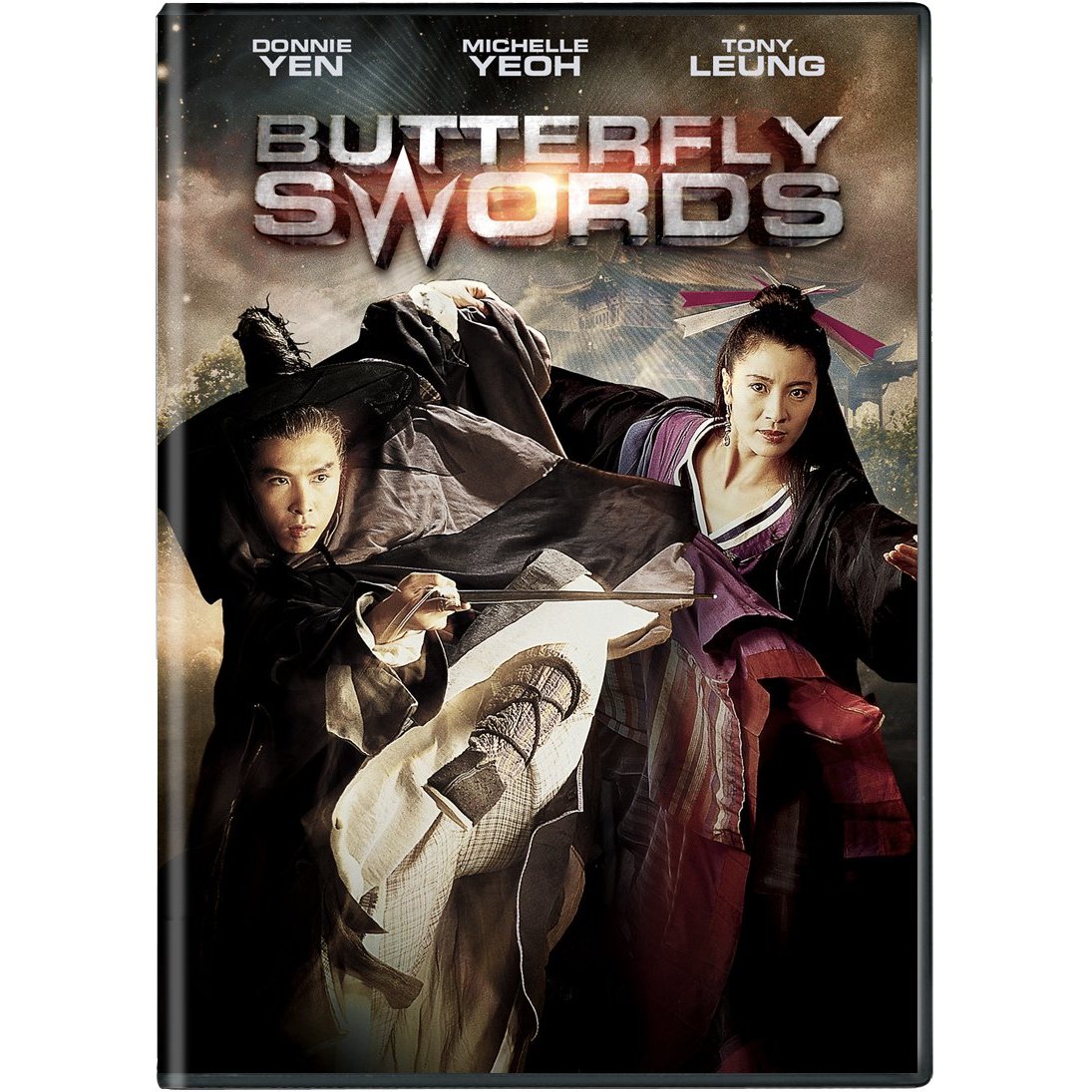
Any movie that features one man flying through the air before slicing another guy's face clean off within the first three minutes and concludes with a swordsman using his female companion as a bow to launch himself in the air like a human arrow so he can rip straight through a bad guy's body pretty much defies criticism. (And I didn't even mention the part where the bad guy comes back a few minutes later, despite the fact that he'd also been decapitated.) Believe me when I say I haven't even scratched the surface of the insanity that is Butterfly Swords.
I mean, this 1993 movie can't even decide if it wants to be called Butterfly and Sword (the title that appears during the opening credits and on the film's IMDb page) or Butterfly Swords (which is what's plastered on the latest DVD release, out July 10), not to mention the fact that the confusing description on the back of the new DVD case gives away the entire movie!
Posted in: Disc Reviews by J C on May 3rd, 2012
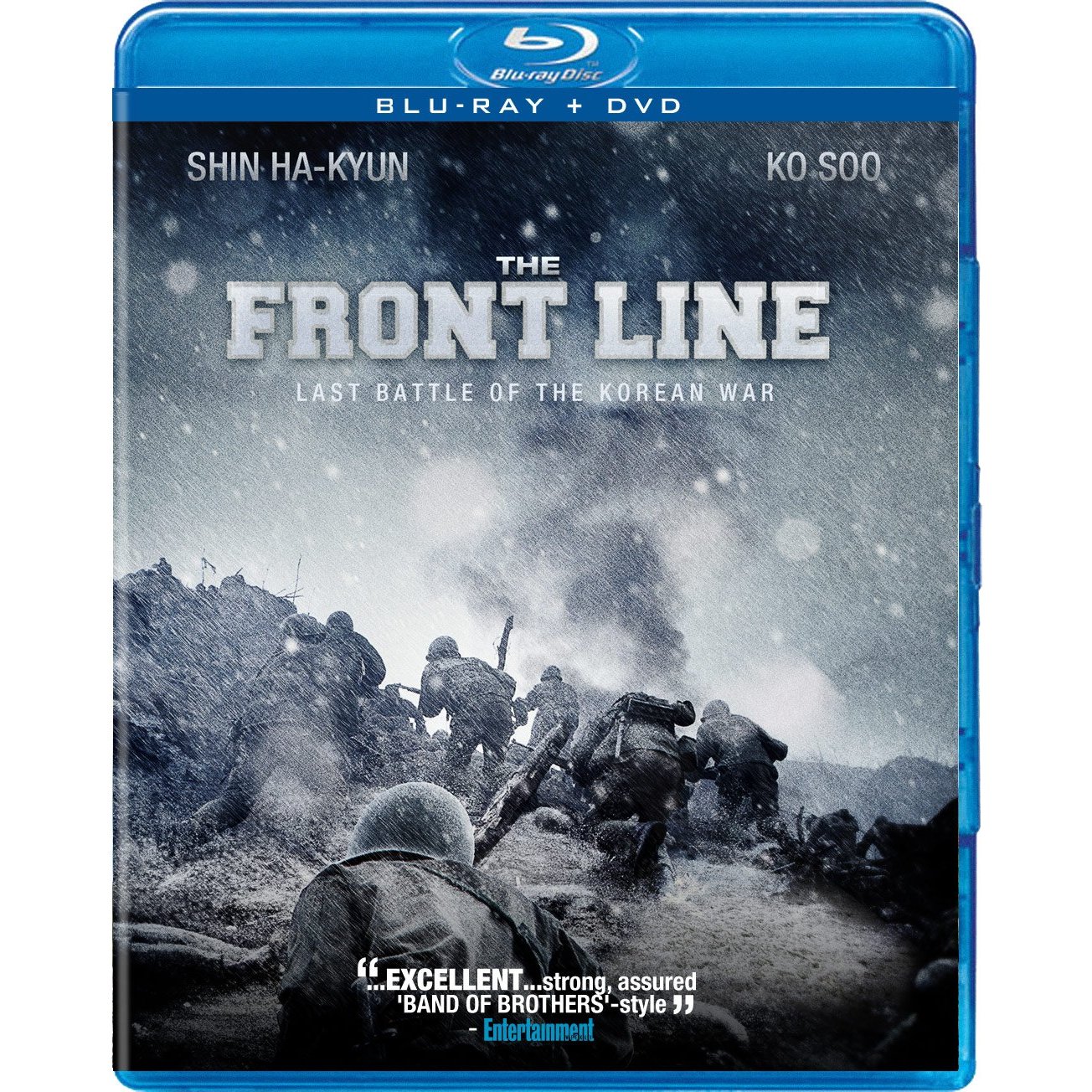
In terms of major conflicts involving the United States, the Korean War has sort of gotten the short end of the cinematic stick with American audiences. Most people can easily rattle off their favorite movies dealing with World War II, the Vietnam War or the U.S. Civil War, but when it comes to the Korean War the options are comparatively more limited. Off the top of my head, there's M*A*S*H, the original Manchurian Candidate, and Don Draper suffering one of the most famous cases of identity theft. (I realize Mad Men is a TV show, so forgive me for reaching.)
The Front Line — a fine, Korean-produced drama — attempts to present the final days (and hours) of the war on both an epic and personal level, and mostly succeeds.
Posted in: Disc Reviews by David Annandale on March 8th, 2012
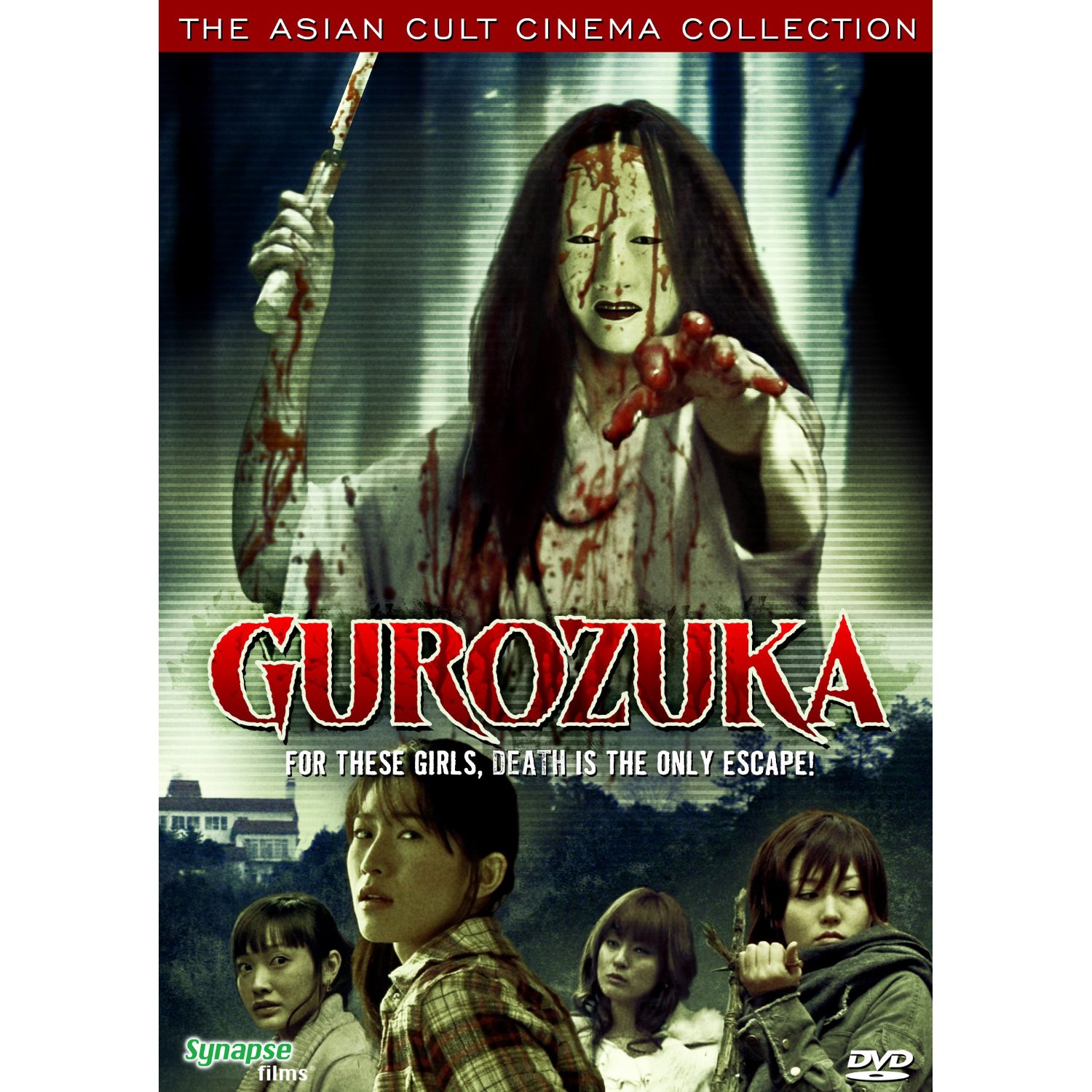
A group of high school girls heads off into the woods to make a movie for their film club. What only the two organizers know is that they are heading for the site of a previous film club’s massacre. Their shoot descended into madness, with a participant in a deigan mask killing all the others, and the whole thing was recorded on tape. It isn’t long after the girls arrive that things start to go wrong, and it seems that history might be repeating itself.
I do like the footage we see of the earlier film – it has a genuinely disturbing quality, and when it arrives, it raises one’s hopes that the perhaps the terminally pedestrian set-up is going to give way to something livelier. No such luck. Much in the way of squabbling, wandering around on one’s own, and off-screen murders transpires. The characters are caricatures when they can be distinguished at all, the cinematography is dishwater dull, and the plot, by the end, makes little sense, though it is very unlikely that most viewers will care one way or the other by then.
Posted in: Disc Reviews by David Annandale on November 1st, 2011
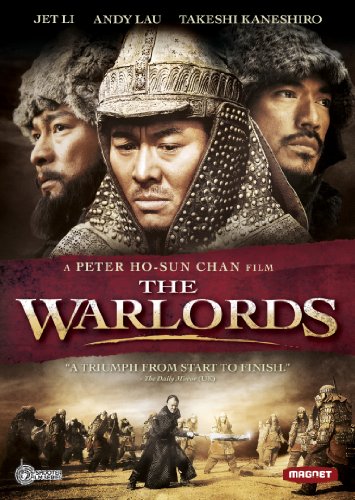
His troops defeated and massacred, General Pang (Jet Li) staggers away from the battlefield, more dead than alive. After a brief by intense overnight encounter with a mysterious Lian (Xu Jinglei), he falls in with bandits headed up by Er Hu (Andy Lau) and Wu Yang (Takeshi Kaneshiro). He finds a renewed purpose in life with this group, and forges the band into a formidable fighting force, one that will play an ever greater role in shaping the conflicts that are dividing China. But the fellowship he forms with his blood brothers has a fatal flaw: as fate would have it, Lian is promised to Er Hu. Betrayal and tragedy lurk in the wings.
First, the positives: this is a very handsome production, with a visual sweep that is appropriately epic. The battle scenes are expertly staged, whether these be small-scale skirmishes or grand campaigns. These are spectacular, exciting moments in the film. The characters and their story, however, are far less interesting. The love between Pang and Lian is difficult to empathize with – we don't really understand why these two are obsessed with each other, and must take it on faith that they are. All of which makes it difficult to care about the relationship, and thus its consequences are more irritating than tragic. And while Pang's internal conflicts are sometimes compelling, Lian's characterization is so perfunctory that she comes across as little more than venal, misogynist caricature. In the end, then, the film seems to drag on longer than its 113 minutes, as one finds one's eyes glazing over between the battle scenes. This is a beautiful movie, but an uninvolving one.
Posted in: Disc Reviews by Gino Sassani on October 28th, 2011
Italian writer and director Giuseppe Tornatore was born in the small village of Bagheria on the island of Sicily in 1956. The life and culture of his home village has had a tremendous influence on his work. Many of his films have an autobiographical nature to them that he takes no pains to disguise. Earlier we reviewed his love letter to movies with Cinema Paradiso, which also took place in Bagheria. This time we explore five decades of life in that same village, known here by its nickname and the title of the film: Baaria.
The journey begins in the 1920's Peppino ("Giuseppe") Tornatore is a young boy whose services have been sold to a local shepherd to feed the family. He learns the trade but discovers it's not what he wishes to make of his life. When the Communist Party begins to make inroads in his village, Peppino is attracted to the message and soon works his way to becoming an important leader of the party. He falls in love with Mannina (Made), and the two must elope because he has no personal fortune and her parents are against the relationship. It is up to Peppino's father to take the ostracized couple into his own home when her family rejects them both. While there is no real plot here, the film follows the young boy through 50 years of life in the village and beyond, taking in the various historical events that effected Sicily at the time. Fascism and eventual World War take their toll. Peppino has a front-row seat to the land riots that rocked the country. His party loyalties cause serious trouble for the man as he goes up against both the established government and even the Mafia.
Posted in: Disc Reviews by Michael Durr on September 26th, 2011
The Durr household often enjoys a good vampire flic to warm the candlelight around the old HDTV (hey, shouldn't I be writing this for the 31 days of October delight?). The taste of blood, the price of your soul, nothing can prepare you for the demons that are right outside your door. Sure, they can promise you sexual pleasure and immortality but that blood is really hard to get out of your clothes. This evening we explore the title We Are the Night featuring four ghoulish women on the cover. Will they sate our palette for blood or perhaps share with us grooming tips? Let's find out.
We open up to a plane on auto-pilot that is witness to a horrifying display of murder and blood letting. Three girls, Louise, Charlotte, and Nora (played by Nina Hoss, Jennifer Ulrich, and Anna Fischer respectively) survey the damage. Unfortunately, none of them really know how to fly a plane, but that's what they get for killing the pilot. They get ready for their departure but Louise hears one more voice from the back of the cabin. She finds a stewardess and looks deep into her eyes before snapping her neck. The three women soon depart for the ground below.