Foreign

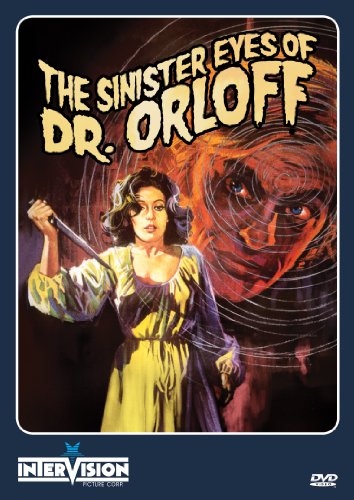
Haunted my recurring nightmares, crippled Melissa (Mona Proust), the heiress to a huge fortune, falls under the care of Dr. Orloff (William Berger). Unforunately, Orloff doesn't have Melissa's best interests at heart. Still enraged over having failed to win the lover of Melissa's mother, Orloff enacts his revenge by using his hypnotic powers to transform Melissa into a killing machine. One by one, the distinctly unsavory members of Melissa's family fall under the knife.

A 1973 effort by Jess Franco, the god-emperor of Eurosleaze, this is a pretty handsome film. Franco doesn't abuse the zoom lens quite as much as elsewhere, and he makes excellent use of his Gothic settings, especially in a remarkably strong stalk-and-kill sequence late in the film. There are quite a number of truly beautiful scenes, showing what Franco is capable of when he's interested. Meanwhile, the violence and nudity are very restrained by Franco standards, but the characters are just as depraved and twisted as ever (that's a good thing). The score (by Franco), meanwhile, varies from the disturbingly effective (abstract soundscapes punching home the nightmare Melissa is trapped in) to the WTF laughable (a folk song so dire it will live forever). This isn't Franco's best work, but it has a lot going for it, and fans are strongly advised to check it out, with two strong caveats in mind. One is that the subtitles are horrendous. The grammar is all over the map, vocabulary is mind-boggling (one character is “condoned as a pedophile”), and the subs go missing altogether for the entire sequence that explains Orloff's motivation! That's helpful! The other problem is the picture quality, about which more below.

Wilson Yip and Donnie Yen have done a lot of movies together in the last five years including Dragon Tiger Gate, Kill Zone, and Flashpoint. This duo has had a knack of combining strong stories with fantastic martial arts. In 2008, they decided to take on the story if Ip Man, the grandmaster of the martial art Wing Chun. Ip Man also had a few famous students including the legendary Bruce Lee. Can Wilson Yip and Donnie Yen produce another quality martial arts flic?

In the 1930’s, Foshan was the center of Chinese martial arts and had plenty of masters willing to teach anybody who was willing to learn. But the most skilled man of martial arts in all of Foshan is not on the front lines teaching students. He’s back in his mansion with his wife and child and goes by the name of Ip Man (played by Donnie Yen). Ip spends his days training and studying his art of Wing Chun much to his wife, Cheung Wing-sing’s (played by Lynn Xiong) dislike.

As the name suggests, this is a collection of ten movies on LGBT themes. In chronological order, here's what we have:

The Children's Hour (1961): Shirley MacLaine and Audrey Hepburn are the headmistresses of a girl's school, and their lives are turned upside down when one ghastly little child accuses them of being romantically involved. It is clear, though, the MacLaine would very much like to be. This was director William Wyler's second stab at adapting Lilllian Hellman's play, and this time was able actually to deal with the play's central issue, rather than disguise it as he had to


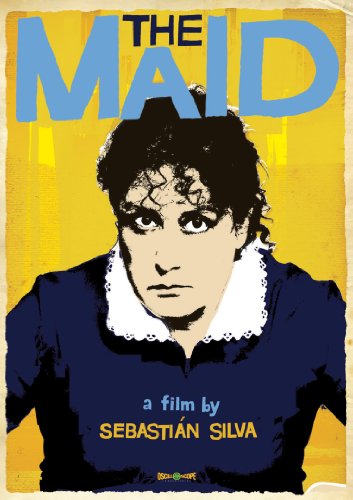
Raquel (Catalina Saavedra) has been the maid for the family run by matriarch Pilar (Claudia Celedón) for 23 years. Those years have taken their toll, and Raquel looks worn far beyond her 41 years. She is clearly unable to look after the household on her own, and Pilar tries to hire another maid to help out. Raquel takes this the wrong way, imagines she's being eased out, and treats each new maid as an invader who must be repulsed.

Saavedra is extraordinary in the title role, her exhausted, pained, but determined look invoking a sullen bulldog who is on the verge of going feral. But this is not the story of a maid's psychotic break, nor is it one where the family she works for is made up of monsters. Everyone in the film is very human, and the story is a very human comedy. The comedy is not of the slapstick nature (though there are some pretty physical moments), but rather grows out of the finely observed characters, and is shot though with genuine drama. A find, deeply sympathetic piece.

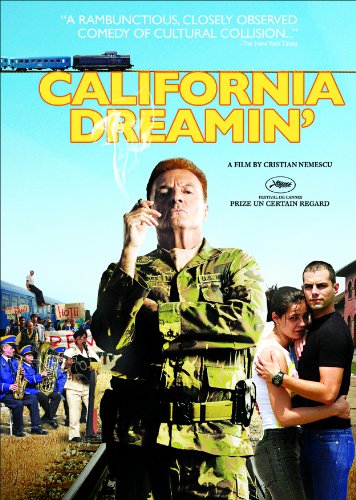
In 1999, a troupe of US marines must transport some equipment across Romania. Leading them is Captain Doug Jones (Armand Assante), a man so committed to his duty that he does a pretty convincing job of appearing passionate and proud about what is, on the face of it, a rather dull, two-bit assignment. As matters develop, the mission is far from dull, though it is not interesting in the way Jones might have hoped. The train is waylaid in the small town of Capalnita by the corrupt stationmaster, and a comical clash of cultures ensues.

Director (and co-writer) Cristian Nemescu was killed in a car accident before he had finished editing the film, and it is likely that his final version would have run less than the current 154 minutes, which is long for a comedy. Nonetheless, there has been no second-guessing of his artistic intent, and the film is presented as he left it, and if it isn't as tight as it probably would have been, had Nemescu been able to complete it, it's still a remarkable piece of work, with wonderful, finely observed (and performed) characters, and a sharp, wry sense of humour.

Pulse:

Plenty of Japanese horror films have storylines that vary from the oblique to the opaque. Pulse is no exception, so forgive me if this synopsis is a bit confusing (or confused). An internet website offers visitors the chance to see actual ghosts. Viewing the footage seems to make one vulnerable to an actual visitation, and when someone encounters a ghost, that person withdraws from others, shunning all society, and becomes consumed by loneliness to the point of suicide or something even more bizarre. All of this is slowly being uncovered by two groups of friends, even as the plague of ghostly encounters spreads far and wide.

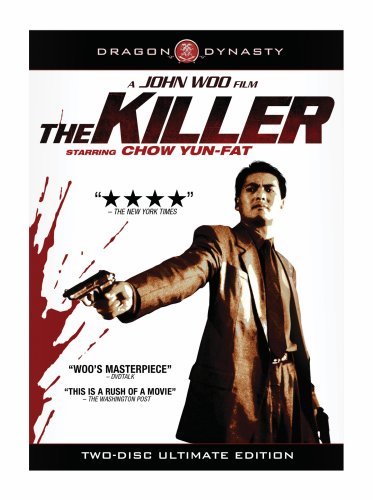
Having accidentally blinded a singer during a contract killing, hit man extraordinaire Chow Yun-Fat, consumed with guilt, becomes the woman's protector, and seeks redemption by finding some way to restore her sight. Meanwhile, Danny Lee is the plays-by-his-own-rules cop on his trail, and inevitably the two men will find themselves as unlikely allies in gigantically operatic gunfights.

I can remember when John Woo was still a name whispered with reverence by cult film fans, and his films were only available on grey market VHS or import laser disc. In fact, I first saw The Killer on one such disc, in Cantonese with Mandarin subtitles, reading a transcription of a translation, desperately trying to grasp the gist of the action. It was worth the effort, though, for I had never seen action sequences like these. Today, of course, the situation is very different. Woo's films are readily available, Hard-Boiled's sequel is a video game (Stranglehold), and his stylistic characteristics have become clichés. The passage of time and over-familiarity have arguably robbed the film of some of its power, while making the OTT sentimentality harder to take, but the fact remains that this is still a seminal moment in action filmmaking.

"The year is 208 AD. After 30 years of civil war, a deathly calm has fallen over northern China. One by one the rebel warlords have met their end under the sword of Prime Minister Cao Cao. Now even the Emperor bows before his power. Yet, from the south a challenge is heard. Two leaders rise against Cao Cao's tyranny. The aging Liu Bei and the inexperienced Sun Quam. So Cao Cao petitions the Emperor to brand these men as traitors and declare a new war against the peaceful southlands."

And so the stage is set for John Woo's enormous epic Red Cliff. The scale of this film is simply one that must been experienced to quite understand. It has the grandeur of any of the largest films in Hollywood's history. But this film is not a product of Hollywood. Woo filmed his massive triumph in his native China. You won't find a bigger story told with more elaborate sets or with such a legion of actors, required to bring these historic battles to life. Gladiator. Kingdom Of Heaven. The Ten Commandments. Red Cliff deserves to stand with the best of them, and it will.

Cult Epics here presents us with their second box set of films by ex-pat Spanish surrealist/'pataphysician/provocateur Fernando Arrabal. These are more recent works, and are, arguably, even more of an acquired taste than the earlier set, though not necessarily for the reasons one might think.

Car Cemetery is the 1983 TV version of his 1958 play. In a dystopian future, the punk/S&M/whatnot inhabitants of the titular setting live through a rock-n-roll version of the Passion. What would have been a hell of a taboo-buster in 1958 hasn't aged well. Quite apart from the very 1980s costume design of the film (in the most unfortunate ways), the religio-political points, clearly aimed at Franco's Spain, no longer have the same bite when re-staged in the post-Franco era, and today seem altogether precious and rather twee.

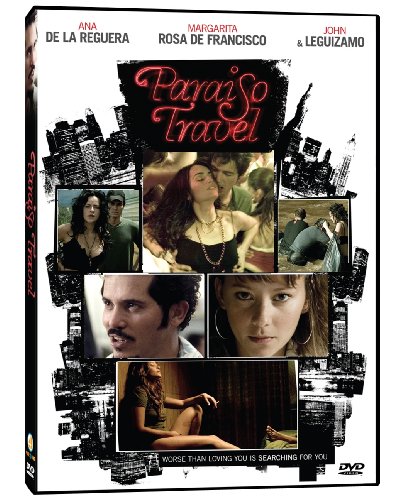
The film begins in the middle of the story, at the end of one journey and the beginning of another. Marlon (Aldemar Correa) and Reina (Angelica Blandon) are illegal Columbian immigrants, and have just arrived in New York City. They are staying in a beyond-seedy hostel in Queens, and Reina has just spent their last coins on a fruitless phone call. Frustrated, Marlon hits the street, and after a panicky encounter with the police, winds up lost in NYC. So begins his second journey one that is both a search for belonging as well as his beloved Reina, that is intercut with flasbacks to the trip that brought Marlon and Reina to the city in the first place, beginning with their leaving the relative comfort of their lives in Medillin and tracking their increasingly nightmarish trek to the States.

The film opens with a bird's eye tracking shot of the various cells (I can hardly call them “rooms”) of the hostel. It's a striking bit of filmmaking, though we have seen this done before (see, for instance, Brian De Palma's Snake Eyes). This is not a bad encapsulation of what is to come – it is both striking (especially the harrowing trip to the States) and familiar, in that it covers ground familiar from other hard-luck immigrant narratives. Marlon is a likable character, but Reina is such a manipulative sexpot that one feels that Marlon would be better off not finding her again. Generally, the male characters are better written and a little less stereotypical than the female ones. There is a lot of power here, then, but the familiar melodrama and iffy characterizations undermine that power.