Foreign

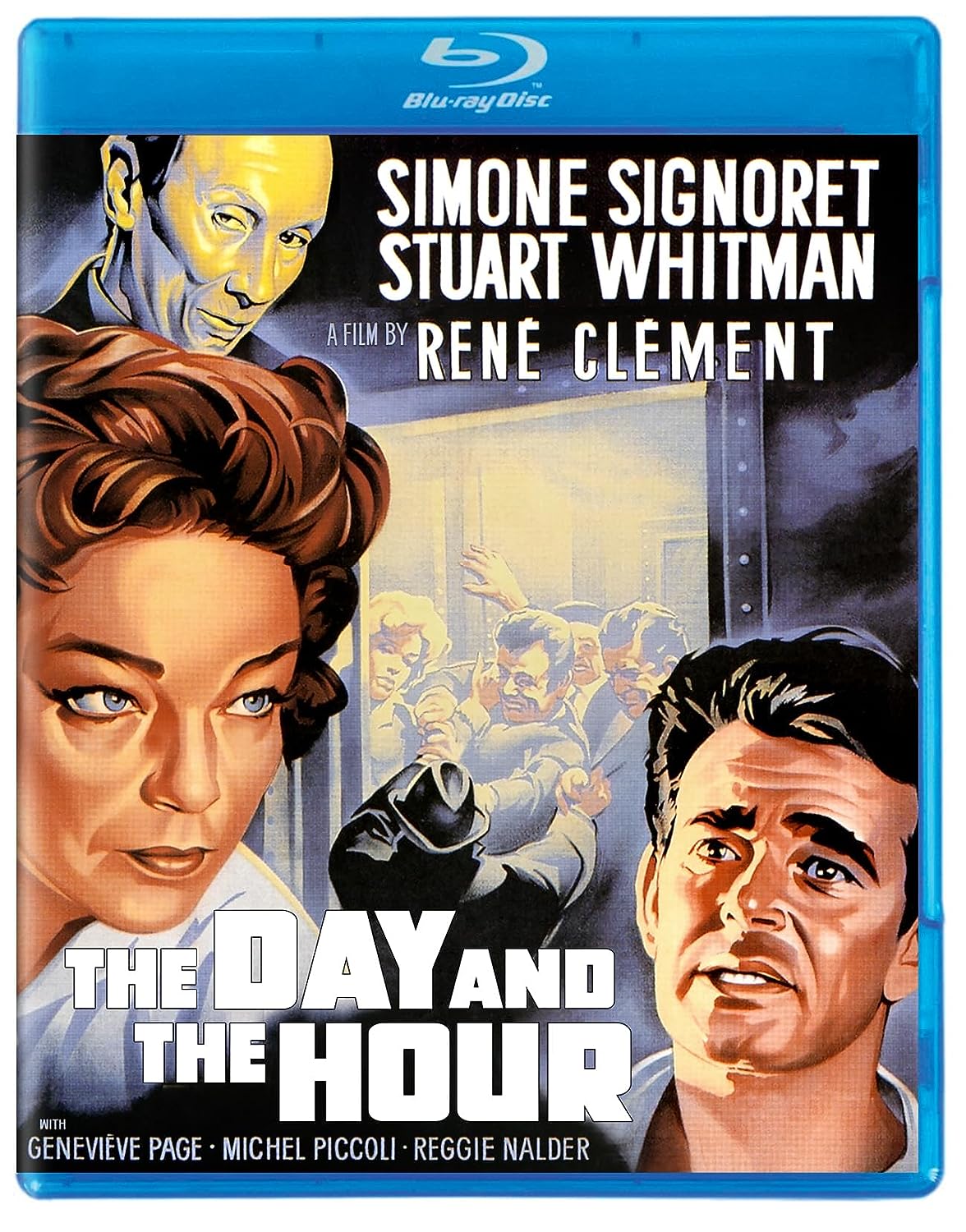
Typically, I avoid World War II period films like the plague.  I literally see the word Nazi or German occupation and usually find a reason not to see the movie.  I have nothing against the pictures; the problem is that so many of these films are surrounded in clichés that it feels like an old hat with nothing new to offer.  However, when I saw The Day and the Hour in my review pile, I was intrigued by the notion of it being in France with a female lead and something of a romance.  Far different from the usual pow pow, war is heck, or a film that's going to have buckets and buckets of tears and worrying about the human condition.  Though from the looks of things, this one might have some waterworks too.  Let's take a look.

1944, the Germans have occupied France. We open the film to a newspaper clipping. The German police have proof that three crew members on an enemy plane that was recently shot down are hiding in the Rethel commune region.  Their names are Allen Morley, Pat Riley, and Norman Thompson.  Anyone who is helping them is subject to punishment up to and including death.

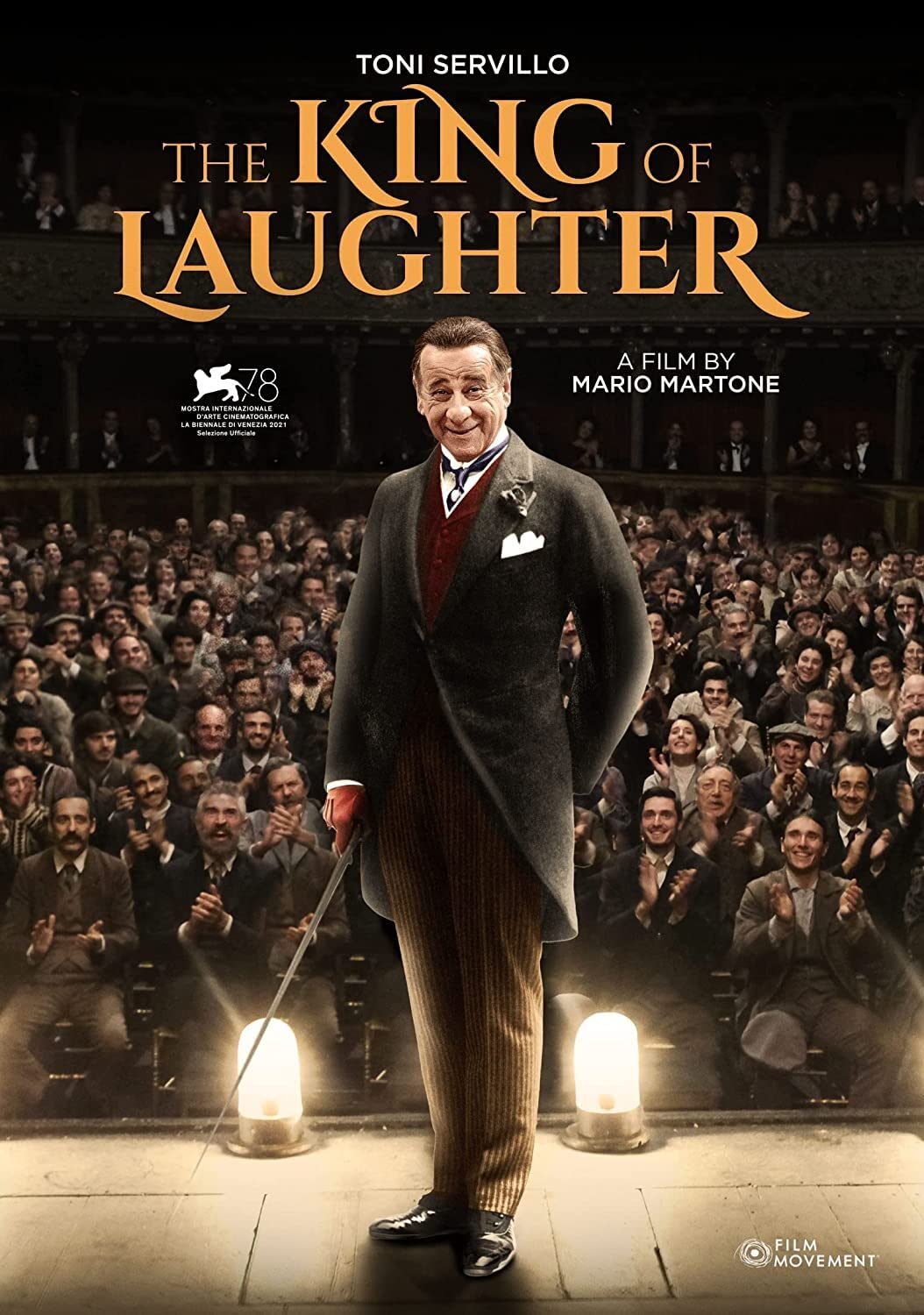
I think all of us want to be on stage, at least in theory.  For me, it started with some plays in high school.  But from there, those aspirations were cut short due to my father telling me that I needed a real job (which was his favorite thing to tell me in high school and college).  I don't think the decade I spent in karaoke bars (and actually singing) really counts for anything either.  So I've always been fascinated with theater, particularly when it comes to comedy.  When I saw King of Laughter as a possible review title, I took a peek at the trailer and decided to give it a shot.  After all, what's not to like about a story featuring the famous actor/playwright Eduardo Scarpetta in a battle with the courts over the concept of parody?  Let's take a look.

We are at a showing of the play Poverty and Nobility.  At the backstage area, we see actors eating pizza.  Then we move across to the box office area where everyone seems to be trying to get a ticket, only to be told that it is sold out.  Eduardo Scarpetta (played by Toni Servillo)  puts on his makeup while members of his family watch.  Nearby, a table has two men seated.  The proceeds from tonight's play are counted over and over again while they try to figure out the payout for each crew member.  Finally, we reach the point in the play where Eduardo Scarpetta makes his appearance to a sea of thunderous applause.

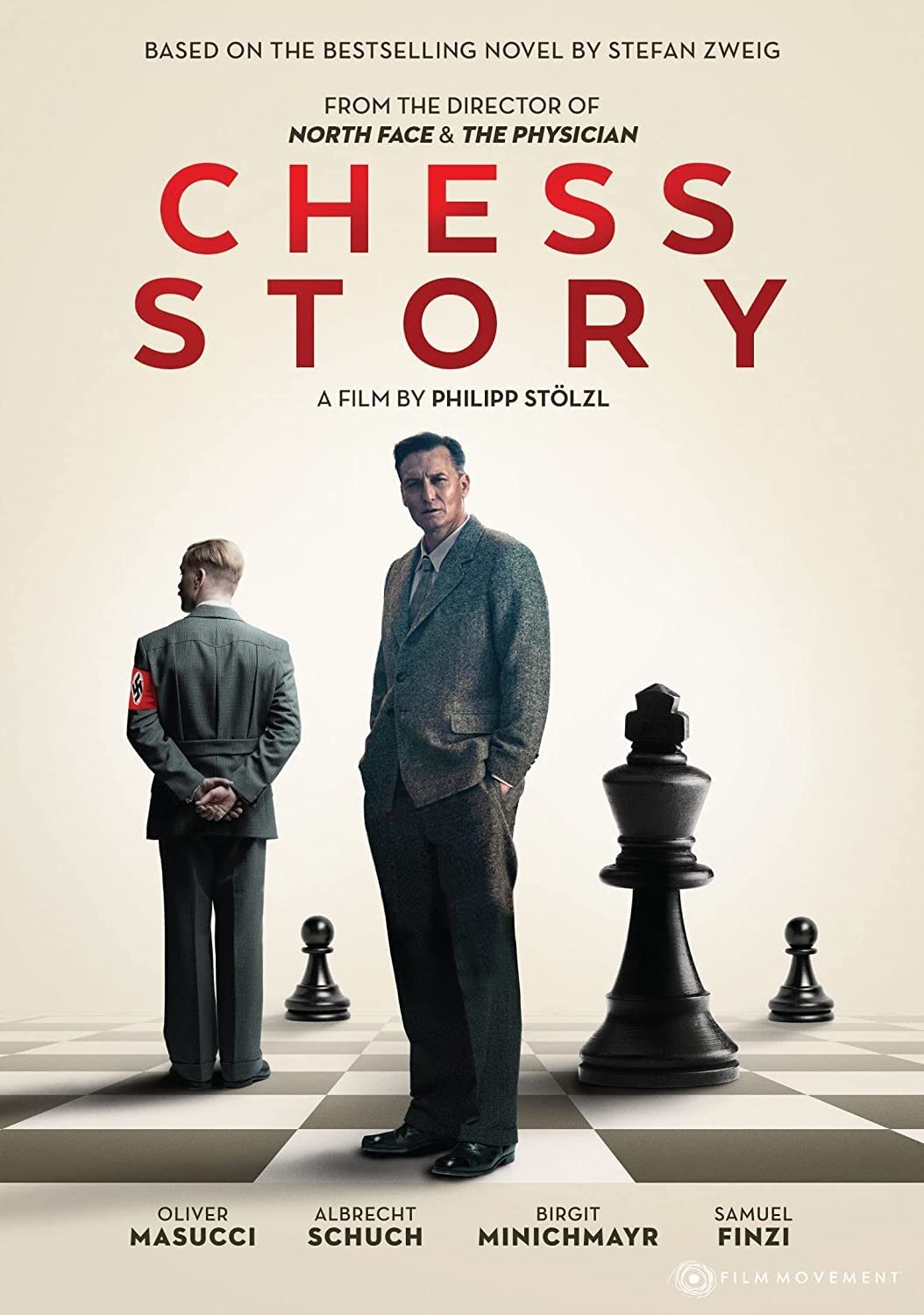
Films about World War II and Nazism are hard for me to watch.  No matter how well-intentioned they may be, I can barely make it through Schindler's List or Dunkirk or even something like Inglorious Bastards (I do, however, find The Producers to be hilarious).  Most of the time, it hits a little too close to home.  For you see, my Polish grandfather (may he rest in peace), his parents were taken away to a concentration camp.  So anytime I watch a film set in that time period, I think, well, what if he had been taken away.  It's not like those horrible people showed any sort of restraint on children, and then where would my grandfather be?  Or my mother?  Or myself?  Anyway, I got lured into Chess Story by the promise of a thriller with the game of chess as the backdrop.  Unfortunately, by the end I was reminded of the horror, but also that there is still great modern moviemaking even with Nazis.  Let's take a look.

We hear whispers all around from every direction, and there is a light crackling overheard.  It continues until it fades to black.

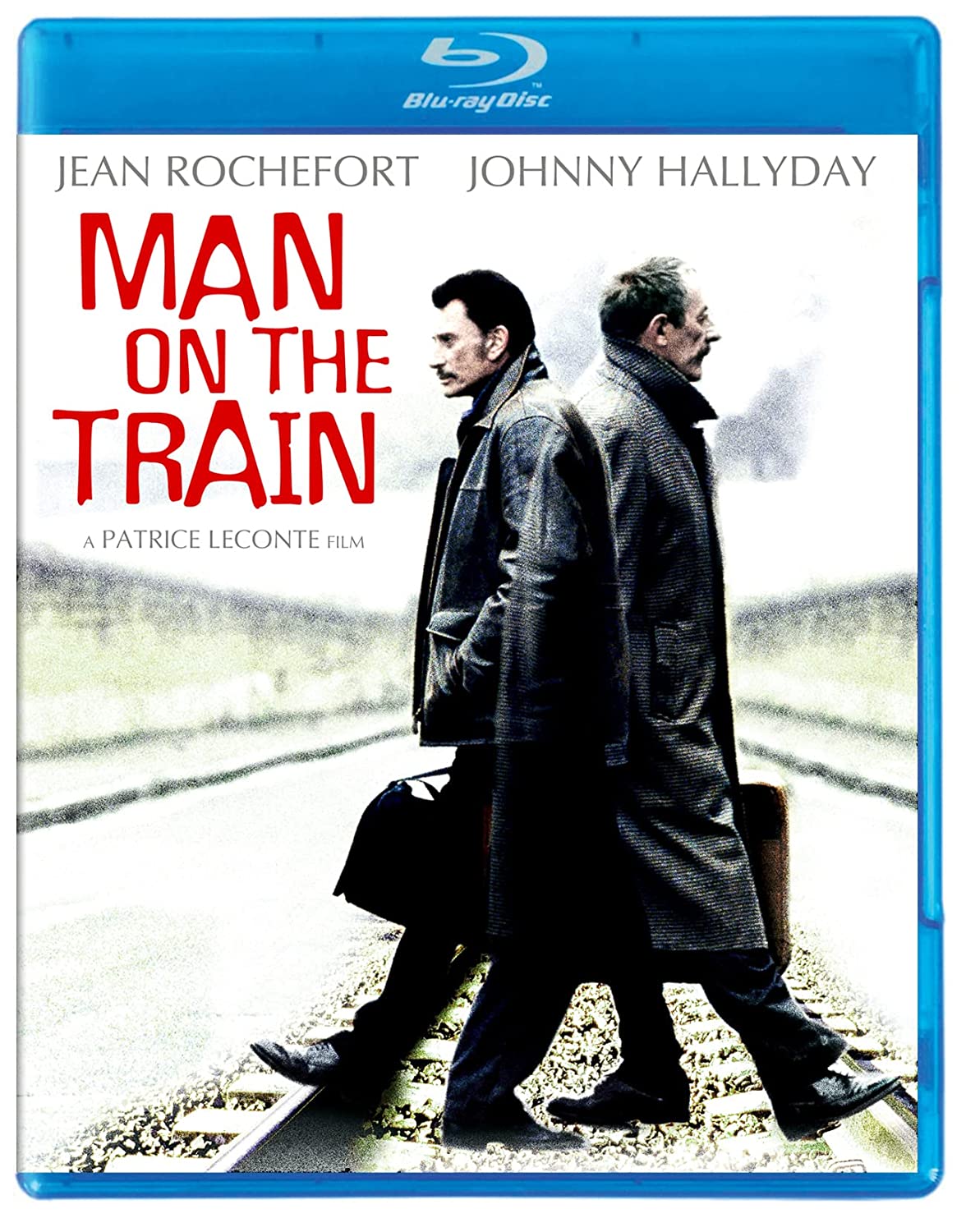
Even though I consider myself to be well-rounded when it comes to films, I admit my personal viewing history of French film to be a little lacking.  Go Google any top 20 list of French films, and I've probably seen maybe two or three of the films.  This is very contradictory to say Chinese, Japanese, English (UK), Australian, etc. where I've seen hundreds of films.  But I'm always willing to expand my repertoire, so I jumped when I saw there was a French crime thriller named L'Homme Du Train or The Man on the Train available for review.  Let's see how it plays out.

As we start, A train runs along the tracks and whips by various locales.  We see a man named Milan (played by Johnny Hallyday) who tries to relax, but obviously he can't.  The train finally comes to a stop, and he is only one to get off.  He walks through the town, which is somewhat desolate, and finally ends up at a pharmacy.  There he asks for some aspirin, which he finally receives.  (Unfortunately it's water-soluble, so he also requires a glass of water).

Most anime fans, particularly those in the west, would probably consider Cowboy Bebop one of the greatest series of all time.  Before it got bastardized in a clueless live-action remake, it was a wonderful story of a bounty hunter crew down on their luck who never made any money but always had one hell of an adventure.  Set to some wonderful jazz numbers.  So naturally, when I heard about a new anime movie about an once powerful god who is now down on his luck as a penniless bounty hunter, my curiosity was certainly piqued.  Let's check out New Gods: Yang Jian.

Oh boy, we start off with some narration.  Let's see ... a long long time ago, a calamity (wait, I have to look this one up; OK, got it) broke out between Heaven and Earth.  Life hung in the balance (woah, heavy), and there was violence and destruction.  Forces of Shang and Zhou fought for supremacy.  Humans and Gods united in order to stand tall against opposing forces.  After the battles ended, they went back to their respective realms.  And the world was at peace.  (Awwww.)

Many people will agree to disagree on the existence of ghosts.  It is probably easier to agree on the point that if those ghosts do exist, they were wronged in some fashion, or there is something left to their story that is unsolved.  That mystery is what makes the concept of ghosts so fascinating.  Today, we have another GKids anime production, this time by the genius loundraw.  It's called Summer Ghost.  Let's take a trip into the paranormal.

A light burns.   Three friends who haven't seen each other have gathered in this special place.  Summer is here again.

The people of Taiwan have been searching for an identity for a long time.  When martial law was lifted over the People's Republic of China in the 1980's and shifted to a more democratic form, the people have increasingly wanted their own identity and no longer to be known as a part of China.  Sure, they might maintain the status quo and appear to work with China (which hasn't been exactly the case lately), but they strive to be known as Taiwanese, separate from the mainland influence.  Our film today, Vive L'Amour, takes place in the 1990's Taiwan, where life was extremely hard for the average young adult.   So hard that many of them didn't even have a permanent residence.

We open to see a key is left in the door of a dwelling.  Nearby a salesman named Hsiao-kang (played by Lee Kang-sheng) finishes up a door-to-door sales call and after a few moments decides to take the key.  He goes to the convenience store, grabs a water, and sees a camera where he adjusts his hair.  The next scene, he is driving on his motorcycle and arrives at the location where he grabbed the key from.  He starts to unlock the door, hears sounds from inside, and quickly leaves.

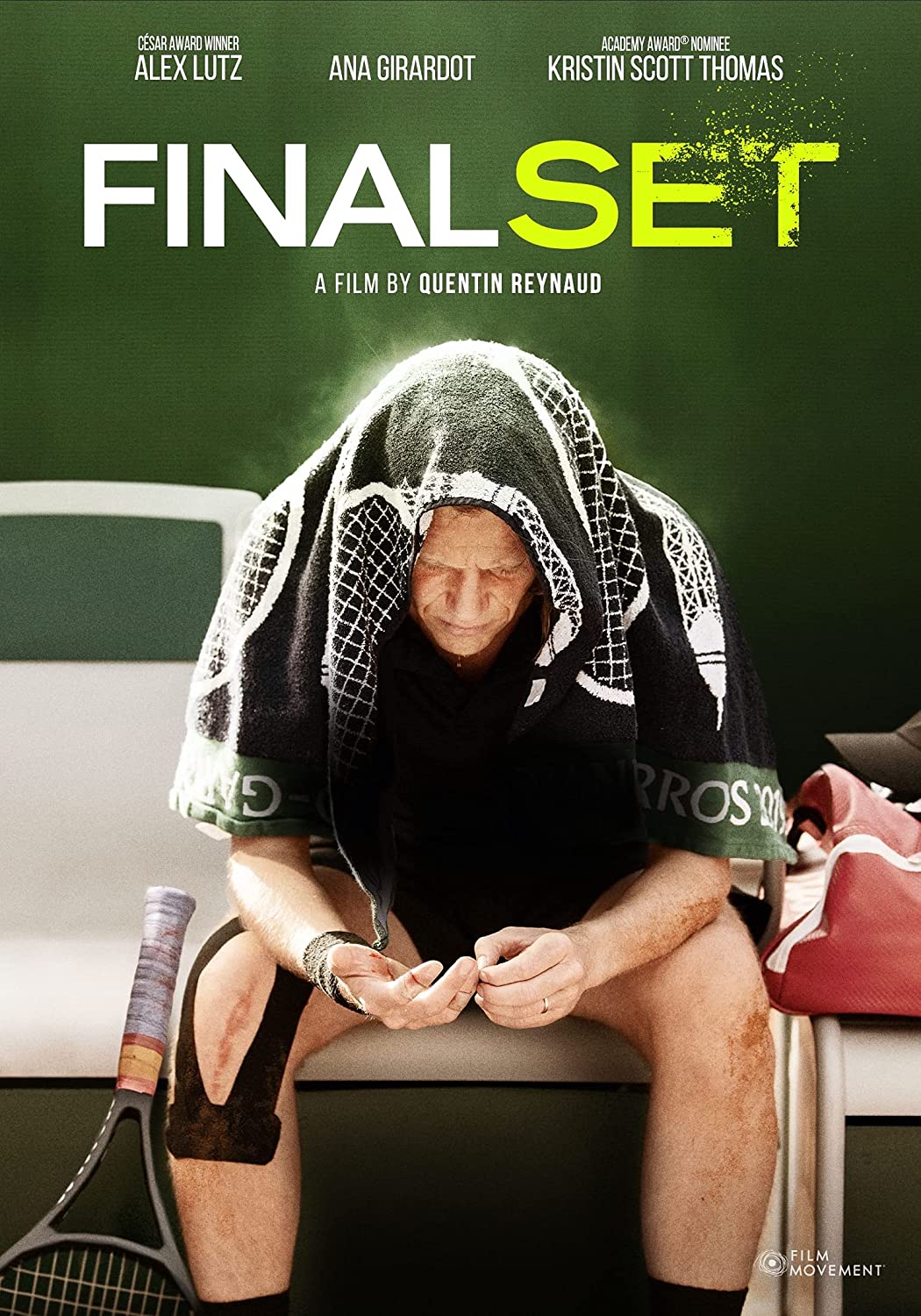
My fascination with tennis has come in spots throughout the early part of my life.  In the 1980's, I was fascinated by John McEnroe with his brilliant play and fiery emotion.  In the 1990's I was smitten with Jennifer Capriati, but also impressed by her tenacity at such a young age.  I still remembering listening to the broadcast of Goran Ivanisevic finally winning at Wimbledon in the early 2000's.  And that's where I stopped watching, really, still eager to see the amazing game play, but no longer finding the characters I so desperately wanted to look for.  Today's film is Final Set, which follows an aging tennis player who has one final shot at becoming the player he always learned to be.

A tennis player serves a ball in slow motion.  It takes a couple of minutes, and then it stops.

A good erotic movie is actually harder than it sounds.  Sure, you have to have skin, word play, arousal, and yes, that other kind of play.  But the good erotic films like Basic Instinct, 9 1/2 Weeks, and Embrace of the Vampire (You thought I was going to say Fatal Attraction, didn't you?) are very entertaining and have a story that draws you in to keep you there even when the spicy bits aren't on the screen.  Today's erotic film is Curiosa, which certainly hits all of the skin elements, but does it have a story that I would want to watch again and again?  Let's check it out.

A curiosa is an erotic object, book, or photograph.  We start the movie with a little photography as we watch our two main characters, Pierre Louys (played by Niels Schneider), who is taking pictures of Marie de Heredia (played by Noemie Merlant).  Marie is set to marry Henri de Regnier (played by Benjamin Lavernhe), but she does not love him.   She is actually in love with Pierre, who is Henri's best friend as well.

Mamoru Hosoda's directing career basically started with the world of Digimon where he directed a few shorts, episodes and even the original Digimon movie.  But where he really started to show off his directing chops was Samurai Champloo which has been often cited as one of the greatest anime shows right up there with Cowboy Bebop.  It would then continue with the first film that he could truly call his own in the Girl Who Leapt Through Time.  From there, Hosoda could have been content at that point but he would go on to direct more and more animated classics.  Today, we take a look at Hosoda's latest film, Belle and I don't think any fan would be disappointed with this one.

Welcome to the World of U.  U is the Ultimate Virtual Community and was created by 5 Sages called the Voices.  They preside over the intellect of the community of five billion users.  Just use the App and plug in.  An avatar is called "AS" and the virtual world will create this avatar based on your biometrics.  It is another reality, another you.