Posted in: Disc Reviews by Archive Authors on December 7th, 2010
Written by Diane Tillis
The world of Avatar has been a part of James Cameron’s dreams for over a decade. When he initially approached studios to pitch the concept, they denied him the opportunity, citing the huge budget that would be necessary to create the film. Thus Cameron had to wait for technology to catch up with his vision. Flash forward a decade with the advancements in capture-motion cameras and 3D technology; Cameron finally saw his opportunity. With an amazing crew of visionaries, Cameron broke several boundaries in the film industry and created a cultural phenomenon. In early April 2010, the theatrical version of Avatar was released on DVD with only the feature film and no special features. Now in November 2010, the extended collector’s edition of Avatar is released with tons of goodies. The collection includes three versions of the film: the original theatrical version, the re-release version with eight minutes of deleted scenes, and the extended collector’s version with sixteen minutes of deleted scenes. The collection is divided into three discs. The first and second discs have the three versions of Avatar, each split in half. Thus, when you watch one version, an hour and a half later you will have to switch to the second disc to continue the movie. The third discs has all the deleted scenes from the films collected for instant viewing, forty-five minutes of never-before-seen deleted scenes in various stages of production, and a ninety-eight minute behind-the-scenes featurette.
Posted in: No Huddle Reviews by Gino Sassani on November 30th, 2010
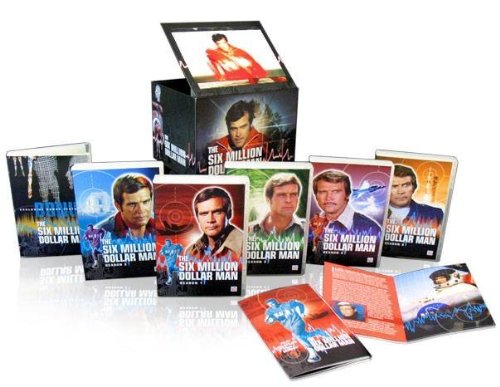
"Steve Austin, astronaut, a man barely alive. Gentlemen, we can rebuild him, we have the technology. We have the capability to make the world’s first Bionic man. Steve Austin will be that man. Better than he was before. Better. Stronger. Faster."
I remember as a kid we used to imitate the Bionic Man when we would be playing in the playground. We would run in slow motion and make that distinctive "chchacha" sound and pretend we were bending steel bars or lifting tons of weight. In the 1970's bionic play was everywhere. For a time it was the most popular thing on television.
Posted in: Disc Reviews by William O'Donnell on November 25th, 2010
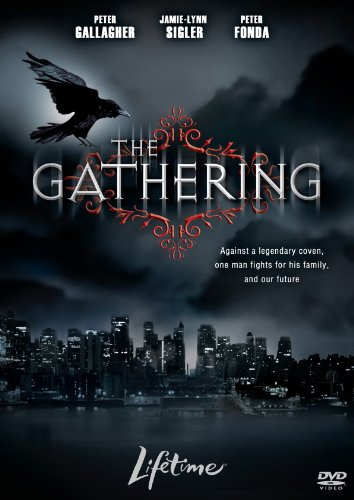
A surgeon named Michael Foster, played by Peter Gallagher, has his world turned upside down when his wife disappears one morning without a trace. Initially he suspected she was having an affair and ran away with another man, but as strange evidence gathers he soon realizes that she has been a part of a strange coven of witches and her disappearance might not have been her choice.
Originally airing on the Lifetime network, this film retains being separated into two parts on this DVD. Each part clocking in around the 90-minute mark, the first part can be a touch tedious as so little time was spent establishing the relationship between Foster and his missing wife that we have no reason to emotionally connect with the situation, aside from our hero's despair as he searches. As all the supporting characters, along with our desperate protagonist, come to accept the supernatural truth driving the plot, by the second part, the story finds a better pace and can hold your attention with more action and moments of tension.
Posted in: Disc Reviews by Gino Sassani on November 23rd, 2010
"You're traveling through another dimension, a dimension not only of sight and sound but of mind; a journey into a wondrous land whose boundaries are that of imagination. That's the signpost up ahead — your next stop, the Twilight Zone."
Posted in: Disc Reviews by Gino Sassani on November 22nd, 2010
Imagine a world where Winston Churchill battles deadly machines from space intent on dominating the universe, a place where Santa is a deadly menace, and a rather eccentric fellow travels about in a police call box with a rather deceptively spacious interior. To Dr. Who fans of all ages, this is all very familiar territory. I fell in love with Dr. Who as played by Tom Baker from 1974 – 1981. He was the fourth actor to portray the Doctor and arguably the most popular. With a pocket full of jelly babies and a trusty sonic screwdriver, the Doctor rather muddled his way about with a massive wool scarf around his neck, all the while solving the mysteries of the universe. It was through PBS stations in the late 70’s that Americans were first introduced to these adventures on a regular basis. Before long the Doctor would develop a cult following of sorts, particularly at college campuses. The Doctor was an alien from the planet Gallefrey. A time lord, he traveled through space and time in his TARDIS, disguised as a police call box by a chameleon device. He was accompanied by a line of companions that would serve as the representative of the audience. These women provided a place for the Doctor to bounce his ideas off of, and from time to time they would require a bit of rescuing. The show was noted for its low budget f/x and over-the-top villains. The cardboard sets often appeared as if they would collapse at any moment. All of this created more than a little bit of campy cheese. But for some reason there was a charm to the entire play that was oddly compelling. To ensure longevity, the character was able to regenerate when faced with death. The new Doctor would not only look different, but he would sport an entire new range of mannerisms. This way the series would continue through several changes in the actor playing him. It all worked, and Dr. Who became the longest running scripted science fiction show ever in the world. Of course all good things do come to an end, and so did Dr. Who, in spite of an American television film attempt to bring the character back. But what started with Peter Cushing in a couple of films finally ended for good…
…but not so fast.
Posted in: Disc Reviews by Gino Sassani on November 17th, 2010
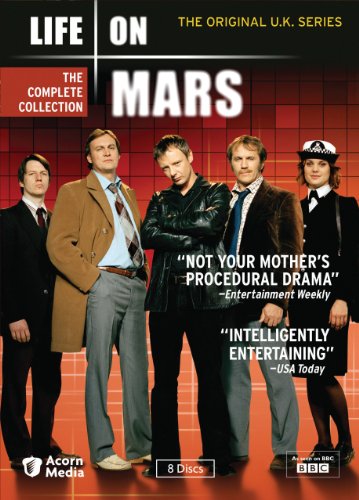
"My name is Sam Tyler. I had an accident and I woke up in 1973. Am I mad, in a coma, or back in time? Whatever happened, it's like I've landed on a different planet. Now, maybe, if I can work out the reason, I can get back home."
I kind of did things a little backwards. I saw the single-season American version of Life On Mars quite some time before I managed to get my hands on the two seasons of the original British version of the show. The idea of a British television series being adapted for American screens is really nothing new. Lately a lot has been written about the phenomenon as if it’s some recent trendy invasion of English telly. We’ve been watching British hits since at least the 1970’s. In those days it was the sit-com that got the most attention from across the pond. Till Death Do Us Part and Steptoe And Son became All In The Family and Sanford And Son, respectively. Both shows became even bigger hits here in the states and are remembered by more folks on both continents than the originals today. The latest hit from England was The Office. Unfortunately, Life On Mars was never destined to join those Anglo/American success stories.

Posted in: Disc Reviews by Gino Sassani on November 10th, 2010
"From the dawn of time, we came, moving silently down through the centuries, living many secret lives, struggling to reach the time of The Gathering, where the few who remain will battle to the last. No one has ever known we were among you ...Until now."
We all want to believe that we're special. We fantasize that one day we'll discover that we aren't the mere mortal people we thought that we were. That we are actually some hidden royalty, or better yet, that we have extraordinary powers. Connor (Lambert) makes just such a discovery in the 16th century as he goes off to war with his brothers to defend his highlander homeland against invaders. He receives what should have been fatal wounds on the field of battle. But he quickly recovers from them. His family and village turn against him, believing such powers can only come from evil. He discovers that he is an Immortal and can only be killed by having his head removed.
Posted in: Disc Reviews by Gino Sassani on November 8th, 2010
I'm not exactly sure what it is that audiences expected when Splice hit the box offices in June. I will have to admit that the trailers were not all that impressive. But I guess that most people didn't see what I saw when I looked at the early promotion for the film. I was fascinated by the appearance of the "creature", and the overall Frankenstein overtones were too much for me to resist. The movie compelled me from the first images and descriptions. Apparently, that wasn't the case in general. Splice tanked at the box office. It barely made $17 million. That's bad news, because the film cost $30 million to make. That figure is actually quite impressive. This was a small movie for one so ambitious. It looks like something that cost twice that to make. It didn't matter, in the end. You stayed away in droves. Back in June, you just might not have known any better. Lucky for you, my gentle reader, you have me to help to guide your home video purchases to get the most bang for your hard-earned buck. In this case, to also correct a serious miscarriage of justice. Splice is the best film you never saw.
Clive (Brody) and Elsa (Polley) are a husband-and-wife super-science team in the field of genetics. They work for a small pharmaceutical company where they develop designer life-forms in the hope of generating new drugs and compounds for the company to market. They are driven by William Barlow (Hewlett) to produce. When they do finally create a creature with drug potential, the company scraps any future gene-splicing. They want the couple to now focus on synthesizing the important compounds they can generate with the life they've already created. But the couple, particularly Elsa, wants to take their process to the next level. They want to incorporate human DNA in their experiments. Even though the company has closed them down, they continue in secret. The result of their undercover work is Dren. The specimen grows at an incredible rate, allowing the couple to study an entire life cycle in compressed time. But, the experiment gets complicated as Dren matures and evolves, making it harder to keep the creature a secret. They move her to a farm that was once part of Elsa's family home. There the couple begins to deal with the consequences of their actions.
Posted in: Disc Reviews by David Annandale on November 4th, 2010
In 2024, the Earth’s ozone layer has been depleted (or so most assume), and life is protected by an electromagnetic shield designed by Connor MacLeod (Christopher Lambert). Eco-crusader Virginia Madsen, however, believes that the ozone layer has restored itself, and the corporation that runs the shield is maintaining it for its own purposes. Meanwhile, back in the past, villain Michael Ironside sends assassins to the future to kill Lambert, who is an aging man as the film begins… The assassins fail, Lambert becomes young once more, and he summons Sean Connery back from the dead. Ironside arrives to take care of his nemesis personally.
I could go on, but I feel a brain embolism coming on. The Highlander concept was never the most intelligent SF/Fantasy idea (and I’m not just talking about casting Frenchman Lambert as a Scot and Sean Connery as a Spaniard), but here the vacuity becomes painfully evident, and the time travel aspect is beyond stupid. The dialog is equally mind-numbing, and for a storyline of comparable inanity, the closest thing would be Battlefield Earth. From Lambert’s embarrassing old-man voice to the ridiculous assassins, new idiocies assault the viewer with every passing second. Granted, the production was shut down before the movie was completed, but it is hard to imagine the film was really salvageable. This edition represents the closest version yet to what the filmmakers had in mind. The special effects have been heavily overhauled, but this isn’t a case of George Lucas-style endless tinkering. The previous version of Highlander 2 had effects that were slapped on by technicians who were not part of the original team, and the look of the film has been notably improved (the shield, for instance, is now blue instead of a garish red). So the film looks much better, but no amount of effort can make a silk purse out of this sow’s ear.
Posted in: Disc Reviews by Gino Sassani on October 28th, 2010
"So come up to the lab and see what's on the slab."
It was 1975. Teamsters President Jimmy Hoffa goes missing. South Vietnam falls. The Superdome opens in New Orleans. Elizabeth Seton becomes the first American saint. Patty Hearst ends her fugitive run. George Carlin hosts the first episode of Saturday Night Live. Phil Collins replaces Peter Gabriel as the lead in Genesis. And The Rocky Horror Picture Show opens to absolutely terrible box office numbers.