Sci-Fi / Fantasy

”A philosopher once asked, ‘Are we human because we gaze at the stars, or do we gaze at them because we are human?’ Pointless, really…’Do the stars gaze back?’ Now that’s a question.”

They do more than gaze in Stardust, a quirky, enjoyable film that’s not the epic tale it’s made out to be. The film adaptation of Neil Gaiman’s graphic novel of the same name, Stardust is a tale about a young man from a small English village who gets caught up in a magical adventure in another realm. With evil witches, fratricidal princes, and a cross-dressing sky-pirate, there’s a lot of fantasy in Stardust, but director Matthew Vaughn’s penchant for Lord of the Rings-style sweeping cinematography creates a canvas much too grand for this simple fairy tale.

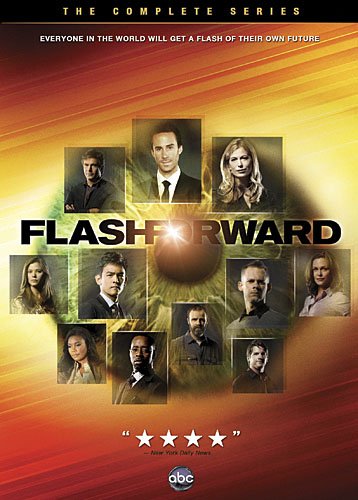
"On October 6, the planet blacked out for two minutes and seventeen seconds. The whole world saw the future..."

For all intents and purposes, it appears just like any routine fall day throughout the world. People are busying themselves about their normal concerns. Suddenly everyone on the planet blacks out for exactly 2 minutes and 17 seconds. Just think about that part for a moment. Every human being collapses at the same moment. Think about all of the things that people are doing at any given moment. Driving cars. Flying planes. Performing delicate surgical procedures, or just walking across the street. Pretty much any activity is going to become dangerous as the blackouts occur. 20 million people worldwide die in the event.

It's been said that all good things must come to an end. In television that could not be more true. In the world of entertainment good things end, often quickly without a chance to leave any kind of an impact. Maybe six years wasn't exactly quick for Lost, but at least it can't claim not to have left an impact. The show changed how we watch television, and it will be a long time before anyone forgets about it.

For six years now, Lost has taken us through mystery after mystery. I’m beginning to think that the show’s title is more a mission statement for where they want to take the viewers. Each time Abrams appears to answer a question and move on, closer examination proves that nothing has actually been revealed. The series has become the poster child for misdirection and script sleight of hand. When I examine the 13 episodes from season 4, I’m left with the inescapable, pun intended, feeling that nothing significant has really happened here at all. But at the same time, it’s the most significant event of the series. All the while I find myself compelled to watch episode after episode. Abrams would have been a great drug dealer if that producing gig hadn’t worked out for him. The show started out with enough directions and plot devices to put our brains into overload. From that point on, he’s been cutting each dose a little bit so that we find ourselves drawn to each hour fix, chasing the high we got in the beginning. Of course, we already know we’re never going to feel that way again, but we’ll keep coming back for more as long as he continues to make us believe that we will. I’m not saying the show has declined at all. I’m saying that it doesn’t really ever go anywhere. Abrams continues to introduce major plot lines such as the hatch, the others, and now the freighter, with promises of linking it all together into some kind of epiphany, and for a short time he actually does. But hindsight leaves us scratching our heads, because once we come down we can’t really explain what the high was all about. And so, we’ll continue to tune in or buy the DVD’s to see where it’s all headed, even if we already know that we’re doomed to remain lost no matter how it all ends.

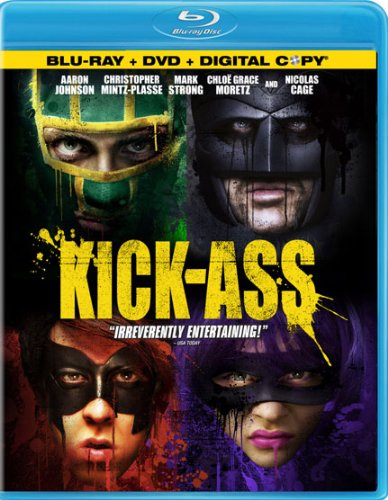
"I always wondered why nobody did it before me. I mean, all those comic books, movies, and TV shows. You'd think that one eccentric loner would have made himself a costume. I mean, is everyday life really so exciting? Are schools and offices so thrilling that I'm the only one who ever fantasized about this? Come on. Be honest with yourself. At some point in our lives, we all wanted to be a superhero. Who am I? I'm Kick Ass."

You have to give the folks at Lionsgate some serious credit for the way they promoted Kick Ass. The film was generating a lot of buzz almost a year before it actually came out. It was a huge topic of conversation at last year's ComicCon, and I must have gotten promo alerts from the studio once a week for several months. But even with all of that hype, the film just refused to interest audiences enough to show up in any great numbers for the quirky superhero spoof. We're talking under $50 million for a film that got so much pre-release attention. And so it was with that history in mind that I rather cautiously approached the film when the Blu-ray arrived here from the studio. Most of what I had heard wasn't so good. I figured, at best, it'll be a nice diversion.

For ten years we watched Jack O'Neil, Samantha Carter, Dr. Daniel Jackson, and the Jaff'a Tealc' enter the Stargate. Others would join the team over the years. Each week we would follow their adventures, first on Showtime and finally on the Sci-Fi (now Sy Fy) Channel. We watched with awe as they stepped through a portal that was in reality a wormhole transporting them instantly to another world, brought online by dialing the device like an old fashioned telephone. For another five years we traveled not only to another planet, but to the Pegasus Galaxy itself to the Atlantis Base, a bright floating city left behind by the ancients, the people who created the Stargate system millions of years before. On this show we met new friends, new bad guys, and had new adventures. The location might have changed. The faces might have, at first, been unfamiliar, but the missions and the entertainment value didn't let us down. For 15 seasons we enjoyed a spectacular tale to rival the myths of the Greeks and Romans themselves.

I'm told that all good things must come to an end. When Atlantis was finally cancelled, I was made almost immediately aware of the plans to continue the franchise. First reports started coming out that the show was going to be called Stargate Universe. Soon my inside contacts started giving me tidbits about the story. Details began to emerge about the Destiny, an ancient ship abandoned in another universe far away. The ship was on some kind of predetermined course and would sport an unsuspecting crew of humans that would be left stranded on the ship for an indeterminate amount of time. It was starting to sound a lot like Star Trek: Voyager to me. Of course, this is Stargate, so there has to be some gate travel, one would assume. The ship would come with a gate, and the vessel would come out of faster-than-light travel from time to time and dial up a local planet for exploration. The ship was ancient not only in its origin but in its duration in space. There were going to be a lot of system failures, as the equipment was long past its expiration date. The ship itself would know what resources it needed to continue to operate. Searching its vast planetary database, the ship would locate planets with the essential resources, allowing away teams to get such vital raw materials. Unfortunately, the ship didn't always give a good indication of what to find or where on the planet it might happen to be. Oh, and did I mention the countdown? The ship would decide how much time it would allot for each mission, instituting a countdown. When the clock reached zero, the ship goes back to FTL, and whoever's not back in time gets left behind.

When I was a kid in the 80’s, Predator was one of those films that you weren’t supposed to watch, but everybody did anyway. Over-the-top action, invincible heroes, cheesy one-liners and big, big explosions made this a film that was a favorite of pre-pubescent boys everywhere. Going into this disc, I found myself wondering if the film would stand up to the harsh tests of time and maturity.

The answer to that question is both “yes”, and “no”. In the “no” column, it is very apparent early on in the film…that there is very little here in the way of plot. Some soldiers are hired to go behind enemy lines to rescue an American politician who has been kidnapped by generic terrorists. Once the team arrives at their location, they discover that they have actually been sent on the mission for different reasons altogether, though those reasons are never really made clear. On their way back to the rendezvous point, they have multiple encounters with an evil and mysterious creature who tries to kill them (and occasionally succeeds). That’s about it. Beyond these basic plot outlines, dialog is basically reserved to screaming profanities and the aforementioned goofy one-liners.

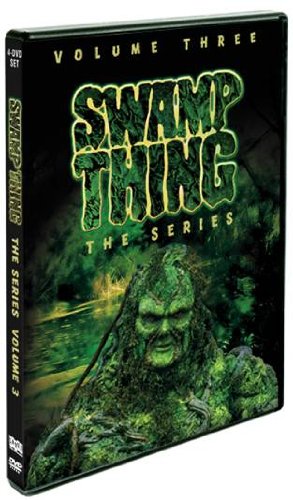
Swamp Thing the series was one of those shows that certainly be considered a guilty pleasure. Like the Incredible Hulk, Swamp Thing told the story of a scientist who is forced to live his life transformed as a mutated green monster. However, this particular green monster is not a drifter, he is forced to live his life in the swamp where the elements in turn give him great power. But in return, he must protect the swamp from people who would cause the ecological system harm.

The Swamp Thing (played by Dick Durock) is a large green monster who patrols the swamps of nearby Houma, Louisiana and knows the evil men do. For you see, he was once a man by the name of Alec Holland. Alec was a scientist and professor who was caught in a malicious chemical burning at the hands of Dr. Anton Arcane (played by Mark Lindsay Chapman).

Fans of classic science fiction know very well who Philip Jose Farmer is. Chances are you have read one of his many Riverworld novels going back to the early 1970's. It's absolutely required reading for any fan of the genre. When you think of those classic book series, this one stands right up there with Asimov's Foundation books or Frank Herbert's Dune series. I've only read the first novel, but remember it still. It's an enchanting world that I always meant to return to one day. That day hadn't yet come by the time I received this DVD release of SYFY's latest take on the work. I'm sad to say that even after watching this 3 hour mini-series, that day still hasn't come.

It's not that this is necessarily a bad film. It's actually not bad at all. It's just not very good. More importantly, it's really not much like the Riverworld I recall. The basic idea is actually all that remains from Farmer's works. Riverworld is a planet that contains 20 million miles of river, hence the name. When people die, they are resurrected along the banks of this river system. Here you might find anyone from any time. Time travels in its own fashion here. Two people who die at exactly the same moment might find themselves on Riverworld years apart from each other. It appears to be random. All of this is in the original books. Nothing else from this film is to be found, at least in any recognizable form, in the novels.

"I try to believe in as many as six impossible things before breakfast. Count them, Alice. One, there are drinks that make you shrink. Two, there are foods that make you grow. Three, animals can talk. Four, cats can disappear. Five, there is a place called Underland. Six, I can slay the Jabberwocky."

To be perfectly honest with you, I have never read either of the two Lewis Carroll books on which this film has been based. Under ordinary circumstances, that would put me at a decided disadvantage in both watching the film and certainly in providing an insightful review of the movie. But these are not ordinary circumstances. The characters and their stories, originally told in both Alice's Adventures In Wonderland and Through The Looking Glass And What Alice Found There, have become an indelible part of our culture. One need not have read a word to be intimately familiar with Alice and her fanciful friends and rivals from Underland, which Alice herself interprets for us as Wonderland. There have been animated features as well as other live action attempts. The characters have become iconic and have appeared in advertising campaigns and even an episode of Star Trek. The surprise isn't that I feel like I know this story without having read the source material. The real surprise would be if there was anyone out in the civilized world who wasn't familiar with these characters.

"In our findings on Gamera, we've ascertained that: Firstly, it is attracted to and consumes fire. Secondly, it also seems to possess an internal power plant, of sorts. This emits a signal frequency that can jam radio communications. In order to store up energy reserves, Gamera consumes inorganic resources. Not only does it consume petroleum as well as other mineral and fossil fuels, but Gamera may also seek out atomic bombs."

Ask anyone about Japanese monster movies and Gamera usually won't be the first name that comes into their minds. Godzilla would likely dominate the conversation, and for most of the last 60 years the folks at Toho have been synonymous with large monsters. But they didn't exactly hold a monopoly on the big beasts. Kadokawa Pictures had their own little monster franchise going on. It all started in 1954 with Gamera: The Giant Monster. From 1965 through the 1970's the studio would produce 8 Gamera films in all.