Fox

I’ve often spent a lot of time talking about how Pixar has dominated the computer animation, at least as far as full length features go. With few exceptions there isn’t anything out there that even comes close. Most films rely on toilet humor and crude innuendo to get a few laughs. A lot of the kids and adults might suck that stuff up, but they can’t hold a candle to Pixar. There are, as I’ve mentioned, some quite notable exceptions. The Fox Blue Sky Studios has had enormous success with their Ice Age films. And when you take a look at the third and latest entry in that franchise, you’ll understand why.

Ice Age came out in 2002 and took the box office like a blizzard piling up a drift of cash that amounted to almost $180 million before it was over. Not bad for a $50 million dollar film. Add in another $200 million in foreign receipts, and a sequel was an absolute forgone conclusion. The film introduced us to some memorable characters. Manny (Romano) was a lovable Woolly Mammoth. Diego (Leary) was a kind and wise saber-toothed tiger. Sid (Leguizamo) was their tagalong friend with not much going on in the noggin. A side story involved a prehistoric squirrel named Scrat who loved his acorns. He had a Wiley Coyote/Roadrunner relationship with acorns and took a lot of punishment to get one. Together they tried to return a lost human infant to his tribe. Four years later the characters were back. Ice Age 2: The Meltdown brought a change in their environment and love in the air for Manny. He meets Ellie (Latifah). Together they must find colder climes as their ice is melting fast. They find their Winter Wonderland, and Blue Sky Studios found another hit. This time the film brought in a crazy $200 million here and another $450 foreign. Before home video the film was close to $700 million in box office. Can you say number 3? Add some dinosaurs to the cast and another $250 million for a total take of nearly $900 million on the third film. If you’re doing the math that’s over $2 billion on 3 films. I think we’re going to see these guys again. Count on it, literally.

Written by Adrienne Ambush

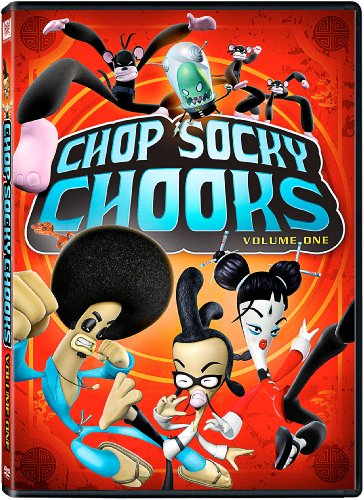
If you were to take the movie Kill Bill, mix it with the Karate Kid, and then put it into animation form, the end result would be Chop Socky Chooks.

It is true, I’m not a big fan of lawyer shows. A long time ago when I was about twelve years old, my future vocation wish was to become a lawyer. I visited lawyers, I talked to them for what seemed like hours. Except it wasn’t hours at all, it was more like thirty minutes. My realization then was that I wasn’t cut out for the business and went into what I do now. However, after watching Ally McBeal for a season of episodes, I come to the realization that I’m so very glad that I didn’t stick around.

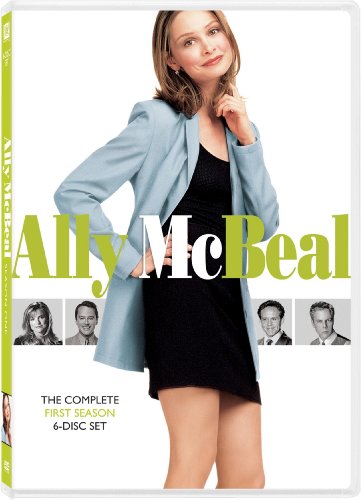
Ally McBeal (played by Calista Flockhart) has just lost her job at her law firm. It seems that a co-worker decided to touch her rear in an unprofessional manner. The co-worker decided to say it was OCD and unfortunately Ally found herself on the streets. She is immediately picked up by an old colleague of hers named Richard Fish (played by Greg Germann) and invited to work at his firm.

This time it’s a quad of whitewater rafters looking for some high adrenalin action. It doesn’t take long before they’re introduced to our favorite clan of cannibals and their arrows. This one doesn’t waste any time with a setup. You know what that title represents, and the filmmakers decide to give you what you want with no delay. Okay. Actually the raft trip IS the setup here. As the rafters escape into the woods, we just know they’re going to run into those snares and traps. And there you won’t be disappointed. This time a guy gets sectioned into three parts. As Kimberly Caldwell was beside herself in two sections for the second film, I can’t wait to see the setup by the time they get to entries 7 or 8.

The real meat, pun intended, of the film begins in a West Virginia prison compound. There’s about to be a high profile prisoner transferred to another facility. Because they fear his “boys” on the outside, they decide to do the transfer a week early with a U.S. Marshall undercover as one of the moved prisoners. You and I already knew that it’s not the mob guys they needed to concern themselves with. It’s no big spoiler to reveal that the bus doesn’t make it to the next stop. The Clan crashes the bus, and before you can say Deliverance, it’s the cons versus the cannibals with a couple of the good guys in the middle. Sounds like a perfect Wrong Turn sandwich, doesn’t it?

“It’s the end of the world. Society is in chaos. Government’s no longer in control. The world has been devastated by a catastrophic disaster, but you’re still alive. Overnight, you’ve been thrown back into the Stone Age. Modern conveniences are a thing of the past. Would you have the guts to survive? Welcome to the Apocalypse. Over the next 5 days contestants will be put to the ultimate test. These 6 contestants have been thrown together in a devastated wasteland with only the clothes on their backs and the will to survive. Rain or shine, in 5 days only one will be alive.”

At least they got the last part right. That’s the premise of the new reality show Ultimate Survivalist. Reality star Kimberly Caldwell is racing to join the cast of the new pilot. She’s complaining to her agent on the cell phone that she’d rather have some better parts. She should know better than to talk and drive. She runs over a pedestrian. As she stops to check on the unfortunate soul, she soon discovers this is no ordinary pedestrian. He’s one of that lovable cannibal clan from the first Wrong Turn film. Before long Kimberly gets her wish. She ends up in two parts, literally. Make that 5 contestants.

I guess they didn’t tell the producer and director of Wrong Turn that an official remake of the Texas Chainsaw Massacre would be gracing the screens in October of 2003. This movie borrows very heavily from the horror classic in terms of the setup, the killers, and the level of gore. Now that being said, this is an above average horror film with excellent makeup and special effects delivered by one of Hollywood’s greatest – Stan Winston, and a good performance by Buffy and Angel regular Eliza Dushku (although it is kind of weird seeing her scream and run away from villains that would be considered lightweights in the Buffy and Angel universe).

The film follows the ill-fated decision by the main characters to drive on a seldom used dirt road to avoid a lengthy delay on the interstate. Once they discover that a barbed wire trap laid in the middle of the deserted road has incapacitated their cars, four of the group of six leave the vehicles to find help. Well, you don’t have to think too hard to guess what happens next – our two remaining young people are the first to encounter the chromosomally challenged inbred hillbilly cannibal killers. Enter the first of many Hollywood horror clichés that are used in this film. The second cliché happens upon the viewer quickly thereafter as our remaining four young people come across the dilapidated home of the aforementioned chromosomally challenged inbred hillbilly cannibal killers. They first investigate the shack only to find a collection of various items that have been left by the previous victims of the inbred family, and upon further searching then find the remains of the victims on plates, in jars, and of course in the refrigerator. As this grisly find is made, the hillbilly three return home for an early lunch, while our heroes scramble to hide and not become dessert. Of course they are discovered as they make their escape (cliché #3) and spend the rest of the movie being chased, culminating in a showdown back at hillbilly central.

The Strawberry Shortcake Movie: Sky’s the Limit definitely surprised me. As I turned this 96-minute movie on I expected to be bombarded with female stereotypes: flowers, butterflies, and the color pink. Though Strawberry didn’t fail to deliver these dainty, feminine elements, it also offered six very strong and independent female characters.

After watching the intro on car seat safety, sponsored by AAA and unable to be skipped, the movie begins. The opening scene shows the town of Berry Bitty City where all the girls live; Strawberry, Orange, Plum, Blueberry, Lemon and Raspberry. The Berrykins (who pick the berries to keep the berry juice flowing which is what powers the entire city) dance while picking berries and singing a song about their “very nice life.” Orange, the craftiest of the girls, has created a juice fountain and is showing it off to all her friends, while Strawberry works on a new smoothie recipe. We are introduced to the only character different from Strawberry and friends, Mr. Longface. He is the lovable caterpillar who seems to offer the girls’ guidance while reading his family’s stories from an “old family journal.”

“I’m the best there is at what I do and what I do isn’t very nice.”

So what do you do after three successful, if not critically acclaimed, X-Men feature films that brought in over a billion dollars total when you factor in domestic and foreign box office and home video sales? It was getting a bit expensive to bring back such a large and growing in popularity cast. Even if you wanted to spend the money for such an ensemble, it gets awfully difficult to write effectively for so many characters at once. Someone’s going to get the dark end of the spotlight. Hurt feelings aside, you can’t continue to please such a wide diverse group of fans. Bryan Singer did such a great job in the balancing act for the first two that it looked like maybe this could go on forever. But Brett Ratner, who is used to working with teams of two, put a fork in the franchise for many, and it seemed we’d seen the last of our favorite mutants. Honestly, I didn’t think the third film was all that bad, but that’s just me. I was never looking for anything more than an amusement park ride for my theater ticket, and that’s exactly what I got all three times. But these issues remain, as does the question, where do you go from there?

Claire (Judd) and Tom (Caviezel) appear to have it made. Claire is a successful attorney and Tom is ex-Army. They are happy and very much in love, trying to have their first child. Suddenly while out on the town an FBI SWAT team surrounds them on the street at Union Square. Tom is taken into custody. Claire soon discovers that Tom wasn’t the man she thought he was. In fact, his name isn’t even Tom. He is Sergeant Ron Chapman, and he’s been a fugitive for 12 years, wanted by the Army for murder. Now the military court is seeking the death penalty. He is accused of killing civilians in a raid gone wrong. He insists that he is innocent and that the guilty party is actually a prominent and influential general. All but two of the event’s witnesses are dead, many by mysterious accidents. Claire takes his case and turns to attorney Charles Grimes (Freeman) who has had experience with these kinds of cases. Unfortunately, he’s an alcoholic and a bit of a wild cannon. Still, he knows his stuff when he’s sober, and he’s the best chance she has of uncovering the truth. To win they will have to prove a government cover-up and risk their lives in the process. It appears a lot of folks don’t want this case to be solved. It’s an uphill battle, and everyone has something to hide. It’s a “trust no one situation” as Claire and Grimes get to the bottom of the case.

The film is based on a moderately successful novel by Joseph Finder. While the film has an impressive cast and a pretty good story, it suffers from a lack of imagination by director Carl Franklin. You may know the name. He was a busy television actor in the 80’s and 90’s and appeared relative failures like Fantastic Journey and well known shows like The A-Team. While he was a fair actor, I’m afraid his directorial skills haven’t translated. The film never really shows any imagination. It reminds me of those tubes on Star Trek that were marked GNDN (Goes Nowhere, Does Nothing). He fails to utilize the full extent of his widescreen picture, and all of the action falls too often inside that cramped relative center square that used to represent the difference with television. In spite of some tremendous chemistry with Morgan Freeman and Ashley Judd, the film appears to meander too long in one place. Pacing is awkward and uneven, to be kind. In the end the film boils down to a very clichéd procedural that never comes close to breaking new ground. Audiences seemed to agree in 2002 when the film opened. It had a rather sweet opening weekend but soon was dropping like an anchor in deep water as word of mouth appeared to include a resounding thumbs down. It finished its run pulling in $41 million on a $42 million budget with 34% of its gross the first week.

“Attention: Tonight’s movie has been M*A*S*H. Follow the zany antics of our combat surgeons as they stitch their way along the front lines operating as bombs and bullets burst around them, snatching laughs and love between amputations and penicillin, as they put our boys back together again.”

M*A*S*H began life as a novel written by an actual Korean War Army surgeon under the pen name Richard Hooker. He based the character of Hawkeye on himself and most of the other characters on actual personnel that were stationed with him at a real M*A*S*H unit. The book was written for the screen by longtime blacklisted screenwriter Ring Lardner, Jr. Lardner was intrigued by the anti-authority message the book had, likely due to his own experiences with the government. He was one of a group of Hollywood talent that refused to testify before the Senate Committee on Un-American Activities. They were thrown in prison and blacklisted in the industry. This particular group became known as The Hollywood Ten. Whatever Lardner’s ideas might have been for the movie, they were enough to get a select group of producers excited about the property and got the ball rolling. We won’t ever really know what those concepts might have been exactly. In the hands of, at that time, new director Robert Altman, the script was practically discarded almost in its entirety. Altman had his own views which were inspired more by the still raging Vietnam War than what he considered an obscure historical event he believed most Americans didn’t even remember. All mention of Korea was deliberately left out of the film. When the studio caught on they forced him into providing a scroll at the film’s beginning that set the location. To Altman and pretty much everyone working on the film they were making a movie about Vietnam, not Korea. He incorporated his own anti-establishment, some might call subversive, ideas and made a film that Lardner would exclaim was nothing like his script. He encouraged rampant improvisation from the cast and little of Lardner’s dialog actually remained.