Paramount

To Catch A Thief is not typical Alfred Hitchcock territory, but then again, it really is. It’s not a terribly suspenseful film coming from the acclaimed “Master of Suspense”, nor is it at all a frightening film even though it was directed by one of horror’s genius minds. What really is scary, however, is how close to a different film this almost was. Cary Grant had exiled himself into retirement. If you can believe his statements at the time, he was concerned that the moviegoing public was pretty much sick of seeing him and preferred the younger actors just then coming of age. He turned Hitchcock down for the role at least twice, before Hitch made a personal visit and appeal to the Hollywood legend. Grace Kelly was also reluctant to do the part. She did it because she loved working for Hitch. Unfortunately, Paramount had other plans. They were troubled that Grant was nearly twice Kelly’s age, and worried that either the public or the standards censors would not accept the situation. They were half right. While the film was one of Hitch’s toughest battles with the Standards folks, the public flocked to see Grant and Kelly on the screen together. Grant would continue his return to acting for over a decade longer. Not so Grace Kelly. The Philadelphia native would have her fateful meeting with Prince Rainier of Monaco and would spend nearly 30 years portraying the larger-than-life, but real nonetheless,  Princess Grace of Monaco, before a tragic automobile accident would end her life. All the same, To Catch A Thief would remain one of her last films. Hitch almost lured her out of retirement some years later, but she declined, saying that if she were to do a film, Hitchcock was about the only man she would have done it for.

John Robie (Grant) is a renowned jewel thief and cat burglar. While he’s been retired for fifteen years, he’s still the prime suspect when a rash of burglaries occurs on the French Riviera. The MO is the same as Robie’s, and before long the police are blaming him for the work of France’s newest celebrity thief, The Cat. Robie sees only one chance to get himself out from under the mess. He has to go to the area and catch the real thief. Once there he hooks up with insurance agent Hughson (Williams) who cooperates on the off chance his company can be spared these high payouts. Robie also meets young and attractive socialite Frances Stevens (Kelly), who sets her sights on catching this thief for her own. She constantly tries to seduce Robie, knowing who he is and suspecting him of being The Cat. When her own family jewels turn up missing, she begins to rethink the dangerous game she was playing. That only gives Robie even more incentive to catch the real crook. Will Robie catch The Cat? Will Frances catch Robie? Only Hitch knew for sure, and in 1955 audiences found out in the film classic, To Catch A Thief.

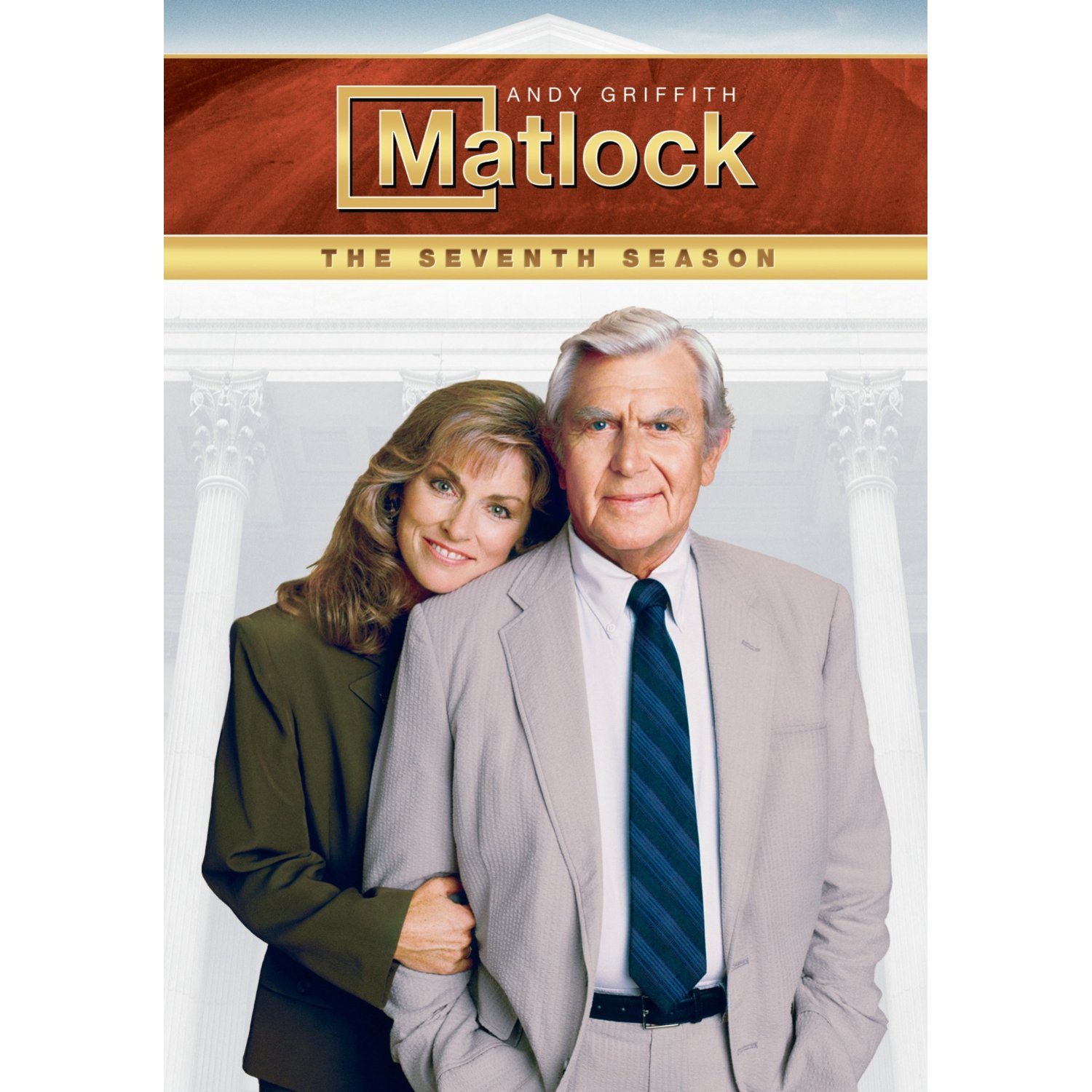
The seventh season of Matlock brought more of the same. If you’re a fan, that’s very good news indeed. What is that, you ask? Imagine Sheriff Andy Taylor older and now an attorney, and you pretty much have the setup for Matlock. Forget for a second that both characters were played by Andy Griffith. That’s not all they have in common. Matlock is every bit the “southern gentleman” that Taylor was. He might be a little smarter, but he walks and talks like Andy Taylor. The series did, however, jump networks with this season. After spending six seasons on NBC, the show moved to ABC with a couple of changes. Michelle, played by Nancy Stafford left the show as the 6th season was originally considered the series finale. As the 7th opens Matlock's older daughter Leanne enters the partnership, played by Brynn Thayer. Law graduate Cliff Lewis, played by Daniel Roebuck, also joins the firm as a new lawyer.

Matlock began life as a television movie from Dean Hargrove, who brought us Columbo. Hargrove would later work the same magic with Dick Van Dyke in Diagnosis Murder. In fact, the two shows could easily have been companion pieces. Both featured sit-com stars from the 1950’s and 60’s who had become somewhat iconic characters. Both would don the role of professionals. Both shows would subscribe to the “formula” mode of storytelling. Diary Of A Perfect Murder would set up the Matlock formula. It’s simple, really. Matlock was a lawyer in Atlanta. Some wronged defendant, usually charged with murder, would show up asking for Matlock’s help. Matlock and his team would investigate the crime with an eye toward, as OJ Simpson is fond of saying, finding the real killer.  His team consisted of his daughter Charlene, herself a competent lawyer, and Tyler Hudson (Holliday), his private investigator. In the pilot the Matlock character was less Andy Taylor and a little more slick at first. I’m sure that while it was intended to show Matlock’s prowess as a high-priced attorney, somewhere along the line it became obvious that the show’s finest asset was Griffith himself and that southern charm he was already famous for. Whatever the reason, you can see the character soften significantly during the early episodes of the season. And that decision was a smart one, as Matlock would continue for nearly a decade.

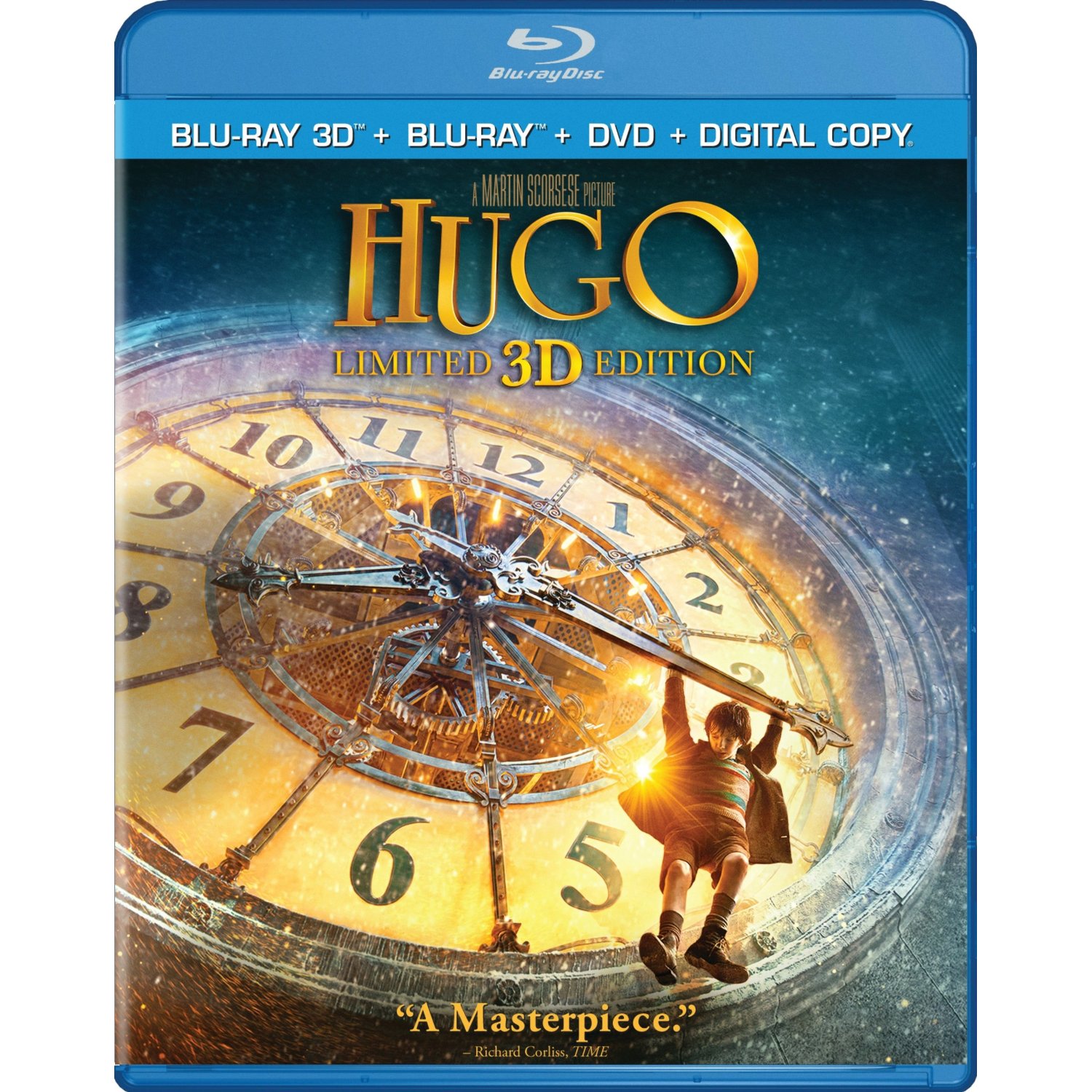
Back when I reviewed the original Blu-ray/DVD combo release, I said that those wanting special features should wait for the inevitable double-dip. Well, here it is, and so loaded with features that they get a Blu-ray to themselves.

Following the events of Transformers: Revenge of the Fallen, the Autobots are working hand-in-mechanical-glove with human authorities (in other words, the apparently all-powerful CIA), keeping close watch for Deception activity, but also helping out in human-on-human conflicts. Meanwhile, Shia LaBeouf has traded in improbably hot girlfriend Megan Fox for the equally improbable Rosie Huntington-Whiteley (an improbability that the script does have some fun with). He is also out of work and dismayed at not being given due consideration as a saviour of the planet.

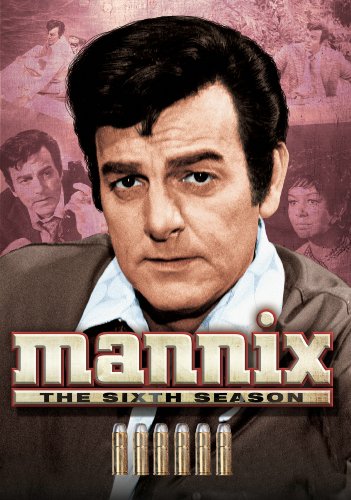
It sounds like nothing new. Hard-boiled detective uses computers and other forms of technology to solve cases. It isn’t anything new, except the detective in question is Joe Mannix, and the series started in 1967. The computer that Mannix used took up an entire room and was queried using cardboard punch cards. This wasn’t science fiction. We’re not talking some newly discovered Irwin Allen series. Mannix didn’t go after aliens or robots. This was a down-to-earth gritty detective show. Mike Connors played the tough-as-nails detective. He was perfect for the part and blended into the role seamlessly for eight years.

The show was created by the team of Link and Levinson, who later gave us the detective in the rumpled raincoat, Columbo. It was groundbreaking in so many areas. While it might not be remembered today as one of the top detective shows, there can be no argument about the impact Mannix had on the genre. A decade later one of my favorite television detectives, Jim Rockford, would borrow rather heavily from Mannix. Like Rockford, Mannix was getting beat up a lot. They both had the same sense of style, wearing rather ugly sport jackets. Neither was afraid to bend the rules, or the law, when necessary. Again like Rockford, Mannix often falls for the wrong girl at the wrong time. Mannix was good with a gun and equally adept with his fists. The show received a ton of controversy from the start for the amount of violence it employed. Tame by today’s standards, Mannix was quite aggressive for its time. The joke was that the show’s producers mandated a fight or car chase every 15 minutes whether it was needed or not. I’m sure that wasn’t true, but nonetheless the show opened the floodgates for the detective shows that followed. In this first season, Mannix worked for the enigmatic detective agency, Intertect. They supplied him with the latest in modern technology and with his cases. His main company contact was Lou Wickersham, played by Joseph Campanella. Now Mannix is on his own and begins to resemble more and more these detectives that would eventually follow in his tire tracks.

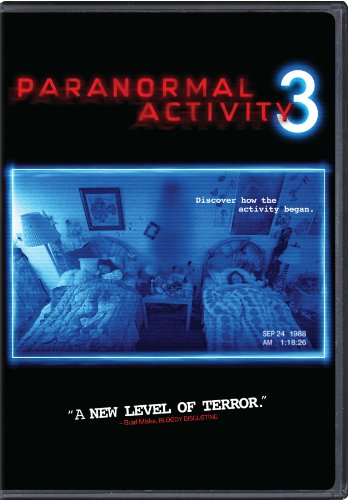
The Paranormal Activity franchise steps back in time for this third entry, revealing how and why sisters Katie and Kristi come to suffer demonic assaults later in life. We are back in 1988. The blended family of mother Julie (Lauren Bittner), daughters Katie (Chloe Csengery) and Kristi (Jessica Tyler Brown) and stepfather Dennis (Christopher Nicholas Smith) are settling in to life together when the first odd things start happening.

Wedding video producer Dennis is the first to suspect the outright paranormal, and sets up cameras upstairs and down to capture events. Ominously, little Kristi has an imaginary friend, Toby, who, in proper Captain Howdy style, reveals himself to be all too real. What is he saying to Kristi? What does he want of her? Answers are forthcoming, and they are not reassuring.

Charles Dickens’ A Christmas Carol is the pre-eminent holiday fare success story. Not only was it gigantically successful for Dickens himself, to the point that not only did he then follow it up with other Christmas books (The Chimes, The Cricket on the Hearth, The Haunted Man), but he also took charge of one of its early adaptations, trimming it down for oral performances. It has also, of course, been the subject of numerous film versions, with everyone from the Muppets to Bill Murray having a go. This one, from 1970, turns the story into a musical.


Albert Finney, grimacing and hunchbacked, and wearing a pretty obvious bald wig, takes on the role of the miser in need of redemption. On hand to provide said redemption are the likes of Alec Guinness, swanning about as a bizarrely fabulous Jacob Marley, Edith Evans as a Ghost of Christmas Present who has apparently come straight from playing Lady Bracknell in a production of The Importance of Being Earnest. The story hews fairly close to Dickens for a good chunk of its running time, though alters scenes inn order to accommodate a variety if rather dire songs. The cast, meanwhile, barely bothers to act, preferring to mug instead, and given the script, one can hardly blame them.

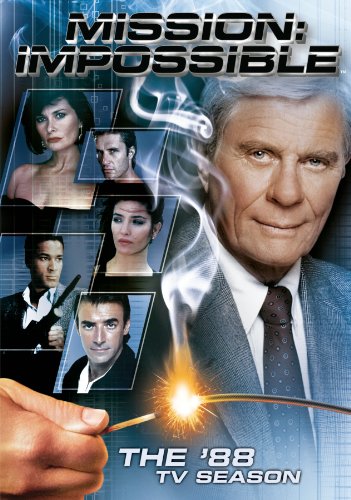
"Your mission, should you decide to accept it..."

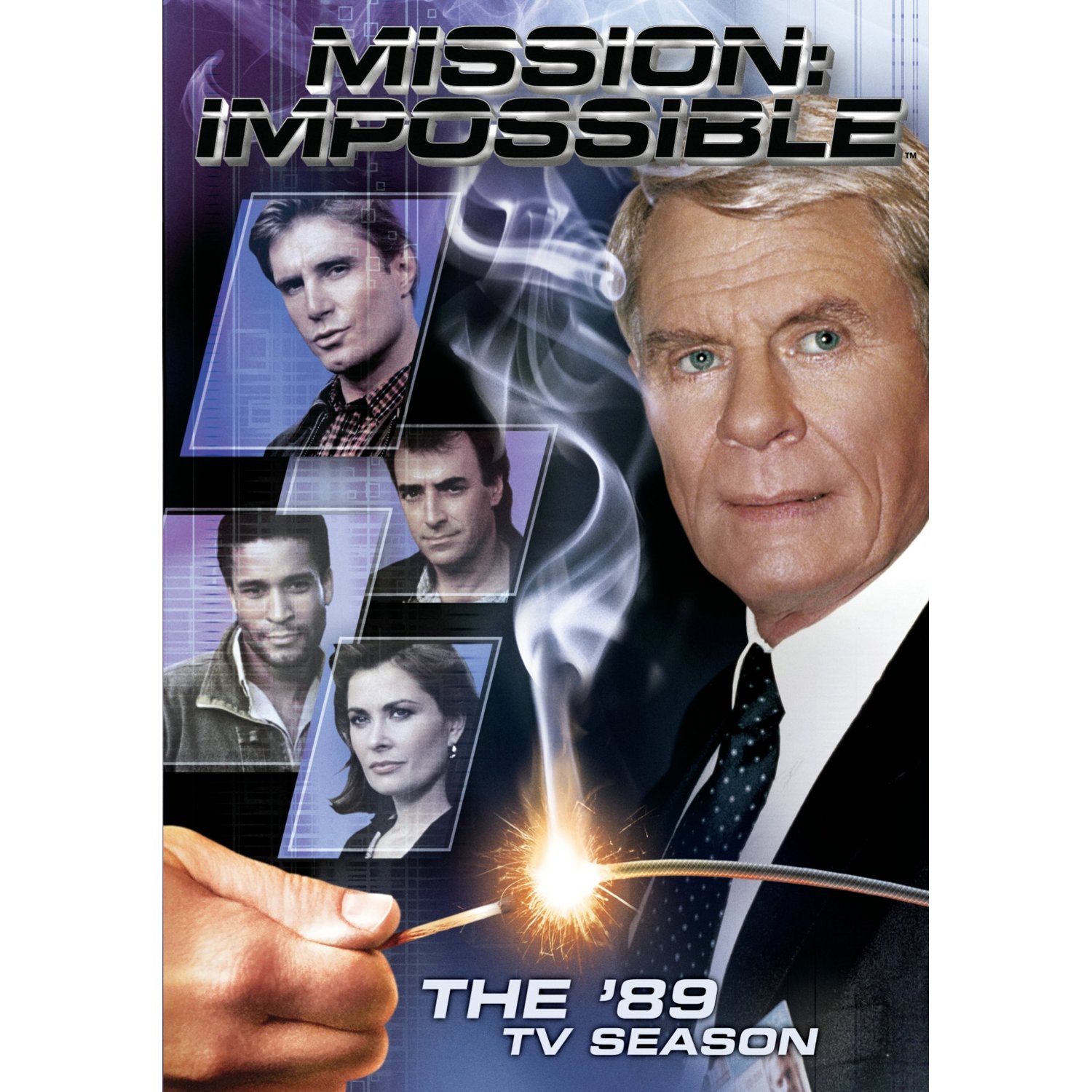
Those words have certainly been a part of the American pop culture for almost 50 years. It all started with the Desilu television series that hit the airwaves in 1966. That first year is probably unfamiliar to most of us. It was in black & white and starred Steven Hill as the leader of the Impossible Mission Force. A year later the show jumped to color and Peter Graves took over the team as the indomitable Jim Phelps. The show lasted a good 7 seasons. The Impossible Mission Force was a black-ops team that worked under the "secretary" who would disavow their mission should any of the team be caught or killed. The show had a pretty good run before ending in 1973. Gone, but never forgotten.

It is 1979. While filming a Super 8 horror movie, a group of young friends on the cusp of adolescence witness a spectacular train wreck. They later discover that they accidentally captured evidence that there was an alien creature on the train, and it is now loose in their small town. But if the mysterious disappearance of dogs, engines and (increasingly) people wasn’t trouble enough, the military descends upon the community with an agenda far more merciless and inhuman than that of the alien itself.

I was 12 in 1979, and I was shooting Super 8 monster movies, so I get the nostalgia that writer/director J.J. Abrams is going for here, and this is an utterly unapologetic exercise in nostalgia. Abrams is is out to recreate the experience of a Spielberg movie from that era, and with the man himself acting as producer, the mission is accomplished. Super 8 plays like the Lost Spielberg Movie, with all the wonder, thrills, and sentimentality one would expect. There is so much here that works beautifully. The young cast is terrific, the dialogue crackles, the effects are spectacular, and the creature is both menacing and sympathetic, like some unholy version of ET reworked by H.P. Lovecraft.

Erle Stanley Gardner wrote crime fiction, and while many of his 100 or so works are unknown to most of us, he created a character that has become as identified with criminal lawyers as any other in fiction. It was in these crime novels that Perry Mason first faced a courtroom. He developed a style where he would investigate these terrible crimes his clients were on trial for. He would find the real killer, and in what has become a Hollywood cliché, reveal his findings in a crucial moment during the trial. While we may not remember the novels, we all remember the man in the persona of Raymond Burr.  Burr had a commanding presence on our screens and enjoyed a well deserved 11-year run as the clever lawyer. What makes this run so amazing is that the show followed pretty much the same pattern the entire time. We always know what’s going to happen, but we wait eagerly for that gotcha moment when Perry faces the witness on the stand. We know when he’s got the guy squarely in his sights, and we can’t sit still waiting for him to pull the trigger. OK, so maybe that’s a little over the top, but so was Perry Mason. From the moment you heard that distinctive theme, the stage was set. To say that Perry Mason defined the lawyer show for decades would be an understatement. Folks like Matlock and shows like The Practice are strikingly similar to Perry Mason. If you haven’t checked this show out, this is your chance. See where it all began.

Raymond Burr did not carry the show on his own. There was a very fine cast of supporting characters. The most famous has to be his faithful secretary Della Street, played by Barbara Hale. The two were inseparable. Perry had the help of a good private investigator in the Raymond Chandler style. William Hopper played the tough-as-nails Paul Drake. One of Orson Welles’ famous Mercury Theater Players took on the part of Police Lt. Tragg. Ray Collins starred in Citizen Kane as the political party boss Gettys. He was a fine example of top talent working in television.  Mason was often pitted against prosecutor Hamilton Burger, whose name too often reminded me of hamburgers. There wasn’t anything funny about Burger, however. He was a worthy opponent who drew the short straw most of the time because he was up against Perry Mason. The task was accomplished with a lot of style by William Talman, a one-time evangelistic preacher.

Six different Nickelodeon children's programs aimed at preschoolers each have their own Christmas (or Holiday) special episodes and are compiled together on this DVD release.

 Dora the Explorer: Using tons of repetition and visual cues, Dora and her friends teach kids while alternating between English and Spanish. This time they need to go to the North Pole.