1.33:1 Fullscreen

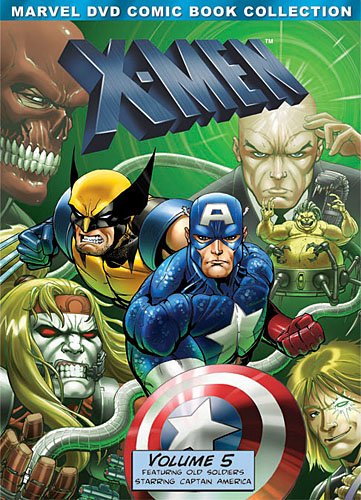
Volume Five of the Animated Series known as X-Men is now upon us. Included here are the last fourteen episodes that haven't been put on disc for the masses. There is a lot going on in these twenty one minute chunks. There are some good things, bad things, funny things and more confusing things than probably should be in a children's animated show. So let us spend some time, the final time with our beloved mutant friendly superhero group.

The fourth season had left us on a climatic showdown. The four parter: Beyond Good and Evil had showed us some strange alliances as well as X-Men fighting together to save the day. Apocalypse was put away for another day as he could not defeat the mutant superheroes. Peace had come to the planet Earth even though we all the knew that it could not last. So we dive right into the final Volume of the X-Men.

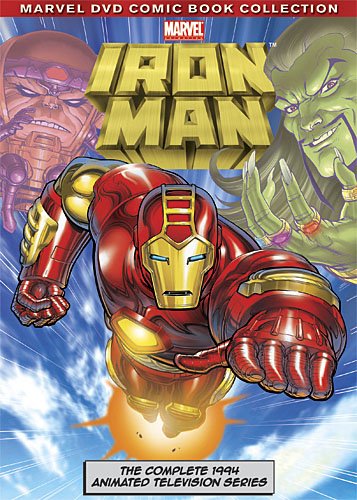
Iron Man 2 comes out this week and is set to do fantastic business. Usually I’m a person who waits for movies to hit dvd and blu-ray and I’m already planning to when I can go see this movie. But one of the things I’ve come to appreciate over the years is when a big movie such as Iron Man 2 comes out, there are disc releases that dip into yesteryear and help to get you in the mood. Imagine my surprise when I was asked to review Iron Man: The Complete 1994 Animated Series.

To do this correctly, I really have to break up this synopsis into two parts. There is the first season and the second season. Trust me, they are so different from each other, I’m surprised they were released together. Everything from drawing style to the characters to the way they craft stories is different. It’s a fun ride either way but you’ll certainly prefer one over the other.

"You know, I never thought what happens to a city ... well ... if it breaks down, all at the same time. There's no power. There's no lighting, or cooking. And food, even if you can get it into the city, you can't distribute it. Then there's water and sewage, things like that. You know, it just never occurred to me when I lived in London. The city's like a great big pampered baby, with thousands of people feeding it and cleaning it, making sure it's all right."

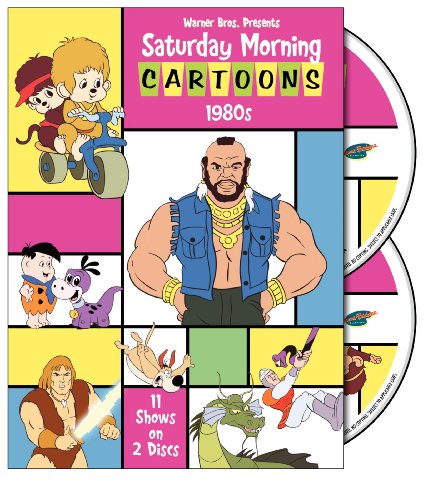
Most of my growing up and living occurred in the 1980’s. From ages five to fifteen, I grew up in an era that was famous to many different types of cartoons. It helped to shape my personality, from bad jokes to that unmistakable sarcasm. So, it was easy to attract me to a cartoon set that showcased odds and ends from that familiar era. Join me as we take a step back in history, a history that hits very close to home.

The first toon we find is one called Goldie Gold & Action Jack. They fight by air, by sea and by the seat of their pants. They aren’t kidding. Goldie is a certified lunatic: she rides a helicopter indoors, jumps out windows and talks to hobos. Doesn’t she know that she is blonde and rich? Jack really isn’t all that Action, he’s just good at being lucky. The show is very gadget heavy and has a little Scooby Doo sleuthing thrown in.

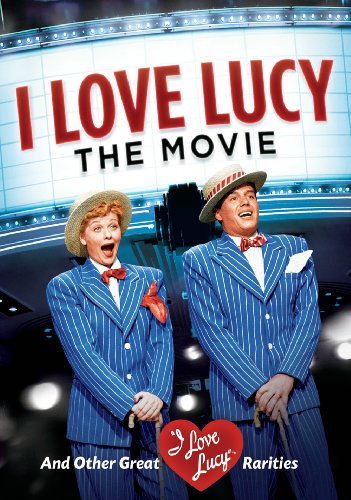
Lucille Ball was originally a radio personality starring in a popular comedy, My Favorite Husband. It was here that she began to develop the character she would continue to play for decades in television through several shows, all bearing her name in one form or another: I Love Lucy, The Lucy Show, Here's Lucy, and Life With Lucy. See the pattern? Anyone who was a fan of the radio show would instantly recognize the red-haired actress even though they had never actually seen her on the radio. That exaggerated cry was already a staple of her physical comedy, even when she couldn't be seen. She had also toured for many years with her real-life husband Desi Arnaz. When they could not convince a network to film a pilot of a show featuring both of them, they made it on their own dime. CBS was so impressed with the pilot they reimbursed the couple, and in 1951 I Love Lucy hit the airwaves.

Lucy played the character she had already perfected on radio and on the stage. Desi played her husband, a Cuban bandleader who headlined at the Tropicana. Lucy was always trying to find a way to get into Ricky's act. She had no talent, but that never stopped her, usually embarrassing Ricky along the way. The couple lived in an apartment owned by the Mertzes, Fred (Frawley) and Ethel (Vance). They were not only the Ricardo's landlords but also their closest friends. Ethel would often find herself talked into one of Lucy's crazy schemes. The show also found comedy fodder in Ricky's thick Cuban accent. Sometimes his mispronunciations caused hilarious misunderstandings. William Frawley as Fred had the job of playing straight man most of the time. It was a thankless job, to be sure, but he was perfect at it. He didn't talk as much as the others, but he had some golden moments over the show's very successful six year run. During that time the series never once fell below number three for the entire year in ratings.

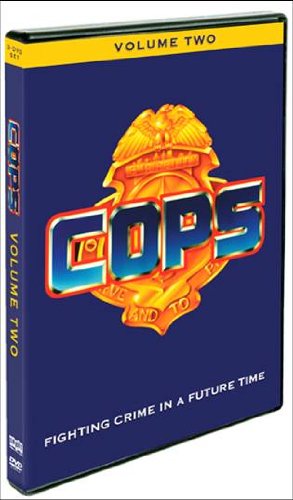
C.O.P.S aired in 1988, one year after the debut of Robocop, and the future-cop theme and design is clearly influenced by Verhoven's violent satire. As a child I caught onto this influence immediately and a part of me always saw it as derivative (along with some Judge Dredd influence). Watching it now I get an eery knot in my stomach as I realize just how silly and loaded with slapstick this cartoon really is, and yet cannot help but still recognize the design influence of Robocop. Throughout there is this strange paradox of immensely threatening looking characters doing terribly silly things. One should expect these various behemoths to be murderers, rapists or just violent thugs (just look at the caricature grins most of them have and tell me I'm wrong) and yet they're stealing fur coats and cavemen and all have goofy voices....my brain takes a while to process all of this.

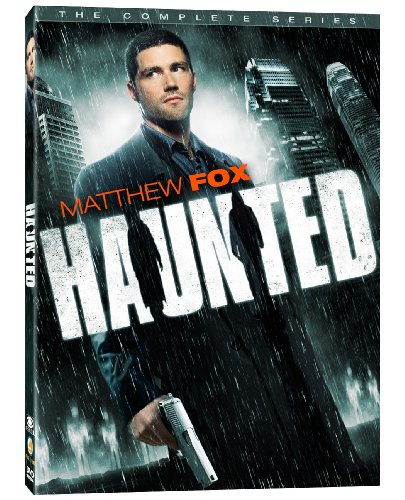
"Two years ago my son was taken from me. Since then I've lost everything: my job, my marriage, even my life. But I came back, and the dead came with me."

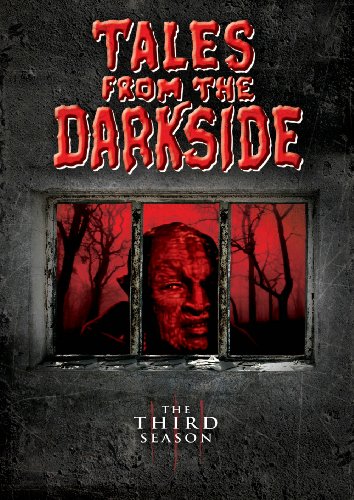
“Man lives in the sunlit world of what he believes to be reality. But there is, unseen by most, an underworld, a place that is just as real, but not so brightly lit, a darkside.”

Not since the likes of Rod Serling’s Twilight Zone or The Outer Limits has there been a really good sci-fi/horror anthology until 1984’s Tales. Not to say that each episode was a winner. In fact, most were pretty weak and relatively lame, but when this show was good, it was very good. These tales weren’t any ordinary specter spectaculars, but were told by spectacular story writers, directors, and producers. Look at just this first season, and you’ll find some of the top names in the field involved in one way or another. You’ll see the likes of Stephen King, Tom Savini, George Romero, Robert Bloch, Frank De Palma, and Harlan Ellison. The tales often came with a twist, or at least a big finale in the end. Much like a train’s headlight in a long tunnel, you might have seen it coming from a mile away, but it’s hard to avoid the impact.

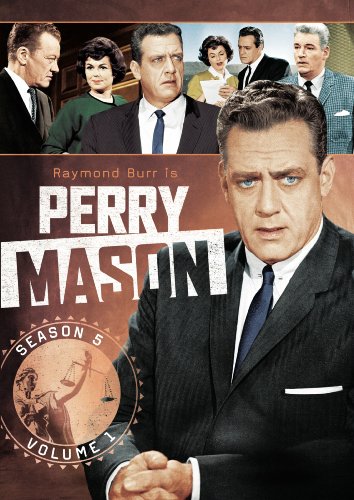
Erle Stanley Gardner wrote crime fiction, and while many of his 100 or so works are unknown to most of us, he created a character that has become as identified with criminal lawyers as any other in fiction. It was in these crime novels that Perry Mason first faced a courtroom. He developed a style where he would investigate these terrible crimes his clients were on trial for. He would find the real killer, and in what has become a Hollywood cliché, reveal his findings in a crucial moment during the trial. While we may not remember the novels, we all remember the man in the persona of Raymond Burr.  Burr had a commanding presence on our screens and enjoyed a well deserved 11-year run as the clever lawyer. What makes this run so amazing is that the show followed pretty much the same pattern the entire time. We always know what’s going to happen, but we wait eagerly for that gotcha moment when Perry faces the witness on the stand. We know when he’s got the guy squarely in his sights, and we can’t sit still waiting for him to pull the trigger. OK, so maybe that’s a little over the top, but so was Perry Mason. From the moment you heard that distinctive theme, the stage was set. To say that Perry Mason defined the lawyer show for decades would be an understatement. Folks like Matlock and shows like The Practice are strikingly similar to Perry Mason. If you haven’t checked this show out, this is your chance. See where it all began.

At this rate, it’s going to be quite some time before you complete your collection. I’m not even sure that DVD will still be a viable format before the end of the series on DVD. It’s another half season, and the episodes continue to fly at us at a snail’s pace. But slow and steady wins the race, and as long as the quality episodes continue to deliver that classic Mason charm and style, I guess folks like us will continue to come back for more.

Teddy Roosevelt has been somewhat of a dominant figure in my life these last few weeks. By coincidence, I have just finished reading an excellent collection of the man's letters in a volume entitled The Scarlet Letters Of Theodore Roosevelt. These kinds of books are wonderful opportunities to get to know an historical figure through his own words, often directed at close friends and family with whom he felt comfortable enough to refrain from censoring his words quite so much. Then there's the two Night At The Museum films which I recently watched and reviewed for these pages. I live in Tampa and was recently near the area in which Teddy trained and assembled his famous Rough Riders for their historic contribution to the Spanish American War. Finally, I had just finished watching a more detailed biography on one of those documentary stations. So, wouldn't you know it that I would find at my doorstep courtesy of my local UPS carrier, a copy of The Indomitable Teddy Roosevelt. I'm quite the history buff. I taught years of AP Government and American History. My specialty has always been the presidents. I was really looking forward to watching this one.

This is a documentary unlike any other I've ever seen. The piece is narrated by George C. Scott. The narration script is mostly very surface kinds of things. The program rarely goes into any kind of detail about the man. There's a lot of fluff and bravado descriptions of the subject, but I can't imagine you really getting to know the man himself from anything you encounter here. If you have knowledge about Teddy Roosevelt at all, you already know all this stuff. What the documentary lacks in detailed information it attempts to make up for in dramatizations. Actors portray Roosevelt and his family in reenactments of some of the narration. We're talking mostly family events. While the filmmakers never try to deceive the audience or suggest that this footage is the real deal, the program did catch more than its fair share of heat for the stylistic choice. But in the end, these reenactments appear as trivial as most of the program itself.