1.66:1 Widescreen

World War II has just ended, and the recently discharged Robert De Niro hits New York on the prowl for sex. He runs up against WAC Liza Minnelli, and the more she resists his advances, the more determined he becomes. There is more: he is a saxophonist, and she (of course) is a singer). So begins a tempestuous relationship between two artists whose enormous talents and equally enormous personalities mean they can neither live with nor without each other.

The idea of Martin Scorsese taking on the form of the classic musical is so bizarre that it had to happen, and here it is. Scorsese’s conceit is ingenious: all the conventions are there (the meet cute, the songs, the artificial sets and colors), but they collide with the naturalism of the performances and the emotions. A perfect case in point: wandering the streets at night, De Niro sees a sailor and his girl perform a dance together. It is a classic musical moment, but the only sound is that of a train passing. It is a scene of extraordinary beauty, grit, and cinematic truth. And it belongs in an extraordinary film.

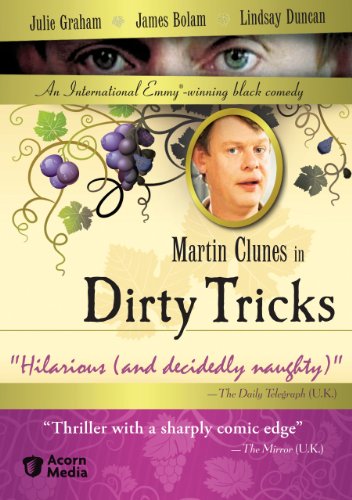
Dirty Tricks stars Martin Clunes as Edward, an underachieving English teacher.  Edward meets an accountant (Neil Dudgeon) and begins an affair with his wife, Karen (Julie Graham). When Karen unfortunately passes away, the aging detective (James Bolam) assigned to the case, suspects Edward is involved. Edward is a charming protagonist at first and suddenly the lies and absurdities begin piling up. On the outside, the film resembles a typical comedy and as the film unfolds it becomes a mystery.  Is Edward who he continues to say he is? Or, is Edward making appeals of innocence to both the audience and the characters within the film?  As a viewer, you will struggle with this question throughout. British television enthusiasts will not be disappointed with this effort.

Martin Clunes plays the role of Edward to perfection. The subtleties of his performance are remarkable.  His lying springs the famous George Costanza line to mind “it’s not a lie, if you believe it”.  There is an organic quality to his performance which is the most appealing.  Clunes is perfectly cast and the film would not be a third as entertaining without him. The other performances are not as dazzling as Clunes.  However, within the narrative of the film, they are a nice compliment to a great performance.

The real world will try to teach us many things. It teaches us that only two things are certain, death and taxes. Unfortunately, one of the things that is not always certain is the wonderful mystery of love. Sometimes, it lasts for a lifetime but more often than not it can be a cruel device and become fleeting. The movie, Blue Valentine deals with this difficult subject and explores one such relationship that is clearly on the ropes.

Frankie (played by Faith Wladyka) screams for her daddy. She yells again. The girl makes her way back to the house and crawls inside using the window. She finds her dad, Dean (played by Ryan Gosling) asleep on the couch. Frankie wakes him and they go outside and we realize that their dog, Meagan is gone. They go back inside and try to wake the mother, Cindy (played by Michelle Williams). She resists but eventually stirs.

When you want to get the most bang for your buck in a low-budget 1980's slasher film, you could do a lot worse than The Dorm That Dripped Blood. It's an elusive film that has never really enjoyed much of any kind of wide release even in the video market. It was really nothing more than a student film put together as a thesis for UCLA students Stephen Carpenter and Jeffrey Obrow. Like most student films, the piece utilizes locations on the UCLA campus and makes use of local talent both in front of the camera and behind. But this movie doesn't look like any student film you've ever seen before. With almost no budget, the team managed to make a film that was remarkably professional in the way it looked. The cinematography showed style that usually takes years or decades to develop. There's none of the usual amateur mistakes, and you'd be hard pressed to find it not worthy of the rest of the films coming out of that genre and that time. The film went through various name changes and has been seen in many forms over the years. You might know it as The Prank or Death Dorm. Whatever you might call it, I call it one of the best slasher films that you probably never heard of.

The story is simple. There are no complicated set-ups. There's no convoluted back story or supernatural urban legend to kick things off. Don't worry about getting to know the characters very well. It doesn't matter. They're merely killer fodder, and we'll get to know them about as well as we need.

"And now I wish to present an entertainment which has given pleasure to many of the crowned heads of Europe. Ladies and gentlemen, tonight for your eyes alone..."

In the 1950's and 1960's Hammer picked up where Universal had left off. They became the studio for the very best in horror films. With names like Lugosi, Karloff and Chaney finally reaching the end of their reign, Hammer offered up the likes of Christopher Lee and Peter Cushing. They resurrected all of the famous Universal monsters in their own image. Now we had a new cycle of Dracula, Frankenstein, The Wolf Man and The Mummy. While the films were somewhat low-budget and released mostly through the drive-in circuit, these films made a bloody splash with horror fans all over the world. But by the time the 1970's had begun, the studio was falling behind in the horror genre. Anthony Hinds had left the studio, and with him went some of the passion for the horror films that made Hammer famous. The studio heads became more interested in other kinds of films, and the horror department languished for a time.

A mysterious figure or organization going by the name of War on Crime is apparently engaged in just that in the streets of Soweto. Known drug dealers are being gunned down. On the case is Lt. Deel (Nigel Davenport). Caught up in the case is newspaperman Chaka (Ken Gampu), who is contacted by War on Crime and given tips as to when the next attack will take place. Deel and Chaka are friends of long standing, but their friendship is challenged by the fact that the police captain now views Chaka as a possible accomplice in the vigilante killings. The question, too, is whether there is more to these killings than meets the eye.

Now this is an interesting artifact: a South African grindhouse epic from the 70s (and thus the Apartheid era). The case boasts that this is a blaxploitation effort, and while this is only 100% accurate, as a fair amount of screen time is spent with Deel, and ditto a white killer working for War on Crime, it's certainly close enough for government work. The story is a bit meandering, given that there isn't really that much plot (and so we can take time out to watch Chaka eat lunch and feed ducks). But the moments of tedium are made up for by the over-the-top slow-motion violence, not to mention the entertainment value of the hilariously clunky post-synchronization. And the editor, it seems, was having to work while being subjected to random electrical shocks. All in all, a most fascinating oddity.

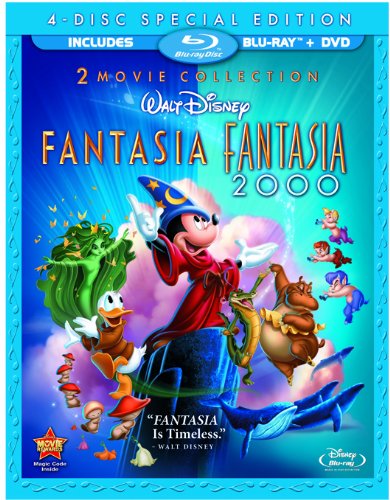
"How do you do? My name is Deems Taylor, and it's my very pleasant duty to welcome you here on behalf of Walt Disney, Leopold Stokowski, and all the other artists and musicians whose combined talents went into the creation of this new form of entertainment, Fantasia. What you're going to see are the designs and pictures and stories that music inspired in the minds and imaginations of a group of artists. In other words, these are not going to be the interpretations of trained musicians, which I think is all to the good."

Just three years after Walt Disney introduced the world to the animated feature in 1937, Uncle Walt was already experimenting with the idea. The man was always fascinated with music as much as he was with animation and the wonderful fairy tales that would become his studio's trademark. It was inevitable that he would come up with the idea of blending music with animation to create something quite unique in the world of entertainment. You have to remember that not only had there only been three years since the first animated feature, but that sound itself in motion pictures was still only a couple of decades old. By 1940 Walt Disney had combined both elements to create something truly magical.

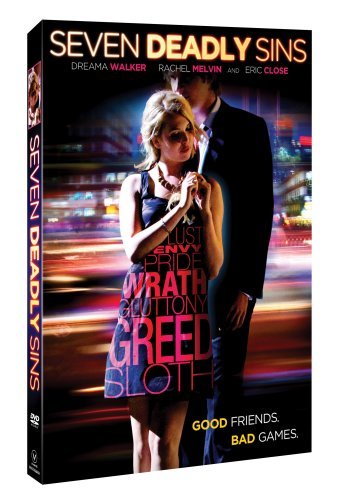
Grace, California is the kind of “small” town that all the young people wish to escape. Why? I suppose it is because they have ambitions for “greater” things. What are their ambitions while they have to stay? To be as catty and backstabbing as possible while living out a teen soap opera existence. Such is the groundwork for Seven Deadly Sins, a two-part mini-series created for the Lifetime network and based on a series of books of the same name. On this DVD the two parts are merged into a monstrous movie (clocking in at over 3 hours).

The story starts when a new girl arrives from Manhattan and uses the fact that she has designer merchandise and a snobby attitude to usurp the throne as coolest girl in school, all the while making a best friend out of the very girl she usurped. As the story progresses we are offered no more than the usual teen drama prattle of high school cliques, “who likes who” and “who betrayed who” which I frankly could care less about. Things do not perk my interest until a central character dies, only to have their ghost linger as the narrator and sometime provoker of events for her still living friends. It is through this implementation of the supernatural that the film desperately tries to tie in the “Seven Deadly Sins” theme, but it is VERY loose ties that it makes. Really, one should not come up with a provocative, albeit over-used, title first and worry about what it actually means to the story and characters second.

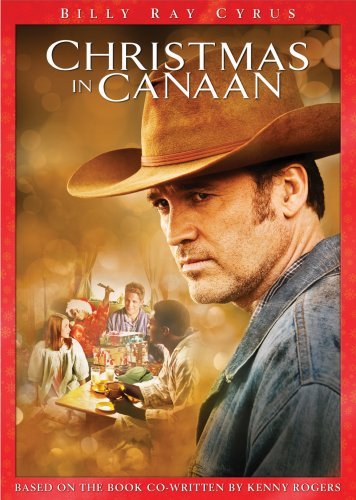
Two young boys start a rivalry that is forged into a friendship by way of helping an ailing dog. As one boy's caregiver passes away, the other boy's family takes him on as one of their own. This family struggles through tough times on their farm as well as tensions from bigoted neighbours because the boy they took into their home happens to be black. Such is the “family bond” thesis of this highly sentimental Xmas film, co-authored by Country superstar Kenny Rogers, and starring country star turned famous dad, Billy Ray Cyrus.

Presented by the Hallmark Channel, it certainly spends much of its time trying to construct those type of “Hallmark Moments” that tug at your heart. The first act (the initial 'unlikely friends' tale) is a bit too cornball for my tastes but darned if it didn't manage to bring in a more interesting story involving a black civil rights meeting, and a racist protest gone violent and nearly deadly. This lead to some interesting choices for the central characters at the climax, which play a slightly unexpected angle on what seemed to be a 'family sticks together no matter' what sort of story. I appreciate it managing to bring me back into the film as it was steering way too steadily into the territory of overly sentimental antics of an impossibly upbeat family...that and Billy Ray's character doesn't seem to visually age despite MANY years going by in the film.

"So come up to the lab and see what's on the slab."

It was 1975. Teamsters President Jimmy Hoffa goes missing. South Vietnam falls. The Superdome opens in New Orleans. Elizabeth Seton becomes the first American saint. Patty Hearst ends her fugitive run. George Carlin hosts the first episode of Saturday Night Live. Phil Collins replaces Peter Gabriel as the lead in Genesis. And The Rocky Horror Picture Show opens to absolutely terrible box office numbers.