1.66:1 Widescreen

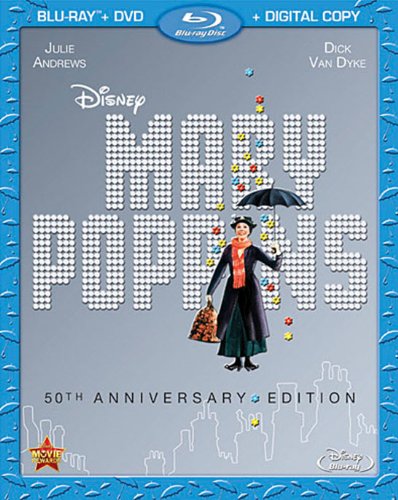
"Wanted: a nanny for two adorable children. If you want this choice position, have a cheery disposition, Rosy cheeks, no warts. Play games, all sorts. You must be kind, you must be witty, very sweet, and fairly pretty. Take us on outings, give us treats, sing songs, bring sweets. Never be cross or cruel. Never give us castor oil or gruel. Love us as a son and daughter, and never smell of barley water. If you won't scold and dominate us, we will never give you cause to hate us. We won't hide your spectacles so you can't see, put toads in your bed, or pepper in your tea. Hurry, nanny! Many thanks!"

And so the call goes out for Mary Poppins. It was 1964 and Walt Disney had a terrible time convincing writer P.L. Travers that Walt Disney Studios should be the ones to bring her flying nanny to life in a feature film. Those trials and tribulations are the subject of a new film out by Disney called Saving Mr. Banks. And so the Blu-ray release of Mary Poppins has been timed to the box office release of Mr. Banks.

This latest incarnation of “90210” ending in its fifth season means it ran for half the length of the original series (which ran for ten). Like the original, the stories of these sexy Beverley Hills residents began in high school. Now we see the sorts of adults they've become and the absolutely ridiculous success they've had. They all started on the top, and somehow manage to claw their way...to the top. Yup...real growth here.

What is this “ridiculous Success” I speak of? Oh, how about the fact that amongst the main characters is a successful club owner (which would warrants even more bragging rights since it's located in California), a software guru (yes, the word “guru” is actually used) and a freaking movie star whose film is #1 at the box office. Incredibly relatable stuff, no?

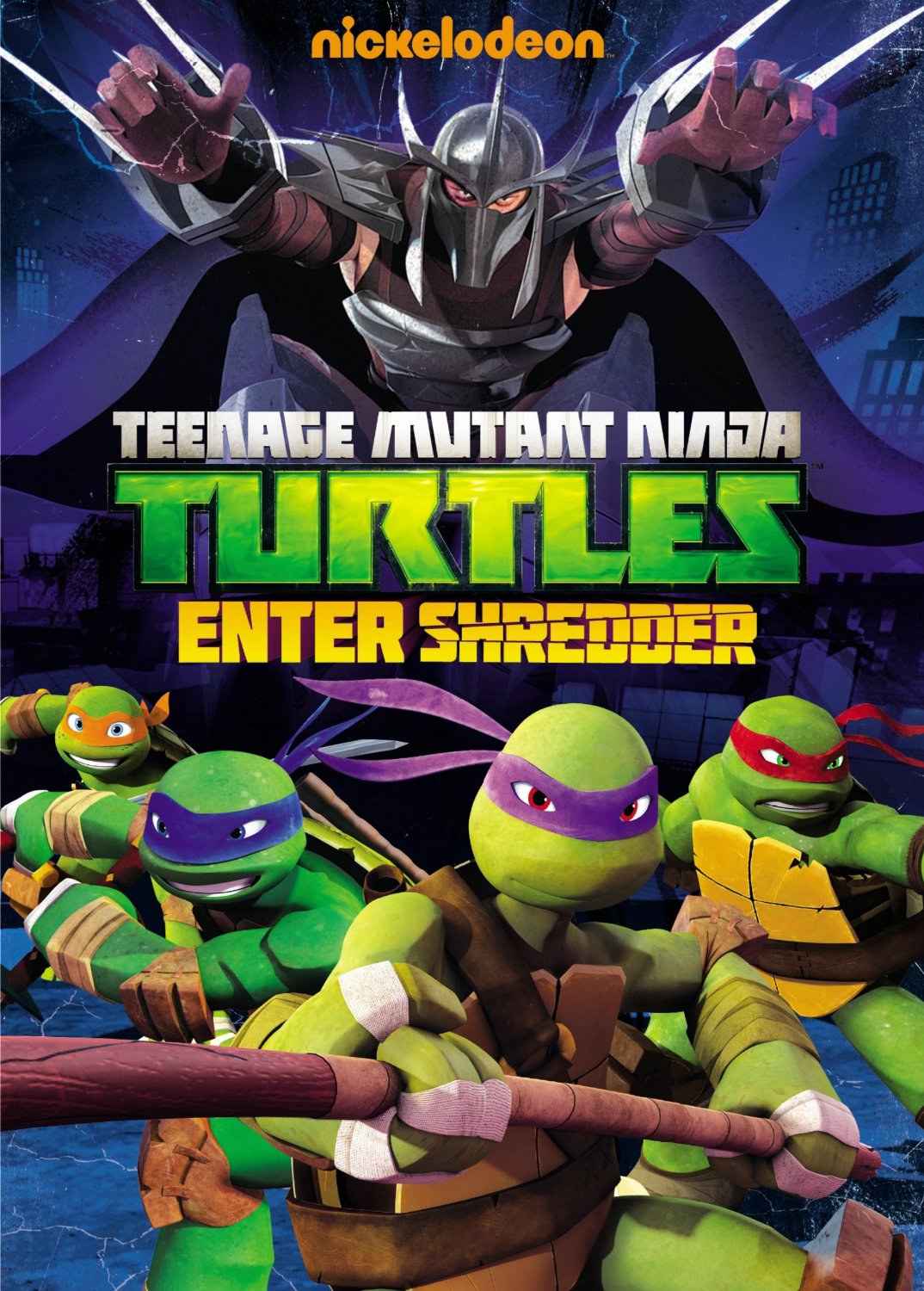
This is the third stab at making an animated series about these radical reptiles. This particular DVD set is the latter half of this show's first season. We are privy to a wide array of toys...er, I mean, characters whose stories are firmly established at this point (roughly 13 episodes into a 26 episode season).

This is the first series presented as a 3D computer animation. The graphics are nicely rendered, but are sometimes hard to see since the movements, especially during fight scenes, are incredibly frantic. I certainly hope the fact that I find the pacing too fast isn’t a sign of old age arriving. The animators have clearly gone through a lot of trouble choreographing a fight that can sometimes have at least a couple dozen characters interacting (a very difficult thing to manage) and I’d appreciate it more if the speed didn’t make me feel like I need to feed the DVD Ritalin.

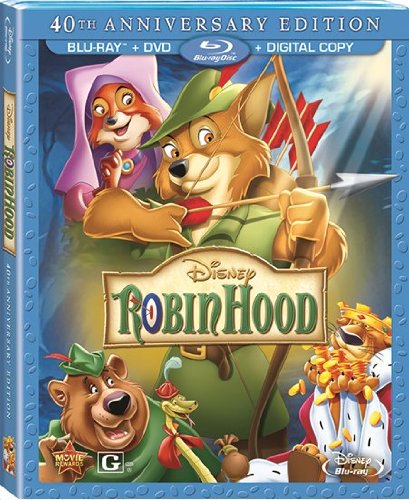
"You know, there's been a heap of legends and tall tales about Robin Hood. All different, too. Well, we folks of the animal kingdom have our own version. It's the story of what really happened in Sherwood Forest."

It didn't even start as a Robin Hood story at all. Walt Disney had many ideas and plans for fables and fairy tales that he hoped to bring to life with a feature animation film. It's no surprise that most of these ideas and plans simply never went beyond the dreaming stage. A few were caught up in production struggles, and remnants of those efforts can still be found in the treasure trove that is the Disney Archives. Some of these projects, however, were reinvented and became something very different from what was originally planned.

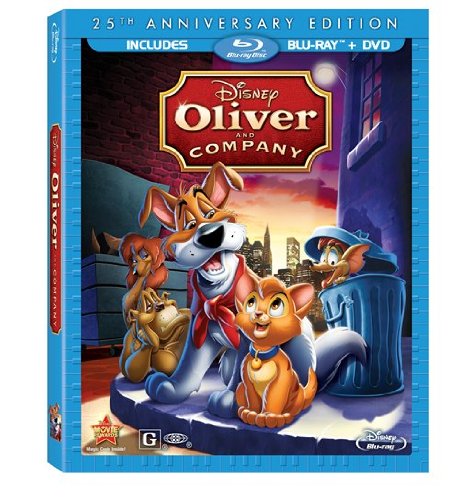
“Once upon a time in New York City…”

Walt Disney might well have been the storyteller of more than one generation of kids. Is it any wonder that when we think of such characters as Winnie The Pooh or Peter Pan our minds conjure the images wrought by Disney animators and not necessarily the classic literature descriptions? That might not be the case with this Charles Dickens story, retold through Disney’s trademark animal point of view. Oliver & Company doesn’t appear to have had the staying power of films both before and after its time. After watching the film again, perhaps for the first time since its release 20 years ago, I can’t imagine why it has never quite caught on. From a popular culture standpoint the film has all of the elements that have led to other more beloved Disney classics. The Dickens story is a familiar one, read by most literature students as a matter of course. Many of the era’s biggest names lent their voice talents to the characters, including Billy Joel and Bette Midler. The songs are about as catchy as anyone might have hoped for. Just what was it that relegated this little seen Disney adventure to the bargain bin of animation classics?

This is the third stab at making an animated series about these radical reptiles. This lone DVD acts as a sampler of seven episodes taken from the middle of its first season, instead of the complete season set. (A common move from Nickelodeon.) These episodes introduce the characters well enough that it will make you curious to see more of what this series has to offer.

This is the first series presented as a 3D computer animation. The graphics are nicely rendered, but are sometimes hard to see since the movements, especially during fight scenes, are incredibly frantic. I certainly hope the fact that I find the pacing too fast isn't a sign of old age arriving. The animators have clearly gone through a lot of trouble choreographing a fight that can sometimes have at least a couple dozen characters interacting (a very difficult thing to manage) and I'd appreciate it more if the speed didn't make me feel like I need to feed the DVD Ritalin.

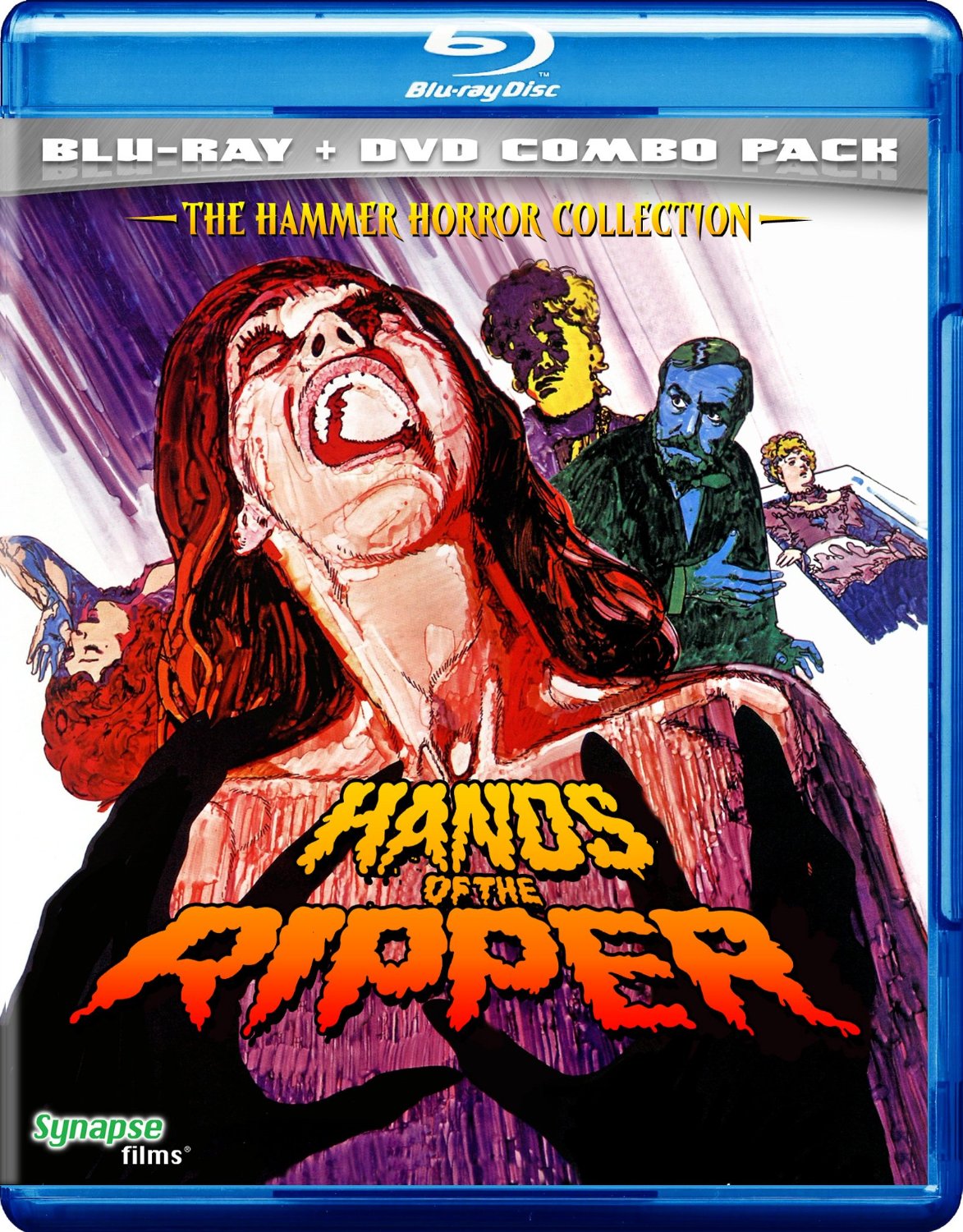
In the 1950's and 1960's Hammer picked up where Universal had left off. They became the studio for the very best in horror films. With names like Lugosi, Karloff and Chaney finally reaching the end of their reign, Hammer offered up the likes of Christopher Lee and Peter Cushing. They resurrected all of the famous Universal monsters in their own image. Now we had a new cycle of Dracula, Frankenstein, The Wolf Man and The Mummy. While the films were somewhat low-budget and released mostly through the drive-in circuit, these films made a bloody splash with horror fans all over the world. But by the time the 1970's had begun, the studio was falling behind in the horror genre. Anthony Hinds had left the studio, and with him went some of the passion for the horror films that made Hammer famous. The studio heads became more interested in other kinds of films, and the horror department languished for a time.

While the studio was still bringing back the monsters that had made it famous, there was a decided effort to return to their own roots with the psychological thriller, and one of the best turned out to be Hands Of The Ripper. Hammer was certainly in decline, but Hands Of The Ripper had the advantage of being shot at England's famous Pinewood Studios where other more illustrious films were also in production at the time. Sets were utilized from The Private Lives Of Sherlock Holmes and more notably James Bond. M's office would be completely recognizable here, complete with the padded door. These sets and production advantages allowed Hands Of The Ripper to go beyond the cost-cutting measures in place at Hammer during this time. It ends up being one of the studio's richest and most atmospheric films.

"All this has happened before and will all happen again. But this time it happened in London. It happened on a quiet street in Bloomsbury. That corner house is the house of the Darling family, and Peter Pan chose this particular house because these were people who believed in him..."

In 1953 with a little help from some Walt Disney magic, generations of children, and adults, of course, would learn to believe in the boy who never grew up. Peter Pan began in the imagination of writer J. M. Barrie. He appeared in a number of works from the Scottish author beginning in 1902 with The Little White Bird. The character had always been a favorite of Walt Disney himself, and it was originally intended as his second animated feature following Snow White. It became quickly apparent that the technology wasn't quite where he needed it to be to tell the story he wanted to tell. It was put on a shelf, but never forgotten. The rights to the character were willed to the children of a Children's Hospital in London, and it was from there that Walt managed to obtain the film rights for the animated feature we have today. Peter Pan has enjoyed success in pretty much every medium possible. There have been hugely popular stage productions where Peter was usually played by a woman. The character has appeared in film, music, comics, television, radio plays and, of course, printed form. He's an endearing and certainly enduring character who has now added high-definition Blu-ray to the list.

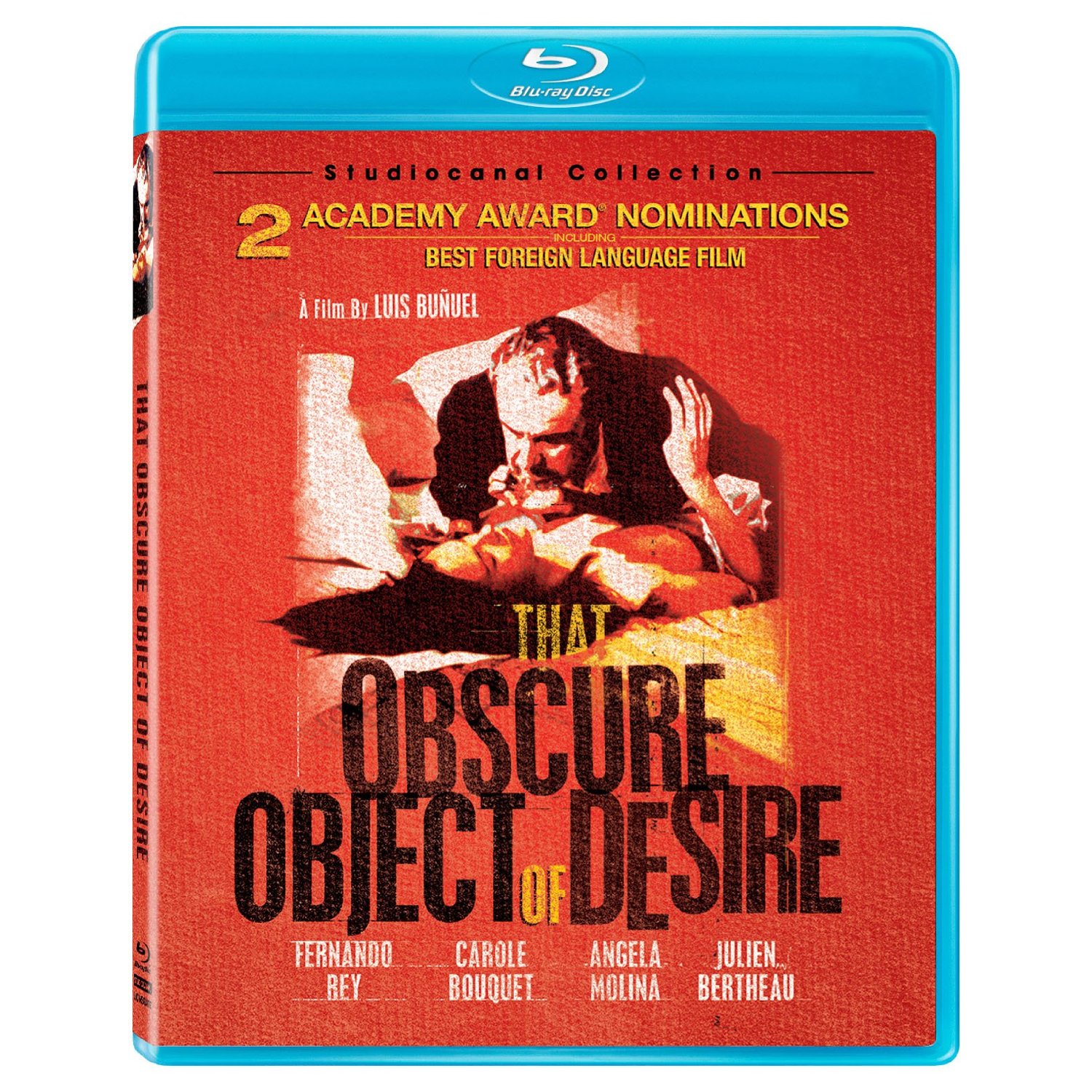
“I’ve changed a lot. I’m not the same woman.”

Early on in Luis Buñuel’s surrealist gem, a mild-mannered older gentleman named Mathieu douses a beautiful, battered woman with a bucket of water as she desperately attempts to board the train he’s riding. His fellow passengers are stunned, but also understandably intrigued. What possible sequence of events could’ve led Mathieu to this cold and cartoonish gesture? It’s an irresistible hook, and Mathieu proceeds to regale the other travelers — and, by extension, the movie’s audience — with the tale of “the foulest woman who ever lived.”

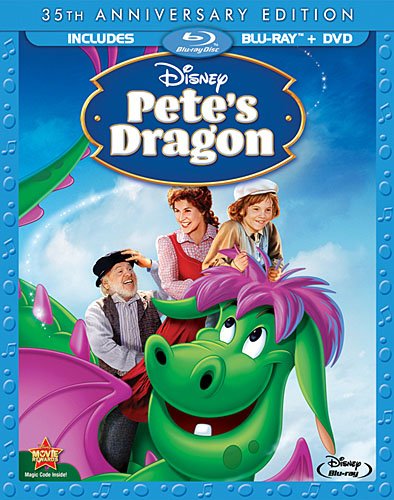
“A dragon. A dragon. You bet we saw a dragon. So big and brave he came to save a village in distress. He kept the ship from crashing when he heard the SOS. He faced a group of villains and he fought them with success…”

When Walt Disney Studios released Mary Poppins, the entertainment world was turned on its ears. The integration of live action footage with animation had never been done with such success before. The studio that nearly singlehandedly perfected modern methods of animation was also the studio that learned how to combine it almost seamlessly with real breathing actors. With the release of Pete’s Dragon many years later, audiences couldn’t wait for a peek at how far Disney had perfected the process in those years. While as children we got a big kick out of Pete’s Dragon, anyone looking for the latest in integration technology was in for a dragon-sized disappointment. The creature effects bore no resemblance whatsoever to that earlier technique. The animation itself was crude, by Disney standards at least, and never, not for a second, appeared as if it existed in the same place as the rest of the film. The beast’s green color would fluctuate in hue as well as brightness. There were many obvious mismatches where the two media connected. Even many of the actors’ sightlines were far off the mark. Walt Disney Studios took several steps backwards with the 1977 release of Pete’s Dragon.