1.85:1 Widescreen

Follow Doogal and friends as they try to save their lush green world from the clutches of the evil jack-in-the-box Zeebad (Jon Stewart) in this CGI family film that completely misses the mark. Though G-Rated - and obviously of inferior intellect - the film tries to be witty and smart with a ton of stale pop culture references its target audience will not come close to grasping. Sure, the adults will get them, but once they do, the question becomes, what do we do with them? Another "Can't Touch This" MC Hammer referen...e? "Wax-on, wax-off" - Karate Kid anyone? "My name is Neo" - did we need another reference to a trilogy where only one of the films was even remotely worth watching? This tripe is the kind of family fare that makes adults cringe in their boots at the thought of having to sit even 77 torturous minutes with these bloated celebrities trying to be funny under the guise of silly looking animals that aren't even that cute.

If I had to find a strong point, I would say Judi Dench's narration is about all the film has going for it. Back to the bad - Kevin Smith's moose character hardly says anything throughout the course of the film, but he does offer up the number of expected fart jokes with his overenthusiastic gastro-intestinal behavior. While Doogal, the long-haired puppy dog intent on saving his master Florence (Kylie Monogue) from the ice block prison created by Zeebad, is a cute little creation, the child star providing his vocals completely ruins any endearing qualities by the mere movement of his lips. This film is truly abysmal. I can't imagine anyone liking it for two reasons: 1) It tries to outsmart its target audience. 2) It does so by antiquated pop culture references, which will completely turn off the only demographic it has left to please. Avoid at all costs.

Synopsis

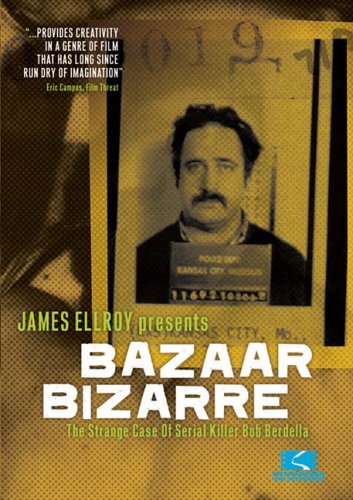
This is an odd fish. It’s a documentary about Bob Berdella, who raped, tortured, killed and dismembered six men in the late 80's. Director Benjamin Meade combines interviews with the investigators, the prosecutor, a survivor and Berdella himself with gruesome recreations of the crimes, an expectedly hard-boiled narration from James Ellroy, and incongruous performances of songs by the rock band “Demon Dogs.” The result is certainly interesting, but it jumps around so much that it can become h...rd to follow (structurally, it resembles Glen or Glenda? done by someone with talent). There’s a lot of raw power here, somewhat diluted by the songs that, though catchy enough, are more puzzling than anything else by their presence.

Written for the screen and directed by Julian Fellowes (Gosford Park), Separate Lies tells the story of James (Tom Wilkinson, Batman Begins), a high powered lawyer in London who lives in the countryside with his wife Anne (Emily Watson, Breaking the Waves). They have the perfect English house and a dog to match. One day, Anne meets William (Rupert Everett, Shrek 2) and has an affair with him, which turns the trio's lives around in a way that they'd never expect.>

Treading into mild spoiler territory here, so scroll down!

Synopsis

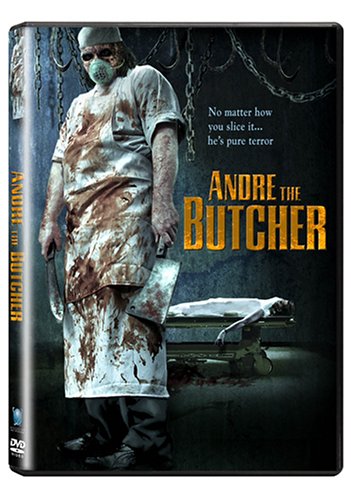
On their way to a regional competition, a group of cheerleaders have a car accident, and wander into the rural landscape to look for help. They come across an apparently abandoned house. Two escaped convicts also find that house, and take two of the girls hostage, but soon everybody has a bigger problem in the shape of a hulking killer, Andre the Butcher, who has all sorts of supernatural powers as well as plenty of sharp blades.

In Stephen Sommers’ Van Helsing, we meet Gabriel Van Helsing (Hugh Jackman) who is a professional monster-killer with a sidekick named Carl. Van Helsing must first track down Mr. Hyde who lives in the Notre Dame Cathedral and, sometimes, likes to venture outside for the occasional murder here and there. After completing this basic mission, Van Helsing is sent to the famous Transylvania to deal with Frankenstein’s Monster where he meets Anna Valerious (Kate Beckinsale). Anna and her brother Velkan represent the...last of nine generations of a family whose one goal is to rid the world of Dracula. Naturally, Anna is suspicious of this Van Helsing character but eventually teams up with Helsing to kick some butt.

It amazes me how Sommers convinced Universal to grant him well over $150 million dollars to make this film. I suppose this is because Sommers’ last two adventure based films, both Mummy films, were great summer adventure flicks which both made Universal some nice coin. However, Van Helsing never seemed to click with audiences as it just made over $160 million dollars domestically. Certainly not the huge success Universal or Sommers were hoping for. Some feel the reasoning was the lack of star power, but was Brendan Fraser really that much of a bankable star? Some feel that Van Helsing focused too much on CGI with all the various amounts of monsters that prowled the screen. I tend to lean toward the latter as Van Helsing seemed like 132 minutes of CGI effect after CGI effect.

It seems like I keep saying this, but here we go again... Jennifer Anniston is way too good of an actress to be stuck in this film. Now, that's certainly not to imply that Shirley Maclaine isn't fantastic as well, but that's a given. Anniston is clearly the star of this film, and it's easy to see what attracted her to it. Not only is it a romantic comedy directed by Rob Reiner, but the premise is a really clever one. While in town for her sister's wedding, Sarah (Anniston) discovers that her family was the inspirati...n for the book The Graduate. How could something with a plot this clever not work out?

This film may be the ultimate example of a great premise wasted. There are so many different things wrong with this film, but many of them can be boiled down to this; too many coincidences. Scene after scene is filled with conversations that work out in just the right way so as the actors get just the information they were looking for at just the right time. The plot is forced on the story, instead of the story leading the plot. The result is a movie that is a big, clumsy train wreck, instead of the fascinating and smart story that it should have been.

The Fugitive, since its’ original release in 1993, has always been seen by a majority of people as the defining thriller of the 1990’s. The film stars Harrison Ford as Dr. Richard Kimble. Kimble, a very well known Chicago doctor, has just been framed for killing his wife. He claims a one-armed man killed her, which prompts nearly everyone to laugh at him. Kimble is immediately arrested and sentenced to death in a cold courtroom scene that doesn’t even give Kimble time to defend himself.

Kimble is th...own onto a bus that is to take him to his pending execution. Along the way, an inmate starts to choke, which turns out to be a distraction as he breaks free. A melee ensues and the driver of the bus, naturally, is shot causing the bus to overturn. The bus rolls and rolls down a big hill finally coming to a stop on a set of railroad tracks. Everything seems fine, until one of the guards hears an oncoming train. Kimble, being the type of man he is, decides to save himself and a guard all while literally escaping an oncoming train crash. This sequence, even though it has been over 11 years since I first saw it, it still one of the more impressive action sequences in modern film.

Before we get into it, just a quick recommendation to check out "Making Movies" by Sidney Lumet, the director of Network, Dog Day Afternoon and 12 Angry Men. While it's a quick read at 220 pages, it talks about dealing with the actors, rehearsal, a day on the set, and other various forms of a production, and includes stories that happened on his sets also. It's an intriguing book, worth checking out at your local bookstore. A "Ryan's Book Club" pick, if you will.

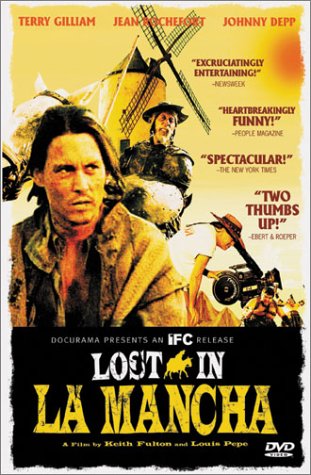
Then there's Lost in La Mancha, Terry Gilliam's documented efforts to make a film called The Man Who Killed Don Quixote. Keith Fulton and Louis Pepe had worked with Gilliam previously to film a documentary for Gilliam's 12 Monkeys, entitled "The Hamster Factor and Other Tales of 12 Monkeys", and whose help was enlisted to film a behind the scenes documentary here. The movie was Gilliam's vision of Cervantes "Man of La Mancha", and something he'd tossed around since 1991. He even came close to starting a production in 1999 before financing fell through. However this time, he had solid financing, and a cast that included Johnny Depp (Fear and Loathing in Las Vegas) and French actors Jean Rochefort (playing Quixote) and Vanessa Paradis. The film notes the problems that previous directors had in shooting a film on Quixote, and features footage of a film shot by Orson Welles that saw a theatrical release, helping to bring life to the aptly named "Curse of Quixote." Gilliam's Hollywood reputation is discussed as well, including the struggles surrounding the making of Brazil and The Adventures of Baron Munchausen. Gilliam is quick to point out on Munchausen there was a producer who promised the stars and the moon, but simply didn't have the budget for what he wanted to do, and Gilliam's name was tarnished from the experience. Being a veteran of such battles almost gives Gilliam a foresight into how his productions will turn out, as 7 weeks before the production starts, he says that there's "a lot of potential for chaos." 3 weeks later, Rochefort arrives, with a newly learned English accent he is eager to show off. As the production is due to start, Rochefort has some "phantom" back pains, so he does not board the plane from Paris to Madrid (where the production is housed). During the weeklong delay, Deep and Paradis arrive and start with screen tests and other work. Rochefort does arrive, and the production starts. Here's where the curse kicks in.

Synopsis

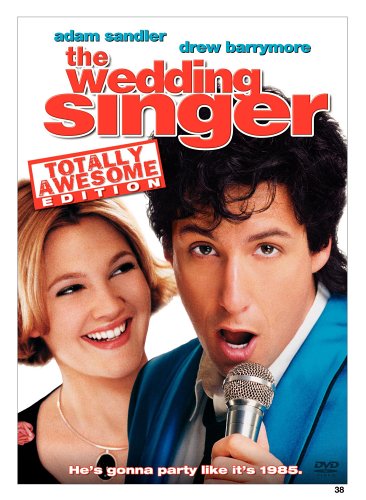
Adam Sandler plays Robbie Hart, wedding singer in 1985, making a living covering other people’s songs, but happy with his life, until he is dumped at the altar. Total professional meltdown then ensues (in the big money scene that everyone saw in the trailers). Hope for romance still exists, however, in the person of Drew Barrymore, a waitress about to be married to a total jerk.

One reviewer accurately described The White Countess as having "echoes of Casablanca." More than that, this last production from Merchant-Ivory seems like it lifted its premise entirely from the classic Bogart film. But at the same time, there is enough different about this colorful and mesmerizing piece to distinguish it as something original - or original enough. With murmurings about that Hollywood may one day remake Casablanca (as it seems they have everything else), I hope and pray the gods ...f better judgment will win out, and let Countess stand as the sole benefactor of such a superior motion picture. At its core, this Ralph Fiennes vehicle is about two people, fallen from glory, who realize the only chance they have in a world quickly going to Hell is the love and respect they share for each other. The film keeps such potentially boring material - and for those that scoff at such an idea, let it be known Merchant-Ivory didn't always knock their films out of the park - fresh and interesting through deep characterization and beautiful imagery. The world the production designers and director of photography Christopher Doyle create is enchanting beyond belief. Once you start watching, it's nearly impossible to remove your eyes from it. In short, these folks make Director James Ivory's job too easy; but it's the audience that reaps the benefits.

Of course, whether the production crew does their job or not, Fiennes always gives a performance worthy of an Oscar - and is subsequently always shunned for his contributions. I would be amiss if I didn't point out just how much his presence adds to the enjoyability - and the credibility - of the film as a whole. He is one of few actors today with that old-time Hollywood quality represented in actors such as Jimmy Stewart or Cary Grant. Let me just say I realize those two men have a world of difference between them, but their best qualities speak much on the kind of incredible actor Fiennes is. Whether he's playing tyrannical Nazi (Schindler's List), vengeful husband (The Constant Gardener), hopeless junkie (Strange Days), or meek blind hero with a sacrificial heart (The White Countess), he always turns in performances worthy of Oscar gold. As you can guess, his rendering of Countess's Todd Jackson is nothing short of amazing. He idolizes, looks out for, and loves the Countess Sofia (Natasha Richardson, with her usual solid performance), and seeks to pick her up from her fallen status in 1930's Shanghai. Pursuing his dreams, he starts a nightclub (shades of Casablanca), where Sofia takes center stage as the object of the club's affections - as well as his own. As the final act begins with the Japanese invasion of Shanghai, we see more shades of Bogart's film in the sacrifices Jackson makes to insure the well-being of the woman he has grown to love. He is content to die, so long as he knows he's done all he could for Sofia and her child (who reminds him of his own daughter, now deceased from the same bombing which claimed his eyesight). But The White Countess is a more optimistic picture than its subject matter will lead many to believe, and it manages to leave viewers with a few surprises and a bit more warmth than they may have expected going in. This film should have been Oscar material, at least for the acting and production value; it is, in my opinion, the fourth best film of 2005.