Posted in: No Huddle Reviews by Gino Sassani on December 9th, 2022
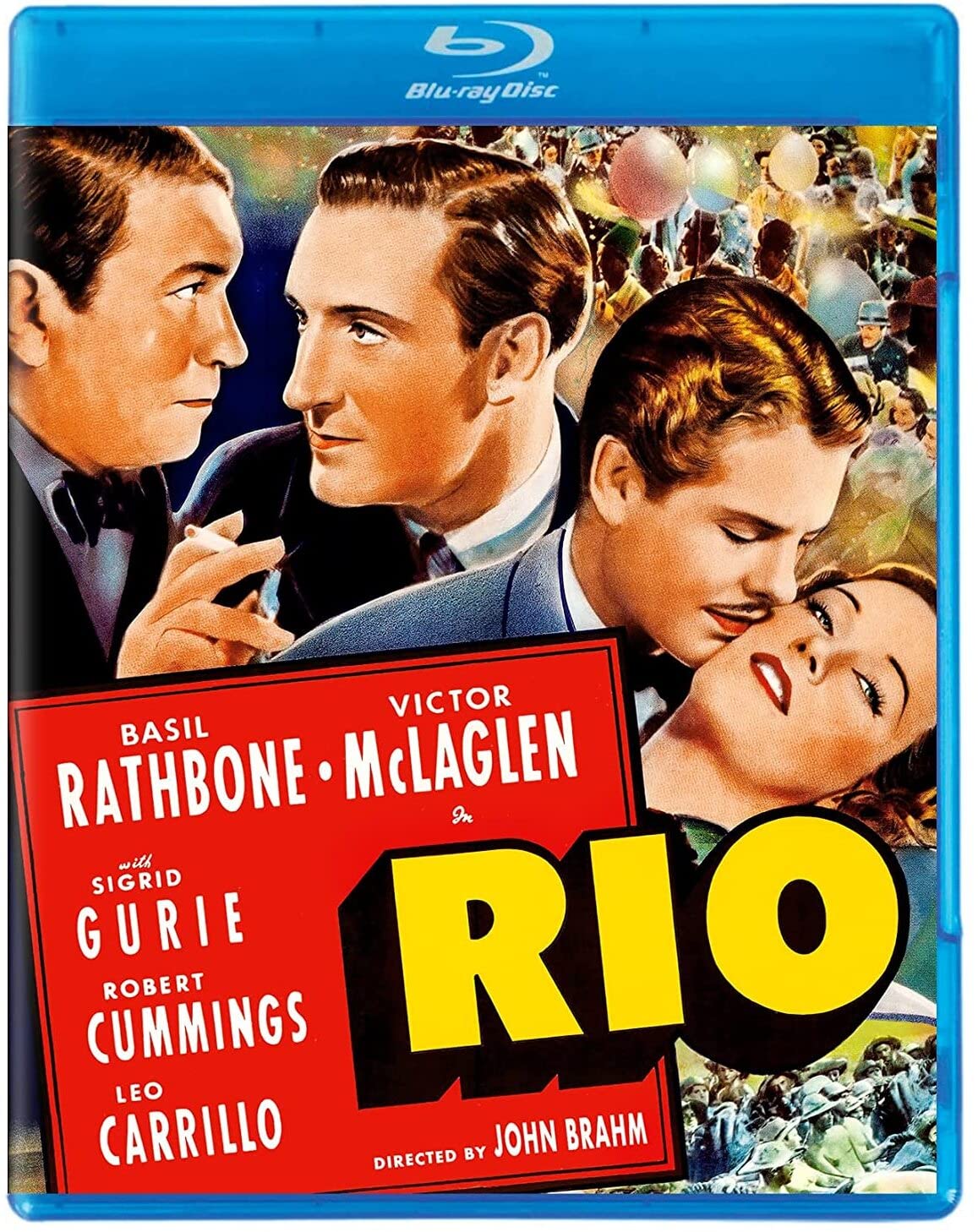
“In the 1940’s, a new genre – film noir – emerged from the world of hard-boiled pulp magazines, paperback thrillers, and sensational crime movies. These films, tough and unsentimental, depicted a black and white universe at once brutal, erotic, and morally ambiguous.”
Film Noir officially started in the 40’s, but the movement was well underway by the early 30’s. You can trace its roots to the Great Depression and the arrival of the dime pulp magazines. These were highly stylized, mostly mystery stories that provided cheap escapism for the masses who were not having a good time of it. Writers like Raymond Chandler crafted the mold that was easily transferred to the silver screen. These were low-budget films that were intended to be second billing with the more mainstream releases. They were shot quickly. Many have a very flat look, created intentionally. The lighting was often minimal, crafting odd shadows and unusual textures. The dialog wasn’t intended to be natural or realistic. These characters usually spoke in clichés and had names like Mac, Griff, or Dollface. There was often a shade of gray to these characters. Good and evil were not always so clear-cut. Gangsters became common themes of the genre. And while the dialog might have been cheesy, the cinematography was often gritty and almost ultra-realistic. At times the films played out like documentaries, often including narration. The narrator would always be a voice of authority; often film-reel stars were used. The films were heavily influenced by German Expressionism, perfected by the likes of Fritz Lang in the silent era and carried over to more modern themes. The films always contained a steady supply of stock characters and actors. It was smoky rooms and neon lights. It was a reflection on the times. It was Film Noir.
Posted in: No Huddle Reviews by Michael Durr on December 6th, 2022
Hopefully, most of you have enjoyed my review of Unidentified, the first in a series of three films directed by Bogdan George Apetri set in a small town in Northern Romania. It is a nontraditional trilogy, as all three stories share the same universe but do not require the viewer to watch them together or in a certain order. Well, today I have received the second film in this series, entitled Miracle. Since they were filmed at the same time, one would hope that it is just as good and just as brilliant as the first film. Let's take a look and see what it has to offer.
We see a girl crying over some holy water. Her name is Cristina Tofan (played by Ioana Bugarin). She is dressed in clothes that resemble those of a nun and is staying at the covenant. Sister Mina (played by Nora Covali) enters and hands her a bag with a cell phone and tells Cristina to call. She does so, but there is no answer, and she tries again. Again, no response. The car is waiting by the side gate, and Cristina prays for safety.
Posted in: The Reel World by Brent Lorentson on December 3rd, 2022
With Thanksgiving in the rearview mirror, that can mean only one thing; that Christmas is just around the corner. Normally this time of year the theaters are filled with movies that are either A) jockeying for awards consideration or B) are big-budget blockbusters, and then if you are lucky there are a few holiday films sprinkled in for good measure. It has been a while since there has been a holiday film that has appealed to me. Some of the best ones in recent memory are Better Watch Out (2016) and Krampus (2015), so I think it is fair to say we are long overdue for a great Christmas film. At first glimpse, Violent Night doesn’t look the part of what you’d traditionally call a Christmas film, but even the trailers for the film market this as a mash-up of Die Hard meets Home Alone, and that’s exactly what you get, and it is gloriously violent and heartwarming.
When we first meet Santa (David Harbour), he’s taking a break from delivering presents and is in a bar enjoying some drinks. This isn’t the cheerful Santa with rosy cheeks and filled with the ho-ho-ho holiday spirit; instead he’s a jaded and broken-down man who has become cynical about what the world has become. This opening scene does a fantastic job of setting the tone of the film, and seeing Harbour in the full Santa costume and makeup just makes me happy, as much as I love him in Stranger Things, I think I’m always going to see him as Santa because of this film.
Posted in: No Huddle Reviews by Dan Holland on December 3rd, 2022
France is a country that is absolutely saturated by a rich cinematic history. Beginning in the late 1890’s with the Lumière Brothers and their Cinématographe, traveling to the middle of the century with Cahiers du Cinéma, the French New Wave, and Cinéma Vérité; all the way to more contemporary French cinema. The country still makes incredible waves that influence the film industry. Interestingly, the term “film noir” came directly from French film critics, commenting on the low-key lighting used in many of the gangster films of that time period, calling them “black films” or “dark films.” It wasn’t until the 1970’s that Auteurs began to intentionally make film noir, however, the characteristics of classic film noir were not lost on French filmmakers who consumed these “dark films” as means of inspiration.
Le roughe est mis/Speaking of Murder
Posted in: No Huddle Reviews by Brent Lorentson on December 3rd, 2022
Director William Wyler is a bit of an icon when you look back in Hollywood history. He’s a director with such classics under his belt as Roman Holiday, Funny Girl, and then of course Ben-Hur. But before he filmed those, he did a smaller and more intimate film called Detective Story. This isn’t a big spectacle, but instead it is a gritty drama that takes place over a single day in a New York police station. The film is so simplistic in scope that it’s no surprise that it was originally a stage play, but it’s Wyler’s direction that elevates this film to something bigger. Then there are the remarkable performances from Kirk Douglas and the rest of the cast that make this film better than the potential snore-fest this could have been. Jim McLeod (Douglas) is a hard-nosed cop who likes nothing more than to take the criminals down in his city, to the point that he doesn’t realize it’s been days since he’s been home and seen his wife. He’s about to head out when he has an encounter with a criminal that sets McLeod off, and he attacks then criminal in custody. The altercation is bad enough to send the criminal to the hospital and jeopardize McLeod’s career. This is just one of the stories going on in the police station. There’s also a woman who’s there after her husband assaulted her, a shoplifter who finds himself in a bind but has a female companion that is trying to help him out, then there is a burglar with an odd sense of humor. All these stories are unfolding and somewhat overlap as the officers do what they can to help each other out, but the main focus seems to be on McLeod.
The drama between McLeod and his wife Mary (Eleanor Parker) is certainly the more interesting story, though I feel audiences these days would be clawing at the screen complaining about how misogynistic McLeod is. It’s their conflict that seems the most profound, though, because at the root of it all this is exploring what happens when couples keep secrets from the other, even if the secrets are kept for good reason. This is what makes this film feel timeless despite being released in 1951. Then factor in the police brutality storyline, and this seems as though it’s been ripped from the modern day headlines. The way these characters are written, it’s easy for the audience to side with one or the other, though there is a dialog exchange that stuck with me where Mary objects to being called a “tramp”, and McLeod’s response to how he interprets the meaning of the word speaks volumes to the time and the characters.
Posted in: No Huddle Reviews by Gino Sassani on December 1st, 2022
"I'm going to make you an offer you can't refuse."
Everybody loves an origin story. The comic book films are loaded with them. Fans have this unquenchable curiosity. We want to know how our heroes became what they are. The same can be said for our favorite movies. I recently read It's Alive. It was a look at the making of Frankenstein through the eyes of the various principals. But it was also a story of the studio system at the time of the early 1930's. I spoke to the author, Julian David Stone, and we talked about how much that story is an integral part of the story of that one particular film. You can listen to that chat here. Now Paramount + has given us a limited series event that takes us back to the late 1960's and early 1970's and takes a dramatic look at the making of The Godfather. Appropriately enough, it's called The Offer, and it just might be the best season of television I've seen in at least a decade.
Posted in: The Reel World by Brent Lorentson on November 30th, 2022
I’ve seen Bones and All twice now, and I have to say this is certainly one of the standout films of 2022. A road film that plays out as a romance between two young cannibals trying to find their place in the Reagan era America, well, it’s just the strange mix that works. Horror isn’t supposed to be this sweet, and romance isn’t supposed to be so gruesome, but director Luca Guadagnino manages to put together a film that is so good that I believe it has a real shot at winning some prestigious awards, and it is so well deserved. I’m going to recommend going into this knowing as little as possible. Just simply allow the film to expose its dark and bloody underbelly to you, and just let yourself care for these monsters that are simply trying to find their place in the world and in the process even fall in love.
Maren (Taylor Russell) is a teen that has grown up with her father. The pair have traveled city to city having to use different aliases because Maren is different; she’s an “Eater”. Eaters are slightly different from your typical cannibal; an Eater does so because it’s a need, sort of like a vampire, and they also have a heightened sense of smell, which comes in handy when coming across other Eaters. When Maren attacks a girl at a sleepover, it’s time for her and her father to go on the run again, though the dad has decided he’s done all he can for his daughter and he leaves her behind with some money, a cassette tape, and her birth certificate. This sets Maren on her path to finding out who her mother is and on her journey to understanding who she is and along this journey she meets some unique and frightening characters along the way.
Posted in: Podcasts by Gino Sassani on November 30th, 2022
If you have been coming to the site for any length of time you know we also pay tribute, from time to time, to the written word. I'll often share the title of a good book when I find them. We also interview these writers when chance sends them our way. We scored 2 for 2 with Bruce McAllister. He's compiled a wonderfully enjoyable collection of some of his best short stories called Stealing God And Other Stories. He's the kind of writer you might find at your local university giving a master class on the craft. I had the opportunity to speak with him just after Thanksgiving, and the conversation was rewarding. His commentary on writing is insightful and compelling. You should give his collection a read. You won't regret it. I think you'll want to hear what he has to say on the subject of writing and Stealing God And Other Stories. Just bang it here to listen in on my chat with Bruce McAllister.
You can also explore the world of Bruce McAllister by going to his website Here
Posted in: No Huddle Reviews by Gino Sassani on November 30th, 2022
"There is an old saying that blood is thicker than water."
We've had Keeping Up With The Kardashians, Gene Simmons with his Family Jewels, and even Snoop Dog's Father Hood. It's become a bit of a trend to follow these celebrity families around and watch the drama of their privileged lives unfold on our television screens. You might think it's a relatively recent phenomenon, but would you believe they were doing it back in the infant days of television when we followed around a musician named Ozzie and his wife way back in 1952? No, we're not talking about Ozzie Osbourne and his family. I'm talking about Ozzie and Harriet Nelson. They were television's darling family before we ever heard about Lucy and Desi. The show actually started on radio like many of the fledgling industry’s early hits including the likes of Gunsmoke. Four years after the radio brought us The Adventures Of Ozzie And Harriet, they moved to television. While their two sons were played by actors on the radio, both David and Ricky Nelson joined the television show, and it went on to make television history, breaking records, some still held today. It was the first television series to ever hit 10 seasons. It lasted from 1952 to 1966 with 436 episodes. Until The Simpsons, it was the longest running scripted television comedy and remains still the longest live-action scripted comedy ever on television. And while the stories were, of course, fictional, most aspects of the show were quite real. Their television home was modeled after their real home. Many of the family's life stories found their way to the series. The four family members were quite real, and you just couldn't fake these relationships.
Posted in: No Huddle Reviews by Brent Lorentson on November 29th, 2022
Some movies are simply timeless. The Apartment (1960) is one of those films that I feel still holds up today and is still rightfully considered a classic. Then there are films like Peking Express (1951) that may have been good for their time, but my experience with the film just felt like a chore I couldn’t wait to finish. It’s not that the film did anything wrong. It was shot well, had decent acting, and the story was simple, but it just didn’t grab me. I like older films. I never had a problem with B&W films, but I guess to simply put it, this one just didn’t do it for me. That’s not to say that this film is bad. It just wasn’t my cup of tea, I guess you could say. The focus is mostly on Dr. Michael Bachlin (Joseph Cotton), a doctor who works with the World Health Organization who is traveling from Shanghai to Peking. No this isn’t a coronavirus-related trip, but instead it’s about a group of people trying to flee the Communist-ruled areas out of fear of being taken prisoner and killed. On board the train, Michael runs into his former lover, Danielle (Corinne Calvet). The romance and tension that builds between Michael and Danielle definitely gave me vibes of a poor imitation of Casablanca, but on a train. This could have worked if only the characters were better developed.
There’s a little bit of mystery when a woman is nearly killed on the train, and Michael suspects that it is her husband that is responsible. Granted, I’m not sure if this film taking an Agatha Christie route would have helped, but when the film shifts gears out of nowhere to the train being held captive by a militia group, things sort of improve.