1951 was a year that spawned some major classic films. There was An American In Paris, A Streetcar Named Desire, The African Queen, and A Place In The Sun. Of the four mentioned, the one I hadn’t seen and honestly was oblivious to was A Place In The Sun. While I do appreciate many classic films, I don’t have an answer for my ignorance of the film, and with a stacked cast of Montgomery Clift, Elizabeth Taylor, Shelly Winters, and Raymond Burr, I was more than happy to check out this film and review it on its 70th anniversary. I went into this film knowing as little as possible, only knowing about the cast and the director George Stevens, a man with an impressive resume as a director as well as a cinematographer. This only flummoxed me further about how this film had managed to escape me for so long.

The film opens up with George Eastman (Montgomery Clift) hitchhiking along the side of a busy highway. Behind him we see a large billboard advertising Eastman swimwear. At the time we don’t know that George’s uncle is the owner of the company, nor do we recognize the significance of the imagery. Before a word is even spoken,, the director has already given us so much and we don’t even realize it. It’s because of this I’m already looking forward to revisiting this film, but I’ll try not to get ahead of myself. George has made this big move to get away from his poor family and hopefully find success in his uncle’s factoryThe uncle does care about family but also doesn’t believe in handouts, and this is how George winds up on the factory floor where he meets Alice Tripp (Shelly Winters). There’s a policy about dating coworkers, but the two budding lovebirds do their best to keep their relationship a secret. Everything is going smoothly, that is until he meets Angela Vickers (Elizabeth Taylor) at a high-society dinner. Is this a romance that simply melds into a story of a man that falls in love with two women? Well, in simple terms, yes, but this film shows just how complicated things can get when you are in love with two people, not to mention struggling to move ahead in society.

"We all have secrets."

Right from the jump there's a lot to like about The Night House, directed by David Bruckner and starring Rebecca Hall. It's the kind of horror film that derives its scares from the point of emotional loss that cuts to the center of the kinds of things that really scare us all. From that point the film immerses us deep into the kind of atmosphere that doesn't come from gory special effects or even some of the nicely placed jump scenes. Instead Bruckner engineers his cinematography to play slight tricks on our eyes that immediately reveal some clever usages of the film's set designs and an Escheresque distortion of our point of view. It's the kind of film that demands you pay very strict attention and then rewards you for the effort. Sounds like a great movie, yeah? Unfortunately, the screenplay, written by Ben Collins and Luke Piotrowski, who both penned the now shooting Hellraiser reboot/sequel, is the glaring weak link that caused me to leave the theater repeating, "I almost loved it."

“The past can haunt a man.  That’s what they say. But the past is just a series of moments. Perfect … .complete … a bead on the necklace of time.”

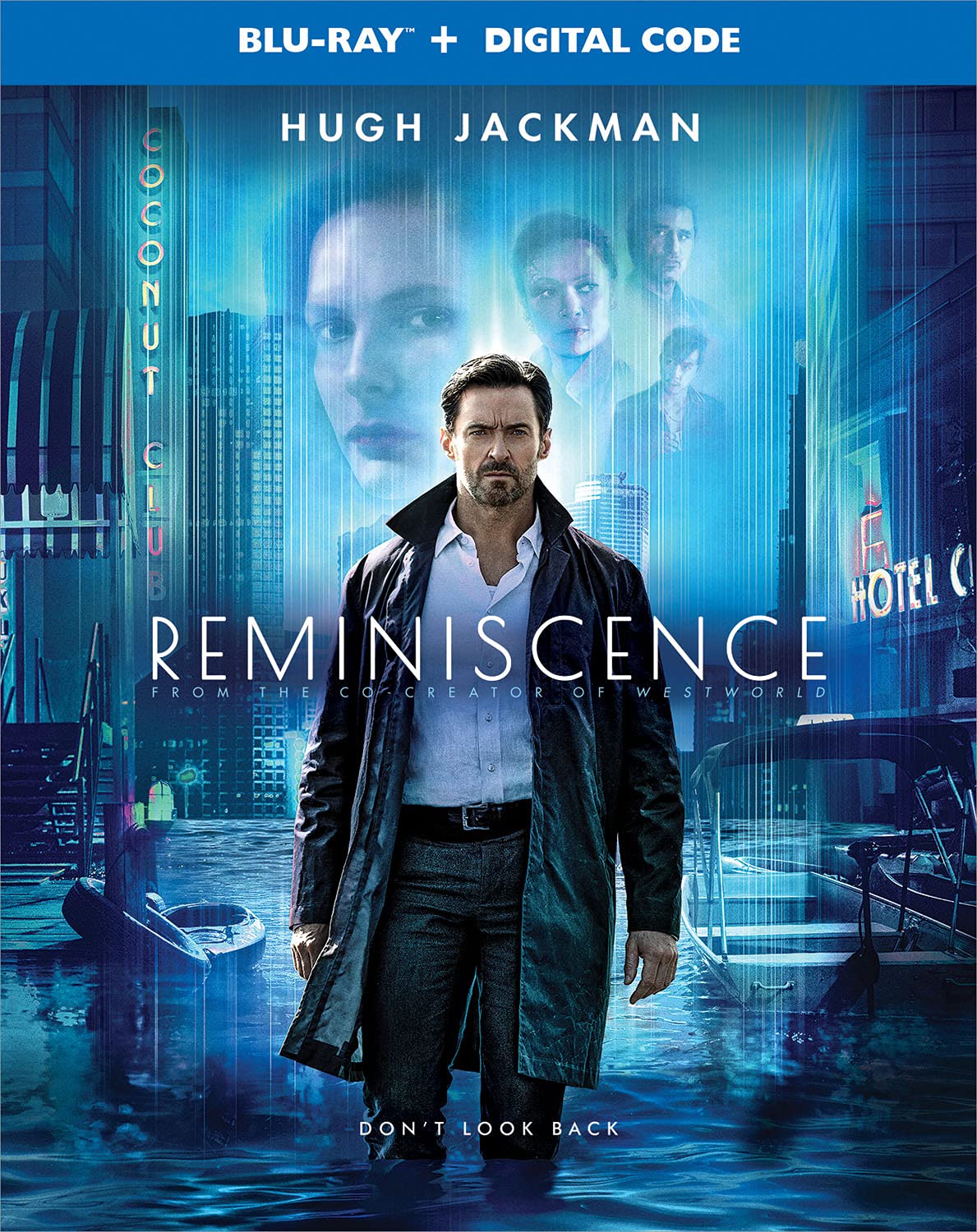
So, an interesting factoid that I learned about the film’s director Lisa Joy: she is the sister-in-law of director Christopher Nolan. This doesn’t really add anything to the review, just an interesting fact that I thought I’d share. Then again, I do remember thinking when the film first opened up that it felt very shades-of-Nolan. Not to say that Nolan had any influence over the film, but just the idea of a movie based off a construct is very much in his wheelhouse. Memory is the construct that is explored in this film, and I must admit that the addictive nature in which the film portrays this construct did have some appeal; however, the film tries to bring too many different themes and elements together, and it results in not enough attention being paid to any of them. Hugh Jackman and Rebecca Ferguson are the film’s big draws, and while their electricity helps to make the film decent, it cannot make it great.

“By 2014, hundreds of young women had left Europe to join ISIS. Their journeys began on social media platforms where they found new friends and chose new names.”

Based on the non-fiction novel, In The Skin of a Jihadist, this film tells the story about one reporters journey to create a groundbreaking story and how she nearly lost herself in the process. Valene Kane (The Fall) plays Amy Whittaker, a freelance reporter struggling to make ends meet when she decides to investigate the recruitment of young European women by ISIS. As part of her investigation, Amy creates a fake Facebook profile of a young woman who has recently converted to Islam. Before long, she is contacted by Bilel (Shazad Latif, Star Trek: Discovery), an ISIS fighter from Syria. On the surface, he is charming and he speaks of his chosen cause with great passion and conviction. Amy’s editor is ecstatic about the potential story, and before long, Amy finds herself disguising herself in the garb of a respectable Muslim so that she can engagement in Skype sessions with Bilel. This was a very unique and compelling story that was full of intense and suspenseful moments from the opening scenes. The most unique element of the story was that the entire film is told from the perspective of a computer screen.

"I saw this movie."

When the film Stargate was released in 1994, I had very high hopes for the movie. The concept was rather brilliant, and I anticipated a kind of Star Trek without the ship. Roland Emmerich and Dean Devlin hit it out of the park with Independence Day two years later, but I was sadly very disappointed in Stargate. I loved the wonderful mythology that combined ancient history and aliens. The concept had so much promise but was bogged down in awkward pacing and some of the worst storytelling I've seen in a big-budget science fiction film. So when the television series debuted on Showtime in 1997, I didn't even bother to check it out. I didn't pay any attention. If I had, I might have given it a try because of the involvement of Richard Dean Anderson, because I loved him in MacGyver, but I intentionally avoided watching the show. Nearly two years later, we had just moved into a new house and I was assembling a metal shelf unit. It was tedious work, so I put on the television for background while I tightened about a thousand small nuts and bolts. The cable box just so happened to be tuned to Showtime, and they were running a string of Stargate SG-1 episodes. I have to admit I was captivated by what I saw. The promise I was so angry had been squandered in the film was very much alive in this television series. The characters/actors were all compelling. Missing out on the show from the beginning was one of the biggest entertainment mistakes I ever made. It's become one of my favorite shows of all time, right up there with Star Trek: The Original Series, Hill Street Blues, The Rockford Files, and Star Trek: The Next Generation. This is science fiction television at its absolute best. A rare case where the television series blows the film from which it was adapted away. That hadn't happened so dramatically since M*A*S*H.

"I know this world is just a game, but this place, these people, that's all I have. So I'm not gonna be the good guy. I'm gonna be a great guy." 

Free Guy is the love letter to video gamers of all ages that Ready Player One should have been. While Ready Player One spent most of its resources on spectacle and a rather convoluted mythology, Free Guy allows the heart to come from the characters and plays out as something much closer to the passion and attachment players have long felt for their favorite games and game characters. The film manages to do this without giving up on the spectacle. There's plenty of that computer-generated magic here, enough to immerse us in the AI world of the game. But the film manages to reach out and connect to the humanity behind the games far better than Ready Player One could do at its best moments. That isn't to say this is a perfect film. There are tons of flaws, and it's not exactly the most original concept out there. In fact you'll find extreme elements of both Groundhog Day and The Truman Show, and Ryan Reynolds has almost become a cliche in this kind of wisecracking, irreverent-but-charming character. Think Deadpool without ... you know ...  the F-bombs and the bloody violence. But take all of that "been there/seen that" aspect of the film, and you walk away smiling a little and totally entertained. Sounds like a fun summer movie to me.

“How many friends did you have growing up? I just had one.”

A member of the cast has described this film as Mean Girls meets Final Destination. I don’t think I could come up with a better summation of the film if I tried. As I watched, I toyed with the idea that the film evoked Kevin Williamson-like nostalgia, but that was the best I came up with. The film is billed as a horror film, but of course there are elements that cause me to see it as more of a black comedy slasher film, like Happy Death Day. OK, that’s enough comparing it to other films; let’s talk about what Séance is. In a nutshell, Séance was a surprise for me. I hadn’t expected to like it as much as I did. As it started out, I figured it was going to be some run-of-the-mill ghost story, and I was prepared to write the film off, but as the film reached it apex and came with a couple of unexpected twists, I found myself leaning in and completely and utterly intrigued.

Retaliation resumes sometime after the original movie. Duke (Channing Tatum) is now leader of his own team, which includes Roadblock (Dwayne Johnson), Lady Jaye (Adrianne Palicki), Snake Eyes (Ray Park), and Flint (DJ Cotrona). After completing a successful mission, the team returns to base camp and awaits extraction. Dropping their guard, the group enjoys downtime; however, when a security patrol arrives ahead of schedule, it does not go unnoticed. Their suspicions are proven right, as a massive assault devastates the camp. Unable to adequately defend themselves, the team suffers heavy casualties including a vital and precious member of the team. (I’m sure you’ll have no trouble figuring out who.)

The only survivors of the attack, the remaining team members quickly put it together that only one person could have authorized the attack: the very man that they take their orders from, the President of the United States. Unbeknownst to them, the President is not who they think he is. He has been captured and replaced by COBRA chameleon Zartan, who has undergone revolutionary surgery to become the President’s double. Slandering the Joes in the media with claims of unsanctioned missions, the President (Zartan) puts COBRA in their place, giving them immeasurable power.

So it’s back to the one that started them all with this review. Coming hot on the heels of a film set to reboot the franchise comes the re-release of the first live-action film adaptation of the popular Hasbro property starring Channing Tatum, Marlon Wayans, Rachel Nichols, and Dennis Quaid. I remember loving the film back when it initial debuted, but now seeing it through the scope of age and wisdom, I can recognize that the film was only decent in comparison to the rave review I’d probably would have given it years earlier. That is not to designed to be a dig, because there are aspects of the film that I still to this day truly enjoyed, but it is very clear that story development was second to the action, as I watched again. Not to mention, not much was done in the way of character backstory and development, especially if you are someone with no familiarity with these characters prior to the watching of this film. The franchise appears to be addressing that now with the recent origin story release of one of the franchises’ most popular characters, but rectifying that now does nothing for this adaptation.

As I stated earlier, the film is not a complete lost cause, because there are aspects of the film that really shone, particularly Marlon Wayans’ performance. Now when I initially heard about his inclusion, I was a skeptic, because I knew him only as the over-the-top member of the Wayans family, but now I know him as Ripcord, the G.I. Joe team’s HALO (High Altitude Low  Opening) Jumper. A natural comedian, Wayans brings that element to his performance, giving balance to Tatum’s more serious performance. In the film, Ripcord is Duke’s (Tatum) best friend and partner. True Wayans is the film’s comic relief, but he also brings in the romance element of the film with his constant and shameless pursuit of Rachel Nichols’ Scarlett. This too brings some comic relief, but there is also some genuine chemistry between Nichols and Wayans, which I feel really improved the overall quality of the film. In fact of the two romantic angles portrayed in the film, I must say that this was my favorite.

“Creeks lead to rivers. Rivers lead to towns.”

With a little more character development, Those Who Wish Me Dead would have been a really intriguing story. The film had a winning recipe: a script written by the man who gave us Hell Or High Water/Sicario (Taylor Sheridan), a cast that include talent like Angelina Jolie, Jon Bernthal, Nicholas Hoult, and Aidan Gillen, as well as a rifle-toting pregnant woman on horseback. What more could you ask for? If only adequate time had been spent fleshing the characters out and answering some of the questions that were posed during the film’s runtime. As it stands, the film never gets past the initial intrigue phase, because despite all the things the film did have, it’s what the film was missing that defines it.