1080i

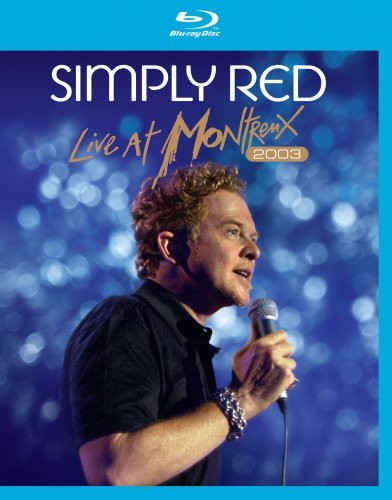
Hi, this is Casey Casem (play along, alright) and welcome to American Top 40. Michael “Mick” Hucknall was often made fun of due to his red locks in Lancashire, England as a young boy. Little did those children know that Mick would use that to propel himself into a music career at just eighteen years old with the Frantic Elevators during the 1970’s. That was the start of a very fruitful music career for Mr. Hucknall. This long distance dedication goes out to Eddie in Tuscaloosa, Mississippi celebrating his 84th birthday today and here is “Holding Back the Years” by the band known as Simply Red.

Simply Red has always been one man’s brainchild and that was Mick Hucknall. It is said that in 1976 when he watched a Sex Pistols gig in Manchester that well that led to the formation of his first group known as the Frantic Elevators which debuted in 1977. That band would actually last for about seven years until they broke up in 1984. The punk band never really caught attention and was only liked by the locals that saw the band perform. However, before they split up, they released a very important song by the name of “Holding Back the Years”.

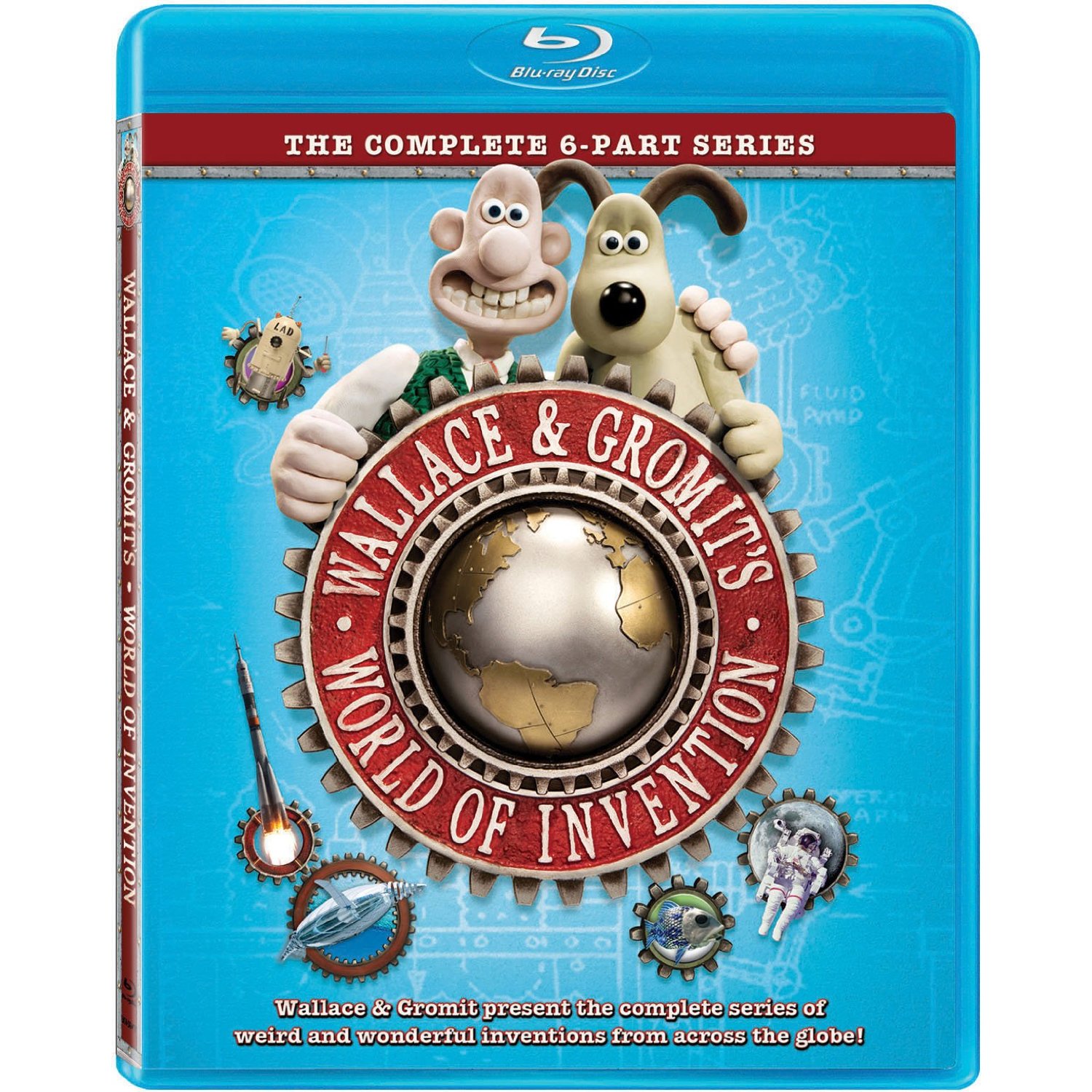
Wallace and Gromit is the brainchild of animator Nick Park. The British filmmaker tried for years to bring his clay creations alive, but on his own finished a mere 10 minutes in a little over two years. When he met up with Aardman Animations, he was teamed up with the creative talents he needed to make his dream come alive, and come alive these two characters did indeed. They’ve become an overnight sensation in the UK and now all over the world. I was introduced to the characters with the full length feature Wallace And Gromit In The Curse Of The Were-Rabbit.

I have to admit that I was completely won over by the magic of this creation. It’s so simple-looking that it almost appears to be child’s play. The truth could not be further from the perception. Stop-motion animation goes back to the beginning of the cinema itself. Pioneered by the genius Willis O’Brian and perfected by Ray Harryhausen, it is one of the most painstakingly tedious tasks in the film industry today. It has been all but abandoned except for a select few who still follow in the footsteps of greatness. Give Nick Park credit for keeping the art alive and making it look effortless.

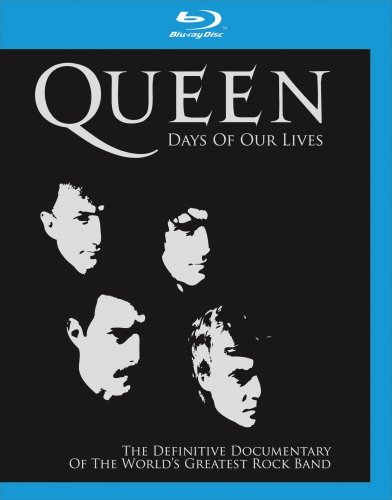
It has not been over 40 years since the inception of the band Queen, but it and its members Freddie Mercury, Brian May, Roger Taylor, and John Deacon, continue to be one of the most popular bands in the world, despite losing lead singer Mercury to AIDS some 20-odd years ago and not creating new material since then. This documentary tells their story in two episodes, spanning nearly 4 hours.

Narrated mostly through a small group of new and old interviews with the band and their friends, both episodes chronicle the band album by album. Fans will already know the history of each album inside and out, but it is still engaging to see their creative energies bouncing off of each other, and drawing in thousands of fans at each concert.

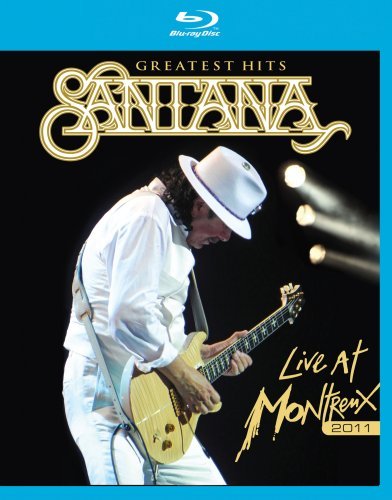
Carlos Santana is too cool for words. When I say that, I refer to both his widely-acknowledged status as a "Guitar God" and to the fact that he doesn't utter a single word until the 21-minute mark of his latest concert film, Santana — Live at Montreux 2011.  Santana may not be chatty, but he and the rest of his eponymous band do a valiant job of holding your attention throughout most of this 167-minute concert in Montreux (which is in Switzerland, and I'm only a little ashamed to admit I had no idea where Montreux was located before I watched this disc).

The music starts almost immediately after you press play — following a short and sweet on-stage introduction by festival creator Claude Nobs — and what follows is a no-frills performance with minimal between-song banter that will nevertheless delight fans of salsa, jazz and rock and roll, genres that Santana has been masterfully fusing for decades. Santana performs his most popular hits — including "Black Magic Woman", "Oye Como Va", "Smooth" and "Maria, Maria" — a few personal favorites of mine (like the playful "Foo Foo") and more than a handful of instrumental numbers that seamlessly blend into one another. There were a couple of instances where I didn't even realize a new song had started until I checked the handy track list on the pop-up menu. (That 23-track song list also allows you to skip ahead to your favorite tunes.)

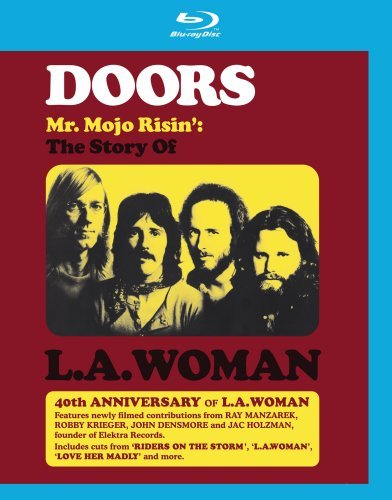
Some music due to my age and music exposure, I just do not quite get. Led Zeppelin, Eagles (once I got out of college) or Black Sabbath, I love. Rush? I can not stand them. Pink Floyd? Way over-exposed to the point where I just do not want to listen to them except one in a while and only to certain songs. The Doors? Hrmmm, well I do like some of their songs. As it just so happens, the Blu-Ray review I have for you today involves my favorite Doors song, L.A. Woman.

The Doors always envisioned themselves as a four man band, a modern jazz quartet of rock and roll. They were working on intellectual levels higher than a lot of bands. In 1970, they were working on their six studio album. Previous albums had been the same, an almost standard rock and roll band with guitarists, drummers, keyboards, and Jim Morrison. They want to try and do something different: bluesy, with horns and elements of jazz. Work started in the December of 1970 to produce: L.A. Woman.

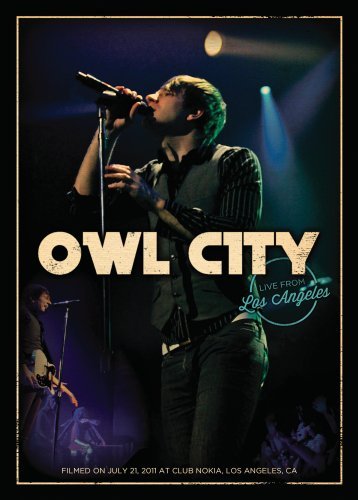
Owl City's popularity was born out of social networking websites such as Myspace. From the days of uploading songs while living in his parent's basement, to going #1 on Charts in an astounding 24 countries, Owl City (aka Adam Young) continues to ride his hysterical success into his inevitable, first concert film.

Young and his band of pretty 20-somethings don't seem to break a sweat while delivering a suspiciously polished sounding hour-and-a-half long performance. I say suspicious because, although the camera shows that everyone is playing these songs accurately (not that they're all that challenging mind you), it just sounds a lot like the studio versions. I'd start making accusations of playing partly to tapes or adding tracks in post-production because the guitar sounds a little too clean, some instruments and voices are mixed in and out mysteriously...but Young is such a polite young man in his in-between song banter that I shall not go into it any further. You're welcome Mr. Young.

The title of this documentary stems from the quote “In the end, the love you take is equal to the love you make." In this film, said “love” refers to the love and support Paul McCartney, and other major celebrities, give to New York in the immediate wake of 9/11. Starting from early rehearsals and finishing with McCartney's closing performance at the “Concert for New York” benefit, we watch one of the most famous people on the planet demonstrate his uncanny sense of humility and humanity as he proves he is a “man of the people.”

The camera is mostly candid as we witness McCartney not be able to walk a single foot on the streets of New York without getting endlessly mobbed by fans. It is refreshing to see that, whether surrounded by starry-eyed civilians or fellow celebrities, McCartney never loses his playful mien.

“Here's the thing, I... I live my life a certain way. And that is that I like to think that if you put your trust out there, I mean, if you really give people the benefit of the doubt, see their best intentions, they're gonna want to live up to it. It doesn't always work out, clearly, but, more often than not, I think that if you do, people will rise to the occasion. I really believe that.”

In a deck of Tarot cards there is a major arcana card called The Fool. It depicts a young man wearing colorful motley clothes and carrying all his possessions in a bag on his back. A dog barks at his heel as he heads off into the world, his eyes so full of wonder and excitement he doesn’t see the cliff directly in front of him. Our Idiot Brother is a movie about that kind of fool.

Quick, ask me a question that involves Rock and Roll music. Chances are the answer to that question is either the Beatles or the Rolling Stones. The answer was Nickelback? Oh, then the question must have been: Name a Band that only had two good albums and spent the rest of the time copying their own music repeatedly until you wanted to smash Chad Kroeger in the face. Anyway, our review today takes us to 1978 and the Rolling Stones. See, I told you all avenues lead to the Beatles or Stones.

The Rolling Stones by 1978 were a huge success having released over a dozen albums, many of which reached Gold and Platinum status many times over. Their latest album, Black and Blue went to Platinum in the US and hit #1 on the Billboard charts and stayed on the charts for twenty four weeks. Their two big hits off the album included “Fool to Cry” and “Hot Stuff”. The former song, “Full to Cry” scored as a top ten hit. In addition to Platinum status in the US, France and the UK both reported Gold sales for the record.

The latest incarnation of Deep Purple is going the route of many “classic” rock and/or metal bands, and are putting being accompanied by a symphony for a special release. This particular concert closed out the 2011 Montreux Jazz Festival.

Many do not realize just how powerful a symphony sound can be without ever hearing one live. For this concert film, it helps when a heavy metal band is present to be matched and/or enhanced by the sheer boom that is power of a symphonic sound to help make for a nice example. The frequently bluesy riffs of Deep Purple, coming from songs both new and old, are complimented well by a large assembly of strings and horns. It should be noted that this is not a full symphony, but something similar to the size of a Count Basie orchestra setup. In fact, there are some songs where the symphony do not play at all, such a “Space Truckin'' whose chunky riffs might be best left alone.