Summit

"You wanted me back. I'm back."

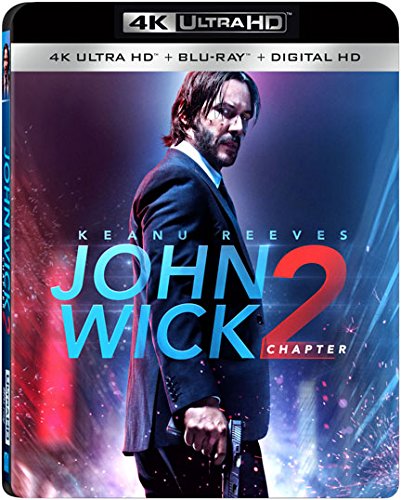
Keanu Reeves has enjoyed somewhat of a career renaissance thanks in no small part to the success of John Wick in 2014. There he teamed up with some stunt friends of his going back to The Matrix, and together they brought a new action hero to the screen that was as much graphic novel as it was action film. It would become the directing debut of the stunt team of Stahelski and David Leitch. Along with their action star, everyone stuck to what they knew and refused to overcomplicate the whole thing. That led to a box office haul of $86 million worldwide and a respectful enough budget to make a sequel seem like a good possibility. It took three years, but that possibility has turned into John Wick: Chapter 2.

The story is the star in Freeheld, which chronicles a same-sex couple's fight for equality. The film is based on the Oscar-winning documentary short of the same name and follows Laurel Hester, a New Jersey cop with terminal lung cancer, as she attempts to pass her pension benefits to domestic partner Stacie Andree. Despite being a modest production, Freeheld was able to enlist some top-drawer acting talent. Unfortunately, it also attracted a risk-averse team of filmmakers who tell Laurel and Stacie's story in a thoroughly rote and uninspired manner.

The movie begins in 2002 with Laurel (Julianne Moore) bailing her partner Dane (Michael Shannon) out of a jam during a sting operation. This opening is meant to illustrate that Laurel is an exceedingly capable police officer, but the clumsily-staged sequence has the unfortunate side effect of shining a light on director Peter Sollett's limitations. (Same goes for a subsequent storyline involving a double homicide that is equally clunky.) Laurel is also a lesbian who worries about someone at her job finding out about her sexual orientation, so she drives to Pennsylvania to take part in social activities. That's where she meets Stacie (Ellen Page), a younger woman who sparks Laurel's interest.

“A successful breakout depends on three things: Layout, Routine, and Outside Help.”

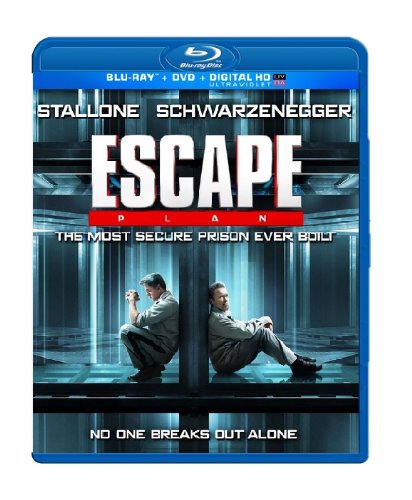
You know, there was a time when the public could only dream of an Arnold Schwarzenegger and Sylvester Stallone team-up. Now thanks to a little film called The Expendables, when it comes to the realm of action star team-ups, anything is possible. Case in point: Escape Plan. When this film was first announced, I figure it would be devoid of any real substance and just another attempt to capitalize on the success of  Expendables (the first one; the second is not that great), but the film surprisingly holds up on its own without having to cling to anything else.

"This is how it starts..."

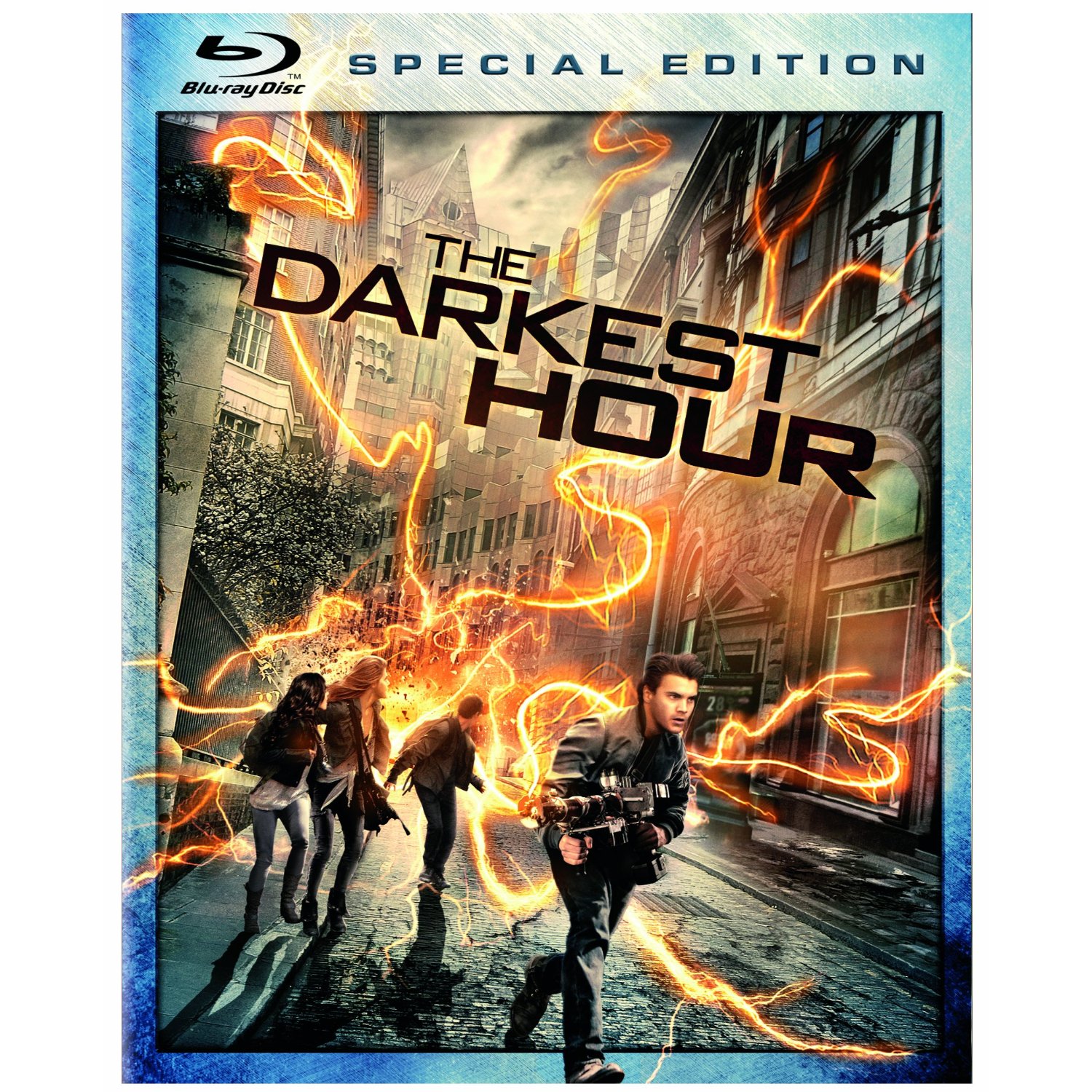
You know, it's getting awfully hard to make an original alien invasion film. Most filmmakers have accepted the obvious and go for mind-blowing f/x and never mind the story. Still others go the trendy found-footage route. I was pleasantly surprised that The Darkest Hour appears to prove that there just might be more than just fumes in the creative tank after all. I'm not going to try to convince you that the film doesn't rely on much of the tried and true standby material. It covers most of the traditional formula. What I will try to convince you of, however, is that The Darkest Hour feels fresh even if it does rely on many of the standard conventions. In the end, it's a very entertaining film that proves you don't have to break the bank or take the shaky camera angle to put some quality on the screen.

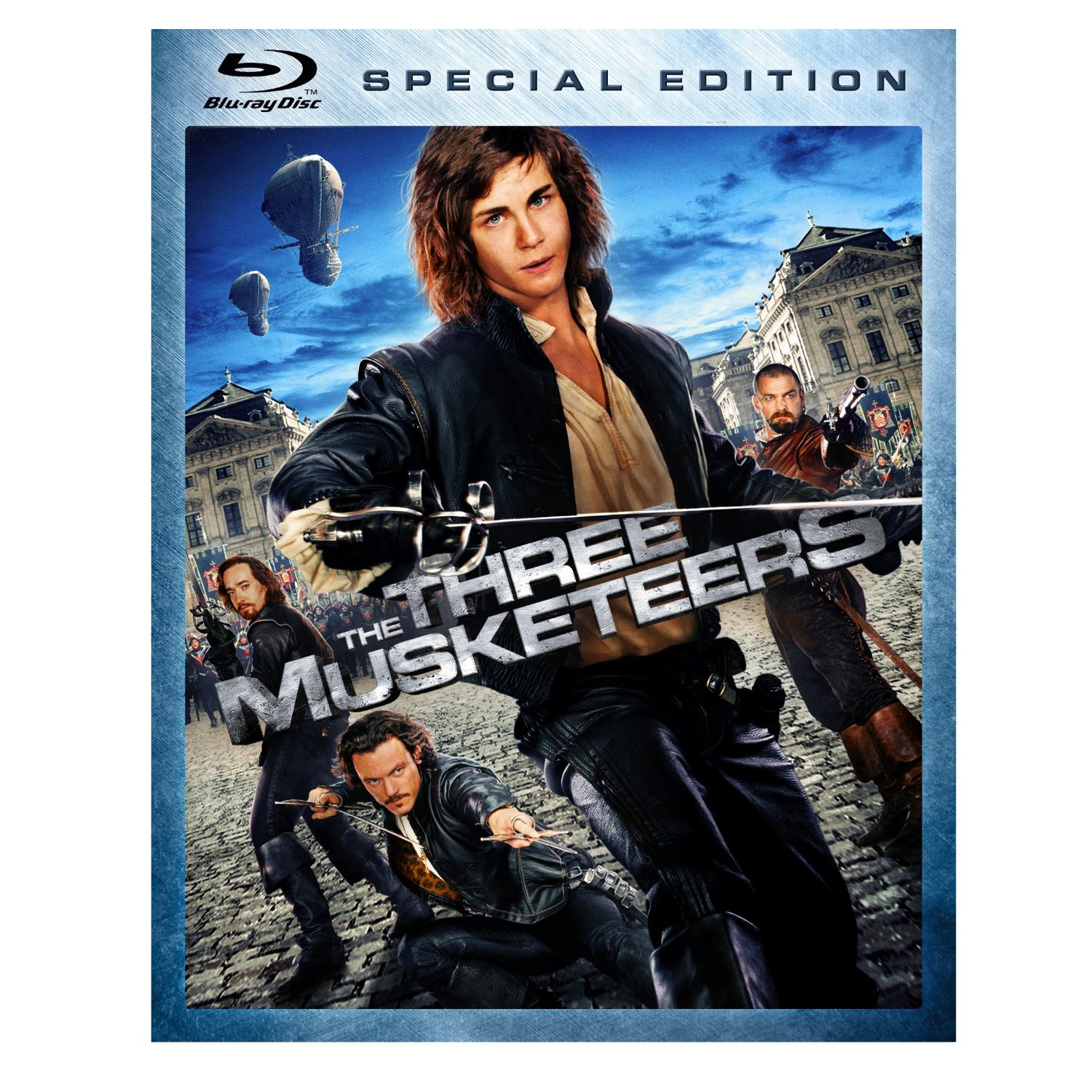
I don't think I'm breaking any news when I say that director Paul W.S. Anderson's latest action spectacle, an update of Alexandre Dumas' classic The Three Musketeers, is junk. So far, the director has specialized in taking established properties — including the Resident Evil and Mortal Kombat videogames, as well as the Alien and Predator franchises — and re-working them to fit his own shallow, highly-stylized, quick-cutting sensibilities. The result is basically the cinematic equivalent of junk food: people know those Resident Evil movies are bad, but they just can't stop consuming them.

That's why I was mildly shocked when this latest adaptation turned out to be surprisingly and sneakily faithful...well, except for the part where Da Vinci's Flying War Machine becomes a significant plot point. (This was a guy, after all, who didn't include a single character from the Resident Evil game in the first movie!)

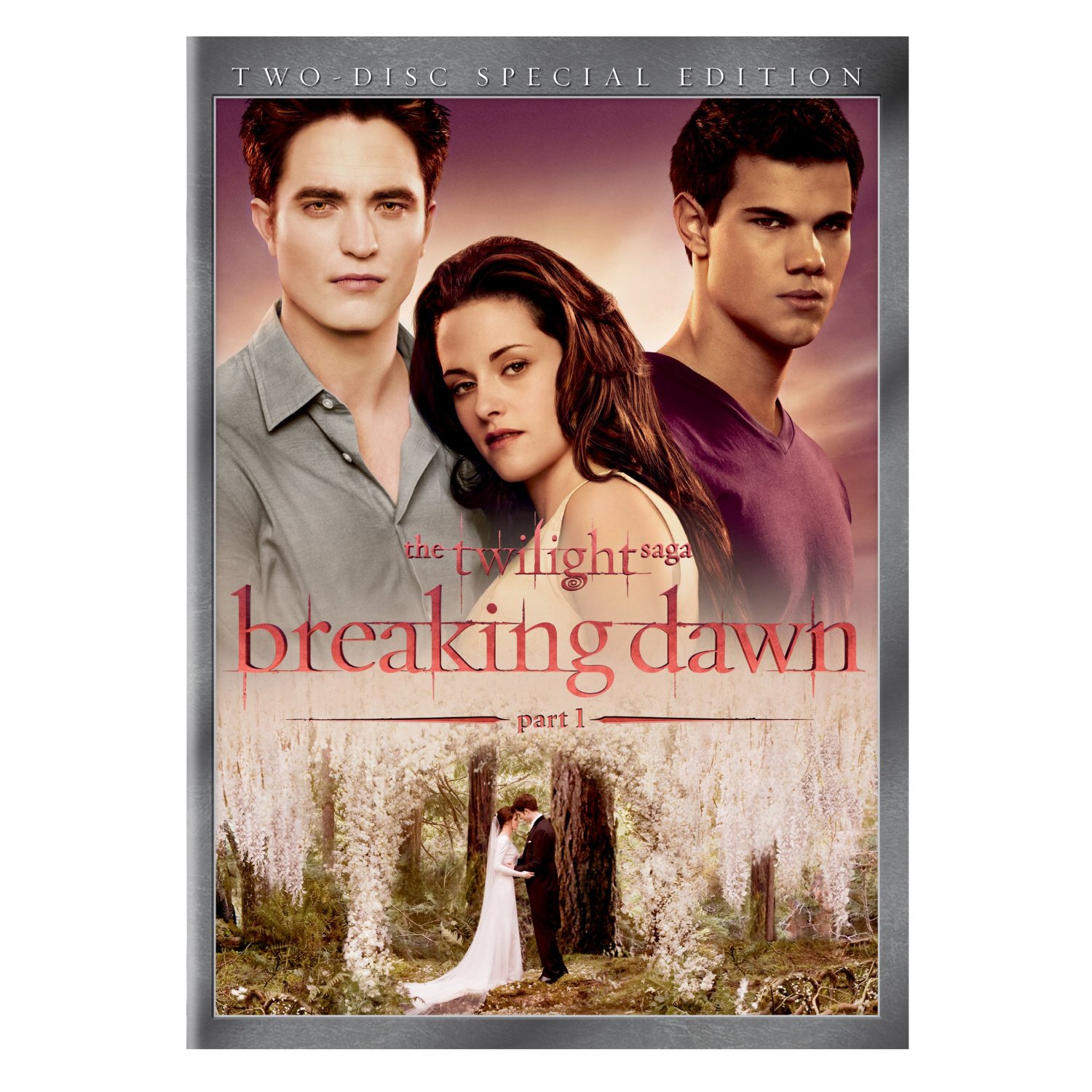
Somehow, I should have known that when my wife started to read the Twilight Series, I would eventually get dragged into watching the movies. The first one, I probably saw three times, the second one, only once. The interesting thing was that my wife was turned off by the movies and I am not sure I remember how the third one ended up. But low and behold, the fourth chapter of the series did not escape my grasp. Not because of my wife, but because of my webmaster knowing I am a glutton for punishment. Enter Breaking Dawn.

Remember kids, this is part one. The new thing in this day and age is if you are adapting a book to film and really want to place emphasis on that last book, you release it in parts. This is two fold, one there is usually a lot of information that needs to get onto screen (since books are more detailed than movies) and two, everybody involved wants to milk the cash cow at least one more time than they would normally be allowed. This only works by the way if the movie is ultra successful. See Harry Potter, and now of course Twilight.

"This is a picture of Walter Black, a hopelessly depressed individual who becomes The Beaver, who becomes a phenomenon."

When I first heard about this film, it was hard to keep the Mel Gibson story out of my mind. It almost seemed as if his casting was related to his off-screen situation. After all, this is a story of redemption, and there isn't anyone in Hollywood searching for that more than Mel Gibson. But as I watched the film, it became surprisingly easy to let go of that baggage and direct all of my attention to the performances and character delivered by the film. And while a lot of credit goes to Jodie Foster and her exceptional job of directing the film, the real credit belongs to Mel Gibson himself who creates a compelling character who you just can't take your eyes away from. It might be the best performance of his career, and it doesn't appear that very many people will ever see it. The film was never given a wide release. It never appeared on more than 200 screens for any given weekend and made less than $1 million at the box office. Unfortunately, I don't see it doing any better on video, and that's a bit of a shame, I think.

"What is source code?"

That's a good question. Unfortunately, there really isn't a good answer, not without spoiling some of the finer elements of this science fiction thriller from Moon director Duncan Jones. At the heart of this code you'll a bit of the familiar. From Groundhog Day to Déjà Vu you'll leave this movie with a sense that you've seen much of this before, and that's not entirely a bad thing. These elements aren't necessarily merely retread material. Let's just say they share a large amount of DNA in this film's basic source code.

"Since the birth of time, humanity has endeavored to restrict evil men in prisons. But since Cain fled the murder of his brother, evil men have fled the walls of punishment. So it doesn't matter if you're a badass mother on the run because you think you're better than everyone else and somehow entitled to do what you gotta do. No, because you see, badass mothers are never fast enough. In the end, they will be accounted for."

People have been breaking out of Hell since the days of Dante. In recent years we've had two very good television shows on the subject. Brimstone suffered an early death but was a wonderful character piece with John Glover as the Devil and Peter Horton as a cop and resident of Hell he uses to track down his escapees. Reaper took a more comedic route and had Ray Wise as Satan utilizing the efforts of Jack Black clone Tyler Labine helping out damned soul Bret Harrison to bring in the escaped. Enter Nicolas Cage in the underachieving action film Drive Angry.

A newspaper article infuriates the White House, which retaliates with all its political might to discredit the story, crush its author and cover up its own internal corruption. Sound familiar, like maybe All the President’s Men? If that’s among your favorite docudramas, then make room on the shelf for Fair Game, a real-life paranoid trip that unfolds across continents but finds its emotional center in a quiet suburban home.

There are striking similarities between the 1976 Redford-Hoffman classic and the inexplicably overlooked Fair Game. There are also major differences: The ’76 film exudes the idealism of its era, while the new one is steeped in the cynicism of modern media. The older movie is told from the viewpoint of hustling young reporters, while the one released this week on video comes through the eyes of a married couple -- respected officials whose careers collide in a cataclysm of government disinformation. Yeah, there’s another huge difference to point out: This time, the good guys don’t win.