HEVC

By Ian Delia

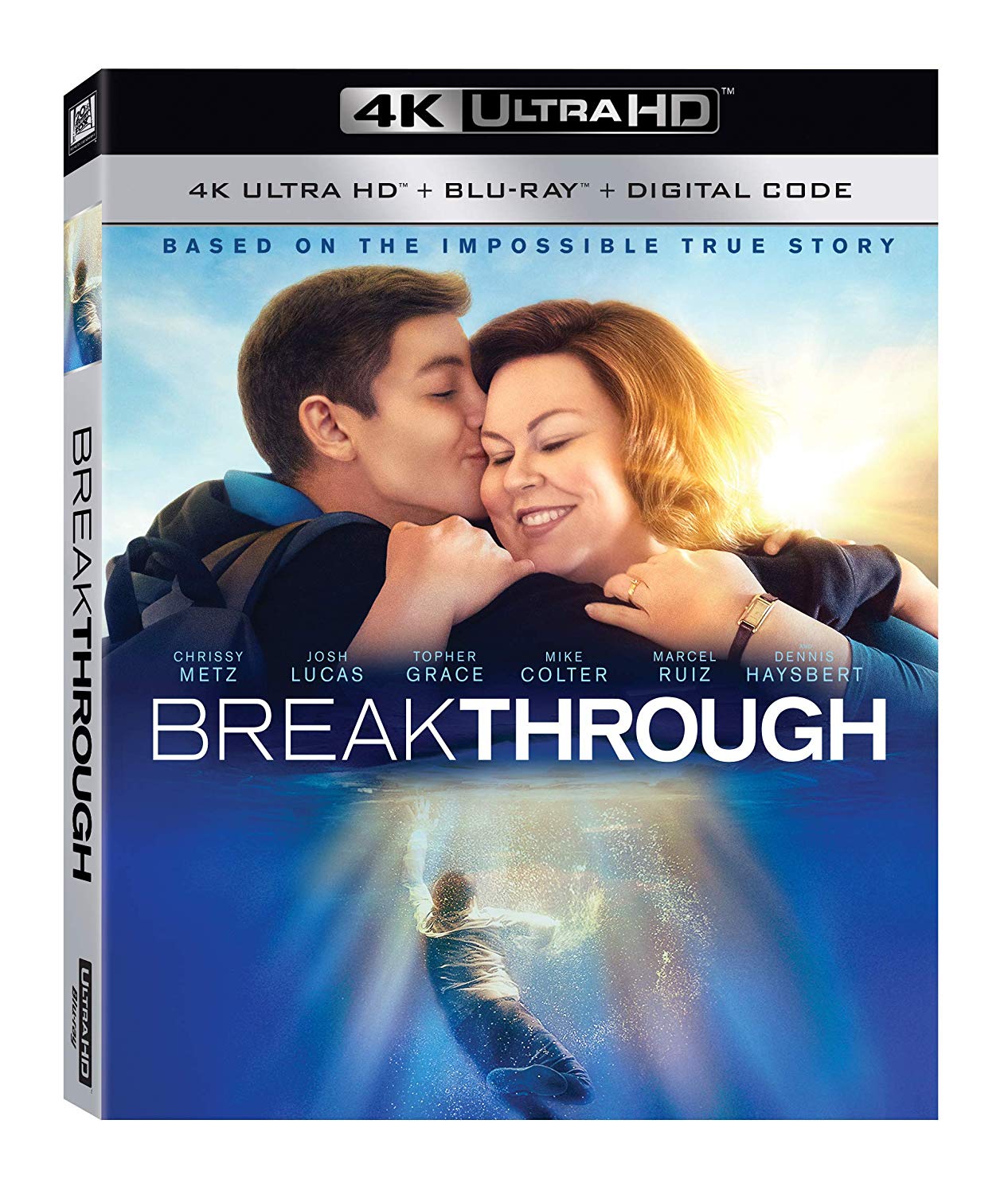
A good time to praise the lord just as many others have in the movie Breakthrough. A beautiful true story of young John, who fought for his life and the miracle brought through his belief in Christ. This movie shows the amazing things you can be blessed with with prayer and faith. Get ready to laugh and smile, but be prepared to cry your heart out with sweet tears. I suggest bringing tissues with you; bring a lot. Young John (Marcel Ruiz) was an orphan since he was an infant. He never knew his mother and always wondered why she gave him up. As a five-month-old baby he was adopted by a loving family, the Smiths. The Smiths, Joyce and Brian, are a very religious family. Joyce runs a bible study, and John is in a Christian school Living Word Christian School in his hometown of St. Charles. John plays basketball at his school, and he’s a very good player, even though the film shows he acted up quite a bit. John doesn’t do assignments, starts fights with others, and doesn’t really care too much about school. John hasn’t given himself to the lord as his adopted parents wish he would. He didn’t really believed in our lord and savior, until the lord shed the light upon John and saved him from the grave.


"I don't wanna be buried in a pet sematary."

It's an inescapable fact of life that some things get lost in translation. Italian poetry loses its imagery. War And Peace is apparently much more compelling in Tolstoy's original Russian. And I've been told that Abbott & Costello is painful when told secondhand. You can add to that axiom that Stephen King really doesn't translate very well on the silver screen. The notable exceptions are films based on non-horror works like The Shawshank Redemption and the barely-horror-related Stand By Me. Both are wonderful films that manage to capture King's knack for the absurd in everyday life. While some consider Kubrick's The Shining a classic, you'll find just as many King fans who hated it, "Here's Johnny", and all of that. I've read most of Stephen King's books and a couple of them multiple times. Pet Sematary is one of my favorites, and I've read it at least three times. When the 1989 film was released, I was eager to see it. That was a mistake, but an even bigger mistake was made by all involved in what was essentially a mess. I blame Denise Crosby, but then again I blame Denise Crosby for hurricanes and urban blight. I don't blame Fred Gwynne. He was the only part of that film that reminded me even remotely of the printed word. Now writers Matt Greenberg & Jeff Buhler join directors Kevin Lolsch & Dennis Widmyer in a remake that while not the disaster of the 1989 film still fails to capture the imaginative prose of the novel. I think it's a translation thing.

"There are thousands of miles of tunnels beneath the continental United States. Abandoned subway systems, unused routes and deserted mine shafts. Many have no known purpose at all."

A very creepy, violent, and disturbing film, Us, enters theaters, and it’s probably going to be there for some time. Not only is the plot haunting and filled with terror; the acting that makes it work is superb under the guidance of Jordan Peele who gave us the film Get Out.  Adding more to the potentially Oscar-worthy film is the dank and fear-inducing cinematography with a soundtrack to match. If you like your horror nonstop, then Us is for you.

"Does announcing your identity help with the covert part of the job?" 

Let me begin by saying that actress Brie Larson doesn't want me to write this review. It's not that I didn't like the film and intend to cut it down. Actually I rather liked the movie, and while it isn't going to crack my top five Marvel films, it's a very entertaining film that adds wonderfully to this always evolving world of the Marvel Cinematic Universe, or as we fan geeks like to refer to it, the MCU. So she wouldn't take much if any umbrage with my evaluation of the film. It turns out that I happen to be a white male, and she has made it known that she doesn't want to see reviews for this film written by white males. Sorry, Brie. I suggest you skip this one. Just put it out of your mind. Still reading, Brie? I thought you might be. So, after a rather long wait for a movie only teased at in the final frames of a stinger added to Avengers: Infinity War, we finally get to meet the newest member of the Marvel MCU. Welcome, Carol Danvers, aka Captain Marvel, and as they used to say on the comic covers when welcoming new characters: I hope you survive.

In the late 1980’s Batman was in trouble. No, he wasn’t tied to a table saw by The Joker. Catwoman didn’t have her claws on him. It was the camp residue of the 1960’s television series. The idea of a Batman film was clamored after by fans, but the studios couldn’t get the Adam West series out of their minds. And, while the success of Superman might have awaken the studio bosses to the appeal of comic book films, there was surprisingly very little interest in a Batman film. Since DC Comics had become a part of the Warner Empire, it seemed only logical that they would want to do the film. But even Warner resisted for several years as a team tried to get the Caped Crusader back on the movie screen.

The Dark Knight was the brainchild of a young comic artist named Bob Kane. He was actually inspired by a Leonardo DaVinci drawing and quote. He was looking at the bat-like wings DaVinci designed for human flight and immediately set to work on creating the follow up to Superman. Unlike Superman, Batman had no superpowers. His parents had been killed in front of his eyes, gunned down on their way home from the theater. The young millionaire’s son grew morose and dark. When he matured, he used the vast resources of his wealth to design weapons, armor, vehicles, and gadgets all around the theme of the bat. With the help of the family butler, who raised the young lad after the death of his parents, Bruce Wayne became the night avenger, Batman. The comic was an almost overnight success. Now there was a superhero who didn’t rely on supernatural powers. This hero relied on his own intelligence and resourcefulness to fight the criminals of Gotham City. The comics would lead to movie serial reels and animated adventures. In the 1960’s Batman would explode on to television screens in a campy, not-so-serious incarnation. Graphic novels in the 1980’s would bring the comic book out of the shadows of guilty pleasures for adults and bring these conventions to the mainstream world of literature. Artists like Frank Miller would bring the Dark Knight back to its roots and expose the world, once again, to Batman. By 1989, the time was right to bring Batman back to life -- live action, that is. And who better to capture the dark and psychologically disturbed world of Batman than Tim Burton.

It hasn’t quite been four months since A Star is Born was released on Blu-ray and 4K and already we have a new release, only this time the film is about 11 minutes longer.  For some this might seem like a double dip, while others this is exactly what fans of the film have wanted.  For me, I’ve always been a fan of extended cuts of films where we get to see how certain deleted scenes actually fit in the film.  Sometimes the extended cuts of films can improve the experience. The Lord of the Rings series is one set that comes to mind. As for A Star is Born, does it breathe new life into the Oscar-nominated film, or does it drag it down?

When I first heard that Bradley Cooper would be making his directing debut with A Star is Born, honestly I kind of groaned.  It’s not because I didn’t believe he’d have the chops; after all, he’s worked with many successful directors over the span of his career. I groaned because I believed the world didn’t need yet another remake of the film. This will be the fourth incarnation of the film, and while many can debate on which version is their favorite, the film was pretty much a relic I felt should have stayed in the past.  I mention this and want to also put out there even after some of the trailers I had caught for the film; my excitement level was pretty low going into this.  Well, this turned out to be the sleeper hit of the year for me.  Sure, many could have told me this would be a hit, and because of the cast I wouldn’t dispute it, but when I walked out of the auditorium I felt like I had experienced something special (even if it had been made three times before).

"Welcome to Benghazi."

It shouldn't matter what your politics might be. The events in Benghazi on September 11th, 2012 bring up some very important questions. Contrary to one 2016 presidential hopeful's declaration, it does make a difference. It did to the people who were there. It does for the families of the four who lost their lives. And it should make a difference to you. With such a political hotbed issue, you'll find that 13 Hours goes out of its way to avoid the political questions. Some might view this as an oversight, but I think it gives the film a greater sense of credibility and makes its impact on the audience to fill in their own political blanks.

"Legend says that when the ground quakes or lava spews from the earth, it's the dragons letting us know they're still here. Waiting for us to figure out how to get along. Yes, the world believes the dragons are gone, if they ever existed at all. But we Berkians, we know otherwise. And we'll guard this secret until the time comes when dragons can return in peace."

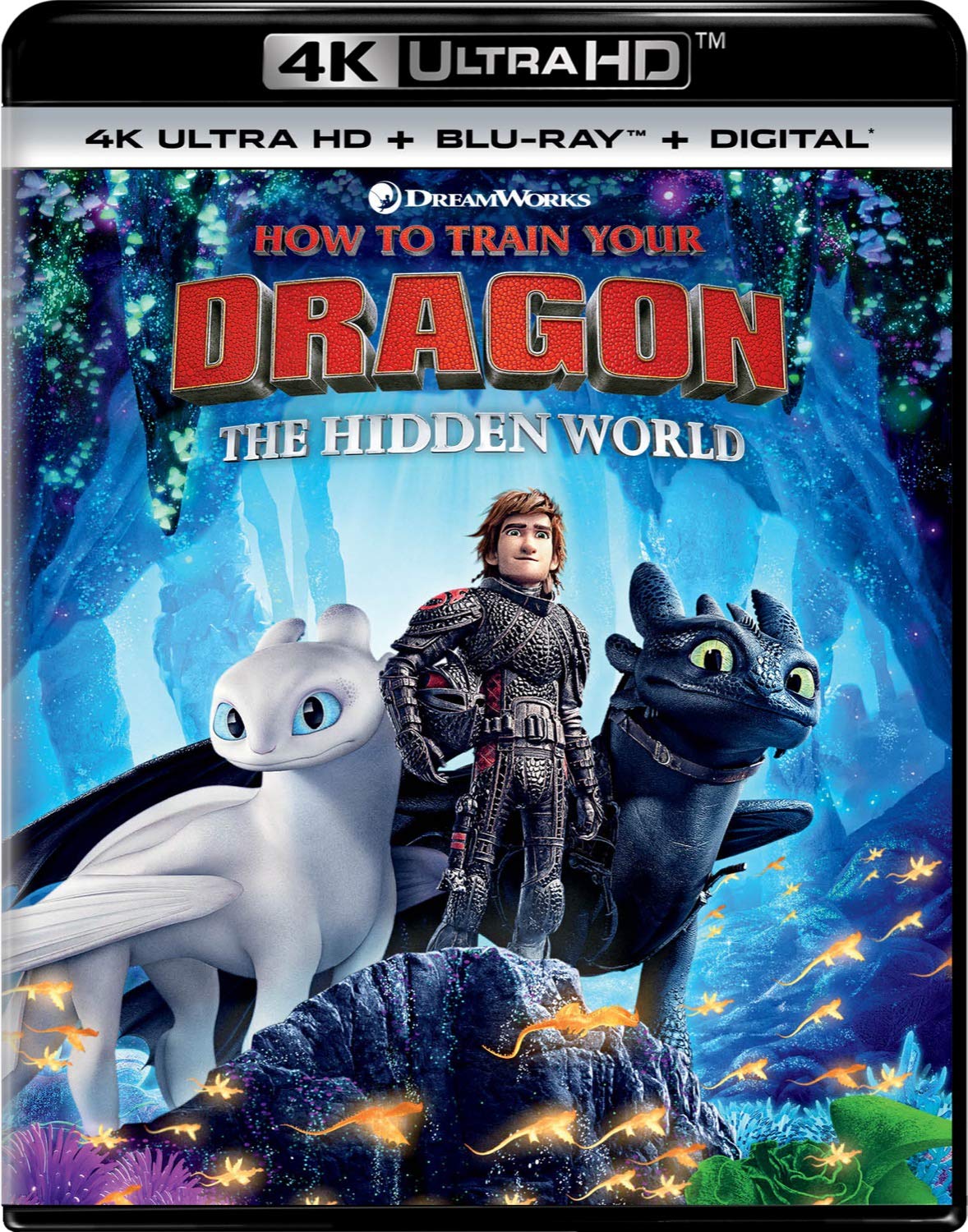
It is surreal to know less about a subject than your six-year-old daughter, but that was the case going into How to Train Your Dragon: Hidden World. Aside from a knowledge of this franchise’s existence, I knew next to nothing about the films as a whole. My daughter, Nalyce, on the other hand, turned out to be a subject matter expert about the series as well as the television series, apparently. It was quite the role reversal having her explain to me significance of Hiccup and his dragon, Toothless. Also, it gave us something to bond over, which was further expanded upon thanks to the opportunity to take her with me to this screening. For me, I found the film to be a wholesome family experience and a satisfactory conclusion to a well-liked franchise, though I’m sure there remains the opportunity for expansion of the film’s universe. Nalyce was mesmerized by the Hidden World and the different species of dragons. All in all, it was a treat for the whole family.

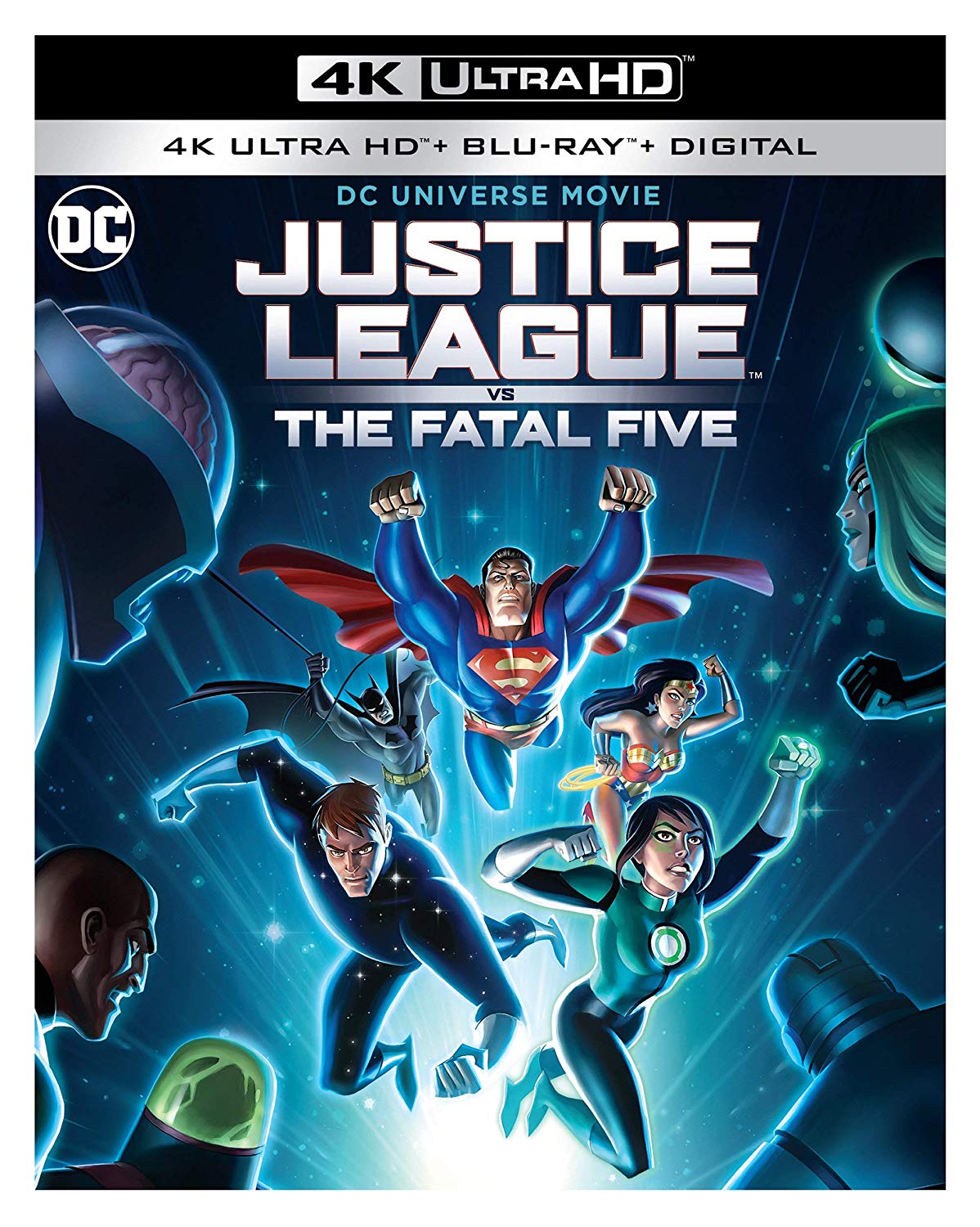
If it wasn't clear enough before, I think the Avengers: Endgame box office mauling put the final point on the situation between Marvel and DC. When it comes to Cinematic Universes, DC has had an impossible task of keeping up. Avengers took in more on the first weekend than Aquaman did its entire run. The box office round goes to Marvel, and it appears DC has started to come to grips with that fact and has started to transform their own films away from the team-up/combined universe and is going back to basics. Where DC has built a rather strong shared universe for their characters is in the animated feature department. In the last handful of years DC has released some very strong animated films, and that's where there appears to be a place where they not only compete with Marvel but leave them in the dust. The latest proof of that idea comes with the Warner Brothers release of Justice League vs. The Fatal Five out on UHD Blu-ray in 4K. It's a solid film with plenty of cheerful action and adventure that always got bogged down in the films with the notable exception of Wonder Woman.

The film begins a thousand years in the future and the League of Superheroes. Their HQ is invaded by three members of their chief nemesis, the Fatal Five. In an attempt to stop them from stealing their time machine the heroes attempt to trap them inside a frozen time bubble, but can't set the trap in time. The three bad guys: Mano (Rodriquez), The Persuader (King) and Thorack (Jessup) manage to steal the time machine and return to our present day with Starboy (Gabel) silently on their trail.

“In space no one can hear you scream.”

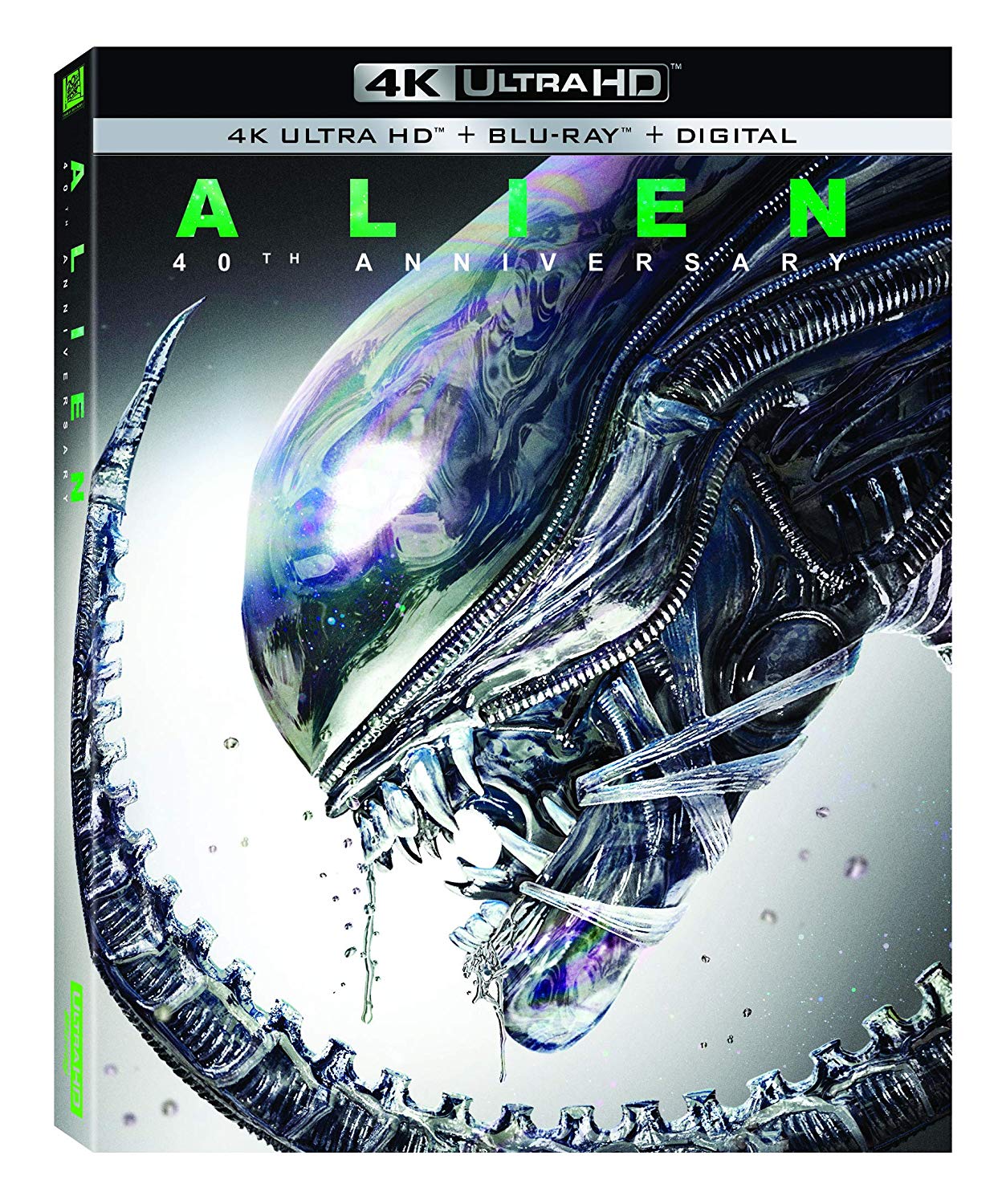
That was the slogan that drew a conglomerate of horror and science fiction fans to theatres in 1979. Was it horror or sci-fi?  Alien turned out to be a rare cross-genre film that managed to satisfy both audiences. Ridley Scott started out by bringing the “space ship” film away from the glamorous bright future and depicted a world startlingly very much like our own. In Scott’s gritty future, companies are quasi-government agencies, and these astronauts are not explorers out for glory and heroism. They are strictly blue-collar workers trying to make a buck. It’s hard to imagine that most of the cast, including Sigourney Weaver, were relative unknowns at the time. Weaver would create a new model for female leads that would later pave the way for actors like Linda Hamilton.