Posted in: No Huddle Reviews by Gino Sassani on May 25th, 2021
"Space... the funniest frontier?"
Star Trek: The Animated Series first aired in September of 1973, four years after the three seasons of what is now referred to Star Trek: The Original Series. It was a straight sequel that continued the five-year mission of the starship Enterprise. All of the original cast lent their voices to the characters they played in the live-action series with the notable exception of Walter Koenig. Chekov was replaced with an alien that had three arms and legs named Arex, who was voiced by James Doohan, as were many of the other guest characters throughout the two years the series ran. There were episodes that served as direct sequels, and so we were treated to the likes of Harry Mudd, tribbles, and the Guardian of Forever once again. Now Paramount and CBS have brought us a second animated series, and the first season of 10 episodes arrives on DVD straight from its running on the network's streaming service.
Posted in: No Huddle Reviews by Gino Sassani on May 25th, 2021
It's been a while since a CSI episode has crossed our paths. For nearly 20 years the franchise would be one of the top-rated dramas on television. It all started with the original CSI: Crime Scene Investigation. This Las Vegas show became an instant hit, and three years later we found ourselves in Miami for a spin-off. Two years after basking in the Florida sunshine, Jerry Bruckheimer caught lightning a third time; this time out New York would serve as the setting. While there are ties that bind the three shows to the CSI franchise, each show has a unique style. The cases also serve to distinguish the shows from one another. The leads for the three shows likely give the most character to the series. Gary Sinise as Detective Mac Taylor brings a strength that establishes this show’s credibility from episode one. Taylor is ex-military who lost his wife in the 9/11 attacks. He’s incredibly driven and passionate about bringing down the bad guys, but won’t allow his integrity or that of his lab to be compromised. Also the New York show differs from the original in that the CSI personnel are full-fledged cops and not just lab rats working for them. I find I like this version far better than the Miami setting, even though I can relate more to the Florida locations essentially in my own back yard.
The show does share some of the qualities that have become traditional essentials for the CSI franchise. Each opens with a song from The Who. I was bummed to hear that the original selection for New York was Behind Blue Eyes, one of my favorite Townsend compositions. It would have been a far better selection. New York has the same narrative style, which usually allows for an “A” crime and a “B” crime. The mandatory lab montages are intact, as are the CGI recreations of some of the internal body demonstrations. The show, like the others, focuses on the CSI team. Beyond Mac Taylor, the team includes Detective Stella Bonasara (Kanakaredes), who has a dynamic symbiotic relationship with Taylor. They are usually teamed together, and there is great chemistry there without it needing to involve romantic attraction. Detective Danny Messer (Giovinazzo) is all New York from the accent to his habits. He’s the kind of tough, no-nonsense New Yorker from an ethnic Italian hood who, you get a sense, could have just as easily gone the other way in the world of real-life cops and robbers. Dr. Hawkes (Harper) started the series as the medical examiner but now works as a CSI detective. Detective Monroe (Belknap), often called Montana, is a country girl adjusting to the big city. Messer often looks after her like a sister, and these two have developed another of the show’s good character chemistries together.
Posted in: No Huddle Reviews by Gino Sassani on May 20th, 2021
"Well, you think about it, Ethan, it was inevitable. No more cold war. No more secrets you keep from yourself. Answer to no one but yourself. Then, you wake up one morning and find out the President is running the country without your permission. The son of a bitch, how dare he. Then you realize, it's over. You are an obsolete piece of hardware, not worth upgrading, you got a lousy marriage, and 62 grand a year."
The more things change, the more they tend to remain the same. In 1996 Paramount was nearing the end of a run of feature films that started with a 1960's Desilu Studios television series called Star Trek. That same year the studio was beginning a run of feature films based on a 1960's Desilu Studios television series that at one time shared an actor with Star Trek, Leonard Nimoy. That series was Mission Impossible. The show starred Peter Graves as the leader of a cold war covert government group called the IMF or Impossible Mission Force. Each week he would select from a group of series regulars after getting his mission, should he decide to accept it, from a tape recorder that always self-destructed in five seconds. The tape's dissolving vapor would lead to the fuse being lit that started the opening credits and an iconic theme written by Lalo Schifin. It ran for seven seasons between 1966 and 1973. The series returned for a short while as another television series in the 1980's before it vanished into post-cold-war oblivion, until Paramount and Tom Cruise decided to join forces and create a new film franchise that has lasted over 20 years and is about to release its 7th big-budget film.
Posted in: No Huddle Reviews by Gino Sassani on May 20th, 2021
"In the 19th century, persons suffering from mental illness were thought to be alienated from their own true natures. Experts who studied them were therefore known as alienists."
The Alienist was drama airing on TNT for two seasons and is the latest in the recent trend of period-piece dramas to populate the television series market. Like many of these kinds of shows, The Alienist relies as much on atmosphere as it does on the actual story being told. The series is intended to attack the senses and obviously elicit some kind of a reaction. Filmed in Budapest, the show takes us back to New York City in the 1890's and truly builds a rather deep and dark environment that you will likely remember far longer than any other element of the show. The series also utilizes a tremendous amount of computer-generated images for set extensions and sometimes complete environments. It's an ambitious undertaking and might well have been the crowning achievement of the series.
Posted in: Disc Reviews by Gino Sassani on May 18th, 2021
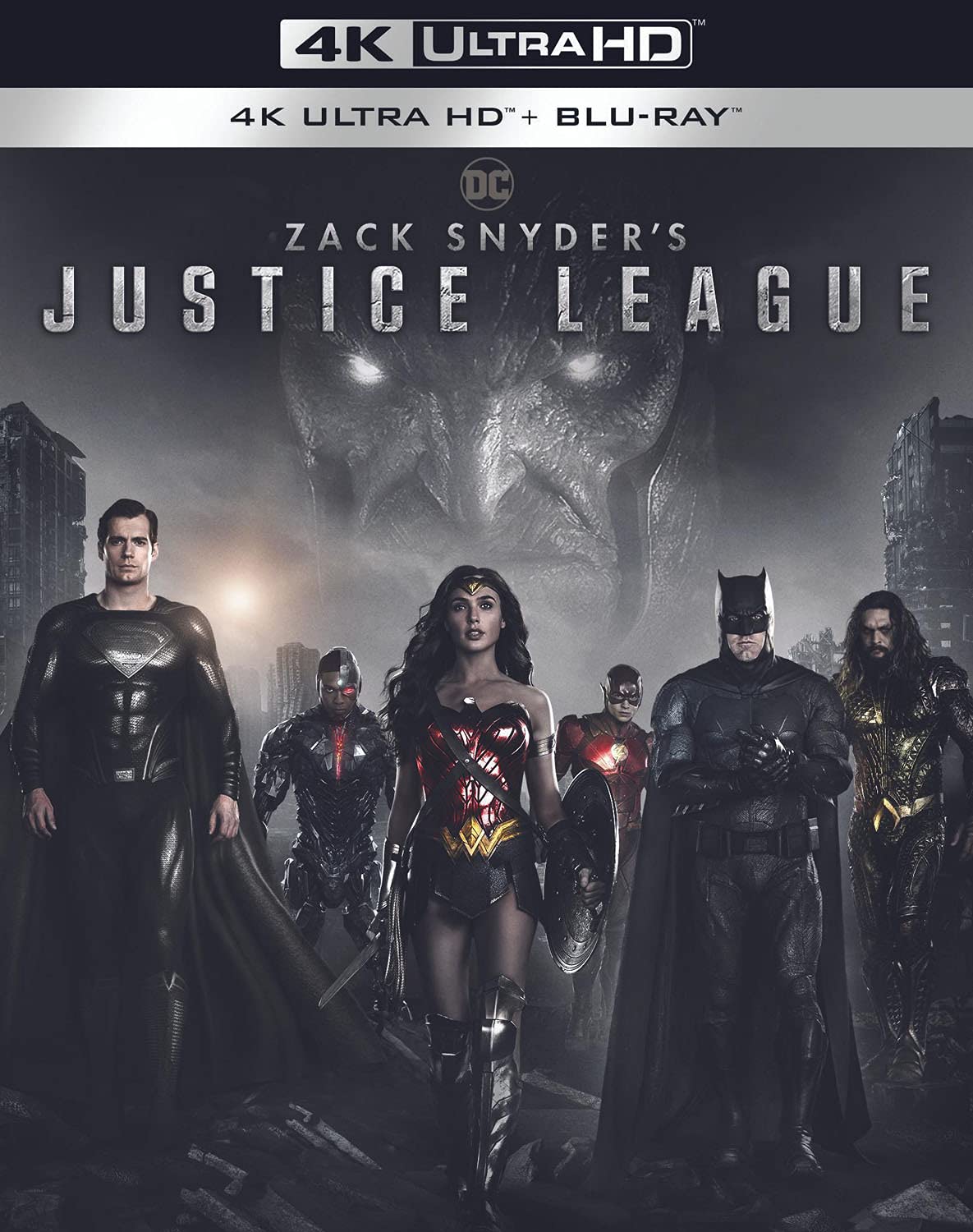
It started in 2013 with Justice League: The Flashpoint Paradox. DC decided to follow the Marvel MCU model and release a series of DC property films in a 16-film phase that ended last year with Justice League Dark: Apokolips War. After 16 films with a couple of branch-offs, that phase/story has come to a close, and a new phase begins with Justice Society: World War II. The stories were pretty much based on the New 52 reboot of the DC comics universe. There have been some exceptional films in the series and a couple of duds. The animation styles varied and conformed to the type of story being told. With the release of Justice Society: World War II we enter a new phase, and so far the theme or source of the new films hasn't been revealed. We know the next two films will be based on the Batman: The Long Halloween comic. After that it appears the DC folks' lips are sealed. While that two-part adventure looks quite enticing, the new series of films opens with a very average entry.
The film begins with President Franklin D. Roosevelt being briefed on a secret Nazi project. This is going to tempt you to fetch your Indiana Jones fedora and whip. You see, this secret Nazi project has Hitler sending teams out to look for "magical" or supernatural objects to help him win World War II. The film presentation gives us an idea of the kinds of artifacts the project is seeking, including... wait for it ... the Ark of the Covenant and the Holy Grail. No sign of Harrison Ford. FDR is also briefed on a special project the Allies are running. It's a group of superheroes who have been gathered to fight for the Allies. The group is led by Wonder Woman, voiced by Law & Order: SVU's Stana Katic with a rather humorous Russian accent. The team also includes Hawkman, voiced by Omid Abtahi, Hourman, voiced by Matthew Mercer, Jay Garrick's Flash, voiced by Armen Taylor, Black Canary, voiced by Elysia Rotaru, and Wonder Woman's main squeeze, Steve Trevor, voiced by Chris Diamantopoulos. We get to see them kick a little Nazi behind before we jump to the present where Barry Allan's Flash, voiced by Matt Bomer is helping Superman, voiced by Darren Criss, beat up on Brainiac, voiced by Darin De Paul. This is all pre-Justice League, and they go out of their way to let you know that this team-up is really something new. Barry tries to protect Superman from a Kryptonite projectile when he is suddenly thrown back in time and ends up on a World War II battlefield.
Posted in: Disc Reviews by Gino Sassani on May 13th, 2021
After filming Cold Pursuit in 2019, Liam Neeson announced he was done with his flirtation with action films. They had opened a new genre to the actor starting with Taken and created a nice boost to his career as an unlikely action star. He said he had some reservations about the genre. It didn't help that he revealed at the same time that he once roamed the streets looking for a black man to kill over the rape of a friend. It looked like it wasn't just action films that were over for the actor. I honestly expected there to be more trouble than there was, given the current climate. Somehow he kind of got a pass after apologizing for the remark. But he wasn't being offered the kind of high drama roles he was expected. So in less than a year he was back as an action figure, and that appears to be something he won't really be quitting in a long time. I get it. I was about to attend my fourth Elton John farewell concert since the first one back in the early 70's. There's something about getting the bug deep in your bones that makes it hard to let go. And let's be candid here, shall we? The pay ain't to bad either.
Liam Neeson plays Jim. He's a recent widower who lives on a ranch in Arizona at the Mexican border. His wife died about a year ago from cancer, and her medical bills have left him pretty much wiped out. He's on the cusp of losing his ranch. He spends his free time patrolling the area for illegals. He's got a walkie talkie that puts him in contact with the local border patrol where his stepdaughter Sarah (Winnick) is in a command position. On one of these patrols he happens upon a woman, Rosa (Ruiz) ands her son Miguel (Perez) slipping through a hole in the fence. He stops them but ends up in a gun battle with cartel warriors who are trying to get to the woman and her child. Her brother got himself in deep trouble with them, and now they plan on killing his family. The gunfight leaves Rosa dead after securing a promise from Jim to get her son to the safety of family in Chicago. He instead turns them in.
Posted in: No Huddle Reviews by Gino Sassani on April 23rd, 2021
The Italian film industry has been setting trends since Edison first released his wonderful moving picture cameras. Names like Dario Argento, Lucio Fulci, and Lamberto Bava delivered what would be known as Spaghetti Nightmares. These are the films that gave birth to the American splatter craze that began in the 1970's. Then there was Sergio Leone and his Spaghetti Westerns that propelled Clint Eastwood to instant stardom with his Man With No Name films. Most film fans know these filmmakers and the history that spawned. What is less known is that decades before these trends Italian filmmakers were created, a genre often called sword and sandal films that featured a lot of ancient buff guys with swords saving cities, and of course beautiful damsels in distress. While many were low-budget affairs, they soon evolved into epic spectacles while still on somewhat limited funds. Among these films the Greek semi-god Hercules would become one of the more famous and successful. Hey, Greek mythology is in public domain, so you can develop a franchise that has high name recognition without having to pay royalties. Writers were a dime a dozen and could be paid with a six-pack and a TV dinner. In Europe at the time there were no unions to make sure everyone shared in the wealth. Before long the craze like the other Italian films caught on in the states. They were dubbed in English and given names often far more spectacular than the film, and they became staples of the drive-in teen audience. Now The Film Detective has remastered one of these sword and sandal delights with a new 4K restoration. You wouldn't believe it, but this one was originally shot with some 70mm elements. And so here we present Hercules And The Captive Women, originally titled Hercules Captures Atlantis.
The film starts with panic among the elites of Greece. There is a rumor that Atlantis is developing supermen to eventually attack and claim the world. King of Thebes, Androclo (Manni) pleads with his friend Hercules, played by Reg Park, to join him in an expedition to get to the truth and stop the plan. It's a very small crew, with the King, a short but feisty loyal servant Timoteo (Furnari), and Hercules' son, who has stowed away without his father's permission. The ship wrecks, and by the power of cinematic coincidence they are washed on the shores of Atlantis but separated. Hercules finds a maiden being sacrificed to a god. Ismene (Efrikian) is the daughter to Atlantis Queen Antinea (Spain) and has been set to die to appease the gods who threaten to destroy Atlantis. Hercules isn't going to make friends or influence people by saving her life. Yet as mad as the queen might be, she kind of falls for the big lunk. That is before he interferes in her plans. Androclo is there, but he appears to have been brainwashed and fights with his strong friend. After yet another rescue of the princess and discovery that his son is also there, Hercules finds a pit where thousands of slaves are kept. The Queen has discovered a strange rock that gives them the powers of a superman but also places them under her control. Of course, she pleads with Herc to join her and rule by her side, but the big guy isn't having any of it. That's too bad for the Queen and too bad for Atlantis, because they all fall down and go boom. And that's why you'll never see a unicorn to this very day ... forget that. That's another story ... sorry.
Posted in: No Huddle Reviews by Gino Sassani on April 21st, 2021
"There is a doorway in the universe. Beyond it is the promise of truth. It demands we question everything we have ever been taught. The evidence is all around us. We are not alone. We have never been alone."
Ever since Eric von Daniken released his speculative book and its subsequent 1970 film Chariots of the Gods, there has been an entire field of study created around something commonly called Ancient Astronaut Theory, the idea is that extraterrestrials have visited many of our ancient civilizations. The theory continues that these visitors had a hand in shaping our development, whether it be through technology or even manipulation of our very DNA. These believers point to a world of evidence to support their claims. There are tons of images from earlier civilizations that could certainly be interpreted as depicting modern devices, concepts, or even spacemen. There is plenty of speculation that some of the knowledge and accomplishments of these peoples could not have been possible without some outside interference. There are even those who believe that aliens best explain our religious beliefs and that God himself was/is an extraterrestrial being. Whatever your own beliefs on the subject, there are certainly some fascinating points to be made. There is no question that the speculations and observations bring up some interesting queries that deserve our attention. This series attempts to document much of this evidence and the beliefs these findings have inspired.
Posted in: No Huddle Reviews by Gino Sassani on April 13th, 2021
"We bring you the circus, pied piper whose magic tunes greet children of all ages, from six to 60, into a tinsel and spun-candy world of reckless beauty and mounting laughter and whirling thrills; of rhythm, excitement and grace; of blaring and daring and dance; of high-stepping horses and high-flying stars. But behind all this, the circus is a massive machine whose very life depends on discipline and motion and speed. A mechanized army on wheels that rolls over any obstacle in its path, that meets calamity again and again, but always comes up smiling. A place where disaster and tragedy stalk the big top, haunt the back yard, and ride the circus train. Where death is constantly watching for one frayed rope, one weak link, or one trace of fear. A fierce, primitive fighting force that smashes relentlessly forward against impossible odds. That is the circus. And this is the story of the biggest of the big tops, and of the men and women who fight to make it The Greatest Show on Earth."
It was 1952 and four years before Cecil B. DeMille would deliver his Biblical epic release of The Ten Commandments. He would team with Charlton Heston for a bit of a dry run first in a film called The Greatest Show On Earth. It was released with the kind of fanfare that often precedes the arrival of the circus to town each year with its popcorn and elephants, clowns and lions and high flying trapeze artists. And while the circus is gone now, many of you are old enough to remember what a thrill it was to watch each time the big top opened up in our towns. For me it was Reading, Pennsylvania and the Rajah Theatre. Cecil B. DeMille was quite aware of the appeal of those usually annual visits. And so was born The Greatest Show On Earth.
Posted in: No Huddle Reviews by Gino Sassani on April 12th, 2021
"This bird you'll never change."
That seems to be the case with the Southern Rock band Lynyrd Skynyrd. Few bands have experienced the level of tragedy this one has. It's somewhat of a miracle that any version of the band would still be standing. But they are thriving and doing their best to keep their particular sound alive. And what better place to demonstrate that nearly 50 years after they were formed than back home in Jacksonville, Florida where the band's original members were formed. (No, they didn't come from Alabama.) I was never a huge fan of the band, but like most music lovers, I was drawn to hits like Free Bird. In my high school band we played Free Bird, Gimme Three Steps, and ... of course, Sweet Home Alabama. In later years another band of mine discovered the similarities with another iconic song, and we'd re-written some lyrics and would perform Werewolves Of Alabama. If you don't believe me, check it out for yourself.