Posted in: No Huddle Reviews by Gino Sassani on November 27th, 2019
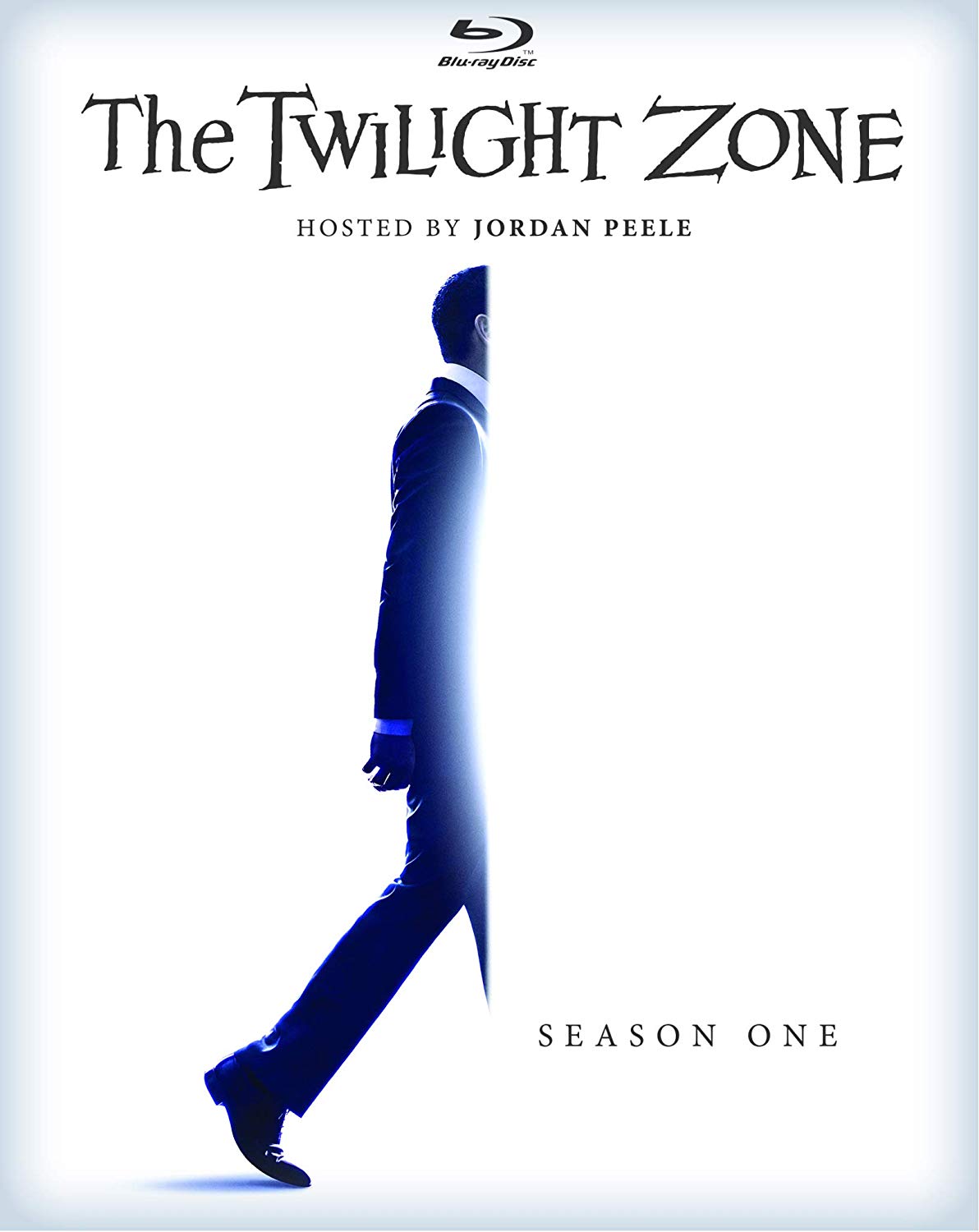
"There is a doorway in the universe. Beyond it is the promise of truth. It demands we question everything we have ever been taught. The evidence is all around us. We are not alone. We have never been alone."
Ever since Eric von Daniken released his speculative book and its subsequent 1970 film Chariots of the Gods, there has been an entire field of study created around something commonly called Ancient Astronaut Theory, the idea is that extraterrestrials have visited many of our ancient civilizations. The theory continues that these visitors had a hand in shaping our development, whether it be through technology or even manipulation of our very DNA. These believers point to a world of evidence to support their claims. There are tons of images from earlier civilizations that could certainly be interpreted as depicting modern devices, concepts, or even spacemen. There is plenty of speculation that some of the knowledge and accomplishments of these peoples could not have been possible without some outside interference. There are even those who believe that aliens best explain our religious beliefs and that God himself was/is an extraterrestrial being. Whatever your own beliefs on the subject, there are certainly some fascinating points to be made. There is no question that the speculations and observations bring up some interesting queries that deserve our attention. This series attempts to document much of this evidence and the beliefs these findings have inspired.
Posted in: The Reel World by Gino Sassani on November 24th, 2019
"It's a beautiful day in this neighborhood. A beautiful day for a neighbor. Would you be mine?
Could you be mine?"
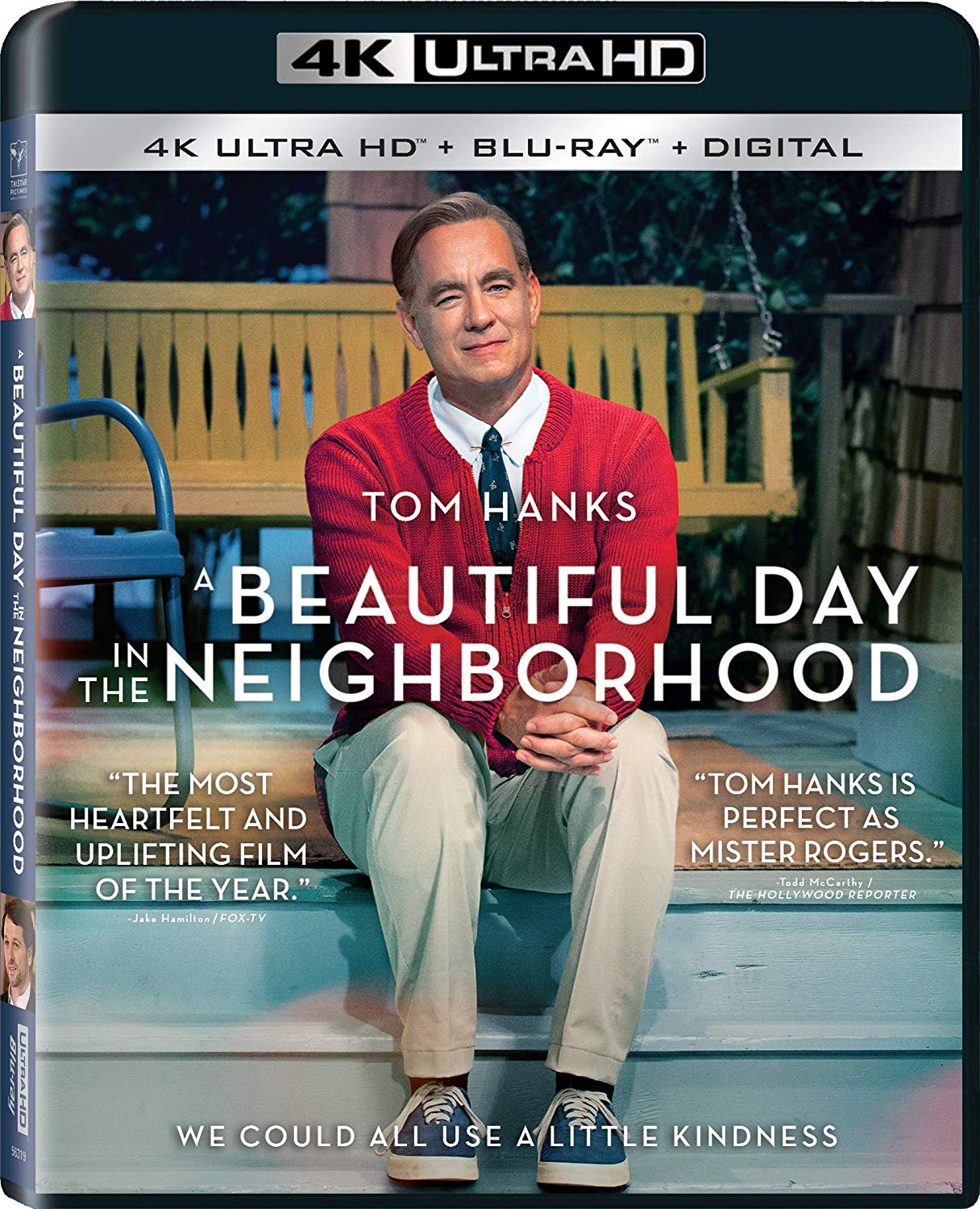
Anyone who was a kid from the 1960's to the 1990's and beyond recognizes Mr. Rogers and his neighbor song. The man defined children’s programming for television, and he did so from a small studio tucked away in Pittsburg, Pennsylvania for almost 40 years. There aren't many people living in this country who don't at least know who Fred Rogers was. It would be a complete waste of my space and your time to tell you very much about the man in these lines. Truthfully, you'll make the kinds of discoveries into the nature of who he was by spending a short 90 minutes watching the documentary Won't You Be My Neighbor that appeared last year. It will be time well spent no matter how little or much you think you know about him. But now hot on the heels of that incredible documentary comes a film staring Tom Hanks as the lovable neighbor we all used to wish we had. Recently Ancestry.com confirmed that Tom Hanks and Fred Rogers are related. Of course you have to go back the pre-revolutionary days of 1734 to find this elusive relative. But you won't have to time travel to spend a magical time with Mr. Rogers and Tom Hanks. In 2019 they happen to be the same man.
Posted in: The Reel World by Gino Sassani on November 22nd, 2019
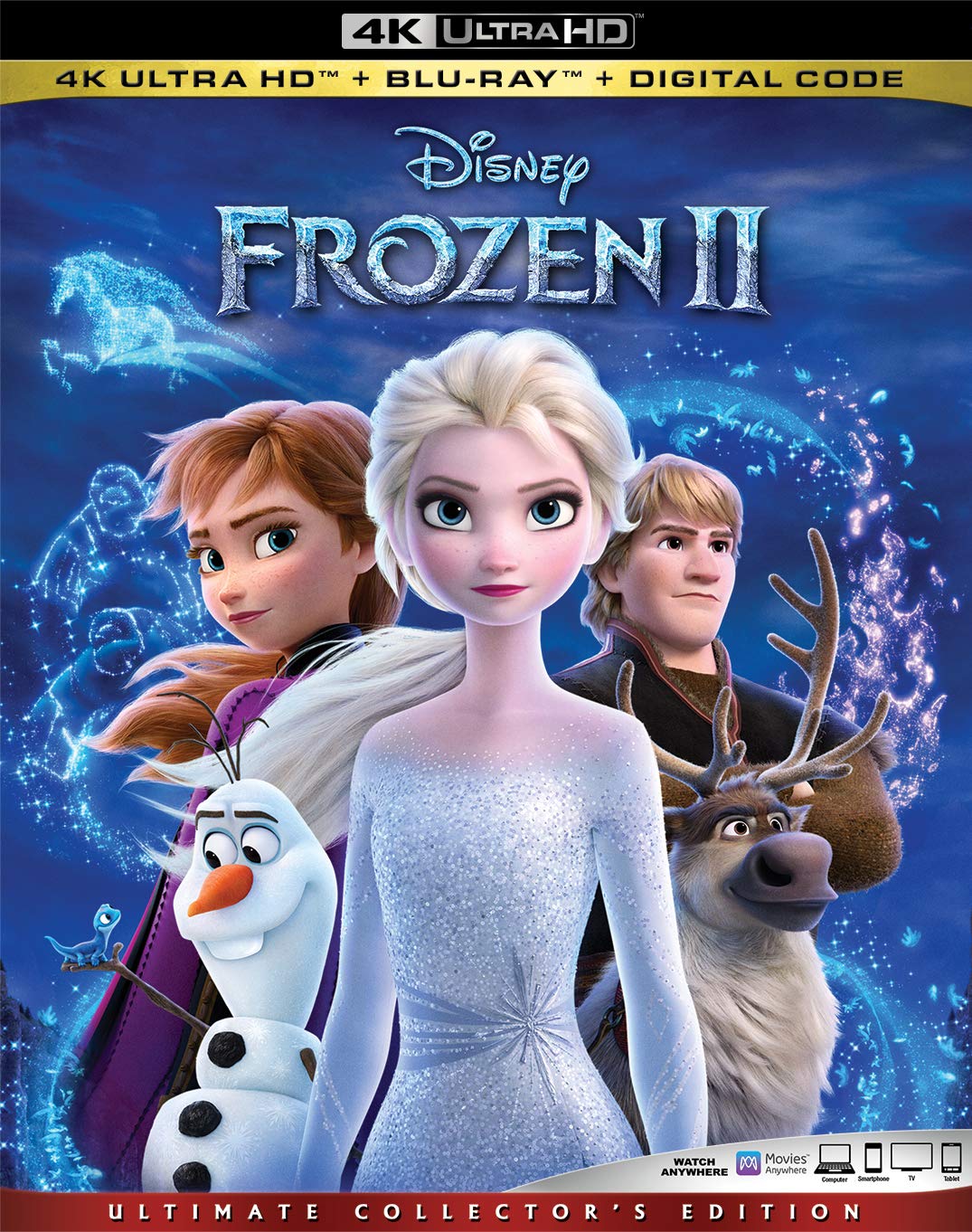
It's been six years since Frozen became somewhat of a surprise hit out of Walt Disney Studios in 2013. No one was surprised it made a good haul at the box office, but I suspect that even the masterminds at Disney never saw this billion dollar baby when it was first being born. It's become the biggest original hit out of Disney since the original Lion King set animated feature records in the 90's. I'll give the studio credit. They didn't rush out and try to cash in on the momentum as quickly as other studios would have. They took their time and assembled the same team of directors and songwriters and allowed the process to follow a six-year process with the intent of doing it right rather than doing it fast. For the most part I think that strategy paid off, and while this film will never be the classic the original has become, it will fit rather snugly into the franchise and will delight children while possibly cursing the adults who are fated to watch the film over and over again. This is absolutely one of those kinds of movies.
It all starts in the past where we spy young Elsa and Anna playfully getting ready for bed. The King puts them to bed with a story out of the kingdom's past. He regales them with how their grandfather met the people of an enchanted forest who had magical powers over the four elements of land, fire, air and water. They are told of the great gift of peace their grandfather gave these people in the form of a huge dam. It all turns nasty when the story continues to tell of a peaceful gathering where the people of the enchanted forest suddenly attack the people of Arendelle. The elements were so angered by the act of betrayal that they separated the kingdoms and enshrouded the enchanted forest with an impenetrable fog that has isolated the forest ever since.
Posted in: Disc Reviews by Gino Sassani on November 22nd, 2019
"He picked me out of a pile of pups, a tangled mass of paws and tails. He'd stopped at the farm on his way home from the speedway at Yakima. Even back then, I knew I was different than other dogs. My soul just felt more human."
There was a time when this kind of film would have been reviewed by Baby, the German Shepherd/Chow who used to run security here at Upcomingdiscs as well as fill in for the occasional dog film review. Baby's gone, and we haven't yet trained Aurora the Siberian Husky who resides at Upcomingdiscs to pitch in on reviews. The problem is getting her to put her ball down long enough to pay enough attention, let alone write a review. But we're working on it. Until then these duties have fallen back to me, the occasional dog lover, which usually depends on what Aurora is up to at any particular moment. As Baby would have said: "Let's not talk about that right now." The task at hand is another talking dog film which followed quickly on the heels of A Dog's Purpose and its sequel A Dog's Journey along with the most recent A Dog's Way Home. It's a trend that has produced some emotional moments at the cinema for those of us who have spent a large part of their lives with our canine companions. This time out we have The Art Of Racing In The Rain, which is based on the novel by Garth Stein. If you're hoping to have that same kind of emotional ride that these other films brought, I think you'll be in for a little disappointment.
Posted in: No Huddle Reviews by Gino Sassani on November 19th, 2019
"Make a little noise. Ruffle a few feathers."
I should confess from the beginning that I am a very dedicated Star Trek fan. I'm not a Trekkie or a Trekker, I'm a fan. I have often allowed my fan status to cause me to embrace the franchise even when it wasn't necessarily so good. As a young 15-year-old kid I attended the first 10:00 AM showing of Star Trek: The Motion Picture with a handful of friends on the opening day. We stayed through six showings and left sometime after midnight the following day, occupying the front row center and subsisting off the day's more limited concession offerings. Basically candy, popcorn and soda. Little has changed except for the lack of responsibilities that would allow me to spend 14 hours watching a single film over and over again. I'm still reluctant to dismiss anything Star Trek, but that's nearly what happened as I watched the first season of Star Trek: Discovery last year.
Posted in: The Reel World by Gino Sassani on November 11th, 2019
Director Roland Emmerich is no stranger to big-screen battles. The difference is that up until this year those battles have been against aliens, huge climactic changes, or giant lizards named Godzilla. There's no question that he understands how to shoot epic confrontation. The question I had going in to Midway was, can he deliver a battle that wasn't fiction? After nearly tow and a half hours, the answer came back somewhat mixed. This isn't the first time that the Battle of Midway has been brought to the big screen. In the 1970's Charlton Heston gave us a film that was more renowned for the trendy Sensurround gimmick than it was for the drama that unfolded on the screen. Sensurround was a fancy name for huge subs that would shake the theater, and if you were lucky enough to be seeing the film at a theater with enough money to go all the way, you might have found yourself in a seat that was wired to shake, rattle, and roll. Today the chains call that Dolby. This Midway didn't lend itself to some William Castle hustle. It's all up on the screen. The film bears no relation to that earlier effort except for the legendary battle in the Pacific that turned the tide of the Pacific theater of World War II toward the Allies. The film actually shares more in common with the classic Tora Tora Tora in that we spend a good deal of screen time with the Japanese players in the battle. Not at all like the earlier gimmick film, this movie is intended to place you squarely in the middle of the action. If that's what you came to see, you are certainly in for an immersive experience only without the hot-wired seat.
The film doesn't start with the titular battle. In fact the term Midway might just as easily describe when that famous event would occur in the film as much as it describes the actual battle itself. The film begins in 1937 a full four years before Pearl Harbor. We get a sneak peek inside the Japanese hierarchy and the seeds of what we already know is to come have been planted. From there the film spends about 30-40 minutes on the actual attack on Pearl Harbor. From there we are treated to the Doolittle raids on Tokyo, which were our direct response to the attack. At this point the focus shifts to the intelligence department of the war where intercepted information is gathered and interpreted. That information is passed along to Charles Nimitz, played incredibly by Woody Harrelson, who has to decide what the enemy is up to and the best use of America's limited naval resources to counter that action. All of the big shots think the Japanese are planning one kind of attack, but Nimitz trusts the leader of one of the intelligence teams who believes the target is Midway, a collection of small islands important most notably as a fueling station between Japan and Hawaii. That intelligence officer is Ed Layton, played by Patrick Wilson. The film spends perhaps too much time with these two talking about the intelligence. We know it's Midway. Even if you didn't do quite so well in history class, it's the name of the film, for crying out loud. Instead of the quick mention, Nimitz and Layton spend too much time with: "Are you sure?". "Yes, I'm sure!" "Are you really sure?" "Yes, I'm really sure!" "Are you really, really sure?" and so on.
Posted in: Disc Reviews by Gino Sassani on November 7th, 2019
"This is where change begins."
We're a visual people, so most of you will recognize Taylor Sheridan from his role as a deputy chief of police in Sons of Anarchy when the controlled puppet regime had finally left the scene. It's not a remarkable role, and it's not a complete surprise that Sheridan found his calling more recently behind the camera. As a writer, his first script did hit it out of the park. Sicario is an awesome film populated with compelling and interesting characters who thrived on a broken system. That theme appears to have stuck with him, because the first season of Yellowstone appears to take us back in time to the days of open frontiers and cattle barons who struggled to keep their land amid lawless communities and raiding parties of American Indians who were portrayed as savage beasts who kill women and children in the middle of the night to become shadows of nightmares and the stories told to keep children in line. These themes are all there, but it takes place in a modern 2018 setting that does indeed make for an interesting new twist on an old idea. This is the dawning of the modern western where lands still stretch for miles and are still owned by a single family. It's Bonanza in the 21st century, and Kevin Costner thought enough of the idea to star in this television drama series for The Paramount Network.
Posted in: The Reel World by Gino Sassani on November 4th, 2019
"There's just more to it than picking the right color. It's the texture, the weight of the material. One wrong choice, it can destroy the look of the entire room."
Film rights can be a tricky and complicated issue. Sometimes these rights aren't quite clear and lead to popular titles never making it to the home video market, or at least suffering long delays as in the 1960's Batman television series situation. Often rights are held for certain periods of time and end up moving from holder to holder. That's been the case with the Terminator franchise. The result has been some sequels that pulled in different directions and failed to provide a nice linear history from film to film. Now those rights have reverted back to a favorable situation for the likes of James Cameron. The result is an attempt to get back to the original course of the first two films. Terminator: Dark Fate picks up from T2 and ignores any of the other films made since then. It's very much like the path taken by the new trilogy of Halloween films we got a taste of last year. There isn't any denying the fact that T2 was the best this franchise has had to offer. Something was always just a little bit off with the rest of the films. There's a texture to all of this that James Cameron has a unique eye for. And while he didn't direct this film, he created the story and produced the film. Like the new Halloween direction, this is also intended to be the first film in a new trilogy. The Terminator franchise appears to be back, and on track to please the legions of fans from the old to the new.
Posted in: Disc Reviews by Gino Sassani on November 1st, 2019
Every generation has had its Christmas classics, films that have become as much a part of the holiday family traditions as Christmas trees and candy canes. For me it has been the more modern A Christmas Story with ol’ Carl Kolchak himself, Darren McGavin. Kids today have taken more of a shine to even more recent films, but for more than one generation, Christmas wouldn’t be the same without Frank Capra’s It’s A Wonderful Life. Since 1947 the film became a seasonal fixture in neighborhood movie houses across the fruited plain. In the 1970’s the film temporarily fell into the public domain and was played relentlessly on local television stations as each holiday came and went. Unfortunately, these were usually prints in horrible condition, so that scratches and splice marks became a part of the experience, not to mention ads for department stores touting their early bird specials. It is with that experience that I, as did most from my generation, become acquainted with Jimmy Stewart’s George Bailey. When the home video market began to bloom with VHS in the mid 1980’s, a better print resurfaced, so that the experience improved dramatically, along with the loss of those commercials. Of course, this new resource of home entertainment created a fight for the rights to the film to once again be restored to a single owner. It ended up being the film’s score that would allow the rights to be enforced once again. The crappy television prints disappeared, and by the early 1990’s, efforts to restore the film began.
These restoration efforts invariably turned to the controversial subject of colorization. If anyone remembers Ted Turner’s push to colorize RKO films, including King Kong, you will also remember how bad those films looked. The color was an added texture of hue covering the picture so that the subject’s textures and subtleties were obliterated. It was almost as if some child decided to finger paint all over the negative. There was nothing magical or at all realistic about the process. It’s A Wonderful Life has been colorized no less than three times. In both 1986 and 1989 the film got the colorized treatment, both failures. In 2007, It’s A Wonderful Life had been colorized by a new process developed by Legend Films. This new process allows films to be colorized naturally, retaining all of the detail and texture of the original print. These are the guys who are working with legendary Ray Harryhausen to colorize and restore many of his classics. The new process uses a 16-bit grayscale, which offers over 64,000 shades of just gray. The process, called “Photo-Real”, can reproduce HD quality pictures with stunning, lifelike color. I was a very cynical skeptic of the process and was prepared to rip this color print to shreds in my review. I was blown away by how natural the color looks. You will be hard pressed to believe this wasn’t an original color print. Not only are the colors realistic, but the print retains the particular color palette of the 1940’s, so that the film still looks like one from the correct era. I know you’ve seen incredibly bad colorization before, and it likely has made you unwilling to even give this one a chance, but you owe it to yourself to check it out. And this is the version you get on the Blu-ray copy of the film.
Posted in: Disc Reviews by Gino Sassani on November 1st, 2019
Ultraman is a huge part of Japanese culture and pretty much has been since the original live-action show in 1966. Perhaps Godzilla started the ball rolling, but Ultraman brought us these monsters on a regular basis. In Japan, Ultraman is like our Superman. He’s an iconic hero and a huge part of the pop culture. Since the 60’s he has appeared in many forms, most of them animated. But it is this 1966 series that made a ton of us kids fall in love with him and an entire genre. Yes, there were many from the era: Space Giants featured a giant fighting robot who fought monsters and sometimes converted into a spaceship (yes, before transformers were ever thought of); Johnny Socko had his giant robot; and the list goes on. But it was Ultraman who started it. Eiji Tsuburaya, who created the original Godzilla, formed a new company outside of Toho Pictures. Ultraman was pretty much the first thing out of the new shop.
It started with a series called Ultra Q. It was a popular series in Japan. There was no Ultraman here, but some of the elements of what would be the Science Patrol started there. When it was finished, the staff was approached to create a new show, and fast. But this one needed more action and also something that could be sold to the American markets. That was Ultraman.