Digital Copy

I'm a Minnesota Vikings football fan. Yes, I accept the condolences. However, I didn't say that to get sympathy, and I'm not yet in need of the services of the suicide hotline. With two games to go, I will keep the number on speed dial, just in case. A thousand years ago we had a star player who made the by now infamous statement that he plays when he wants to play. For a young athlete with an already troubled past, it didn't go over too well. But over the last decade or so Clint Eastwood appears to be in that same mindset. He acts when he wants to. He's only appeared in three films in the last ten years. The difference is that Clint has earned the right to be picky about when he works. He isn't taking a paycheck when he isn't working, and when others depend on him to hit it out of the park, he rarely misses the ball. Trouble With The Curve won't ever rival Eastwood's other roles for action, intensity, or even one-liners, but it's a solid performance in every way. For all of those Eastwood critics in the glory days who said he couldn't pull off a performance without the trappings of Dirty Harry or The Man With No Name, I suspect you're having a hearty meal eating those words after seeing Trouble With The Curve. It's perhaps his simplest role yet. It also happens to be a home run.

Gus (Eastwood) has been a scout for baseball's Atlanta Braves for 40 years. He's responsible for the team's greatest talents going back to Dusty Baker. Now he's in his 80's. New, younger blood has invaded the world of scouting, and they've brought along all of their latest computer toys to do the job. Gus won't adapt to that new technological world. He can tell a hitter's talent by the sound of the ball leaving the bat or the sound of the batter's hands as he gets ready to swing. That's a good thing, because Gus is losing his eyesight. He trips over tables and chairs (enter your own RNC joke here) and isn't the safest person behind the wheel of his car. His old friend and head of scouting for the team is Pete (Goodman). He's still behind Gus, but the pressure is on. There are only three months left on Gus's contract, and the draft is approaching. Gus has one scouting trip to prove he's still got it, or he's going to be put out to pasture by owner Vince (Patrick).

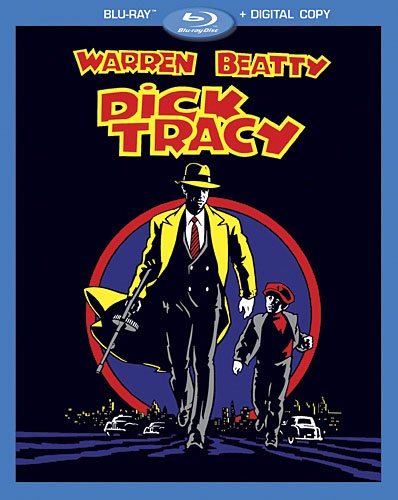
At the turn of the millennium, we seemed to collectively decide that we wanted our heroes to be dark and gritty. The X-Men traded in their yellow spandex for black leather in their first big-screen adventure. Batman went from exchanging quips and painful puns with Mr. Freeze to brooding magnificently for director Christopher Nolan. And Hollywood almost completely stopped making candy-colored spectacles like Dick Tracy.

It’s not difficult to understand why this happened. Though I have a soft spot for pulpy ‘90s period pieces like The Rocketeer, The Shadow and even The Phantom, they didn’t exactly set the box office on fire. The star-studded Dick Tracy was actually the most successful film from this group, grossing over $100 million, earning seven(!) Oscar nominations and winning three of those trophies. However, the fact that Dick Tracy’s closest doppelganger is probably the ultra-violent Sin City — another tale with tough-talking cops and crooks that looks like it was ripped directly from the pages of its source material for the big screen — tells you where moviemaking has gone from then to now.

"When you said you wanted an ocean view, you didn't think you'd get the whole ocean, did you?"

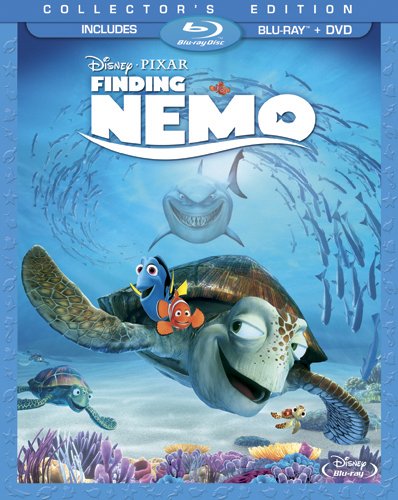
When Finding Nemo was released in May of 2003 there were a ton of skeptics. It was certainly a divergence from the tried and true Pixar formula, and even the people involved with the project were concerned that it would become Pixar's first flop. They needn't have worried. The film was far from a flop. It took in over $70 million in just its first weekend. The final total would be just shy of a billion dollars. The animated feature took the Oscar for best animated feature that year. But that would be just one of 35 awards the film would go on to win. Still, the true success of a film can not always be found in the box office take. Truly classic films are timeless. It's been one of Walt Disney's defining characteristics over the decades. It might be too early to tell if Finding Nemo will fit that timeless classic mold, but it has already left a pretty strong impact on our pop culture.

“You think this can last? There’s a storm coming, Mr. Wayne. You and your friends better batten down the hatches, because when it hits, you’re all gonna wonder how you ever thought you could live so large and leave so little for the rest of us.”

In the spirit of full disclosure, let me state that my favorite comic book hero is Batman. As a child, even before the sixties TV show premiered, I loved the tale of Batman. It is a story of a child who overcomes the fear and destruction of his childhood and becomes stronger because of it. He grows into an extraordinary man and, in spite of having no super powers, created a legend out of himself by becoming an icon for justice. Bruce Wayne channeled his lust for vengeance into mastering his intellect, detective skills, science and technology, physical prowess, martial arts skills, an indomitable will, fear, and intimidation skills to fight his continuous war on crime. He may have inherited almost limitless wealth, but he didn’t let it make him soft; instead he converted the riches into a crime-fighting asset. His behavior may have been borderline psychotic, but he lived by an impossibly strict, but simple, set of rules… no guns, no killing, no glory, but most of all, zero tolerance for crime.

"I promise you the secrets of the universe, nothing more..."

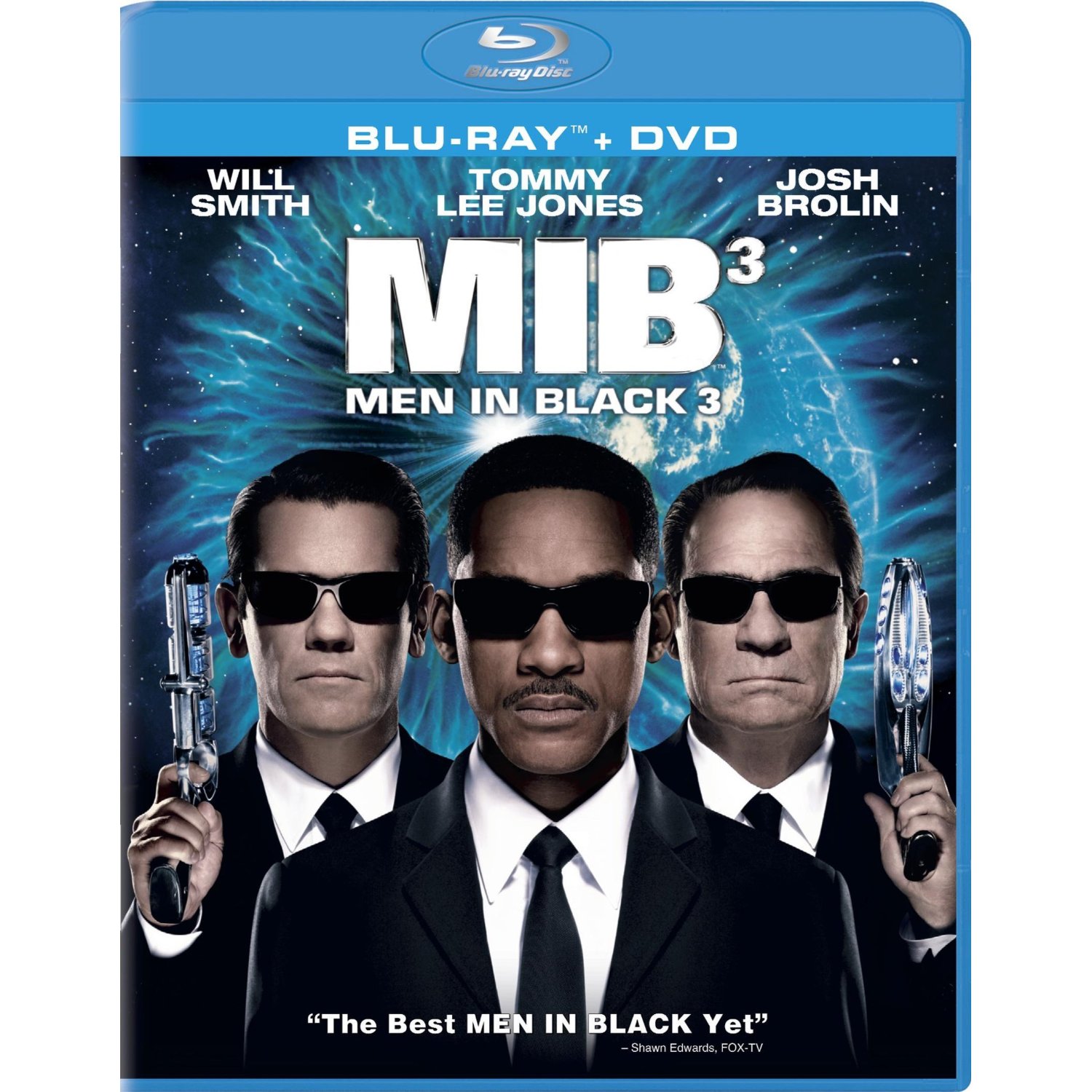
It's been an astonishing 15 years since Will Smith and Tommy Lee Jones first teamed up as Agents J and K respectively for the intergalactic police force Men In Black. The film was like a breath of fresh air. It combined top-flight science fiction fantasy with whimsical humor. It was a hit at the box office, and like most wonderfully original hits it was quickly followed by a sequel that had almost none of the cleverness and freshness of the original film. The film was so unmemorable that I sat with other critics getting ready to see Men In Black 3 and none of us could actually remember what the second film was even about. Years went by and most of us put the franchise in our rearview mirror.

 "In 1920 they passed the prohibition act making the sale of alcohol illegal. Well... at least it was supposed to be."

I know what you’re thinking, and I was also incredibly disappointed to learn this film was not a biopic of Xena: Warrior Princess actress Lucy Lawless. (This hypothetical film would obviously star the ageless Kiwi, because the actress still looks incredible.) Fortunately, Lawless makes up for its startling lack of Lawless by being one of the better films I’ve seen this year.

"Nice Greek girls are supposed to do three things: marry Greek boys, make Greek babies, and feed everyone until the day we die."

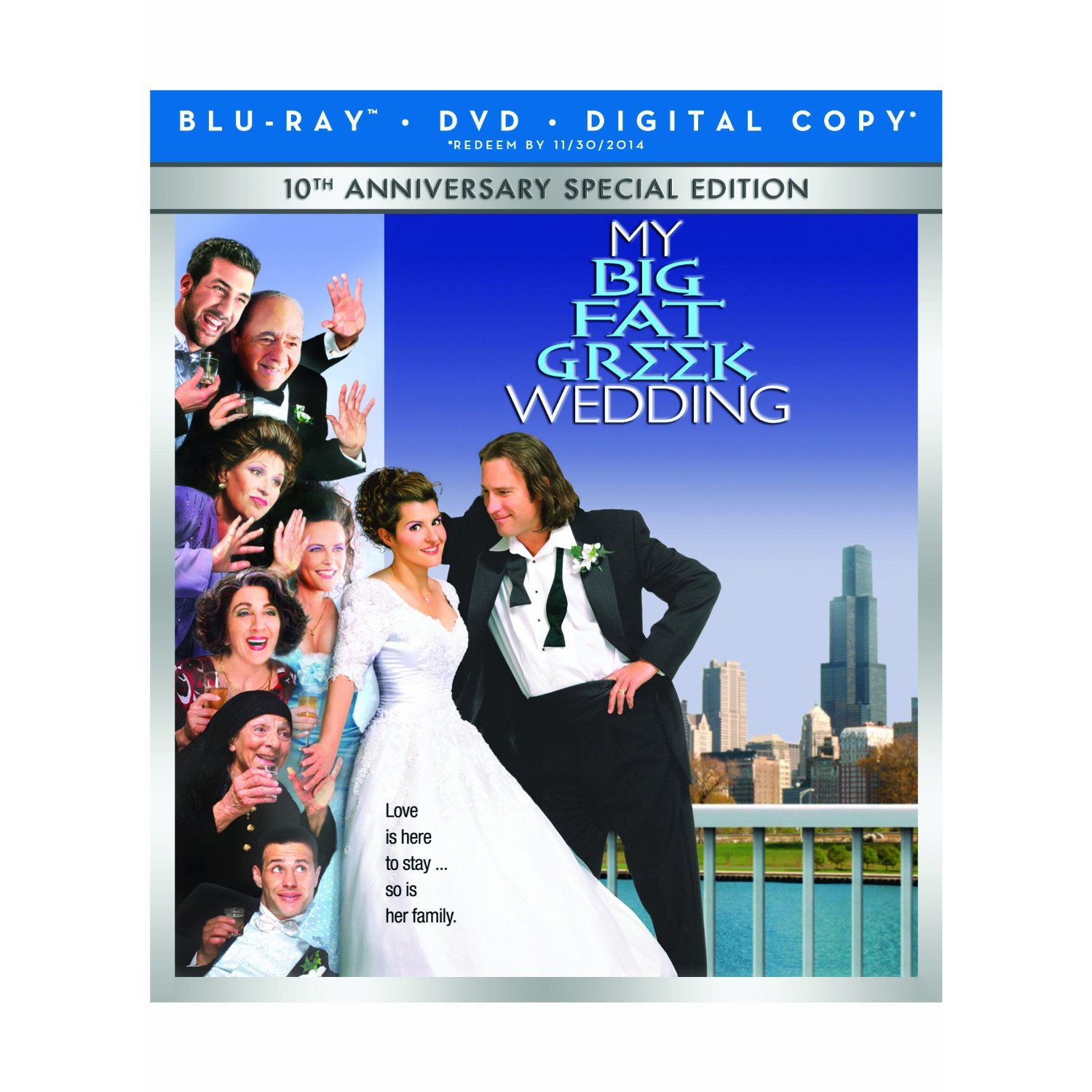
If ever a movie could be negatively affected by monstrous box office numbers, it’s My Big Fat Greek Wedding. When a five-million-dollar film rides a tsunami of critical buzz and excellent word-of-mouth past the two hundred million dollar box office gross (finally ending somewhere over $230 million), it’s impossible to see it for the first time completely free of expectation. Perhaps this was my mistake, because I went into my first viewing of the king of sleeper hits excited to a super-duper romantic comedy. …I’m not sure exactly what I was hoping for. Was it a hearty helping of belly laughs? This film offers sparse and modest chuckles at best. Perhaps it was some sort of originality within its predictable story arc. Instead, this is a by-the-numbers romcom with by-the-numbers romcom characters. Maybe I was hoping for a film that could at least approach capturing the profundity of love, or the reality of struggles with culturally divergent family values. Whatever it was, I felt pretty unfulfilled by the time it was all over, even though I found the movie reasonably enjoyable.

"The ancients spoke of it. It is the heart of this fierce land. It is carried in the wind. Born of our legends, and when we are put to the test, it is the one thing that we must always be."

Readers of this site already know that I have a particular fondness for most of the films that have come from Pixar. The studio pretty much invented the computer-animated feature film, and they've been setting the bar higher with each new release. I've always thought it was rather fitting that the studio ended up as part of Disney. After all, it was the Mouse House that invented the animated feature to begin with. It all has a certain poetic destiny feel for me. Pixar is still leading the cutting edge. My favorite to date has been Monsters, Inc., and I am eagerly waiting for the Monsters University prequel, which is now only a year away. In the meantime, the powers that be over at Pixar have tossed us yet another original story: Brave.

My favorite genre of music to make fun of is Metal (even though I like listening to it). As an example, This is Spinal Tap, the best musical mockumentary ever, we learn that metal can be freaking hilarious. That’s why when my webmaster offered me Metalocalypse Season Four on Blu-Ray, I eagerly said yes even though I had only seen the cartoon once or twice. However, once I opened it up, I realized before me was perhaps one of the funniest dark comedic cartoons I have ever seen.

This site has not really touched this series since Season One, so I will go ahead and go over the basics. Metalocalypse is about a band, possibly the world’s greatest death metal band, Dethklok. This band has become so successful that they are considered the seventh largest economy in the world. Dethklok consists of five members: Nathan Explosion (lead singer), Skwisgaar Skwigelf(lead guitar), Toki Wartooth (rhythm guitarist), Pickles (drummer) and William Murderface (bassist).

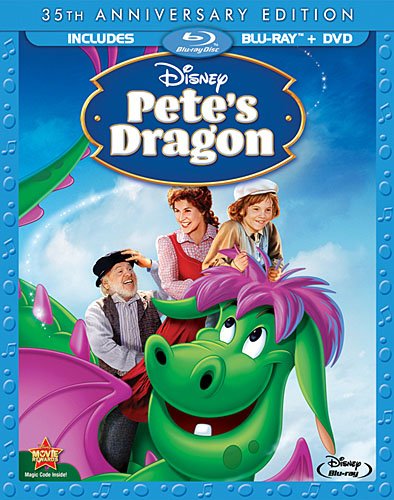
“A dragon. A dragon. You bet we saw a dragon. So big and brave he came to save a village in distress. He kept the ship from crashing when he heard the SOS. He faced a group of villains and he fought them with success…”

When Walt Disney Studios released Mary Poppins, the entertainment world was turned on its ears. The integration of live action footage with animation had never been done with such success before. The studio that nearly singlehandedly perfected modern methods of animation was also the studio that learned how to combine it almost seamlessly with real breathing actors. With the release of Pete’s Dragon many years later, audiences couldn’t wait for a peek at how far Disney had perfected the process in those years. While as children we got a big kick out of Pete’s Dragon, anyone looking for the latest in integration technology was in for a dragon-sized disappointment. The creature effects bore no resemblance whatsoever to that earlier technique. The animation itself was crude, by Disney standards at least, and never, not for a second, appeared as if it existed in the same place as the rest of the film. The beast’s green color would fluctuate in hue as well as brightness. There were many obvious mismatches where the two media connected. Even many of the actors’ sightlines were far off the mark. Walt Disney Studios took several steps backwards with the 1977 release of Pete’s Dragon.