Comedy

Look, I don’t take pleasure in being the guy who slams a religious movie. It’s not that I’m afraid I’ll go to hell. (If someone can go to hell for writing a scathing movie review, then the system is broken.) I just don’t particularly enjoy tearing down any well-meaning movie with a positive message. However, when a film is as thoroughly inept as The Holy Roller, I’m afraid I have no choice.

The New Zealand dramedy follows Pastor Luke (Angus Benfield) who leaves his modest countryside congregation — although calling one person a “congregation” might be too generous — in favor of the big city because he wants to witness a miracle. (The Holy Roller was filmed in Christchurch, the country’s third largest urban area, right before a series of severe earthquakes in 2010 and 2011.)

Oregon may have been the 33rd state to join our union — and Portland may be its most populous city — but Portlandia is a state of mind. And according to the surreal IFC sketch series created by stars Fred Armisen, Carrie Brownstein and director Jonathan Krisel, that state of mind is happily stuck in the simpler time represented by the '90s.

Armisen and Brownstein co-star in almost every sketch, and each segment lasts no more than five minutes. That shrewdly gives the audience multiple opportunities to laugh within one episode even if a particular concept isn’t working or is too bizarre. (One especially painful skit consisted of Armisen and Brownstein repeatedly calling out “Sacagawea!" Thankfully, it was over relatively quickly.)

“‘Cause I’m a con, don’t mean I ain’t got no rights.”

The movies have done a pretty good job of showing us the action, drama, horror, comedy and, yes, sex that lies behind prison walls. But there are far fewer examples of films examining what happens once an inmate is paroled and tries to re-enter the “real world.” The most famous movie parolee is probably Brooks from The Shawshank Redemption, and that didn’t turn out so well.


Being on this planet more than a few years, I can say I have had my share of relationships as well as those times when I felt like I was starting over. In that time I was able to reflect, I always felt like a new person, well at least temporarily. But every relationship helped me to refine my personality and build my character to the person I am today. As it turns out today, I get to review Lola Versus which takes us on a journey of self realization after a crushing breakup. Let’s see how it does.

We open up to a beach where Lola (played by Greta Gerwig)is performing various yoga exercises and over analyzing her horoscope which says that something will soon turn her life upside down but in the end it will only make her stronger. Her ears start ringing to a sound of a persistent noise blower. The next thing she knows she is waking up next to her boyfriend, Luke (played by Joel Kinnaman). It’s her birthday and she is turning twenty-nine.

The darker side of suburbia's well-manicured lawns and white picket fences has been properly documented and satirized in both film (The Stepford Wives, American Beauty) and television (Desperate Housewives, Weeds) over the past few decades. Suburgatory — ABC’s smart and affable addition to the genre — is among the latest to throw its fancy, colorful hat into the ring.

After single father George Altman (Jeremy Sisto) finds a condom in his 15-year-old daughter’s room, he panics and uproots the two of them from Manhattan to the picture perfect suburb of Chatswin because it’s supposed to be one of the best places to raise children. Not surprisingly, Tessa (Jane Levy) is not very happy with her father.

As I was watching the new Ocean’s Eleven for the 185th time — it’s the last movie I saw twice on the same day in theaters — it occurred to me that the stakes were entirely too high. Three casinos…$160 million…the threat of being caught and glared at by Andy Garcia. The Babymakers, on the other hand, builds up to a heist with absurdly low stakes. It’s basically like Ocean’s Eleven, only the exact opposite.

After a few years of marriage, Tommy (Paul Schneider) and Audrey (Olivia Munn) decide they want to have a baby. We then watch Tommy try to get Audrey pregnant — strategic camera angles keep Munn mostly modest — without any success. Since it appears that Tommy is shooting blanks, the couple decides to visit a fertility clinic after receiving a bunch of advice from their respective groups of friends that I’m not sure I’m allowed to repeat on this site.

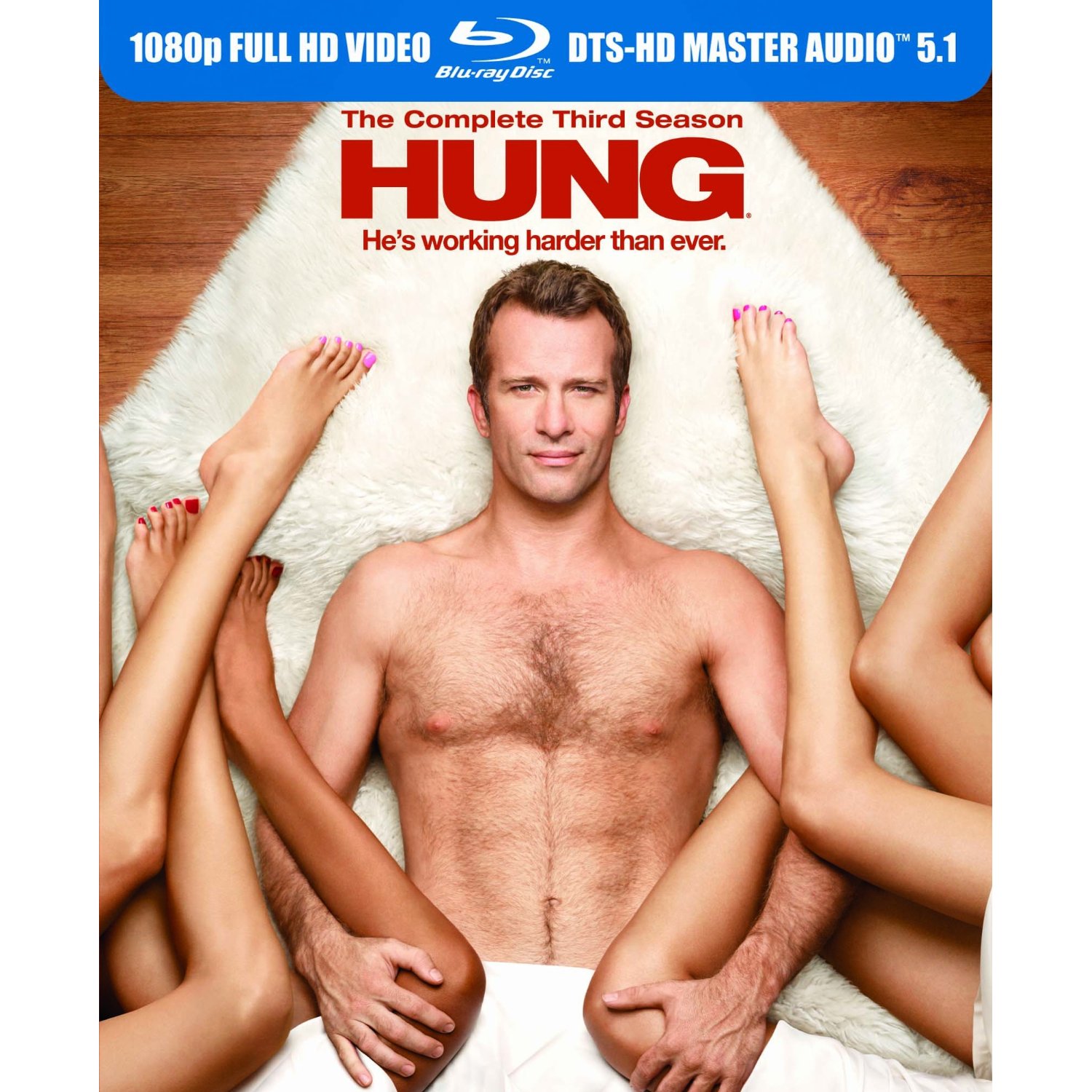
Remember when I mentioned the difficulty of reviewing a season in the middle of the show’s run? This week, I shall attempt to review two different HBO shows at the end of their respective run. Yes, I will be piecing together a show that is in its last season with very little (or no knowledge) of the seasons before. This should be a fun ride and our last entry is the third season of the HBO Comedy: Hung.

Our very own M.W. Phillips was able to review the second season of this show, so feel free to check that out.

If you have a low tolerance for quirky indie comedies, just listening to the premise of Goats might be enough to make you gag. The film follows Ellis, a responsible 15-year-old Tucson boy who decides to attend a prestigious East Coast prep school. Left behind are his flaky, New Age-y mother and Goat Man, a pool man/weed grower who is also Ellis’s primary father figure. In case you’re already rolling your eyes, let me assure you there’s slightly more going on here than quirk for quirk’s sake.

The central joke is that the most stable adult Ellis (a mature, non-showy Graham Phillips) has ever known is Goat Man (David Duchovny), a kind soul who appears, at first glance, to have worse hygiene than the goats he spends most of his time with. Then again, Goat Man pretty much wins by default because Ellis’s mother Wendy (Vera Farmiga) is more interested in her own spiritual rituals and new boyfriend (Justin Kirk) than she is in trivial things like paying her bills. (Ellis handles all the finances.) Wendy, however, is lucid enough to become enraged when Ellis decides to attend Gates Academy, the same prep school where his father (Ty Burrell) studied.

Everyone on TV has nicer clothes and a bigger house than you do. And I’m not just talking about TV doctors or lawyers. Even small-screen characters with relatively modest incomes manage to live in palatial apartments. (Friends is probably the most famous example.) We complain about how unrealistic it is for a barista and a line cook to be able to afford such a nice place, but part of the appeal of turning on the tube is temporarily turning off our real-world problems.

CBS’s 2 Broke Girls — along with Fox’s Raising Hope and ABC’s The Middle — seeks to follow in the blue collar sitcom tradition of shows like Roseanne and Sanford and Son. (Though 2 Broke Girls is nowhere near as good as either of those shows.) Despite the fact that their apartment is big enough to literally fit a horse, 2 Broke Girls is one of the few shows on TV where the main characters actually worry about money. (Not counting shows where the main characters are gangsters or meth dealers.)

There’s obviously nothing funny about the atrocities committed by some of history’s most notorious tyrants. So why have these men proven to be such a surprisingly fertile source of comedy? Whether it’s (Puppet) Kim Jong-il crooning forlornly about being lonely (actually “ronery”) in Team America: World Police or Adolf Hitler being saluted by a chorus line of high-stepping stormtroopers in The Producers, there’s certainly a precedent for mocking these reviled figures. With The Dictator, Sacha Baron Cohen appears to be taking his patented inappropriateness to a new level.

Cohen — the English actor, comedian and professional provocateur — stars as Admiral General Haffaz Aladeen, ruler of the oil-rich and fictitious Republic of Wadiya. (Muammar Gaddafi and Saddam Hussein are clearly major influences.) The trick to making this sort of (potentially-abhorrent) comedy seems to be focusing on the outrageous personalities of these tyrants, rather than all the horrible things they’ve done. As a result, Aladeen is racist, sexist and too many other negative “-ists” to list, but the movie portrays him as a bearded buffoon who isn’t even remotely dangerous. (Though try telling that to the dozens of people Aladeen orders to be executed over trivial offenses.) When he is summoned by the United Nations to address concerns about his country’s nuclear program, Aladeen travels to New York, where he embarks on a life-changing journey involving a boyish feminist (Anna Faris), a severed head and a few celebrity cameos.