Genre

"Four score and seven years ago our fathers brought forth on this continent a new nation, conceived in liberty, and dedicated to the proposition that all men are created equal. Now we are engaged in a great civil war, testing whether that nation, or any nation, so conceived and so dedicated, can long endure."

These were strong words, and the man who spoke them was certainly a dominant figure in American history. He's been portrayed hundreds of times on film and television. Rarely have any of these efforts been able to capture the true essence of a great man. You can't blame the actors or the production teams. There are those tasks which some say just can't be done. Lincoln heard those arguments himself. I'm sure that Steven Spielberg must have been haunted by the same thoughts when he set out to do Lincoln. Fortunately, he found another remarkable man who was up to the task. Daniel Day-Lewis does get the Oscar for his performance as Abraham Lincoln. We might well believe that all men are created equal. It's a true enough axiom. That doesn't mean that all men process equal ability in all things. Just two and a half hours with Daniel Day-Lewis and you'll find the point well illustrated. The film also took an Oscar for its wonderful production design.

“It’s been a long time getting from there to here.”

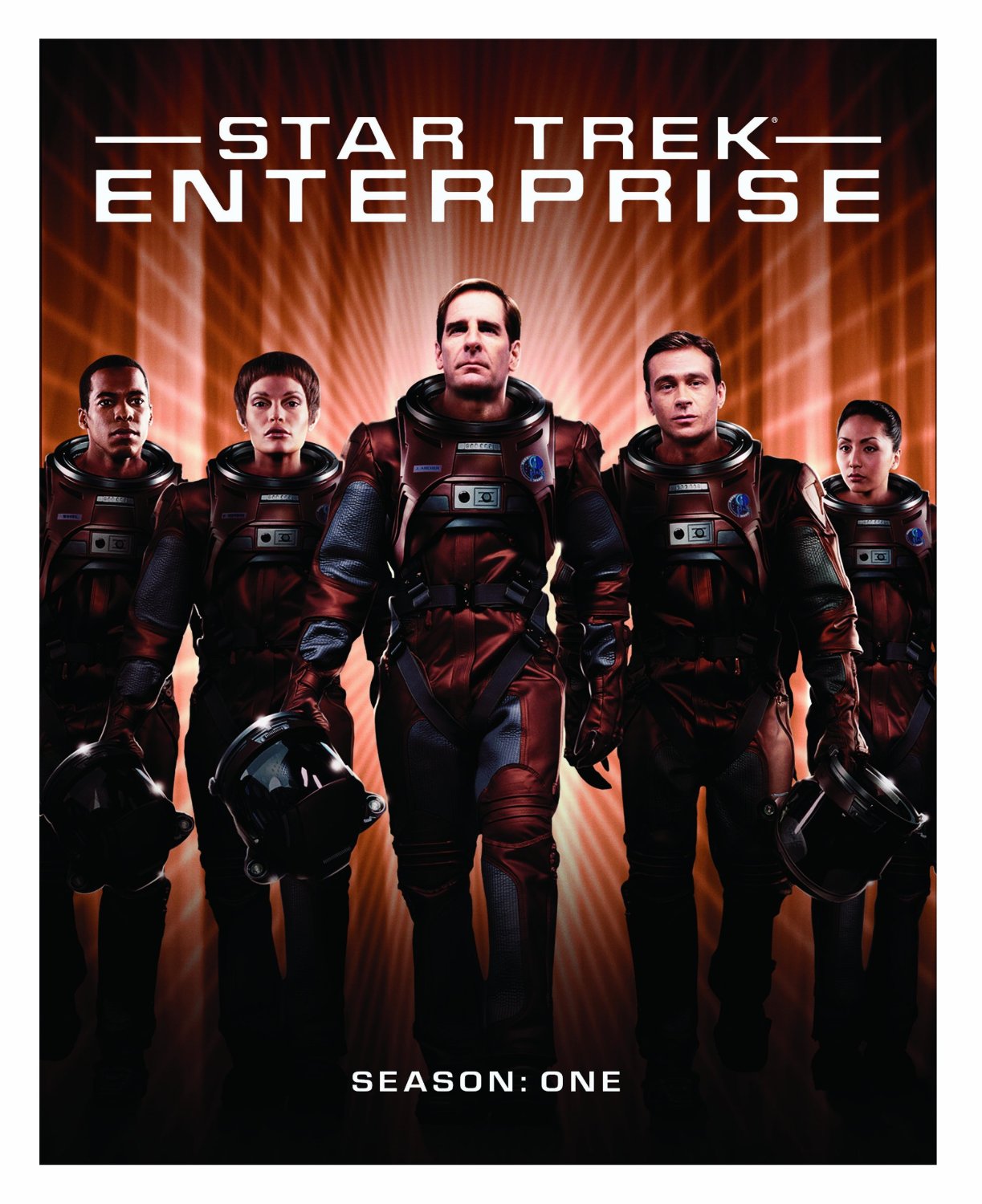
35 years to be exact. Enterprise is the fourth spinoff from the original 1960’s hopeful series. The Earth is finally ready to send its first starship to explore the vast galaxy. This first starship Enterprise is smaller than the ships we’ve become used to. There are no shields or photon torpedoes. The transporter has only been cleared for inanimate objects. Not that this stands in the way of its occasional “emergency” use. The ship is very much like the cramped spaces of today's submarines. It adds an even greater sense of reality to the show. The crew is composed of Captain Jonathan Archer (Bakula), First Officer and Vulcan High Command liaison, T’Pol (Blalock), Chief Engineer Charles (Trip) Tucker (Trinneer), Tactical Officer Malcolm Reed (Keating), Denobulan Dr. Phlox (Billingsly), Pilot Travis Mayweather (Montgomery) and Linguist/Communications Officer Hoshi Sato (Park).

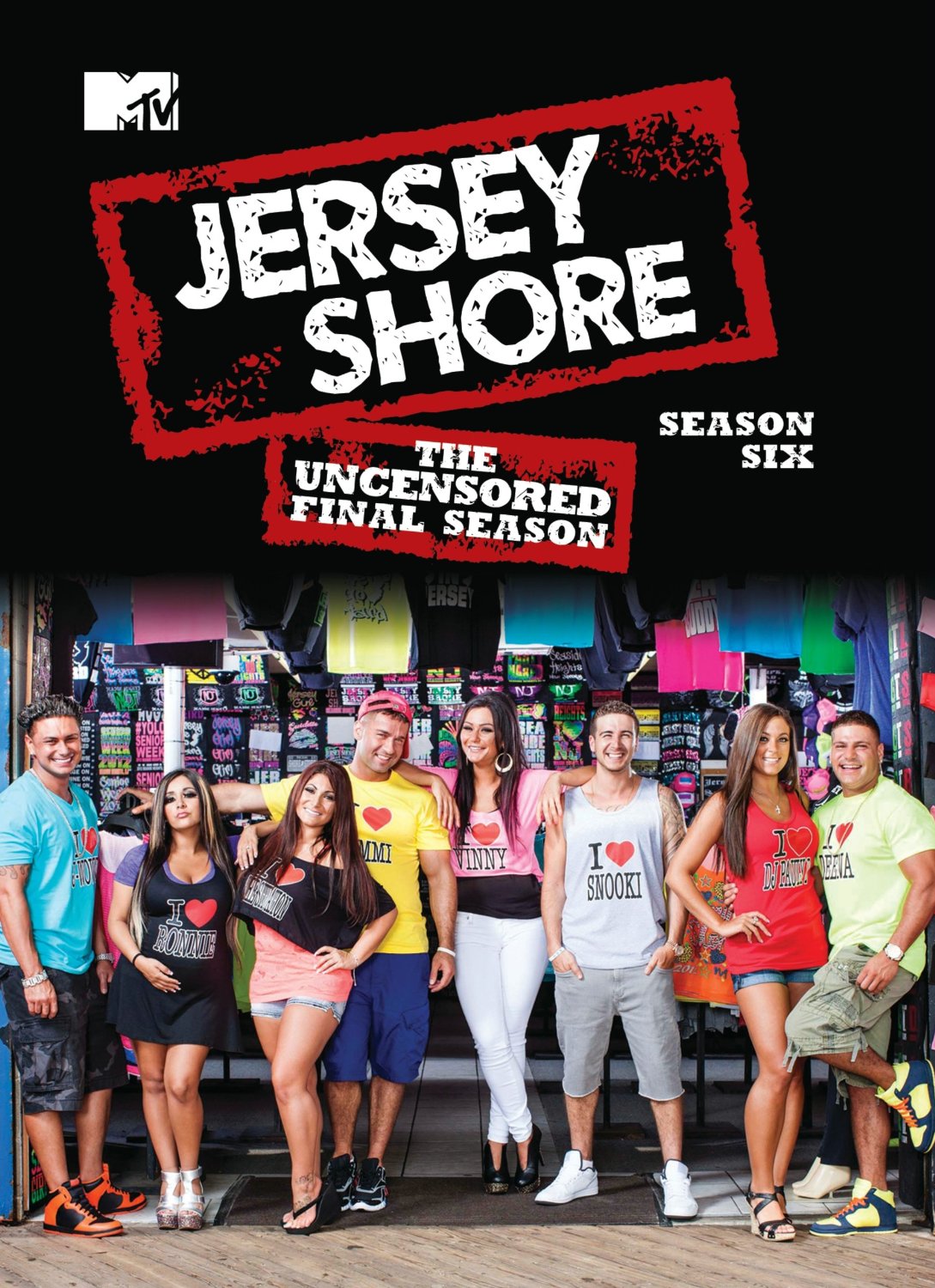
Jersey Shore finally comes to an end. Of course, there are spinoffs and TV specials and TMZ reports and aaaarggh! We're never going to escape them are we?! This is an Uncensored version of the season so instead of 'beeps' we get to hear the versatility of the f-word and other assorted curse words that are flung across rooms and dance floors as these bronzed oddities continue their bitter stalemate against maturity and class.

(Much of what is about to be read is taken directly from my previous review of the last season of Jersey Shore because my feelings have not changed nor has my spite lost it's relevance):

I tend to shy away from films that have come out before I was born. It’s not a rule, just a habit. The reason for that being because not being from the generation that movie was produced in, I fear that there will be a lot of cultural reference that I will be unfamiliar with and I will have to Wikipedia them all. I also feel that because I am from a different era I am not qualified to render a sound opinion of an older film, because I may judge it too harshly due to my growing up within a time of special effect advancement. Of course I am well aware that this aversion causes me to miss out on quality films like Raiders of the Lost Ark, Apocalypse Now, and as it turns out, Zulu Dawn. Thank goodness for this job for introducing me to films I wouldn’t normally see of my own volition.

Zulu Dawn is a war film covering the Battle of Isandlwana, the first major encounter in the Anglo-Zulu War between the British Empire and Zulu Kingdom in 1879. The film is told mainly from the perspective of the British soldiers and features Hollywood household names Burt Lancaster, Peter O’Toole, Simon Ward, and Bob Hoskins on that side. The film starts off with Lord Chelmsford (Burt Lancaster, Lawrence of Arabia), a commander of British forces stationed in South Africa who is eager for advancement, and Sir Henry Bartle Frere (John Mills, Ryan’s Daughter), the High Commissioner of South Africa issuing a ultimatum to King of the Zulu Empire, King Cetshwayo: dissolve his empire or face the British forces that were looking to expand the ever-growing industrial economy. The King refuses and rallies his people to prepare for war.

The great, central joke of Veep — HBO’s sharp, profane political comedy — is that no self-respecting politician aspires to become the Vice President of the United States. (Just like no self-respecting kid dresses up as Robin for Halloween.) It’s no accident the POTUS is completely MIA from the show, leaving his second-in-command and her beleaguered staff to deal with the countless indignities of a job described on “The Making of Veep” featurette as “so close to being important.”

A 15-second graphic at the opening of each episode tidily summarizes the failed presidential bid by Senate rising star Selina Meyer (Julia Louis-Dreyfus) and her subsequent acceptance of the show’s titular position. Veep follows Meyer as she carries out her day-to-day duties with the help of a team that includes devoted chief of staff Amy Brookheimer (Anna Chlumsky), sloppy director of communications Mike McLintock (Matt Walsh), clingy personal aide Gary Walsh (Tony Hale) — who may not be willing to take a bullet for Meyer, but he’ll definitely take a sneeze — and no-nonsense personal assistant Sue Wilson (Sufe Bradshaw). The staff often has to deal with smug White House aide/VP liaison Jonah Ryan (Tim Simons), who mentions that he works in the White House every chance he gets. By the end of the first episode, the team has also acquired ruthless deputy director of communications Dan Egan (Reid Scott), who will suck up to (or date) whoever he needs to get ahead.

It’s tradition. The night before a wedding, the groomsmen throw a party for the groom and the bridesmaids do the same for the bride. Usually, the bachelorette parties are tamer than their male counterparts. Unless, of course, the bride has the absolute worst bridesmaids in the history of weddings; like the ones Becky (Rebel Wilson, Pitch Perfect, Bridesmaids) chooses for her bridal party in Bachelorette.

When Becky asks Regan (Kirsten Dunst, the Spider-man trilogy) to be her maid of honor, Regan immediately calls her other two friends from high school: airhead Katie (Isla Fisher, Wedding Crashers, Rise of the Guardians) and sarcastic Gena (Lizzy Caplan, Cloverfield, TV’s The Class). Completely enraged that “Pig-Face” — Regan’s cruel high school nickname for Becky — is getting married before her, Regan flips out. Fast-forward to the day before the wedding. Katie and Gena have flown in for the rehearsal dinner determined to liven up the “boring” bachelorette party, with Katie hiring a male stripper and Gena toting a purse full of cocaine. When the drugs and the stripper ruin the party, Becky storms off. Left alone in the bridal suite with champagne and cocaine, the three friends decide to get drunk, high, and generally feel sorry for themselves.

Biblical strongman Samson accomplishes many amazing feats and makes many a powerful enemy along the way. None are able to defeat this champion until his action catch the eye of Delilah, and he becomes the target of her affections. Unbenounced to Samson, Delilah has been tasked to discover the source of his supernatural strength. God granted Samson amazing physical strength, but his heart and mind are weak to the machinations of this sly, deceitful woman and it is only a matter of time before she learns his greatest secret.

Hedey Lamarr's Delilah is a character that we love to hate. Her scheming is fused perfectly into her seductive charms. Meanwhile, Victor Mature is rugged as this Hebrew He-Man. Both play well off of each other although many a time they seem to be treading water with melodramatic dialogue that rallies back and forth and only seems to accomplish extending the run time of the film instead of advancing the plot efficiently.

Day of the Falcon is a photogenic, lavish reminder that violence and strife in the Middle East existed well before it could be broadcast on CNN. The film — set in the early part of the 20th century — also works as a throwback to the sort of rollicking, epic-scale adventure films David Lean was making at the height of his powers and that no one seems terribly interested in making anymore. Don’t get me wrong: Day of the Falcon is no Lawrence of Arabia or Bridge on the River Kwai, but it’s an accetable 21st century substitute.

Directed by Jean-Jacques Annaud — who made the great, underrated WWII sniper drama Enemy at the Gates — the movie features a multi-cultural cast and a relatively hefty budget. (Reports put it anywhere between $40 million and $55 million; either way, it’s one of the most expensive films produced by an Arab — Tarak Ben Ammar — which also deals with that part of the world.)

Sometimes you really can judge a book terrible movie by its cover. Beyond the awful Photoshopped shot of the film’s stars, the cover art for House Arrest boasts that the movie comes “From a Producer of You Got Served.” That set off a bunch of questions in my curious mind. Why just one producer? Is this really something a person would brag about? Most importantly, where are all the hip hop dance battles?! Worse than all that, the film itself completely muddles a worthwhile message about faith and the importance of family with shoddy storytelling and a steady stream of substandard performances.

House Arrest quickly introduces us to Chanel (Stacey Dash), a spoiled L.A. rich girl living the high life with her boyfriend, DeAndre (Jayceon “The Game” Taylor). You can tell Chanel is spoiled because she even has a tiny dog named Trixie that she carries around in her purse. While out shopping one day, Chanel and DeAndre are both arrested for the robbery of some valuable computer chips. (The crime is so vague and ultimately pointless that they may as well have been accused of stealing a box of vintage floppy disks.) Prior offender DeAndre is sent to prison while first-time offender Chanel is sentenced to house arrest in a much less ostentatious part of town under the roof of grandma Mee-Mah (Bebe Drake) and Chanel’s daughter Autumn (Kiera Washington). Chanel is innocent, but Deandre asks her to take the fall because she’d probably only get a probation — this guy is a real sweetheart — and because DeAndre’s crimes helped fund their expensive lifestyle.

"My dear Frodo, you asked me once if I had told you everything there was to know about my adventures. Well, I can honestly say I've told you the truth, but I may not have told you all of it..."

It's hard to believe that it's been a decade since Peter Jackson last brought us to the fantastic lands of Middle Earth. It was one of Hollywood's most ambitious projects ever. Jackson took on the perilous journey of adapting J.R.R. Tolkien's famous Lord Of The Rings trilogy, perilous because of the beloved place the works hold in the hearts of those who have read them over the years. There is such a wonderfully detailed world delivered by Tolkien that we already had very vivid ideas of these places and characters. To his credit, Jackson proved to be up to the task and delivered a trilogy that one can only describe as brilliant. The lands and people were just as I had envisioned them since I first encountered them in my own youth. Expanded versions hit the home video market, and about 12 hours of story have made it to our screens. And there it has sat for the better part of that decade.